
How to Choose the Perfect Entryway Rug for a Stylish and Functional Home
Table of Contents
Introduction
Your entryway is the first impression guests have of your home—and often the first thing you see when you return after a long day. Yet, one of the most overlooked details in creating a warm, welcoming, and functional entryway is the rug beneath your feet. The right entryway rug not only elevates your home’s aesthetic but also serves a practical purpose—protecting your floors, trapping dirt, and adding a sense of comfort and style.
However, choosing the perfect entryway rug isn’t as simple as picking a pretty pattern. You need to consider your space’s layout, the amount of foot traffic, material durability, and how the rug complements your home’s design. A rug that’s too small, slippery, or hard to clean can disrupt both the look and functionality of your space.
In this comprehensive guide, we’ll explore everything you need to know about selecting the ideal entryway rug—from finding the right size and material to matching it with your decor. Whether your home exudes cozy minimalism or modern sophistication, this guide will help you choose a rug that perfectly balances beauty and practicality.
Understanding the Function of an Entryway Rug
Before diving into design and style, it’s essential to understand the purpose of an entryway rug. This small yet impactful home element plays a crucial role in both functionality and visual harmony.
An entryway rug acts as your home’s first line of defense against outdoor dirt and moisture. It prevents debris from being tracked into your living areas, keeping floors cleaner and extending their lifespan. Beyond practicality, a well-chosen rug defines your entryway space—especially in open layouts where boundaries between rooms are subtle.
When selecting your rug, think about traffic flow. For busy households with kids or pets, a durable, low-pile rug with a non-slip backing is essential. For quieter spaces, a softer, decorative rug can create a welcoming tone.
| Function | Description |
| Dirt Control | Traps dust, mud, and moisture before they spread |
| Aesthetic Framing | Defines your entryway and adds texture |
| Comfort | Provides warmth and softness underfoot |
| Safety | Reduces slip risks on hard flooring |
Choosing the Right Size for Your Entryway Rug
Size is one of the most important factors when selecting an entryway rug. A rug that’s too small can look awkward and fail to protect enough floor space, while one that’s too large may overwhelm the area or bunch up under doors.
To determine the right size, start by measuring your entryway dimensions. Ideally, your rug should be large enough for people to step onto it completely when entering. For standard doorways, a 2×3 or 3×5 rug works well, but for larger foyers, runners or 4×6 options may suit better.
The rug’s placement should also complement door swing and furniture layout. Make sure the rug doesn’t block doors or extend awkwardly into walkways. Centering the rug in relation to your console table, bench, or mirror helps balance the overall look.
| Entryway Size | Recommended Rug Size | Ideal Placement |
| Small hallway | 2×3 or 3×5 rug | Directly in front of door |
| Medium foyer | 4×6 rug | Centered with furniture |
| Long corridor | Runner rug (2×8 or longer) | Along walkway |
Selecting the Best Material for Durability and Style
Material selection determines how well your entryway rug performs over time. Since this area experiences heavy foot traffic, your rug needs to be both durable and easy to maintain—without sacrificing aesthetics.
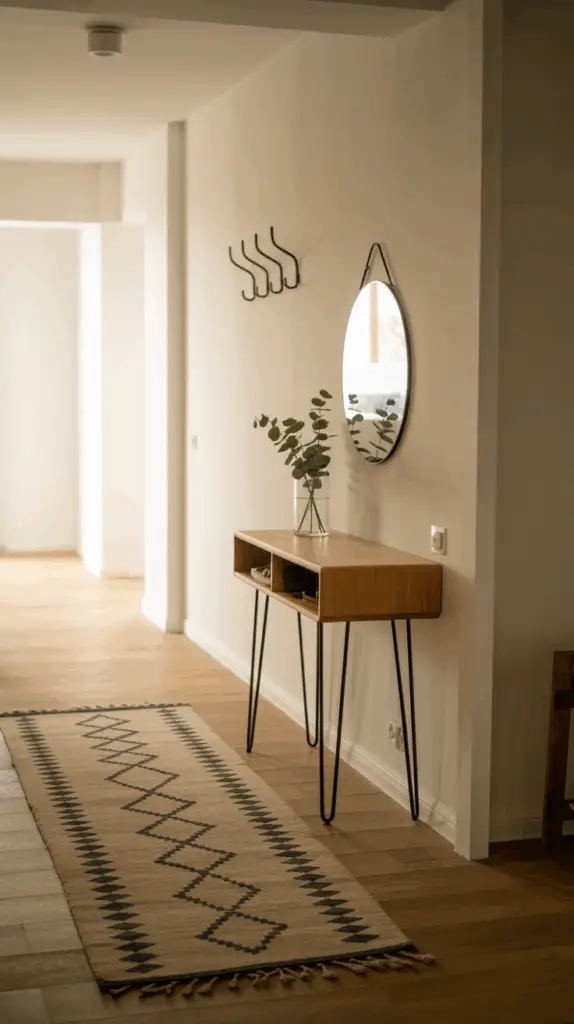
Natural fibers like jute and sisal are excellent choices for rustic or coastal-inspired homes. They’re tough, eco-friendly, and offer an earthy texture that complements natural interiors. However, they’re less resistant to moisture, making them better for covered or indoor entryways.
For homes where durability and stain resistance are priorities, synthetic materials such as polypropylene or nylon are ideal. They handle dirt and moisture well, clean easily, and come in a wide range of designs. Wool rugs, while more luxurious, strike a balance between softness and durability but require regular care.
| Material Type | Advantages | Ideal Use |
| Polypropylene | Stain-resistant, affordable | High-traffic areas |
| Wool | Soft, durable, natural | Formal entryways |
| Jute/Sisal | Eco-friendly, textured | Covered porches |
| Cotton | Washable, lightweight | Casual spaces |
Coordinating Color and Pattern with Your Decor
Your entryway rug is a design statement—it sets the tone for the rest of your home. Color and pattern choices can transform an ordinary entrance into a visually stunning introduction.
For minimalist or Scandinavian-inspired interiors, neutral tones like beige, gray, or ivory work beautifully. These colors create a sense of openness and calm, blending seamlessly with wooden or white flooring. If your home leans toward bohemian or eclectic design, opt for patterned rugs featuring geometric or vintage-inspired motifs.
Consider the overall color palette of your space before committing. If your walls and furniture are neutral, a patterned rug can add personality. Conversely, if your entryway already features strong colors, choose a simple, solid rug to balance the look.
| Decor Style | Suggested Rug Colors/Patterns | Aesthetic Effect |
| Minimalist | White, beige, gray | Clean and airy |
| Bohemian | Persian, geometric, colorful | Artistic and vibrant |
| Modern | Monochrome, abstract | Sleek and sophisticated |
| Coastal | Blue, sand, natural fiber | Calm and breezy |
Practical Maintenance and Cleaning Tips
Even the most beautiful rug can quickly lose its appeal if not properly cared for. Regular cleaning and smart maintenance habits ensure your entryway remains both stylish and hygienic.
Start by vacuuming your rug at least twice a week to remove dirt and grit that can wear down fibers. For high-traffic entryways, consider shaking the rug outside to dislodge deeper debris. Spot clean any spills immediately using mild detergent and warm water.
Rugs with removable covers or washable materials like cotton are excellent for easy upkeep. If your rug isn’t washable, professional cleaning once or twice a year can help restore its color and texture.
Rotating your rug every few months ensures even wear, particularly in areas with consistent foot traffic. Finally, always use a rug pad—it prevents slipping, protects floors, and extends your rug’s lifespan.
| Maintenance Task | Frequency | Purpose |
| Vacuuming | 2–3 times per week | Removes dirt buildup |
| Spot Cleaning | As needed | Prevents stains |
| Professional Cleaning | 1–2 times yearly | Restores fibers |
| Rug Rotation | Every 3–4 months | Evens out wear |
Balancing Function and Aesthetic Appeal
The perfect entryway rug seamlessly merges functionality with style. It should feel welcoming yet withstand daily wear. Achieving this balance involves thoughtful material choice, proportion, and coordination with surrounding decor.
Think of your rug as part of a layered design story. Pair it with elements like wall art, a statement mirror, or a simple console table. These accents work together to create visual harmony. A small bench or shoe rack in complementary tones can complete the look without overwhelming the space.
Lighting also affects how your rug looks. Soft, natural light brings out colors and textures beautifully, while strategic use of warm artificial lighting can make darker rugs feel cozier.
| Design Element | How It Enhances the Rug |
| Console Table | Adds structure and symmetry |
| Wall Mirror | Reflects light and expands space |
| Lighting | Highlights texture and warmth |
| Decorative Tray | Keeps the area neat and styled |
Entryway Rug Mistakes to Avoid
Even with the best intentions, it’s easy to make design missteps when choosing a rug. Common mistakes include selecting the wrong size, neglecting a rug pad, or prioritizing style over practicality.
A rug that’s too small disrupts visual proportion and fails to protect enough of the floor. Similarly, rugs without non-slip backing can become safety hazards, especially on tile or hardwood floors. Choosing a material unsuitable for your home’s climate can also backfire—for instance, jute rugs in damp areas may mold easily.
Lastly, don’t underestimate how a rug interacts with your door. Always ensure there’s enough clearance for the door to open smoothly without bunching or folding the rug.
| Common Mistake | Result | Simple Fix |
| Rug too small | Unbalanced look | Measure before buying |
| Slippery surface | Safety hazard | Add non-slip pad |
| Poor material choice | Quick wear | Match to traffic level |
| Ignoring door clearance | Functional issue | Test before final placement |
Conclusion
Choosing the perfect entryway rug is about blending function, durability, and style. The right rug welcomes guests with warmth, protects your floors, and enhances your home’s design. By understanding materials, sizing, and maintenance, you can select a rug that fits both your lifestyle and aesthetic vision.
From cozy natural fibers to sleek modern runners, every entryway has a perfect match waiting to be discovered. With careful selection and thoughtful styling, your rug becomes more than just decor—it becomes the elegant foundation of your home’s first impression.