

Affordable Bathroom Tile Combinations for a Stylish Remodel: Creative Design Ideas That Look Expensive
Table of Contents
Introduction
Designing a beautiful bathroom doesn’t have to mean draining your savings. According to a 2024 interior design survey, nearly 70% of homeowners completing bathroom remodels were looking for ways to achieve a luxury look on a modest budget. The secret? Choosing the right tile combinations.
Tiles are the foundation of any bathroom design—they set the tone, define the aesthetic, and influence how large or serene the space feels. While high-end materials can be tempting, you can easily recreate that polished, designer finish using affordable alternatives like ceramic, porcelain, or peel-and-stick options.
This guide explores how to combine budget-friendly tiles to create a stylish bathroom remodel. You’ll discover timeless color pairings, creative layout patterns, and clever design tips that deliver elegance without overspending. Whether you’re upgrading a powder room or revamping your master bath, these affordable tile ideas will help you design a space that feels fresh, cohesive, and inviting—all while staying within budget.
Mixing Tile Textures for Depth and Dimension
Combining different tile textures is one of the simplest ways to give a bathroom an upscale feel without expensive materials. Matte and glossy tiles, for instance, can play off each other beautifully—glossy finishes reflect light and make small bathrooms feel larger, while matte surfaces provide balance and a sophisticated contrast.
To create a harmonious look, keep the color palette neutral or monochromatic. For example, pairing glossy white subway tiles on the walls with matte hexagonal floor tiles in light gray creates a timeless design that feels modern and clean. If you want a bit more warmth, try creamy beige or soft greige tones.
Adding texture through stone-look or wood-look porcelain tiles can also bring natural charm without the cost or maintenance of real materials. The goal is to layer visual interest subtly while maintaining flow throughout the room.
Texture Pairing Guide
| Tile Type | Texture | Best Use | Visual Effect |
| Subway Tile | Glossy | Walls or shower surround | Bright, clean reflection |
| Hexagon Tile | Matte | Floor | Adds visual interest |
| Porcelain Wood-Look | Textured | Accent wall or floor | Warm and organic |
| Marble-Look Tile | Polished | Vanity backsplash | Luxurious and elegant |
Neutral Combinations That Never Go Out of Style
When in doubt, neutral bathroom tile combinations are always a safe and stylish choice. Shades of white, beige, gray, and soft taupe create a spa-like atmosphere while offering endless versatility. The key to making neutrals feel dynamic lies in contrast—using varied tones, patterns, and finishes to add personality.
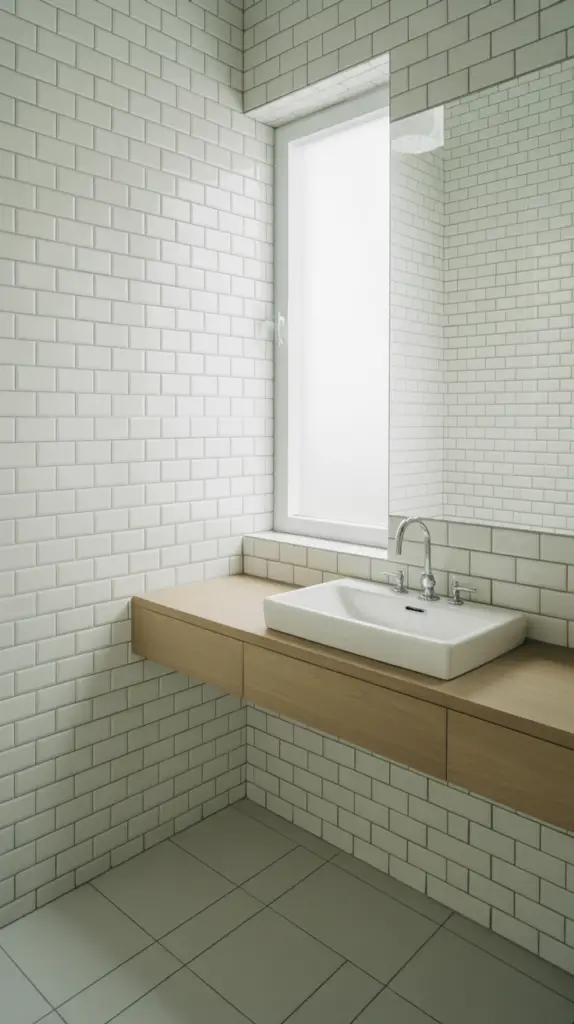
A white-and-gray combo remains a timeless favorite. Consider pairing crisp white ceramic subway tiles with soft gray floor tiles or vice versa. Another elegant choice is mixing beige travertine-look tiles with off-white accents for a warmer, Mediterranean-inspired aesthetic.
If you’re working with a small space, lighter neutrals can make the room appear more open and airy. Add depth by choosing a grout color that subtly contrasts with your tiles, like warm gray grout for white tiles—it defines the layout beautifully without feeling harsh.
Timeless Neutral Pairings
| Color Scheme | Tile Style | Ideal Placement | Mood |
| White + Gray | Subway + Large Format | Walls and floors | Classic and modern |
| Beige + Cream | Stone-look | Shower walls | Warm and natural |
| Greige + Ivory | Ceramic | Vanity backsplash | Calm and contemporary |
Pattern Play: Using Tile Layouts to Elevate Design
Tile patterns can dramatically impact the overall look of your bathroom—even when you’re using inexpensive materials. Creative layouts like herringbone, chevron, basketweave, or vertical stacking can turn simple tiles into statement features.
For example, classic subway tiles arranged in a herringbone pattern instantly feel more elevated and modern. Similarly, vertically stacked rectangular tiles can make low ceilings appear taller, creating a more open feel. If your bathroom floor is small, diagonal tile patterns visually widen the space.
Keep patterns cohesive by choosing one focal area—like the shower wall or floor—and keeping the rest of the design simpler. This approach ensures balance and avoids overwhelming the space.
Tile Pattern Inspiration
| Pattern | Works Best For | Design Tip |
| Herringbone | Shower walls or backsplash | Adds movement and sophistication |
| Vertical stack | Small spaces | Enhances height |
| Basketweave | Floor | Classic, timeless charm |
| Diagonal | Compact bathrooms | Makes the room look wider |
Affordable Alternatives That Look High-End
You don’t have to buy marble or natural stone to achieve a luxury aesthetic. Today’s manufacturing advancements allow affordable tiles to mimic expensive materials remarkably well. Porcelain and ceramic options can replicate the look of marble, travertine, or slate at a fraction of the cost.
For instance, a porcelain marble-look tile brings elegance and depth without the upkeep of real marble. Similarly, matte concrete-look tiles offer modern minimalism, while ceramic tiles with subtle veining add an artisanal touch. Wood-look porcelain tiles are another budget-friendly way to introduce warmth, especially in larger bathrooms.
Mixing high-quality faux finishes with real materials like natural wood accessories or metal fixtures can create an elevated contrast that feels intentional and chic.
Affordable Luxury Comparison
| Luxury Look | Affordable Alternative | Price Range (per sq. ft.) | Benefit |
| Carrara Marble | Porcelain marble-look tile | $2–$5 | Durable and low-maintenance |
| Natural Slate | Ceramic slate-look tile | $1.50–$3 | Rustic, modern appeal |
| Travertine | Porcelain travertine-look tile | $2–$4 | Easy to clean and long-lasting |
| Concrete | Matte porcelain | $1–$3 | Sleek and industrial |
Mixing Wall and Floor Tile Designs
Combining different tile styles on the walls and floors creates contrast and dimension. The trick is ensuring they complement each other rather than compete. Typically, it’s best to use smaller tiles or busier patterns on the floor and larger, simpler tiles on the walls. This keeps the room balanced and visually spacious.
For example, pairing a patterned mosaic floor tile with plain white or taupe wall tiles creates an elegant contrast. Conversely, if you love a bold feature wall—like geometric or marble-inspired tiles—keep the flooring neutral to let the design shine.
When mixing materials, stay within a consistent color family. Warm tones (like beige, cream, or terracotta) pair well together, while cool tones (gray, white, blue) harmonize effortlessly.
Wall and Floor Pairing Chart
| Wall Tile | Floor Tile | Style Outcome |
| White subway | Patterned mosaic | Modern with vintage flair |
| Beige ceramic | Terracotta-look porcelain | Warm Mediterranean charm |
| Large-format gray tile | Marble-look porcelain | Minimal and sleek |
Using Accent Tiles to Add Personality
Accent tiles are the perfect way to introduce creativity into your bathroom design without breaking the budget. You can use them sparingly—in niches, borders, or behind the vanity—to make a subtle yet powerful statement.
Glass, metallic, or mosaic accent tiles can add texture and shimmer, while patterned ceramic options bring charm and personality. Accent strips in the shower, for instance, draw the eye upward and make the space feel taller.
When using accent tiles, moderation is key. Stick to one or two accent areas to keep the look cohesive. Choose colors that echo the rest of your tile palette for a balanced design.
Accent Tile Placement Ideas
| Area | Accent Tile Type | Visual Effect |
| Shower niche | Mosaic or glass | Adds sparkle and depth |
| Vanity backsplash | Patterned ceramic | Creates a design focal point |
| Floor border | Contrasting porcelain | Defines zones and adds structure |
Creative Color Pairings for a Fresh Look
While neutrals are timeless, a bit of color can transform your bathroom into something special. Combining muted tones like sage green, soft blush, or dusty blue with affordable neutral tiles creates personality without overwhelming the space.
For a fresh and modern approach, pair white or gray tiles with subtle pastel accents. A sage green wall tile against white hexagonal flooring, for example, evokes a serene spa-like atmosphere. Similarly, pairing blush pink subway tiles with matte gray floors strikes a delicate, romantic balance.
Color should always enhance the existing design, not dominate it. Stick to one main color accent and ground it with neutrals for a cohesive, high-end feel.
Color Pairing Inspiration
| Main Tile | Accent Color | Resulting Mood |
| White subway | Sage green | Fresh and calming |
| Gray ceramic | Blush pink | Warm and soft |
| Beige travertine | Dusty blue | Coastal and airy |
Conclusion
A stylish bathroom remodel doesn’t have to come with a luxury price tag. By choosing affordable bathroom tile combinations wisely—mixing textures, balancing tones, and adding subtle accents—you can create a high-end look that reflects your taste and creativity. The beauty lies in how you combine materials, not how much you spend.
Whether you lean toward sleek modern neutrals or warm, earthy tones, the right combination of tiles will make your bathroom feel timeless, welcoming, and beautifully designed. With a bit of planning and imagination, affordability and elegance can go hand in hand—turning your remodel into a space you’ll love for years to come.