
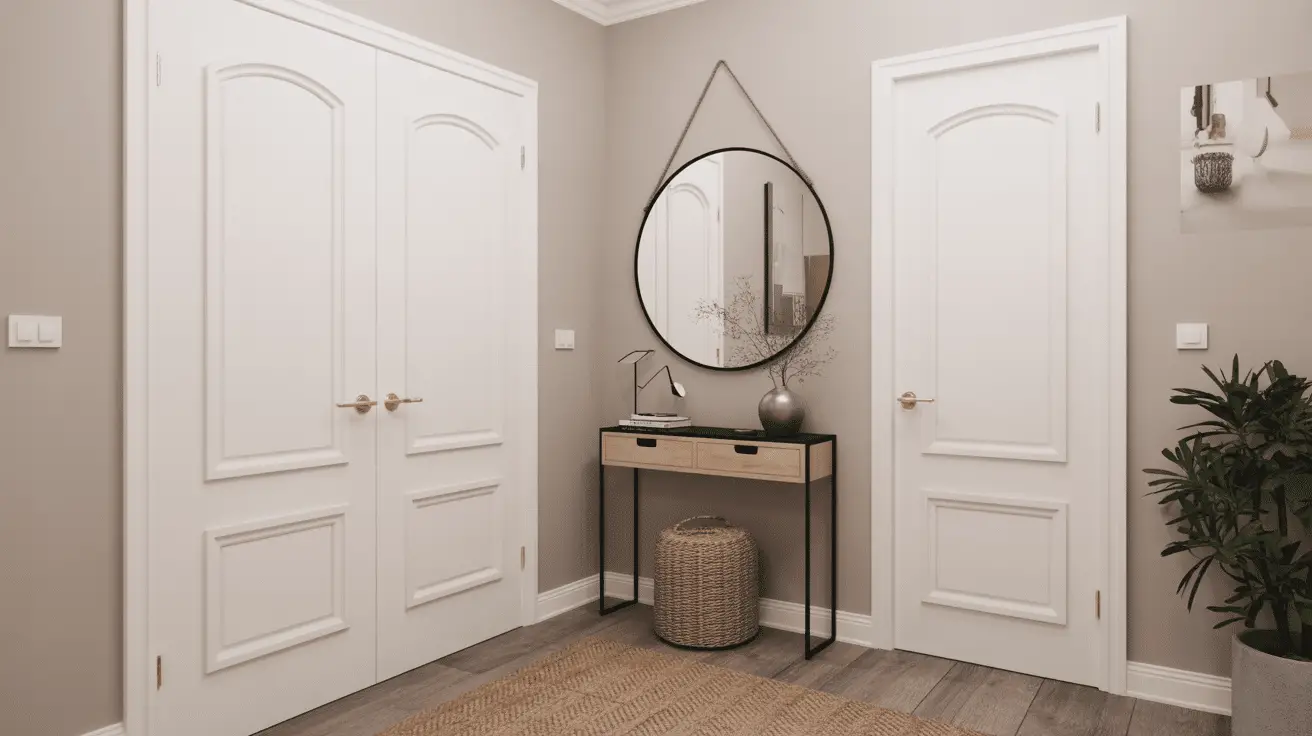
Small Space Double Door Entryway Solutions for a Stylish and Functional Home
Table of Contents
Introduction
The entryway is the first glimpse guests have of your home—and it sets the tone for everything beyond it. Yet for many homeowners, designing a small space with double doors feels like solving a design puzzle. How do you maintain functionality, allow for graceful movement, and still create a beautiful, inviting space?
In compact homes or apartments, a double door entryway can present both an opportunity and a challenge. It offers grandeur and balance but can also feel cramped or awkward without the right design strategy. Thankfully, with thoughtful planning, smart storage, and cohesive styling, you can turn even the smallest entryway into a stunning focal point that welcomes warmth and personality.
This article explores practical and aesthetic double door entryway solutions tailored for small spaces. We’ll discuss layout optimization, color schemes, lighting, furniture placement, décor layering, and material choices—all designed to enhance beauty without sacrificing comfort. Whether you’re looking to modernize your front doors, amplify natural light, or simply make your entrance feel more spacious, these ideas will guide you toward a design that’s both functional and enchanting.
Using Layout and Proportion to Your Advantage
Designing a small entryway begins with understanding space proportion. A double door setup can dominate the area visually, but careful planning allows balance between function and flow.
Start by measuring your available square footage, then map out where furniture and décor pieces will go. Avoid blocking the door’s natural swing path—this keeps the entryway feeling open. If you have French or glass-panel double doors, take advantage of their transparency to visually extend the area.
Consider slimline console tables, wall-mounted shelves, or built-in storage benches that align parallel to the doors. These solutions maximize usable floor space without creating clutter. Keep walking zones at least 36 inches wide to maintain ease of movement.
Proportion & Layout Guide:
| Element | Ideal Size/Placement | Purpose | Visual Effect |
| Console table | 10–14 in depth | Surface for décor | Adds symmetry |
| Mirror | Above console | Reflects light | Expands visual space |
| Rug | Just inside doors | Defines entry zone | Creates warmth |
| Wall hooks | Beside door frame | Functionality | Organized storage |
Color Schemes That Create the Illusion of Space
Color plays a vital role in shaping perception. For small double door entryways, light-reflective hues can dramatically open the area and create an airy atmosphere.
Begin with a neutral palette—shades of ivory, taupe, or soft gray—which amplifies natural light and gives the impression of height. Layer these tones with gentle contrasts like sage green, dusty rose, or pale blue to infuse subtle warmth. Avoid overly dark colors near the doors, as they can make the space feel boxed in.
An accent wall behind a console or mirror adds depth without overwhelming the senses. If your double doors are painted, choosing a slightly darker shade than the walls creates visual definition while maintaining harmony. Metallic finishes in doorknobs or light fixtures—especially in brushed brass or antique bronze—add elegance without clutter.
Color Harmony Table:
| Base Color | Accent Tone | Best for | Mood Created |
| Soft ivory | Olive green | Natural elegance | Fresh and open |
| Pale gray | Navy blue | Modern spaces | Calm sophistication |
| Warm beige | Blush pink | Vintage homes | Cozy charm |
| Cool white | Matte black | Minimalist décor | Sleek contrast |
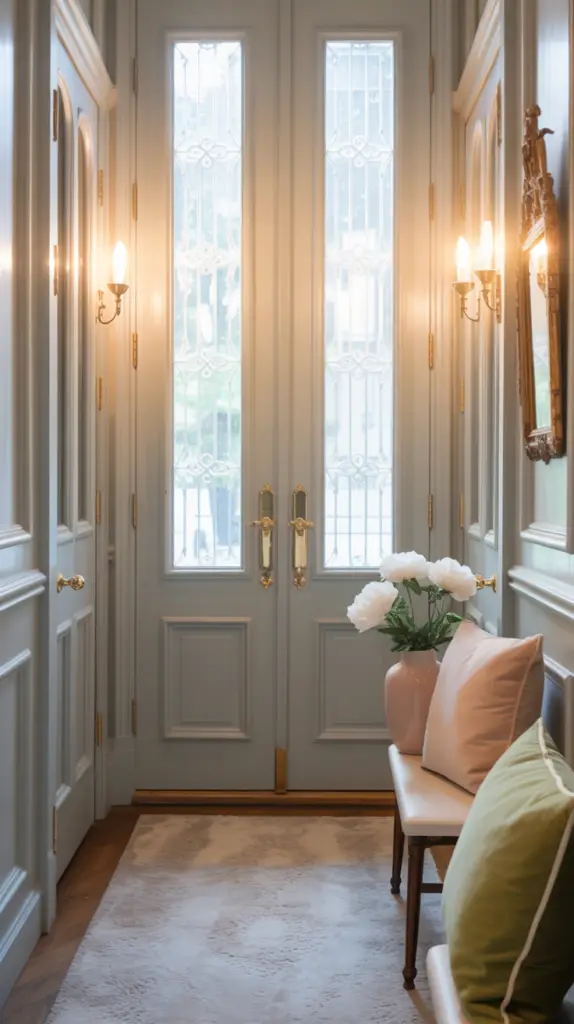
Smart Storage Solutions That Keep It Stylish
Small entryways demand organization without sacrificing beauty. The key is blending form and function through integrated storage ideas that complement your double door design.
Opt for storage benches that double as seating—perfect for putting on shoes while keeping clutter hidden. Floating shelves or vertical cubbies above the bench offer display opportunities without encroaching on floor space.
Wall-mounted coat racks or slim cabinets help maintain order while adding visual structure. For symmetry, flank each side of the double doors with identical storage pieces or décor accents, creating a cohesive look. Use decorative baskets, trays, or ceramic bowls to organize daily essentials like keys, mail, and scarves in style.
Storage Style Table:
| Storage Type | Placement | Function | Design Benefit |
| Bench with drawers | Below window or wall | Seating + hidden storage | Dual-purpose |
| Floating shelves | Above bench | Display + utility | Vertical space use |
| Slim cabinet | Beside door | Conceals clutter | Streamlined profile |
| Baskets & trays | Console top | Everyday essentials | Adds texture |
Lighting That Enhances Depth and Warmth
Lighting determines how a small double door entryway feels—welcoming, spacious, or closed-in. The right combination of fixtures adds depth, defines zones, and sets mood.
Begin with overhead lighting, such as flush-mount chandeliers or pendant lamps, that cast even illumination. In smaller spaces, diffused warm light (2700–3000K) works best to avoid harsh contrasts. Complement this with wall sconces or a table lamp placed on a console for layered brightness.
Natural light should also be maximized. Glass-paneled double doors or sidelights let daylight spill in, visually enlarging the area. Add translucent curtains for softness while maintaining privacy. If your entryway lacks natural light, use mirrors or high-gloss paint finishes to reflect artificial light and brighten corners.
Lighting Strategy Table:
| Type | Fixture Example | Placement | Purpose |
| Overhead | Pendant or flush mount | Ceiling center | Ambient light |
| Task | Table lamp | Console table | Focused accent |
| Accent | Wall sconces | On either side of mirror | Depth and warmth |
| Natural | Glass doors | Entry front | Visual openness |
Decorative Accents That Define Character
Every well-designed entryway tells a story through its decorative touches. For double doors in small spaces, the secret lies in curated simplicity—each piece should serve purpose and style.
Start with a focal piece above your console, such as a framed artwork, large round mirror, or statement wreath. Layer in greenery through potted plants or floral arrangements to bring freshness and life. Incorporate texture through woven baskets, ceramic vases, and natural fiber rugs that add warmth underfoot.
Consistency matters—choose materials that echo your door finish. For instance, matte black handles pair beautifully with iron-framed mirrors, while wooden doors complement rattan or wicker accents. Candles or diffusers can subtly scent the area, enhancing its inviting aura.
Décor Inspiration Table:
| Accent Type | Material | Best Placement | Visual Effect |
| Mirror | Metal or wood frame | Above console | Reflects space |
| Rug | Jute or cotton | Entry floor | Defines boundary |
| Greenery | Potted plants | Corners or shelves | Adds freshness |
| Scent | Candles or oils | Tabletop | Creates warmth |
Choosing the Perfect Double Door Style
Your door choice is the centerpiece of your entryway—both architecturally and aesthetically. Selecting the right style for a small space requires balancing openness, proportion, and visual weight.
Glass-paneled doors are ideal for smaller areas, as they allow light to pass through and create an airy impression. Frosted or etched designs offer privacy while maintaining brightness. If you prefer solid wood, choose lighter stains like oak or ash to prevent visual heaviness.
French doors, barn-style sliders, or even bi-fold designs can bring charm and flexibility. Modern metal-framed doors in black or bronze add sleek definition, while vintage designs in distressed finishes contribute warmth and character.
Pair your doors with minimal trim and coordinated hardware for seamless flow. The goal is cohesion—every element should feel intentional and balanced within your entry’s scale.
Door Design Comparison:
| Door Type | Material | Ideal Use | Design Appeal |
| French doors | Glass + wood | Max light entry | Classic elegance |
| Barn doors | Wood | Rustic interiors | Space-saving charm |
| Bi-fold doors | Composite | Compact entryways | Flexible function |
| Metal frame | Steel or aluminum | Modern homes | Industrial sleekness |
Styling Floors and Walls for a Cohesive Look
A small entryway benefits greatly from thoughtful floor and wall design. These elements frame your entire decor and influence how open or confined the area feels.
Light-colored flooring such as white oak, limestone tile, or patterned ceramic enlarges perception. Layering with a narrow runner or round rug defines zones and introduces color. Opt for durable, easy-to-clean materials that withstand heavy foot traffic.
For walls, use wainscoting, wallpaper, or subtle texture to create visual rhythm. Vertical lines or light-reflective finishes elongate the space. Keep artwork or wall accents minimal and balanced with your double doors—symmetry remains key to maintaining order.
Surface Style Table:
| Surface | Recommended Material | Function | Visual Result |
| Flooring | Light wood or tile | Durability | Brightens entry |
| Wall finish | Wainscoting or wallpaper | Depth | Adds sophistication |
| Rug | Narrow runner | Defines pathway | Adds warmth |
| Paint | Eggshell finish | Reflects light | Smooth texture |
Conclusion
Designing a small space double door entryway is about harmony—where beauty meets function. Every design choice, from color and material to lighting and layout, shapes the experience of entering your home. By focusing on proportion, subtle contrasts, and cohesive décor, you can turn even the most compact entrance into a sophisticated and welcoming space.
With creativity and intentional design, a double door entryway transforms from a spatial challenge into a statement of style—a perfect introduction to the elegance that lies within.