
Smart and Stylish Small Bathroom Designs for Small Family Homes
Table of Contents
Introduction
Small family homes often face one of the most common layout challenges: making a tiny bathroom feel spacious, organized, and comfortable for daily use. With multiple people sharing the same room, clutter can accumulate quickly, and poor design choices can make the space feel even more restricted. Yet, a well-designed small bathroom has the potential to transform routines, improve functionality, and even enhance the overall value of the home.
The great advantage of compact spaces is that they encourage thoughtful, creative solutions. When every inch matters, design becomes purposeful—storage becomes smarter, fixtures become more efficient, and styling becomes more refined. Families can enjoy a sense of calm and openness, even in a smaller footprint, simply by choosing the right layout, color palette, lighting, and multifunctional elements.
This article explores practical and inspiring small bathroom designs tailored for small family homes. You’ll discover space-maximizing storage ideas, layouts that improve flow, lighting techniques that brighten without overwhelming, and material choices that enhance durability and style. Each section includes detailed examples and visual breakdowns to help you imagine what these solutions could look like in your own home.
Space-Savvy Layout Ideas for Compact Family Bathrooms
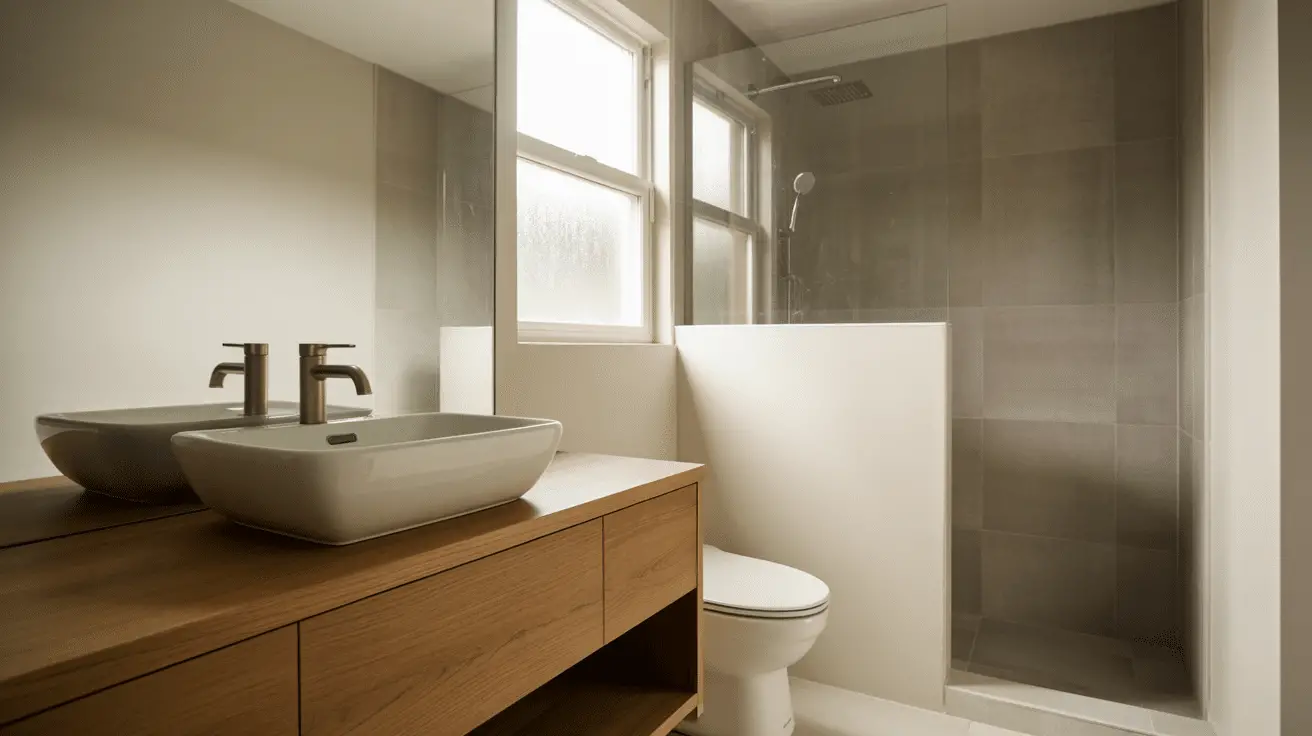
Designing a small bathroom begins with choosing a layout that optimizes movement and reduces visual clutter. A well-planned layout allows family members to use the space more comfortably and ensures that every fixture feels intentional rather than cramped. One of the most effective approaches is to simplify lines—floating vanities, open shower zones, and wall-mounted toilets create visual breathing room. Even small shifts, like repositioning a door or choosing a corner sink, can dramatically improve traffic flow.
Another valuable strategy is to adopt a “zoning” mindset. This means creating designated areas for washing, showering, and storage. Zoning keeps the space feeling organized and prevents morning routines from overlapping. Glass shower partitions can expand the sense of openness while still containing water and maintaining a clean look. Sliding doors, both for entry and shower spaces, offer additional circulation benefits in tight environments.
Here’s a breakdown of layout considerations that can make small family bathrooms feel larger and more functional:
| Layout Strategy | Benefit |
| Floating vanity | Opens floor area and improves airflow |
| Corner sink or toilet | Uses underutilized space |
| Sliding door | Reduces obstruction and improves flow |
| Glass shower screen | Expands visual space while containing water |
| Recessed shelves | Adds storage without taking up room |
Thoughtful layout choices create a bathroom that feels balanced and comfortable, even with multiple family members sharing the space.
Smart Storage Solutions That Keep Family Bathrooms Clutter-Free
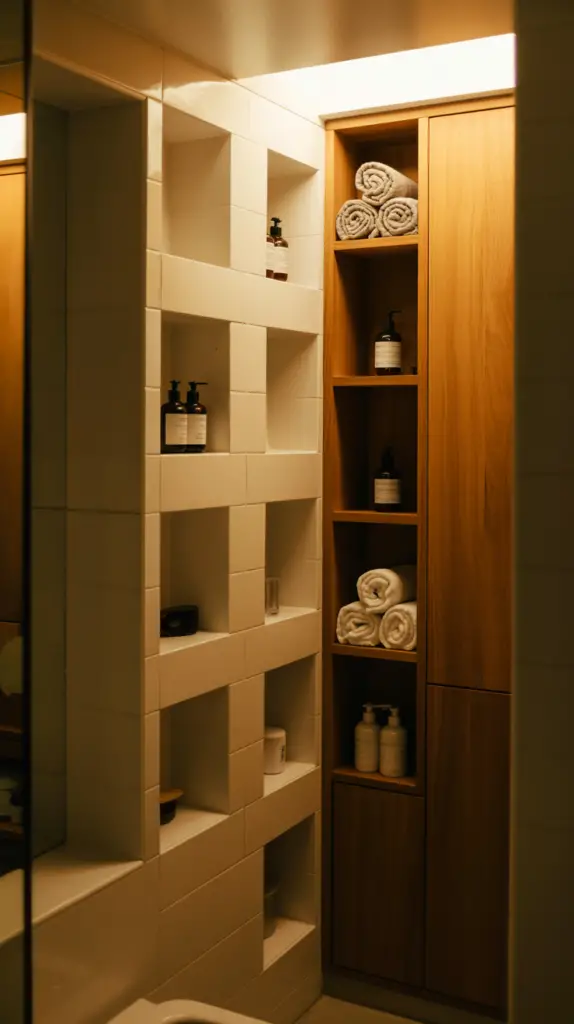
Storage is one of the biggest concerns in small bathrooms—especially when everyone has different products, towels, and essentials. The key is to focus on vertical space and multifunctional pieces that provide storage without crowding the room. Wall-mounted cabinets, tall shelving units, and built-in niches above the toilet or inside the shower offer excellent ways to expand capacity.
Families benefit greatly from storage zones designed with specific daily needs in mind. For example, pull-out drawers with dividers help children and adults keep items separated for easy access. Mirrored medicine cabinets offer dual purpose—reflection and hidden storage. Even unused corners can become valuable real estate with tiered corner shelves or compact towers.
Another transformative idea is to integrate concealed storage. Slim cabinets tucked behind doors or inside vanity kickplates can hold cleaning supplies or backup toiletries. The key is to make every item easy to reach but invisible when not needed, promoting a calm and organized environment.
A helpful look at storage options for small family bathrooms:
| Storage Option | Ideal Use |
| Recessed wall niches | Shampoo, soap, small bottles |
| Tall narrow cabinets | Towels, bulk items, kids’ supplies |
| Mirrored cabinets | Skincare, medicine, grooming tools |
| Corner shelving | Plants, small baskets, decorative items |
| Under-sink drawers | Everyday essentials |
With smart planning, even the smallest bathroom can feel tidy and spacious, supporting smoother daily routines for the entire family.
Lighting Techniques That Open Up Small Bathrooms
Lighting plays a crucial role in expanding how a small bathroom feels, especially in family homes where everyone uses the space at different times of day. A blend of ambient, task, and accent lighting can eliminate shadows and create the illusion of depth. Soft LED strips under cabinets, for example, add a floating effect that lightens the room visually. Meanwhile, well-positioned sconces around the mirror improve grooming visibility and reduce glare.
Natural light is another asset. When possible, consider enlarging a window, adding a skylight, or choosing frosted glass for privacy while still allowing sunlight to filter in. Reflective surfaces—such as glossy tiles or metallic fixtures—can bounce light around the room, enhancing brightness without requiring additional electrical fixtures.
For families, layered lighting ensures flexibility. Bright, cool-toned lights are useful for morning routines, while warm, dimmable options create a relaxing evening atmosphere. Thoughtful lighting not only increases functionality but also enhances the overall style and comfort of the space.
Here’s a helpful lighting breakdown:
| Lighting Type | Purpose |
| Ambient overhead lighting | General illumination |
| Mirror task lighting | Grooming, shaving, makeup |
| Under-cabinet LED strips | Enhances space perception |
| Accent lighting | Adds visual interest |
| Natural light enhancements | Expands openness and clarity |
Materials and Finishes That Maximize Durability and Style
Choosing the right materials is essential for small family bathrooms because humidity, daily traffic, and frequent cleaning require durability. Porcelain tiles, quartz countertops, and moisture-resistant laminates are excellent options that combine longevity with beauty. Selecting larger-format tiles can minimize grout lines, creating a more seamless appearance that visually expands the room.
Color is equally important. Light, neutral shades such as soft beige, warm gray, or creamy white help the space feel open and inviting. Adding texture through natural stone variations, wood-grain tiles, or matte finishes introduces character without overwhelming the room. Families also benefit from anti-slip tile options, which offer safety in wet conditions.
Fixtures and hardware add the final touch. Brushed nickel, matte black, and polished chrome each create different moods—from cozy to contemporary. The goal is to choose materials that stand up to constant use while maintaining their beauty over time.
A guide to choosing materials for small family bathrooms:
| Material | Advantage |
| Porcelain tile | Durable, water-resistant, low maintenance |
| Quartz countertop | Non-porous, easy to clean |
| Matte fixtures | Fingerprint-resistant |
| Vinyl plank flooring | Warm, waterproof, affordable |
| Glass shower panels | Opens up visual space |
The Power of Color and Texture in Small Bathroom Design
Color and texture influence how big or small a bathroom feels. Lighter colors reflect more light, but layering subtle tones—such as soft gray paired with warm wood—adds depth and personality. Patterned tiles used sparingly can create a focal point without making the space feel busy. Textures like ribbed tiles, wood slats, or matte finishes can lend warmth and tactile interest.
Families benefit from wipeable paint finishes, mold-resistant coatings, and easy-clean surfaces, especially in high-moisture environments. You can also introduce texture with accessories: woven baskets, natural stone soap dishes, or tactile mats bring warmth and softness to a room dominated by hard surfaces.
Here’s a comparison of color and texture approaches:
| Design Element | Effect |
| Light neutrals | Expands space |
| Warm textures | Adds coziness |
| Minimal patterns | Creates gentle visual interest |
| High-contrast accents | Defines zones |
| Matte vs. glossy finishes | Soft vs. reflective ambiance |
Multifunctional Features That Simplify Family Life
Multifunctional elements make a significant difference in small family homes. Consider a vanity with built-in laundry sorting, a mirror with integrated lighting and storage, or a combined shower and tub for families with small children. Wall-mounted fold-away stools or pull-out steps for kids improve usability without taking up permanent space.
Dual-purpose fixtures save space while improving convenience. For example, a towel warmer can double as a drying rack, and a ledge behind the toilet can act as both storage and decor space. Even installing hooks instead of a bulky towel bar maximizes wall efficiency.
A breakdown of multifunctional features:
| Feature | Benefit |
| Combined shower/tub | Saves space for families with kids |
| Integrated mirror storage | Keeps surfaces clutter-free |
| Towel warmer rack | Enhances drying space |
| Pull-out kid step | Helps children reach sinks |
| Dual-flush compact toilet | Saves water and space |
Conclusion
Designing a small bathroom for a family home is a rewarding challenge that blends creativity with practicality. Through smart layouts, thoughtful storage, flattering lighting, and durable materials, even the smallest space can become functional, beautiful, and enjoyable for everyone in the household. By paying attention to details such as color, texture, and multifunctional features, you create a bathroom that not only meets daily needs but also brings comfort and style to the home. A well-designed small bathroom proves that size isn’t nearly as important as smart planning and inspired ideas.