
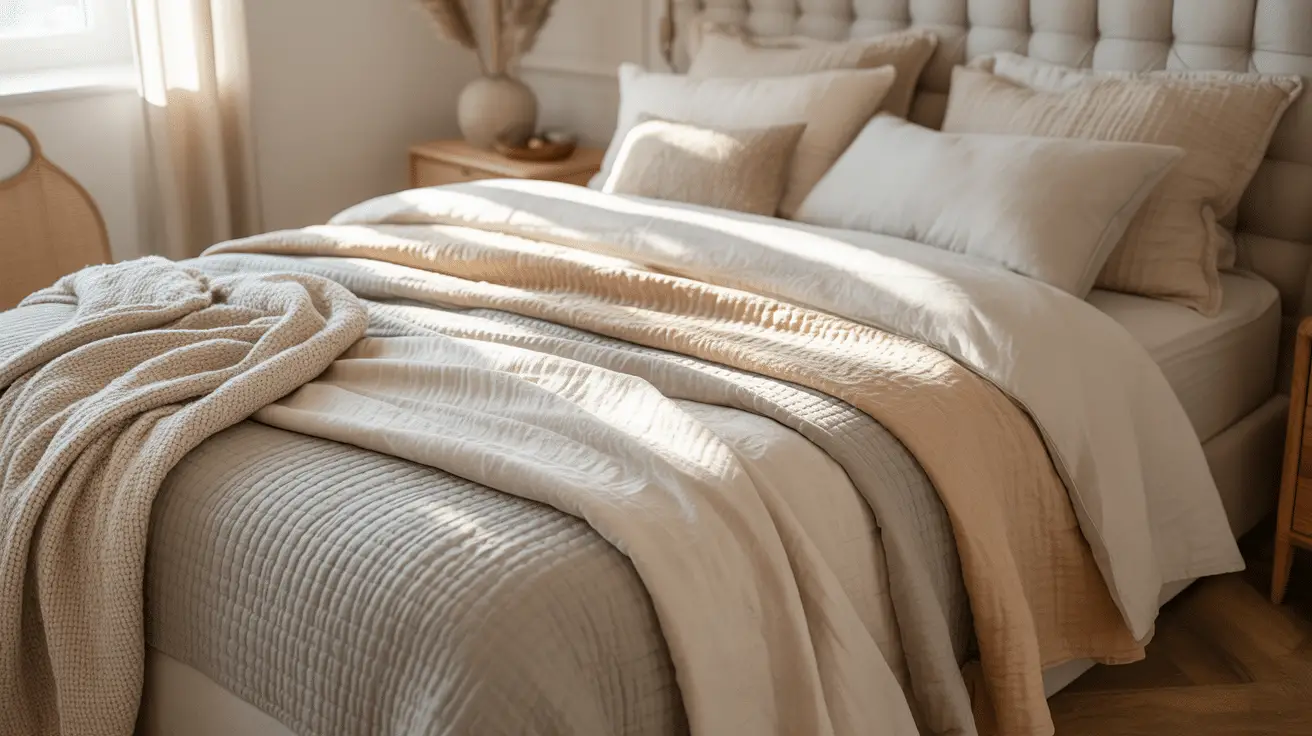
Layering Quilt Bedding for Stylish Interiors: Elegant Ways to Elevate Your Bedroom Design
Table of Contents
Introduction
Layering quilt bedding has become one of the most popular styling techniques in modern interior design, celebrated for its ability to transform even the simplest bedrooms into warm, inviting, and visually sophisticated spaces. Research shows that textured layers in a bedroom help create a sense of comfort and emotional well-being, contributing to better relaxation and deeper sleep. Because quilts offer both aesthetic appeal and practical coziness, they are ideal for layering—adding dimension without the heaviness of bulky comforters.
Whether you gravitate toward farmhouse charm, minimalist sophistication, coastal serenity, or bold contemporary style, quilt layering adapts beautifully to every décor theme. This styling technique allows you to mix textures, colors, and patterns in a way that feels curated rather than cluttered. It’s also an excellent way to update a bedroom seasonally without redecorating the entire space.
In this guide, you’ll learn how to layer quilt bedding for stylish interiors using thoughtful color palettes, intentional textures, balanced patterns, and practical structure. Each section offers in-depth examples, real-world tips, and visual tables to help you design a polished, magazine-worthy bed. Whether your goal is a cozy, homey look or a sleek, elevated style, quilt layering will become your most versatile design tool.
Choosing the Right Quilts for Layering in Stylish Interiors
Selecting the right quilts forms the foundation of successful quilt layering. Not all quilts serve the same visual or structural role, so choosing pieces intentionally is essential. Lightweight quilts work beautifully as base layers, offering breathability and subtle texture. Mid-weight quilts provide structure and depth when folded or draped. Meanwhile, decorative quilts—often with bolder patterns or hand-stitched detailing—can act as accent layers that bring personality to the design.
Material matters as much as appearance. Cotton quilts offer softness and durability, making them ideal for everyday use. Linen quilts provide an elevated, natural texture that enhances minimalist or organic interiors. Velvet quilts introduce luxury and warmth, especially in colder seasons or more dramatic design styles.
When layering multiple quilts, think about their interaction. Each quilt should complement the others instead of competing. For example, a solid-color linen quilt makes an excellent grounding layer beneath a patterned cotton quilt, creating visual harmony while showcasing each quilt’s texture.
Quilt Selection Table
| Quilt Type | Best Use | Visual Effect | Ideal Style |
| Lightweight Cotton | Base layer | Soft, breathable | Farmhouse, minimalist |
| Linen Quilt | Middle layer | Natural texture | Organic, modern |
| Velvet Quilt | Accent | Luxurious depth | Glam, vintage |
| Patterned Quilt | Top or folded layer | Visual interest | Boho, cottagecore |
Building Color Palettes That Elevate Quilt Layering
Color is one of the most powerful tools when layering quilt bedding. A cohesive color palette ensures that your bedding looks curated and intentional, rather than mismatched. Start by choosing one dominant color that anchors the palette—typically a neutral or muted tone such as ivory, taupe, slate blue, sage, or warm gray. This grounding color creates visual consistency.
Next, introduce one or two complementary colors through your secondary quilts or throws. Soft pastels, earthy hues, or rich jewel tones work beautifully depending on your decorating style. The key is balance—your accent colors should enhance the overall palette without overpowering the dominant shade.
Color temperature also matters. Warm tones like rust, ochre, and terracotta create a cozy, inviting feel, especially in rustic or boho bedrooms. Cool tones like navy, charcoal, and dusty blue bring calm sophistication to modern or coastal interiors.
A layered color palette offers flexibility—allowing your bed to evolve with seasons or trends while maintaining a cohesive foundation.
Color Palette Guide
| Palette Type | Dominant Color | Accent Colors | Mood Created |
| Warm Earthy | Beige or cream | Rust, olive, clay | Cozy & rustic |
| Cool Calm | Slate blue | Charcoal, white | Clean & serene |
| Soft Pastels | Blush or sage | Cream, dusty blue | Airy & gentle |
| Bold Modern | Charcoal | Emerald, gold | Dramatic & elegant |
Mastering Quilt Layering Techniques for Stylish Interiors
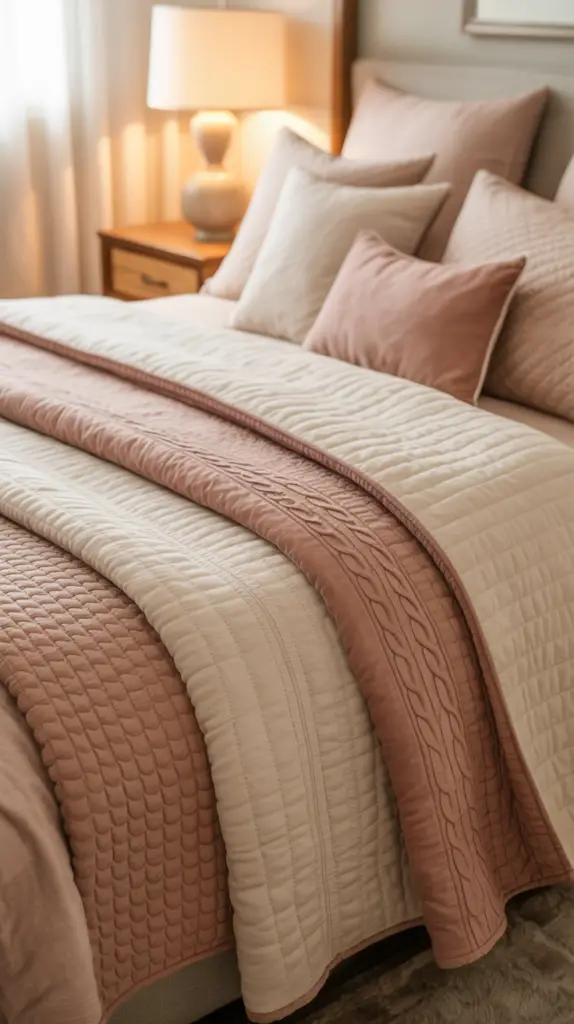
Layering quilt bedding is both an art and a science. The goal is to create a bed that looks full, luxurious, and intentionally designed. Begin by placing your base quilt—the one with the simplest texture—flat across the bed. This creates your foundation and ensures visual continuity. Next, drape your secondary quilt across two-thirds of the bed, either laid flat or folded in half for emphasis. This establishes depth and introduces your primary pattern or accent color.
A third quilt can be folded neatly and placed at the foot of the bed. This visually anchors the bedding and adds structure. For a softer, more inviting look, the top quilt can be draped loosely with gentle folds rather than crisp lines.
Balance is essential. If your quilts are heavily textured, keep the arrangement simple. If your quilts are more minimal, folds and drapes provide added interest.
These techniques help your bed feel both stylish and approachable, creating a designer-worthy focal point in the room.
Layering Techniques Table
| Layer | Purpose | Visual Impact | Recommended Quilt Type |
| Base Layer | Foundation | Smooth continuity | Lightweight cotton |
| Middle Layer | Depth & structure | Adds dimension | Linen or patterned quilt |
| Accent Layer | Style focal point | Visual anchor | Velvet or bold-pattern quilt |
Pairing Patterns and Textures for Elevated Quilt Styling
Patterns and textures are essential for creating visually dynamic quilt layering. Because quilts naturally offer stitched designs, their textures play an important role in shaping the personality of the bed. Combining different quilting patterns—such as diamond stitching, channel stitching, or floral motifs—provides depth without overwhelming the space.
When mixing printed quilts, scale is key. Pair one bold pattern with one subtle pattern to avoid visual chaos. For example, a large floral motif complements a small geometric design, especially if they share overlapping colors.
Texture contrast is equally important. Linen against cotton, velvet against percale, or a chunky knit throw atop smooth quilts creates a balanced interplay that enhances coziness. Textures also influence the room’s tone—smooth textures feel modern and refined, while organic textures evoke warmth and comfort.
Pattern & Texture Coordination Table
| Element Combination | Why It Works | Best Applications |
| Bold + Subtle Pattern | Adds contrast | Middle or accent quilt |
| Linen + Cotton | Natural + soft | Base and middle layers |
| Velvet + Percale | Luxury + minimalism | Accent throw or quilt |
| Geometric + Solid | Balanced visual flow | Folded quilt layer |
Choosing Bedding Accessories That Complement Quilted Layers
Accessories elevate quilt layering by adding softness, contrast, and dimension. Pillows are the most effective accessory. Use euro shams to create height and structure at the head of the bed. Place standard pillows in front, and finish with one or two decorative pillows that reflect your color palette or quilt patterns. Keep decorative pillows intentional—too many distract from the layered quilt design.
Throws also enhance the look, adding texture and color. A knit throw introduces coziness, while a linen throw lends casual elegance. They can be folded neatly for a polished style or draped freely for a relaxed, lived-in feel.
Bed skirts or tailored frames help ground the look by adding visual completion to the lower portion of the bed. Complementary décor such as bench seating, side tables, or soft lighting can emphasize the quilted layers and tie the room together.
Bedding Accessory Table
| Accessory | Function | Best Style Pairings |
| Euro Shams | Height & symmetry | Neutral solids |
| Decorative Pillows | Visual accents | Patterned quilts |
| Knit or Linen Throw | Warmth + texture | Layered foot of bed |
| Bed Skirt | Finishing touch | Minimal or tailored |
Using Quilt Bedding to Transform Seasonal Interior Styles
Quilt layering offers exceptional flexibility, especially when transitioning interiors between seasons. Quilts are lighter than duvets, making them ideal for adapting warmth levels without sacrificing style. In colder months, layering multiple quilts—such as a cotton base, linen middle, and velvet accent—creates warmth while maintaining a rich, textured look. Deep, warm colors complement autumn and winter décor beautifully.
In warmer seasons, lighter quilts in breathable cotton or linen can be used alone or in soft layered combinations. Soft blues, sage greens, and warm neutrals feel airy and fresh, enhancing your bedroom’s summer atmosphere.
Seasonal quilt layering allows you to refresh your space without significant redesign. A simple swap of the accent quilt or throw can completely shift the mood of your bedroom.
Seasonal Quilt Style Table
| Season | Recommended Quilts | Color Palette | Texture Notes |
| Spring | Lightweight cotton | Pastels, soft neutrals | Smooth textures |
| Summer | Linen quilts | Sage, sky blue | Airy textures |
| Fall | Cotton + velvet | Rust, mustard | Rich textures |
| Winter | Multiple layers | Deep jewel tones | Heavy textures |
Creating Stylish Interiors With Quilt Bedding for Different Décor Styles
Quilt bedding layers adapt effortlessly to a wide range of interior design styles. For farmhouse interiors, select vintage-inspired quilts, muted tones, and soft florals. Cottagecore spaces benefit from delicate patterns, patchwork quilts, and warm textures that emphasize coziness.
Minimalist interiors use quilt layering for subtle dimension—solid colors, natural linens, and clean stitching create understated elegance. Boho rooms embrace color, pattern mixing, and relaxed folds. Modern interiors lean into bold accent quilts, geometric stitching, and sleek color palettes.
Understanding how quilt layering supports different aesthetics helps you create a bedroom that authentically reflects your style.
Décor Style Quilt Table
| Design Style | Quilt Choices | Layering Approach |
| Farmhouse | Patchwork, florals | Structured layering |
| Minimalist | Solid linen, cotton | Clean folds, simple palette |
| Boho | Colorful prints | Relaxed draping |
| Modern | Geometric patterns | Bold accent layer |
Conclusion
Layering quilt bedding is one of the most versatile and visually rewarding ways to style a bedroom. Through thoughtful quilt selection, coordinated color palettes, intentional layering techniques, pattern pairing, seasonal flexibility, and décor matching, you can create a space that feels both stylish and deeply comforting. Quilts add texture, warmth, and character—making them an essential element for sophisticated interior design. Whether your style is modern, rustic, minimalist, or eclectic, quilt layering transforms your interiors with depth, beauty, and effortless charm.