
Best Narrow Living Room Layouts for Cozy Spaces: Smart Design Ideas for Small, Modern Homes
Table of Contents
Introduction
Designing a narrow living room can feel like solving a puzzle. According to recent home design surveys, nearly 48% of homeowners say that narrow or awkward layouts are their biggest interior design frustration. Limited width, tight walkways, and restricted furnishing options can make your space appear smaller and more cluttered than it really is. But with thoughtful planning and smart styling, a narrow living room can become one of the coziest and most inviting spaces in your home.
The best narrow living room layouts strike a balance between functionality, comfort, and visual openness. Whether you’re working with a long rectangular floor plan, a narrow apartment space, or a living room that doubles as a walkway, the right layout makes all the difference. This guide explores practical, stylish, and approachable layout ideas that maximize space without sacrificing personality or comfort. You’ll learn how to arrange furniture, create flow, choose the right materials, and utilize design elements that open up the room both visually and physically.
From symmetrical setups to floating furniture arrangements and creative multifunctional layouts, each section offers detailed guidance, examples, and helpful visual breakdowns. By the end, you’ll have a tailored set of strategies to transform even the narrowest living room into a cozy, functional haven perfect for modern living.
Symmetrical Layouts That Create Balance
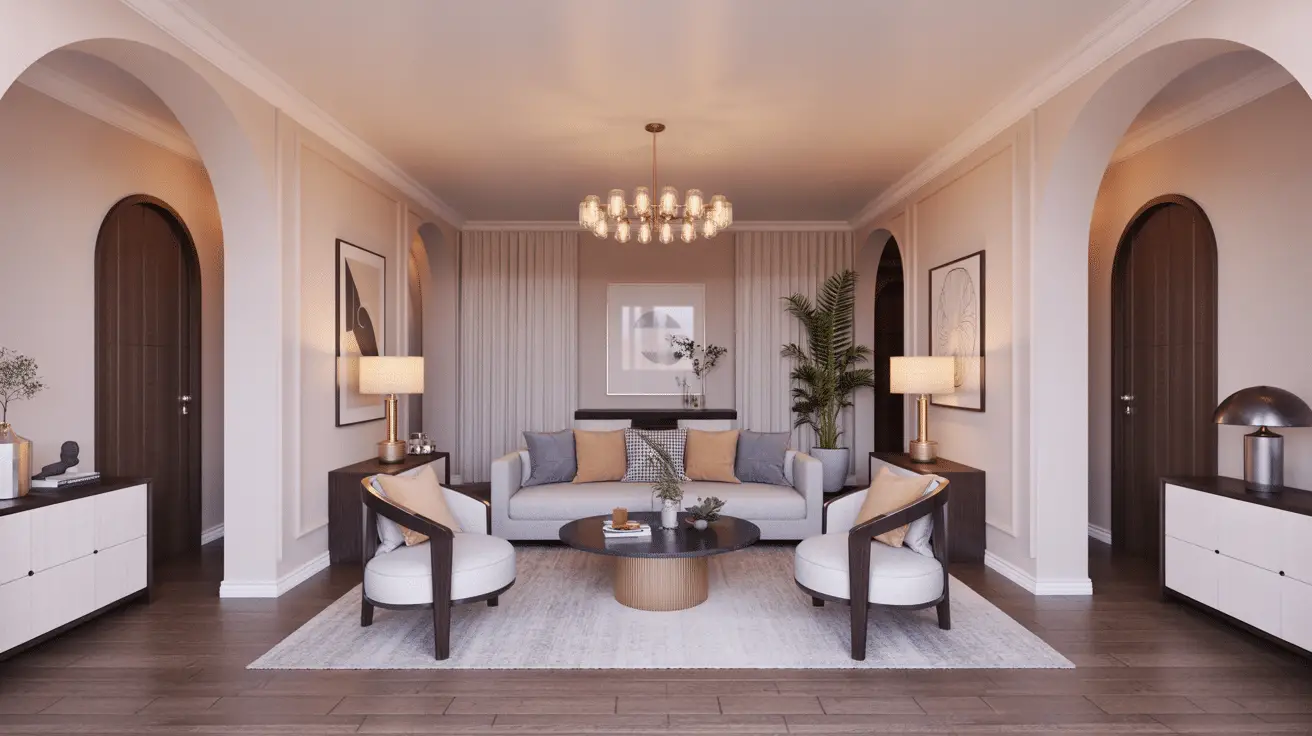
Symmetry is one of the most reliable ways to make a narrow living room feel visually balanced and intentionally designed. This layout centers the room around a primary focal point—whether it’s a fireplace, a TV stand, or a large window—and places matching furniture or decor pieces opposite each other. The visual harmony created by symmetry makes the room feel structured, inviting, and surprisingly spacious.
Begin by identifying the strongest architectural feature in the room. Align your main seating—like a sofa—directly across from this focal point. Then introduce matching accent chairs, side tables, or lamps to create pleasing repetition. This subtle mirroring effect guides the eye evenly across the space rather than toward cramped corners, which helps the room feel wider than its actual dimensions.
When using symmetrical layouts in narrow spaces, avoid overstuffing. Select sleek, modern furniture that fits the scale of the room. Textures such as linen, boucle, or soft knits can bring warmth to the structured layout. Meanwhile, adding a cozy rug under the seating arrangement helps frame the symmetry and anchor the space.
Symmetry Layout Breakdown
| Element | Placement Technique | Effect on Space |
| Sofa | Centered opposite focal point | Creates strong anchor |
| Accent Chairs | Mirrored on each side | Adds visual balance |
| Lighting | Paired lamps or sconces | Enhances symmetry |
| Rug | Centered under seating | Defines layout frame |
Floating Furniture for Enhanced Flow
Floating furniture is one of the most effective strategies for narrow living rooms because it improves flow and breathing room. Instead of pushing every piece against the wall—as many people instinctively do—floating furniture toward the center of the space creates natural walkways and encourages airiness.
Begin with your main seating piece. Position it slightly away from the wall, even if only by a few inches. This tiny shift creates a sense of depth and prevents furniture from feeling crammed. If your living room is long and narrow, float the sofa so it helps divide zones, such as separating the seating area from a dining nook or workspace.
Adding a narrow console table behind the sofa enhances function without sacrificing space. This piece can serve as a surface for lighting, décor, or storage baskets, and it separates the sofa visually from the wall.
Chairs positioned at subtle angles help break up the “bowling alley” effect that narrow rooms often have. Angled seating softens the linearity while still fitting within tight dimensions. Complement these pieces with a round or oval coffee table to improve maneuverability; curved shapes reduce harsh lines and allow smoother movement around the room.
Carpets and rugs can further define the floating layout. Choose one that is large enough to ground all main seating pieces. This creates a cohesive, welcoming center that feels intentional rather than scattered.
Floating Layout Planning Table
| Feature | Why It Works | Best Use Scenario |
| Sofa Off the Wall | Adds depth and dimension | Long, narrow layouts |
| Console Table Behind Sofa | Adds function and separation | Multi-purpose rooms |
| Angled Chairs | Breaks linear feel | Small or awkward corners |
| Curved Coffee Table | Enhances flow | Tight traffic areas |
Zoning Techniques for Multi-Functional Narrow Rooms
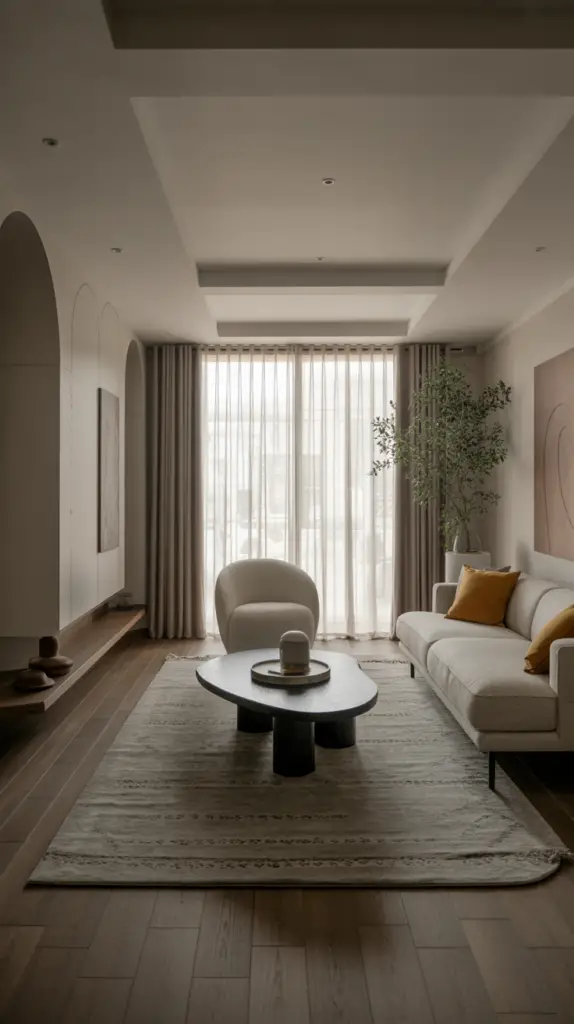
Many narrow living rooms must serve multiple roles—lounging, working, dining, or entertaining—which makes zoning essential. Zoning allows you to separate these functions visually and physically without making the room feel cluttered or disjointed.
Start by identifying the room’s primary purpose. If the space is frequently used for relaxing or watching TV, let the seating area anchor the room. Once this zone is established, you can layer additional sections around it. For instance, add a small desk along a free wall, or incorporate a reading nook near a window.
Furniture arrangement plays a major role in defining each zone. Use area rugs to visually separate spaces—one rug under the main seating area, another under a workspace or dining table. This simple technique helps the eye understand where each zone begins and ends.
Lighting is another powerful zoning tool. Floor lamps can highlight a reading corner, pendant lights can designate a dining spot, and table lamps can illuminate a work zone. These distinct lighting types help reinforce the separation without adding physical barriers.
Flexible furniture such as nesting tables, folding desks, or ottomans with storage can also enhance multifunctionality. These pieces blend seamlessly into different areas and adapt quickly to the needs of the space.
Zoning Planner Table
| Zone Type | Key Elements | Ideal Placement | Purpose |
| Seating Zone | Sofa, chairs, TV | Center or widest portion | Relaxation |
| Workspace | Desk, task lighting | Along narrow wall | Productivity |
| Reading Corner | Chair, lamp, small table | Near window | Comfort |
| Dining Spot | Bistro table, pendant light | Far end of room | Meals |
Using Vertical Space to Open Up the Room
In narrow living rooms, maximizing vertical space can dramatically improve the room’s appearance and functionality. When the floor area is limited, walls become valuable design real estate. By drawing the eye upward, you help the room feel taller and more open, reducing the sense of confinement often associated with narrow layouts.
Tall shelving units are a great way to add storage without overwhelming the floor. Position them on the shorter wall to balance visual proportions. Floating shelves also work beautifully in narrow rooms, offering display surfaces without bulky furniture.
Another powerful technique is hanging curtains from ceiling height rather than just above the window frame. This elongates the walls and makes the room appear more expansive. Choose lightweight fabrics to maintain a sense of airiness.
Vertical décor—such as tall plants, elongated mirrors, or vertically oriented artwork—reinforces the perception of height. Mirrors, in particular, brighten and widen the space by reflecting natural light and creating illusionary depth.
Vertical Space Utilization Table
| Vertical Element | Best Placement | Benefit |
| Tall Shelving | Shorter walls | Adds height + storage |
| Ceiling-Height Curtains | Window walls | Visually elongates room |
| Vertical Artwork | Beside seating | Draws eye upward |
| Tall Plants | Corners | Softens edges, adds greenery |
Furniture Scaling and Proportion
Choosing the right furniture scale is essential for narrow living rooms. Oversized pieces overwhelm the room, while overly small furniture may feel mismatched and uncomfortable. The goal is to strike a balance that enhances both comfort and spaciousness.
Opt for slender-profile sofas or loveseats with raised legs to create a lighter visual footprint. Avoid bulky armchairs and instead embrace compact accent chairs or armless seating that fits more easily within the room’s dimensions.
Coffee tables should be proportional to the seating. Long, narrow benches or slim rectangular tables work particularly well in tight spaces. Modular furniture offers extra flexibility; pieces like sectional sofas with removable segments adapt easily to narrow layouts.
Furniture Scaling Guide
| Furniture Type | Best Style for Narrow Rooms | Visual Effect |
| Sofa | Slim profile, raised legs | Lightens the space |
| Chairs | Armless, compact | Improves flow |
| Coffee Table | Narrow or round | Enhances movement |
| Storage | Wall-mounted or vertical | Reduces floor clutter |
Light Color Palettes for a Bright, Cozy Look
A narrow living room benefits immensely from a light and cohesive color palette. Soft tones help diffuse light, create openness, and make the room feel more welcoming. Shades such as white, cream, pale gray, light sage, or warm beige enhance brightness and prevent the room from feeling boxed in.
To keep a light palette from appearing flat, incorporate texture through fabrics, rugs, baskets, or natural materials like wood or rattan. Combining different textures within the same color family creates richness without overwhelming the room.
Accent colors should be soft and used minimally. For example, soft blues, blush tones, or muted greens can add subtle personality, while metallic accents in gold or brushed nickel offer warmth and modern appeal.
Light Palette Breakdown
| Base Color | Accent Tone | Best Material Pairing | Room Mood |
| White | Soft Blue | Linen + wood | Fresh and airy |
| Beige | Sage | Wool + rattan | Cozy and organic |
| Pale Gray | Blush | Metal + cotton | Modern and soft |
| Cream | Gold | Velvet + wood | Warm and elegant |
Creative Storage Solutions That Don’t Crowd the Room
Storage can overwhelm a narrow living room if not handled thoughtfully. To maintain spaciousness, choose storage that blends seamlessly with the room’s layout. Built-in shelving is ideal for narrow spaces because it adds storage while sitting flush against the wall.
Multipurpose furniture such as storage ottomans, hidden cabinets, or nesting tables offers functionality without clutter. Consider baskets placed under console tables for blankets, magazines, or remote controls.
Floating cabinets or wall-mounted media units free up floor space and create a lighter aesthetic. These modern solutions allow for organization without heavy furniture pieces.
Smart Storage Table
| Storage Type | Best Placement | Benefit |
| Built-In Shelves | End wall | Saves floor space |
| Storage Ottoman | Near sofa | Multiuse functionality |
| Floating Cabinet | TV wall | Clean, modern look |
| Under-table Baskets | Console or side table | Hidden storage |
Conclusion
Designing the best narrow living room layouts for cozy spaces requires a blend of creativity, function, and thoughtful styling. From symmetrical arrangements to floating furniture, zoning techniques, and clever vertical storage, small rooms can be transformed into warm, welcoming retreats that feel intentional and open. By focusing on proportion, natural light, and purposeful design choices, even the narrowest living room can achieve balance and comfort. With the right strategies, your space becomes more than functional—it becomes a stylish and cozy haven tailored to modern living.