
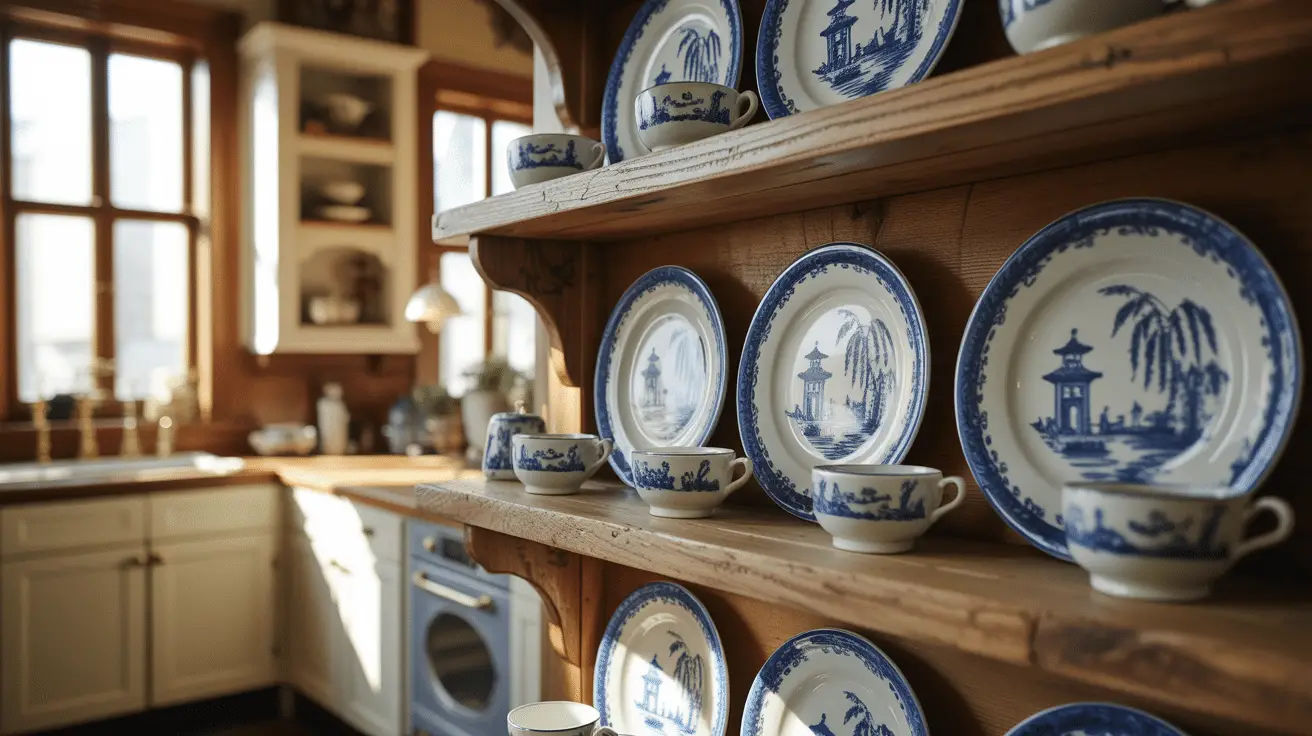
Blue Willow Kitchen Decor for Classic Interiors: Elegant Blue-and-White Style That Never Fades
Table of Contents
Introduction
Few design elements have stood the test of time quite like the delicate blue-and-white patterns of iconic Blue Willow china. With origins tracing back to the late 1700s, Blue Willow has maintained its place in homes around the world, celebrated for its romantic motifs and instantly recognizable scenic imagery. Today, it is one of the most sought-after accents for homeowners who want to blend tradition, elegance, and a sense of collected heritage within their kitchen spaces.
In a world where interiors often shift toward minimalist or hyper-modern aesthetics, Blue Willow brings a refreshing return to character-rich design. Whether you’re renovating a historic home or simply adding charm to a contemporary kitchen, its decorative value is undeniable. Its versatility allows it to complement farmhouse kitchens, colonial-inspired spaces, cottage-style interiors, and refined traditional homes with ease. For many, incorporating Blue Willow kitchen decor is not only about style—it’s about celebrating a timeless motif tied to craftsmanship and storytelling.
This article will walk you through the essential ways to incorporate Blue Willow decor into your kitchen while preserving the integrity of classic interior design. You’ll explore foundational elements, smart styling techniques, display ideas, color harmony strategies, and furniture pairings that reflect the sophistication of this traditional pattern. By the end, you’ll be equipped with both inspiration and practical tools to craft a kitchen that feels refined, inviting, and steeped in lasting beauty.
The History and Charm Behind Blue Willow Decor
Understanding Blue Willow’s history helps illuminate why it continues to captivate designers and homeowners today. Designed in England during the late 18th century, Blue Willow china borrowed from Chinese landscape art, blending Eastern influences with Western craftsmanship. The signature cobalt-blue scenes—pagodas, bridges, birds, and rivers—tell a romantic folklore story, which only deepened the design’s emotional appeal.
In classic interiors, Blue Willow brings authenticity. Its hand-painted look and intricate detailing feel crafted rather than mass-produced. Even modern reproductions uphold the refined artistry of earlier designs. This charm makes Blue Willow not just decorative, but narrative-driven—a unique quality among kitchen décor styles.
The characteristic blue-and-white palette works effortlessly with many traditional kitchen materials, including natural wood, stone countertops, marble backsplashes, and brass fixtures. Homeowners looking to create a timeless space often gravitate toward Blue Willow because it enhances elegance without overwhelming the room. Whether displayed openly or incorporated subtly, it lends character to even the simplest settings.
Table: Key Elements That Define Blue Willow’s Appeal
| Feature | Description | Why It Matters |
| Blue-and-White Palette | Deep cobalt on white porcelain | Works seamlessly with classic interiors and neutral kitchens |
| Storytelling Motif | Scenic landscapes and folklore | Adds emotional charm and historical depth |
| Versatility | Works in farmhouse, cottage, colonial, and traditional homes | Adapts to various styles effortlessly |
| Collectible Quality | Vintage and new pieces available | Allows homeowners to build meaningful collections |
How to Build a Blue Willow-Inspired Color Palette
Color plays a major role in reinforcing Blue Willow kitchen decor, especially in classic interiors where harmony and balance matter. The distinctive cobalt blue of Willow patterns serves as the anchor shade, but pairing it thoughtfully with complementary tones is what elevates the entire room’s aesthetic.
Begin with soft whites or off-whites as the dominant background, especially on walls, cabinets, or tilework. These hues provide a clean canvas that allows the intricate designs of Blue Willow china to stand out. Warmer whites or creamy tones can also enhance vintage pieces by giving them a subtly aged, collected look.
To build depth, incorporate neutrals such as slate gray, muted navy, or light taupe. These colors support the overall palette without competing with the china’s visual impact. For homeowners who want a more dramatic look, navy cabinetry can create a stunning contrast, allowing blue-and-white accents to pop with intentional sophistication.
Textures also contribute to the palette. Natural wood tones—especially warm oak or walnut—bring grounding to the blue-and-white color scheme. Brass hardware or fixtures add soft metallic warmth that complements the coolness of blue hues. Meanwhile, stone materials like marble or quartz with delicate veining can echo the movement within Blue Willow patterns.
Color Harmony Table
| Color Category | Examples | How It Enhances the Space |
| Dominant Whites | Pure white, cream, porcelain | Allows Blue Willow pieces to stand out |
| Accent Blues | Cobalt, navy, powder blue | Reinforces the central motif |
| Complementary Neutrals | Slate, taupe, greige | Adds balance and sophistication |
| Natural Textures | Wood, marble, brass | Introduces warmth to contrast cool tones |
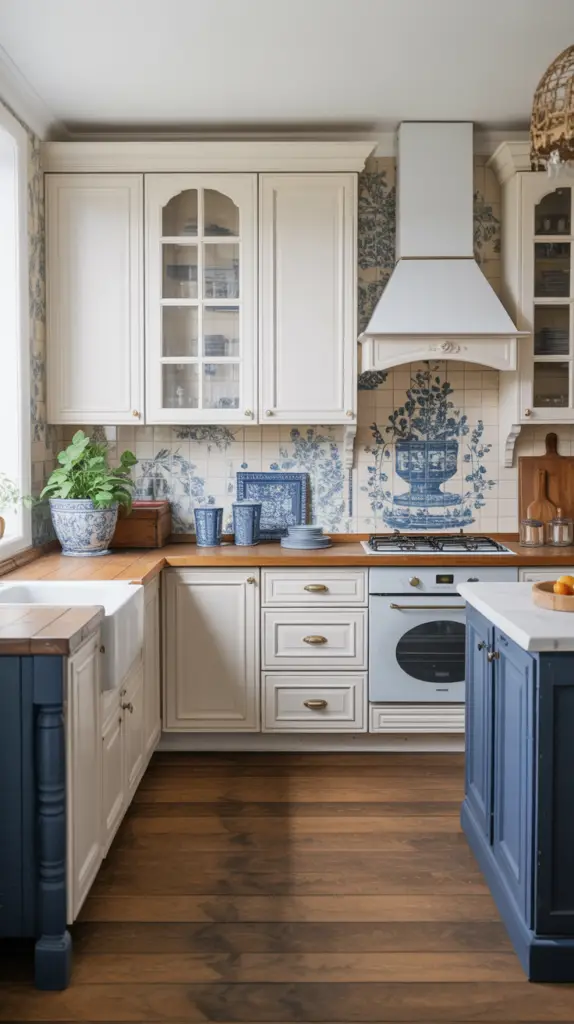
Decorating with Blue Willow Dishware in Your Kitchen
One of the most impactful ways to incorporate Blue Willow kitchen decor is by showcasing the dishware itself. Whether you own a full vintage collection or modern reproductions, Blue Willow pieces bring instant sophistication and charm to your kitchen. Their decorative potential extends beyond practical use—they can become artful elements that shape your kitchen’s visual storytelling.
Open shelving is a favored method for showcasing Blue Willow dishware. The natural contrast of blue patterns against white or wood shelving creates a curated, airy display reminiscent of heritage homes or European-style kitchens. This setup works especially well in classic interiors where décor feels intentional and lived-in. When arranging plates, bowls, and teacups, consider mixing sizes and shapes for depth while maintaining balance. Placing larger plates at the back and layering smaller items in front adds visual interest.
Glass-front cabinets offer a more traditional approach. These allow Blue Willow pieces to shine subtly, adding elegance without risking exposure to dust or handling. LED cabinet lighting can enhance the intricate motifs on the china, especially in the evening, when warm lighting emphasizes depth and detail.
Beyond cabinets and shelves, Blue Willow dishware can be used functionally while still contributing to the décor. For example, a Blue Willow teapot on the stovetop, small bowls on the counter holding citrus or herbs, or dessert plates stacked neatly on a cake stand can all serve dual purposes—practicality and beauty. These subtle placements reinforce your kitchen’s theme without feeling forced.
For homeowners who love tablescaping, incorporating Blue Willow into a daily or seasonal table setup is a wonderful way to extend the style. Layering Willow plates with woven placemats or linen napkins creates a timeless, inviting look that works for casual meals or formal gatherings alike.
Dishware Styling Table
| Display Method | Best For | Styling Benefit |
| Open Shelves | Cottage or farmhouse kitchens | Creates an airy, curated focal point |
| Glass Cabinets | Traditional interiors | Protects and highlights china elegantly |
| Countertop Displays | Everyday use | Adds charm through functional décor |
| Tablescapes | Hosting or daily dining | Offers seasonal or thematic styling flexibility |
Incorporating Blue Willow Patterns into Kitchen Textiles
Textiles offer an easy, low-commitment way to weave Blue Willow patterns throughout your kitchen. They help soften the room, add visual rhythm, and introduce pops of blue naturally. While Blue Willow designs are most commonly associated with china, they translate beautifully into fabrics when thoughtfully applied.
Start with linens such as tea towels, table runners, or curtains. Tea towels featuring blue-and-white motifs can be displayed artistically by draping them over oven handles or layering them in baskets. Table runners with toile-inspired patterns pair beautifully with wooden tables, creating a charming contrast that echoes the classic dish designs.
For homeowners who want more subtlety, consider textiles that complement Blue Willow rather than replicate it. Solid navy linens, striped blue napkins, or vintage-inspired floral prints can visually support the dishware without overwhelming the kitchen. The goal is cohesion, not duplication.
Seat cushions or upholstered stools offer another subtle opportunity. A cushion in soft chambray blue or a delicate blue floral pattern brings comfort to the kitchen while reinforcing the overall theme. Because these items can be swapped seasonally, they allow for flexibility and easy refreshes.
Textile Use Breakdown
| Textile Type | Example | Impact on Style |
| Tea Towels | Blue-and-white motifs | Reinforces pattern through daily-use items |
| Table Linens | Runners, napkins | Adds elegance to dining or prep areas |
| Curtains | Sheers or patterned fabric | Softens the room visually |
| Upholstery | Cushions, seat pads | Subtle comfort-driven accents |
Blue Willow Accents and Decorative Pieces for the Perfect Finishing Touch
While dishware may take center stage, smaller accents can enhance Blue Willow kitchen decor and complete a cohesive design. These finishing touches allow the theme to extend throughout the room in subtle, meaningful ways.
Ceramic jars, ginger jars, or canisters in Blue Willow tones can be placed on countertops to store cooking essentials. Their decorative presence adds charm without compromising functionality. Pairing them with wooden spoons or marble boards creates a layered aesthetic that blends vintage elegance with modern practicality.
Wall art featuring blue-and-white prints—whether botanical illustrations, chinoiserie patterns, or artistic interpretations of Willow scenes—adds vertical interest. These pieces frame the room’s palette and help tie together dish displays and textiles.
Decorative trays can also enhance the space. A simple silver or wooden tray holding Blue Willow cups, candles, or napkins makes for an attractive vignette on a kitchen island or countertop. Even small objects like salt and pepper shakers, utensil holders, or flower vases in complementary colors can contribute significantly to the overall look.
Decorative Accent Table
| Accent Type | Example | Purpose |
| Ceramic Canisters | Storage jars | Functional yet decorative |
| Wall Art | Blue-and-white prints | Adds height and visual structure |
| Trays | Wood or silver | Creates intentional, styled groupings |
| Small Décor | Vases, shakers | Adds finishing touches and cohesion |
Furniture and Architectural Details That Complement Blue Willow
When designing a Blue Willow-inspired kitchen, furniture choices and architectural details play a defining role. They provide the structure within which Blue Willow patterns can shine, creating a harmonious balance between bold visual motifs and timeless interior features.
Start with cabinetry. Classic paneling styles—such as shaker, inset, or raised-panel designs—align beautifully with the elegance of Blue Willow décor. White or cream cabinetry highlights the striking blue patterns, while navy or slate cabinets create a dramatic backdrop that elevates the motifs. Hardware in brushed brass or polished nickel enhances sophistication while offering a soft contrast to the coolness of blue tones.
Furniture pieces, especially wooden tables or antique sideboards, reinforce the room’s traditional character. A farmhouse table in warm oak or a painted vintage hutch can serve as the central anchor for your Blue Willow displays. These pieces bring warmth and grounding, ensuring the overall space feels inviting rather than overly formal. The juxtaposition of wood textures with porcelain patterns adds depth and visual richness.
Architectural details such as crown molding, beadboard paneling, and decorative trim work incredibly well with Blue Willow because they underscore traditional craftsmanship. A beadboard backsplash painted in soft white or pale blue adds charming texture without competing with patterned dishware. Meanwhile, wainscoting or chair rails can frame the kitchen’s palette and create a cohesive look that carries throughout the space.
Lighting fixtures also matter. Classic lantern pendants, glass globe fixtures, or vintage brass chandeliers pair beautifully with Blue Willow’s elegance. These fixtures introduce a warm glow that highlights intricate china details and enhances the room’s timeless feel.
Furniture & Architectural Details Table
| Element | Style | Benefit |
| Cabinetry | Shaker, inset | Matches classic aesthetics |
| Furniture | Oak table, vintage hutch | Adds warmth and depth |
| Architectural Details | Beadboard, trim | Reinforces traditional charm |
| Lighting | Lantern or brass fixtures | Enhances elegance and ambiance |
Conclusion
Blue Willow kitchen décor offers a timeless way to elevate classic interiors with its rich history, recognizable patterns, and elegant color palette. Whether showcased through dishware, textiles, architectural accents, or thoughtfully chosen furniture, Blue Willow brings a sense of collected tradition and refined charm to any kitchen. Its blue-and-white motif blends seamlessly with natural textures, warm woods, and sophisticated neutrals, creating an atmosphere that feels both nostalgic and enduring. By integrating these elements thoughtfully, you can design a kitchen that celebrates heritage, beauty, and the enduring appeal of classic interior style.