
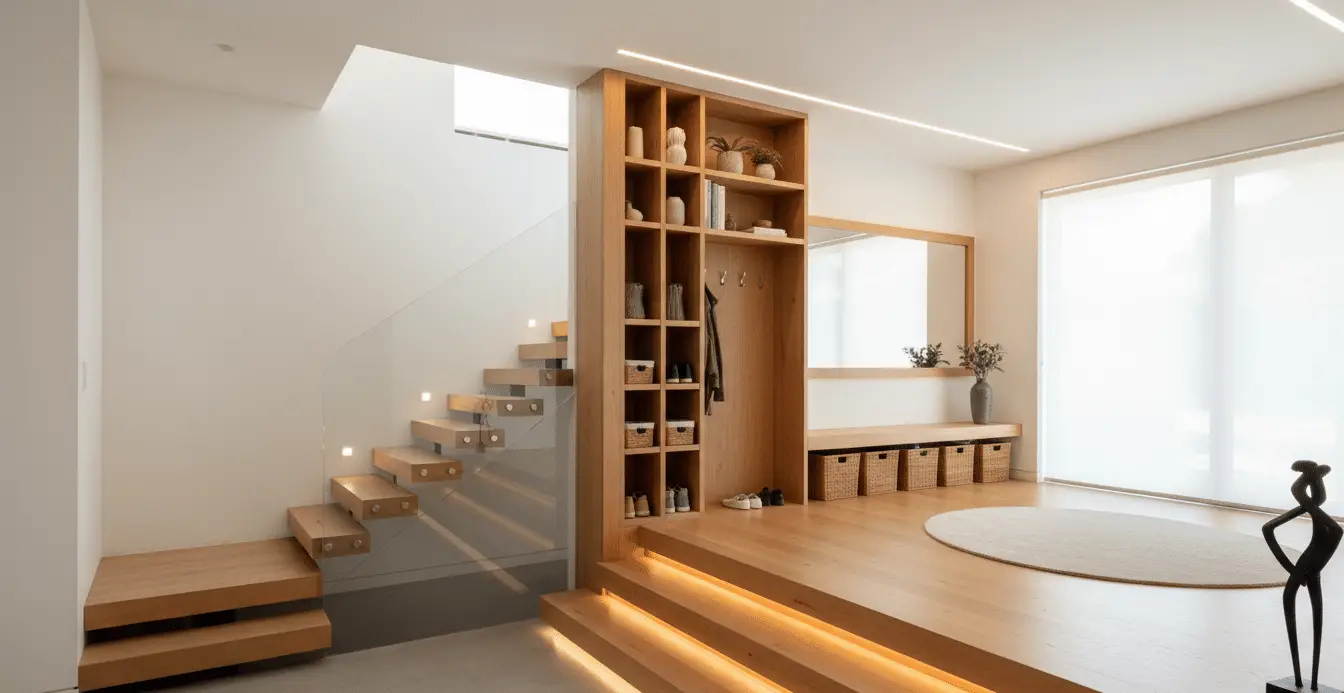
How to Organize a Split Level Entryway Beautifully for a Functional and Stylish First Impression
Table of Contents
Introduction
A split level entryway presents a unique design challenge: the moment you walk through the front door, you’re met with two directions, limited landing space, and often a cluster of shoes, bags, and coats fighting for a home. According to home layout surveys, split level homes remain popular for their efficient use of space, yet the entryway is consistently cited as the most difficult area to keep organized. This struggle is understandable—there’s little room for clutter, and every inch counts.
A well-organized split level entryway does more than look tidy; it sets the tone for the entire home. It influences how you feel when you step inside and determines how easily your family can move in and out each day. A thoughtfully designed entryway should support daily routines, reduce visual noise, and feel warm and intentional rather than chaotic or cramped.
In this guide, you’ll discover how to organize a split level entryway beautifully through smart storage solutions, functional layout ideas, visual styling techniques, and thoughtful décor. You’ll learn how to make the most of vertical and horizontal space, how to incorporate systems that actually work for your lifestyle, and how to transform an awkward transitional area into a welcoming, efficient, and stylish part of your home.
Understanding the Unique Challenges of a Split Level Entryway
Split level entryways are unlike traditional foyers. They’re typically compact, positioned between two stairways, and must transition smoothly into multiple parts of the home. This makes them especially prone to clutter and visual heaviness. Understanding the structural limitations and opportunities of these entryways is the first step toward creating a beautifully organized space.
One of the biggest challenges is limited floor space. With two sets of stairs converging at the entry, there is often little room for furniture or storage units. This means organization must rely heavily on smart vertical usage, built-in systems, and multifunctional items. Another challenge is managing visual flow. Because the entry is visible from both upper and lower levels, any clutter is immediately noticeable. A clean, cohesive aesthetic is essential.
Lighting also plays a crucial role. Split level entryways often lack natural light due to their positioning. Without proper illumination, the area can feel smaller and more chaotic. Strategic lighting choices—such as wall sconces, flush mounts, or stairway lighting—can make the space feel brighter and more open.
Table: Challenges and Solutions for Split Level Entryways
| Challenge | Why It Happens | Practical Solution |
| Limited floor space | Tight landing area | Use vertical storage and slim organizers |
| Visible clutter | Open sightlines from multiple levels | Keep surfaces minimal and cohesive |
| Poor lighting | Few windows, narrow layout | Add layered lighting and reflective décor |
| No defined drop zone | Multiple directions upon entry | Create micro-zones for essentials |
| Traffic flow issues | Constant movement on stairs | Choose compact, unobtrusive furniture |
When you understand the obstacles, you can more easily design systems that overcome them while enhancing the beauty of the space.
Designing a Functional Layout for a Split Level Entryway
A functional layout is the foundation of a beautifully organized split level entryway. This small area must support daily routines while remaining visually light and uncluttered. Because floor space is limited, mapping out where each organizational element belongs is essential. The goal is to guide movement naturally while offering effortless access to everyday items.
Start by identifying the “landing zone”—the small area that handles the highest traffic. This is where family members remove shoes, hang coats, and put down bags. Even in narrow spaces, this zone can be optimized with a slim console table, floating shelf, or built-in cubby. These pieces anchor the entryway and create a sense of structure.
Next, consider how to utilize the walls effectively. Hooks, peg rails, and mounted organizers keep items accessible while preventing the area from feeling crowded. Position these at varying heights to accommodate both adults and children. Stairway walls are often underused, yet they provide excellent surface area for functional and decorative elements.
Traffic flow should feel intuitive. Avoid placing items where people naturally step or turn. Instead, tuck storage and décor into corners or along the straight walls to maintain safe, open pathways. This approach creates spaciousness while preserving function.
Layout Planning Table
| Layout Element | Purpose | Ideal Placement |
| Landing zone | Handle shoes/bags | Just inside the door |
| Wall hooks | Vertical storage | Beside or above stairs |
| Console shelf | Surface for essentials | Against the longest wall |
| Small bench | Seating for shoe removal | Opposite the staircase |
| Decorative accents | Visual interest | Stairway walls or narrow shelves |
A well-planned layout turns even the smallest entryway into a harmonious and efficient starting point for the home.
Smart Storage Solutions for Keeping a Split Level Entryway Organized
Storage is the backbone of an organized split level entryway. Because the area is compact, every storage solution must be intentional, space-saving, and visually coherent. The best storage approaches maximize vertical height, use multifunctional items, and disguise clutter discreetly.
One highly effective solution is incorporating closed storage. Built-in cabinets, narrow lockers, or even a tall cupboard can hold coats, shoes, and seasonal items without creating visual noise. Closed storage maintains a streamlined look, especially when painted in neutral tones that blend with the walls.
Open storage also has its place. Peg rails, hooks, and floating shelves are perfect for frequently used items. They help reduce bottlenecks during busy mornings and encourage family members to follow simple routines. Baskets add warmth and versatility, storing everything from scarves to pet leashes. Choose ones with labels to maintain consistency and ease of use.
If floor space allows, a compact bench with built-in storage can serve as both seating and concealed organization. For extremely tight spaces, consider corner shelves, stair-adjacent hooks, or over-the-door organizers.
Table: Storage Ideas for Split Level Entryways
| Storage Type | Best For | Benefits |
| Closed cabinets | Coats, shoes, clutter | Clean, minimalist appearance |
| Hooks & peg rails | Daily-use items | Fast access and easy routines |
| Baskets | Accessories & seasonal items | Adds warmth and texture |
| Floating shelves | Keys, mail, décor | Maximizes vertical space |
| Storage bench | Shoes & seating | Dual-purpose functionality |
Thoughtful storage choices ensure the entryway remains efficient, tidy, and visually appealing every day.
Creating Visual Balance and Style in a Split Level Entryway
A split level entryway must serve both function and aesthetics. With its limited footprint, styling the space beautifully requires restraint, cohesion, and intentional layering. The goal is to create visual balance that enhances the architecture while promoting a welcoming atmosphere.
Start with color. Choosing a calm, neutral palette helps the space feel larger and cleaner. Whites, warm grays, and soft taupes reflect light and create a pleasing backdrop for décor. Because the entryway is visible from multiple levels, keeping colors cohesive ensures smooth transitions throughout the home.
Textures also play a key role. Natural materials like wood, woven baskets, textured mats, and soft textiles introduce warmth. These elements prevent the space from feeling too stark, offering a gentle balance between practicality and beauty.
Incorporating mirrors can dramatically enhance the space by reflecting light and visually expanding narrow areas. A strategically placed mirror opposite the door or along the staircase creates depth and movement.
Decor should be minimal but meaningful. A piece of art, a simple vase, or a small plant can anchor the space without overwhelming it. The goal is to decorate thoughtfully, not densely.
Table: Styling Elements for Visual Balance
| Styling Element | Benefit | Placement |
| Neutral colors | Expands space and calms visuals | Walls, furniture |
| Natural textures | Adds warmth and softness | Rugs, baskets |
| Mirrors | Enhances light and depth | Long walls or stair fronts |
| Subtle décor | Personalizes space | Shelves, console tables |
| Consistent finishes | Creates visual flow | Hooks, hardware |
When décor and function blend seamlessly, your entryway becomes a polished, inviting transition into your home.
Maximizing Vertical Space in a Split Level Entryway
Vertical space is perhaps the greatest asset in a split level entryway. With limited floor area, the walls serve as your primary organizational and decorative canvas. Taking advantage of height allows the space to remain open and accessible while offering valuable storage opportunities.
Tall shelving units or built-in cabinets make excellent use of upper wall space, especially for rarely used items like seasonal accessories. Keeping upper shelves orderly ensures they contribute to the aesthetic rather than detract from it. Painted in the same color as the surrounding walls, tall storage pieces feel integrated rather than intrusive.
Hooks and peg rails are ideal for mid-level wall space. They keep frequently used items easily reachable without adding clutter to the floor. Stagger them at different heights to create visual interest and accommodate both adult and child use.
High-mounted décor such as artwork, mirrors, or sconces enhances vertical flow. These elements guide the eye upward, making the area appear more spacious. Lighting placed higher on the wall or over doorways helps illuminate dark corners that otherwise shrink the space visually.
Table: Vertical Storage and Décor Ideas
| Vertical Element | Purpose | Best Use |
| Tall shelving | Storage for less-used items | Upper wall areas |
| Peg rails | Daily organization | Eye-level areas |
| Mounted hooks | Coats, bags, accessories | Near stairs or door |
| High décor | Expands visual height | Above benches or shelves |
| Wall lighting | Brightens narrow spaces | Stair surfaces or high walls |
Leveraging vertical space not only adds function but also transforms the entryway into a beautifully proportioned, dynamic area.
Decorating a Split Level Entryway with Purpose and Personality
Decorating a split level entryway is an exercise in balance. The space must feel inviting and expressive without becoming cluttered. Purposeful décor enhances function while adding identity to the home. Every item should contribute to a cohesive atmosphere.
Begin by selecting décor that aligns with your overall home aesthetic. Whether your style is modern farmhouse, minimalist, Scandinavian, or transitional, consistency is essential. Choose materials, colors, and shapes that complement surrounding rooms.
Plants are excellent for entryways. Even a single small potted plant or a tall floor plant in a corner adds life and freshness without overwhelming the space. Textured planters offer visual interest while keeping the look simple.
Artwork should be scaled to fit the narrowness of the entry. Vertical prints, slim frames, or a unified gallery of small pieces work well. They draw the eye upward and maintain visual flow between levels.
Functional décor is the most effective for split level entryways. Decorative bowls for keys, trays for mail, and baskets for gloves or scarves bring beauty and order simultaneously. The key is to choose items that look intentional, not makeshift.
Table: Purposeful Décor Choices
| Décor Type | Benefit | Placement |
| Plants | Adds life and color | Corners or shelves |
| Artwork | Creates visual interest | Stairway walls |
| Decorative trays | Organizes essentials | Console or floating shelf |
| Small sculptures | Adds personality | Niches or narrow shelves |
| Coordinated baskets | Stylish storage | Bench cubbies or corners |
Decorating with purpose makes your split level entryway feel polished, personal, and cohesive without sacrificing function.
Conclusion
Organizing a split level entryway beautifully requires thoughtful planning, smart storage choices, and a balanced approach to style. By understanding the unique structural challenges of this layout, you can transform what may feel like an awkward transitional space into a welcoming and highly functional area. Using vertical space effectively, maintaining visual harmony, and incorporating purposeful décor ensures that the entryway supports daily routines while creating a meaningful first impression. The result is a home that feels organized, warm, and intentionally designed from the very moment you step inside.