
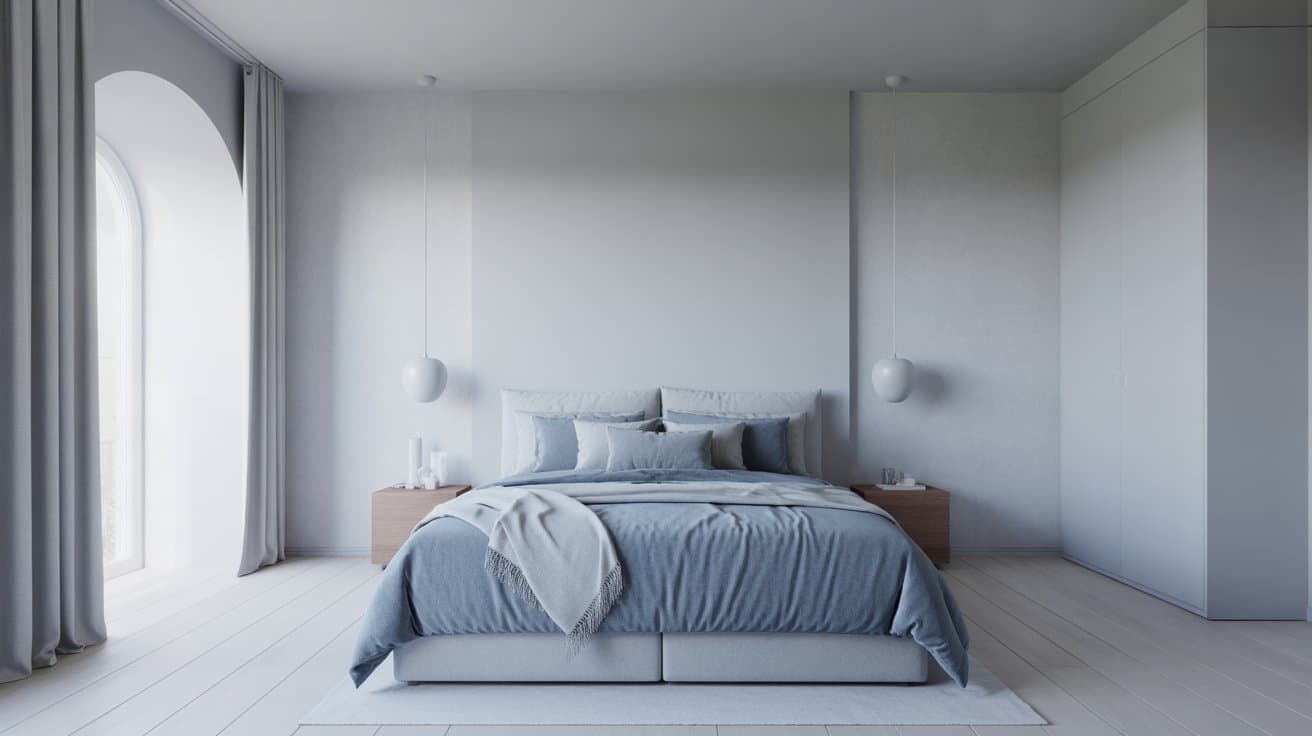
Minimalist Cool Bedroom Ideas for Calm Interiors: Fresh Designs for a Serene, Modern Space
Table of Contents
Introduction
In a world where constant noise, digital overload, and busy schedules dominate daily life, it’s no surprise that more people are embracing minimalism—especially in the bedroom. Studies on interior psychology reveal that uncluttered spaces with cool color palettes can significantly reduce stress and support deeper, more restorative sleep. This is why minimalist cool bedroom ideas have become a leading trend for creating calm interiors that feel intentional, refreshing, and deeply soothing.
A minimalist cool bedroom isn’t about removing personality—it’s about refining your space so that every piece serves a purpose and contributes to a harmonious atmosphere. Cool tones, simple furniture silhouettes, and thoughtful decor create a retreat where the mind can truly rest. Whether you gravitate toward soft neutrals, muted blues, or modern grays, this approach allows your bedroom to breathe while still reflecting your personal style.
In this guide, you’ll discover minimalist cool bedroom ideas designed to inspire tranquility and effortless elegance. Each section explores practical ways to incorporate calming colors, functional layouts, natural textures, streamlined decor, and serene lighting.
Embracing Cool Color Palettes for a Relaxed Minimalist Bedroom
Cool color palettes form the foundation of any calm minimalist bedroom. Shades like soft gray, muted blue, pale sage, and crisp white work together to create an atmosphere that encourages slow breathing and quiet reflection. The simplicity of these tones allows the room to feel open while preventing visual noise—a key principle in minimalist design.
A cool palette doesn’t need to feel cold. Instead, layering tones of the same color family adds depth while maintaining harmony. For example, pairing a pale blue wall with deeper slate bedding or mixing cool beige with warm gray creates a comforting gradient effect. These subtle shifts keep the room dynamic without overwhelming the senses.
Cool colors also interact beautifully with natural light. Soft light reflects gently off cool-toned surfaces, enhancing brightness while maintaining a soft, airy feel. Whether your room has large windows or limited daylight, choosing a cool palette maximizes perceived spaciousness.
To incorporate these hues strategically, begin with your walls and bedding—the largest visual surfaces in the room. Then add accent pieces like curtains, rugs, or throw pillows in complementary cool tones. This creates cohesion while giving you flexibility for seasonal updates.
Cool Color Palette Table
| Color Tone | Mood | Best Use in Bedroom |
| Soft gray | Quiet + grounding | Walls, bedding |
| Muted blue | Calming | Throws, accents |
| Sage green | Restorative | Curtains, decor |
Simplifying Bedroom Layouts for Calm and Functionality
Layout is one of the most powerful yet overlooked components of a minimalist cool bedroom. The way furniture is arranged determines whether the space feels calm and functional or chaotic and overwhelming. A clean, intentional layout creates visual flow, making the room feel more spacious and serene.
Start by identifying the focal point—usually the bed. Position it where it’s easily accessible and naturally draws the eye, often centered on the main wall or aligned with windows for symmetry. Keep pathways clear and ensure each piece of furniture serves a purpose. Nightstands, dressers, and benches should be thoughtfully placed to support your daily routine without crowding the space.
In minimalist design, less is more. That doesn’t mean your room should feel empty, but unnecessary pieces should be removed to enhance calm. If a chair only collects clothes or a bulky dresser overwhelms the room, consider swapping or removing it. Open floorspace contributes to a sense of mental clarity.
Storage also plays a vital role. Hidden storage prevents clutter from accumulating on surfaces. Opt for under-bed drawers, minimalist nightstands with compartments, or discreet wall shelving that blends into the room’s design.
Minimalist Layout Breakdown Table
| Layout Element | Purpose | Calm Effect |
| Centered bed | Establishes focus | Visual balance |
| Clear pathways | Improves flow | Reduces stress |
| Hidden storage | Minimizes clutter | Enhances serenity |
Incorporating Natural Materials and Textures for Warm Minimalism
Even in a cool-toned bedroom, natural materials introduce warmth and balance—preventing the minimalist design from feeling sterile. Wood, stone, linen, wool, and clay-based décor create tactile interest while reinforcing a grounded, calming environment. These materials complement minimalist aesthetics by adding quiet character without visual clutter.
Begin with foundational pieces like a wood bed frame, wooden nightstands, or a bench at the foot of the bed. Light woods such as ash or oak pair beautifully with cool palettes, enhancing brightness. For richer contrast, walnut or smoked oak provides depth while maintaining minimalism.
Textiles are another essential layer. Linen bedding, wool throws, and softly textured rugs add warmth through touch and appearance. Even in cool hues, textured fabrics make the space feel inviting. Consider choosing a single feature textile—like a woven rug or nubby throw—to anchor the room’s sensory experience.
Smaller accents such as ceramic vases, stone trays, or clay lamps bring subtle organic qualities into the design. These materials mimic natural landscapes and help soften the sharpness of minimalist lines.
Natural Material Inspiration Table
| Material | Visual Quality | Best Use |
| Light wood | Warm + airy | Furniture |
| Linen | Soft + breathable | Bedding |
| Stone | Grounded + textural | Decorative accents |
Choosing Minimalist Bedding for a Cool and Serene Look
Bedding is one of the most defining components of a minimalist cool bedroom, as it occupies the largest visual footprint and contributes directly to both comfort and aesthetics. The goal is to achieve effortless calm—using clean lines, thoughtful layering, and cool-hued textiles that work harmoniously with the overall palette.
Start by selecting a high-quality duvet or comforter in a soothing cool tone like glacier blue, dove gray, or soft sage. These colors introduce tranquility without distracting from the room’s minimalism. Solid colors are preferred in minimalist design, but subtle patterns such as micro-stripes or tonal grid stitching can add interest while preserving simplicity.
Layering is essential to creating depth without adding visual clutter. Begin with crisp cotton or linen sheets in white or pale cool tones. Add a lightweight waffle or knit blanket for texture. Top the ensemble with a neat fold at the foot of the bed—this adds structure and a tailored look.
Minimalist pillows should complement the serene aesthetic. Opt for two to four pillows at most. Choose matching pillowcases with soft textures rather than bold prints. A single textured lumbar pillow can serve as a focal point without overpowering the minimalist vibe.
Material quality plays a significant role. Natural, breathable fabrics keep you comfortable year-round and contribute to a cohesive, organic feel. Linen, in particular, brings airy elegance, while cotton percale offers a crisp, cool sensation perfect for calming interiors.
Colors should communicate tranquility. Cool neutrals blend seamlessly with minimalist surroundings, allowing the eye to rest naturally. If you want to introduce a hint of personality, choose muted versions of your favorite colors—slate lavender, mist blue, or fog green—which maintain the cool aesthetic while adding softness.
Minimalist Bedding Style Table
| Bedding Component | Recommendation | Purpose |
| Duvet cover | Solid cool hue | Establish calm foundation |
| Sheet set | White or pale cool tones | Brighten + simplify |
| Throw texture | Waffle or knit | Add dimension |
Styling Minimalist Decor and Accessories for Subtle Impact
Minimalist decor relies on purposeful selection—each piece must have meaning, function, or strong aesthetic value. In cool-toned minimalist bedrooms, accessories should enhance calmness rather than distract from it.
Choose decor with simple shapes and organic materials. Ceramic vases in muted tones, sculptural bowls, or minimalist lamps with clean silhouettes add visual interest without cluttering the space. Stick to a restrained palette so each object supports the serene environment.
Wall art should be sparse and soothing. Abstract line art, grayscale photography, or subtle nature-inspired prints maintain the room’s calmness. Rather than filling the walls, choose one or two larger pieces to create intentional focal points.
Plants can also play a role—but choose minimal, architectural varieties like snake plants or olive branches. Their structured shapes align well with minimalist themes while introducing a natural, grounding presence.
Minimalist Decor Checklist Table
| Decor Item | Style Benefit | Placement |
| Ceramic vase | Softens lines | Nightstand, dresser |
| Abstract art | Creates focal point | Above bed |
| Sleek lamp | Adds warm light | Bedside |
Using Lighting to Enhance a Cool and Minimal Aesthetic
Lighting plays a transformative role in creating a calm minimalist bedroom. Even with the right colors and furniture, poor lighting can disrupt the serenity of a space. Thoughtfully layered lighting brings warmth, harmony, and restful ambience—ensuring the room feels soothing at every hour.
Begin with ambient lighting, which provides the general illumination for the room. In minimalist spaces, this often takes the form of recessed lighting, flush mount fixtures, or soft-diffused pendants that blend seamlessly with the ceiling. Cool-toned or neutral-white bulbs maintain clarity without feeling harsh. Opt for dimmable solutions that let you shift the mood from bright morning energy to peaceful evening relaxation.
Next, incorporate task lighting. Bedside lamps, reading sconces, or focused downlights provide functional illumination without overpowering the space. Choose minimalist designs—slim metal frames, frosted shades, or sculptural forms—that match your color palette. Position task lights intentionally to support daily routines, such as reading before bed or journaling.
Accent lighting adds depth and subtle drama. LED strip lights under floating shelves, behind headboards, or beneath bed frames introduce a soft glow that emphasizes clean architectural lines. This creates a hotel-like feel without overwhelming brightness.
Lighting materials also influence the overall aesthetic. Glass, brushed metal, or matte finishes blend seamlessly with cool minimalist interiors. Avoid ornate designs that detract from the calm, refined tone of the room.
Minimalist Lighting Table
| Lighting Type | Function | Minimalist Benefit |
| Ambient | Overall illumination | Clean, seamless light |
| Task | Focused use | Supports daily routines |
| Accent | Mood + depth | Soft, layered atmosphere |
Conclusion
Minimalist cool bedroom design is a thoughtful blend of simplicity, calmness, and intentional beauty. By embracing soothing color palettes, functional layouts, natural materials, serene bedding, purposeful decor, and layered lighting, you create a retreat that supports both rest and clarity. These design principles work together to strip away distractions, giving the room space to breathe and allowing you to unwind more easily at the end of the day. A calm interior is not simply an aesthetic—it’s an experience shaped by the choices you make, all contributing to a bedroom that feels refreshing, grounded, and deeply peaceful.