
Creative Toddler Room Decor Ideas for Small Spaces That Maximize Style and Function
Table of Contents
Introduction
Designing a toddler’s room is an exciting milestone, but it becomes especially challenging when you’re working with a small space. Toddlers need room to explore, learn, rest, and play—yet cramped environments often feel cluttered and overwhelming. Studies show that young children thrive in spaces that provide visual order, cozy zones, and opportunities for independence, which means thoughtful design matters more than square footage. A well-decorated toddler room can support emotional development, creativity, and smoother daily routines.
The good news is that small spaces can be incredibly efficient with the right strategies. From multi-purpose furniture to clever storage, vertical wall solutions, playful accents, and child-friendly layouts, there are endless ways to create a charming and functional toddler room without expanding the footprint. With intentional planning, even the tiniest room can feel spacious, inviting, and perfectly suited to your child’s needs.
This article shares creative toddler room decor ideas for small spaces, providing practical insights, detailed examples, and easy-to-apply design frameworks. You’ll learn how to maximize every corner, incorporate imaginative décor, choose toddler-friendly furniture, and create zones that grow with your child. Each section includes a helpful visual breakdown and styling tips, making it simple to bring your vision to life.
Maximize Vertical Space With Smart Storage Solutions
Small spaces demand clever vertical thinking. Toddler rooms tend to accumulate toys, books, clothing, and learning materials—so maximizing wall space becomes essential. Using the walls for storage not only frees up floor space but also creates a visually organized environment that helps toddlers find and put away their items more independently.
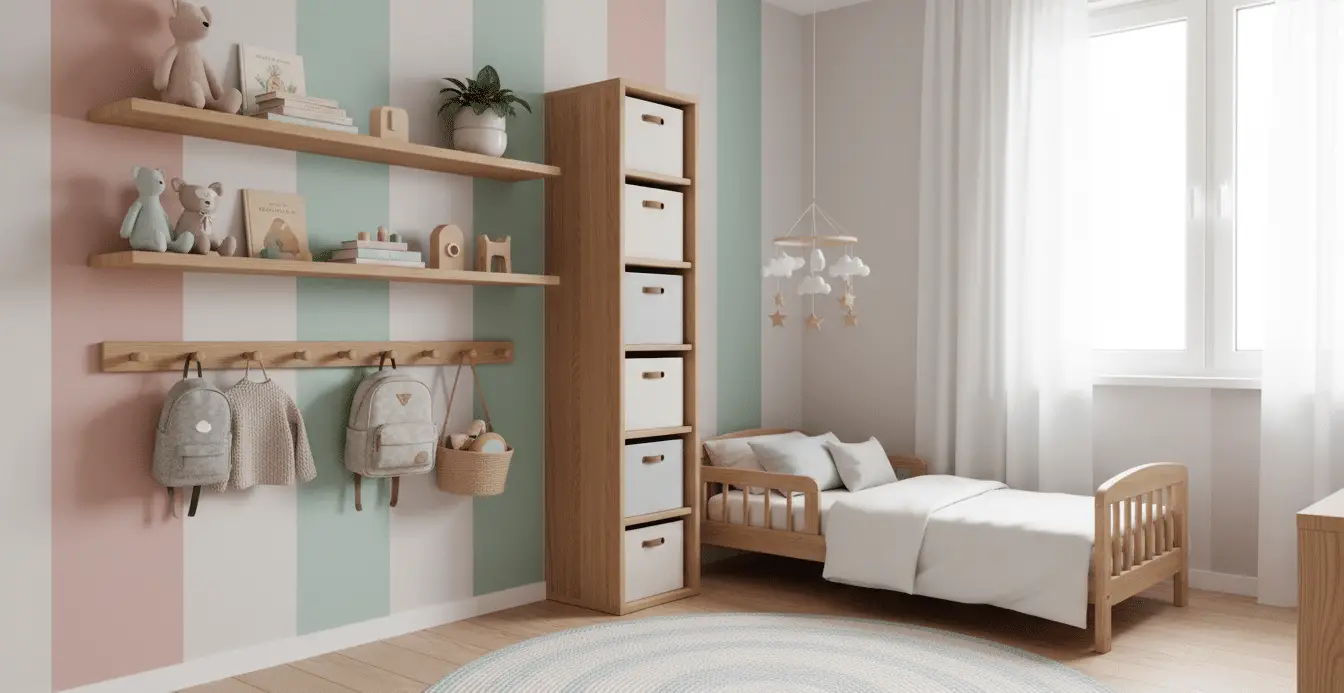
Start by installing floating shelves at varying heights. Lower shelves can hold board books and soft toys toddlers can access safely, while higher shelves can display décor or store items not meant for daily use. Peg rails are another multifunctional solution, great for hanging baskets, dress-up items, or lightweight backpacks. Wall-mounted bins and slim vertical cabinets offer compact storage that doesn’t intrude into the room’s usable space.
When using vertical storage, balance aesthetics and practicality. Avoid overcrowding the walls to prevent a cluttered look; instead, use a few well-spaced pieces with intentional placement. Choose natural wood finishes or pastel tones to maintain a soft, child-friendly aesthetic.
Vertical Storage Guide
| Storage Type | Best Use | Why It Works |
| Floating shelves | Books, décor | Adds display and storage without floor clutter |
| Peg rails | Baskets, accessories | Easy for toddlers to use independently |
| Slim wall cabinets | Clothes, toys | Maximizes vertical space in small rooms |
| Hanging bins | Lightweight toys | Keeps floor open for play |
Choose Multi-Functional Furniture That Saves Space
Furniture plays a major role in how comfortable and functional a small toddler room feels. Multi-functional pieces are key—they reduce clutter, provide versatile use, and adapt as your toddler grows. A thoughtfully chosen bed, dresser, or play table can transform a tiny room into a practical, stylish haven.
A toddler bed with built-in storage underneath is one of the best investments for small spaces. The drawers can hold clothing, blankets, toys, or seasonal items, eliminating the need for extra storage furniture. Daybeds are another smart option; they provide sleeping space at night and function as a cozy seating nook during the day. Convertible cribs that turn into toddler beds extend the lifespan of your purchase and keep the room layout consistent.
Consider dressers that double as changing tables. Add a removable changing pad to the top, and you instantly maximize space. Once your toddler outgrows diapers, the dresser remains fully functional without looking out of place. Foldable play tables or nesting stools also offer flexible functionality—perfect for creative activities without permanently taking up space.
When selecting multi-functional furniture, prioritize rounded edges, non-toxic materials, and sturdy construction. Toddler rooms are high-energy environments, so durability and safety are essential.
Space-Saving Furniture Table
| Furniture Piece | Multi-Function Benefit | Ideal Placement |
| Storage toddler bed | Sleep + toy storage | Center or corner of room |
| Dresser changing station | Clothing storage + diapering | Against main wall |
| Daybed | Sleeping + lounging | Under window or long wall |
| Foldable table | Play + compact storage | Near reading or play zone |
Thoughtful furniture selection ensures that your toddler’s room remains functional and adaptable, even as their needs evolve. With smart choices, you can create a space that supports play, learning, and rest within a small footprint.
Create Defined Zones for Play, Rest, and Learning
Even the smallest toddler rooms benefit from well-defined zones. Clear boundaries help toddlers understand where different activities occur, supporting smoother routines and emotional regulation. Zoning also creates visual order, making the room feel larger and more intentional.
A rest zone should feel peaceful and calming. Soft bedding, soothing colors, and minimal décor help reinforce the idea that this area is for sleep. If possible, position the bed away from the most active area of the room to minimize distractions.
The play zone can include a soft rug, toy baskets, and a few select activities. Keeping this area low-profile helps prevent overwhelming clutter. A learning zone, even if tiny, may feature a small table, wall-mounted art supplies, or a quiet nook for reading. These zones don’t need separate furniture—they simply need thoughtful placement.
Zoning works through visual cues such as rugs, lighting, color changes, and furniture arrangement. Even low-cost solutions like a different wall color behind the bed or a small canopy can distinguish one zone from another.
Toddler Room Zoning Breakdown
| Zone | Key Elements | Purpose |
| Rest | Bed, soft lighting | Encourages calm and sleep |
| Play | Rug, toy baskets | Supports creativity and movement |
| Learning | Mini table, books | Promotes focus and quiet time |
Use Light and Color to Make a Small Room Feel Larger
Color and lighting are powerful design tools, especially in small rooms. Soft pastels, warm neutrals, and airy tones make a toddler’s room feel bigger and brighter. But creative approaches to color can also add personality without overwhelming the space.
Light-colored walls—such as pale sage, warm beige, powder blue, or creamy peach—reflect light and visually open the room. For added depth, an accent wall behind the bed creates a focal point without shrinking the space. Using a monochromatic palette keeps the room cohesive, helping it feel more spacious.
Lighting should be layered. A soft overhead light, a warm night-light, and a table lamp or wall sconce create a soothing environment for bedtime while offering bright playtime illumination during the day. Battery-powered sconces are especially useful for small toddler rooms because they eliminate cords and installation.
Mirrors also play an important role—they reflect light and create the illusion of more space when placed opposite a window or light source.
Color & Lighting Strategy Table
| Element | Recommended Approach | Benefit |
| Wall color | Light pastels or warm neutrals | Opens and brightens the room |
| Accent wall | Muted statement color | Adds depth without clutter |
| Layered lighting | Overhead + lamp + night-light | Creates functionality and warmth |
| Mirror placement | Opposite window or lamp | Enhances sense of space |
Add Playful, Space-Saving Decorative Elements
Decorative elements in small toddler rooms must strike a balance between whimsy and practicality. The goal is to spark creativity while keeping the room visually calm and organized. Thoughtfully chosen décor can transform even the tiniest rooms into imaginative spaces that feel magical without overwhelming the senses.
Wall decals are incredibly effective for small spaces. They add personality—whether animals, stars, rainbows, or abstract shapes—without taking up floor space. Unlike wallpaper, decals are affordable, easy to apply, and removable when your toddler’s interests change. Pair them with a simple gallery wall featuring framed prints or your child’s artwork to personalize the space.
Canopies or wall-mounted fabric drapes create enchanting reading nooks or cozy bedtime areas without needing extra furniture. They also introduce softness and texture. Choose lightweight fabrics in calming colors to maintain an airy aesthetic.
Multi-purpose décor items are ideal for small spaces. For example, decorative hooks can be used for both styling and organization; cute baskets can store toys while enhancing the room’s charm. Small wooden toys, when displayed intentionally, double as décor and play items.
Below is a guide to choosing décor that fits both form and function:
Decorative Elements Table
| Decor Item | Space-Saving Benefit | Visual Effect |
| Wall decals | No floor footprint | Adds whimsy and theme |
| Canopy | Creates cozy zone | Softens and enhances charm |
| Decorative hooks | Storage + styling | Keeps items accessible |
| Display toys | Dual-purpose décor | Personalizes space |
These thoughtful touches create a harmonious balance between beauty and function, ensuring the room remains both playful and practical.
Incorporate Smart Storage Bins and Labels for Easy Cleanup
Toddlers thrive on routine, and cleanup time becomes much easier when storage is intuitive. Clear bins, soft baskets, and labeled containers help toddlers understand where their belongings go. Storage baskets made from cotton rope, felt, or woven materials keep the room stylish while providing flexible, safe storage options.
Labels—whether picture-based or text-based—teach toddlers organizational skills. Use images for younger children and simple words for older toddlers. Keeping the system consistent reduces cleanup battles and promotes independence.
Place bins at toddler height to encourage hands-on participation. Reserve higher storage for out-of-rotation toys or seasonal items. Rotating toys keeps clutter under control and refreshes interest in existing toys without adding new items.
Storage System Table
| Storage Type | Ideal Use | Toddler Benefit |
| Rope baskets | Soft toys, blankets | Safe and accessible |
| Clear bins | Blocks, puzzles | Easy item recognition |
| Labeled containers | Sorting smaller toys | Builds independence |
| High storage | Rarely used items | Maintains tidy appearance |
Conclusion
A small toddler room offers endless potential when designed with creativity and intention. By incorporating vertical storage, multi-functional furniture, defined zones, strategic use of color and lighting, playful décor, and easy-to-maintain organization systems, you can create a space that feels both nurturing and spacious. These creative toddler room decor ideas for small spaces ensure that your child has room to grow, explore, and rest comfortably—no matter the size of the room. Thoughtful design transforms limitations into opportunities, resulting in a cozy, efficient, and imaginative environment tailored perfectly to your toddler’s world.