
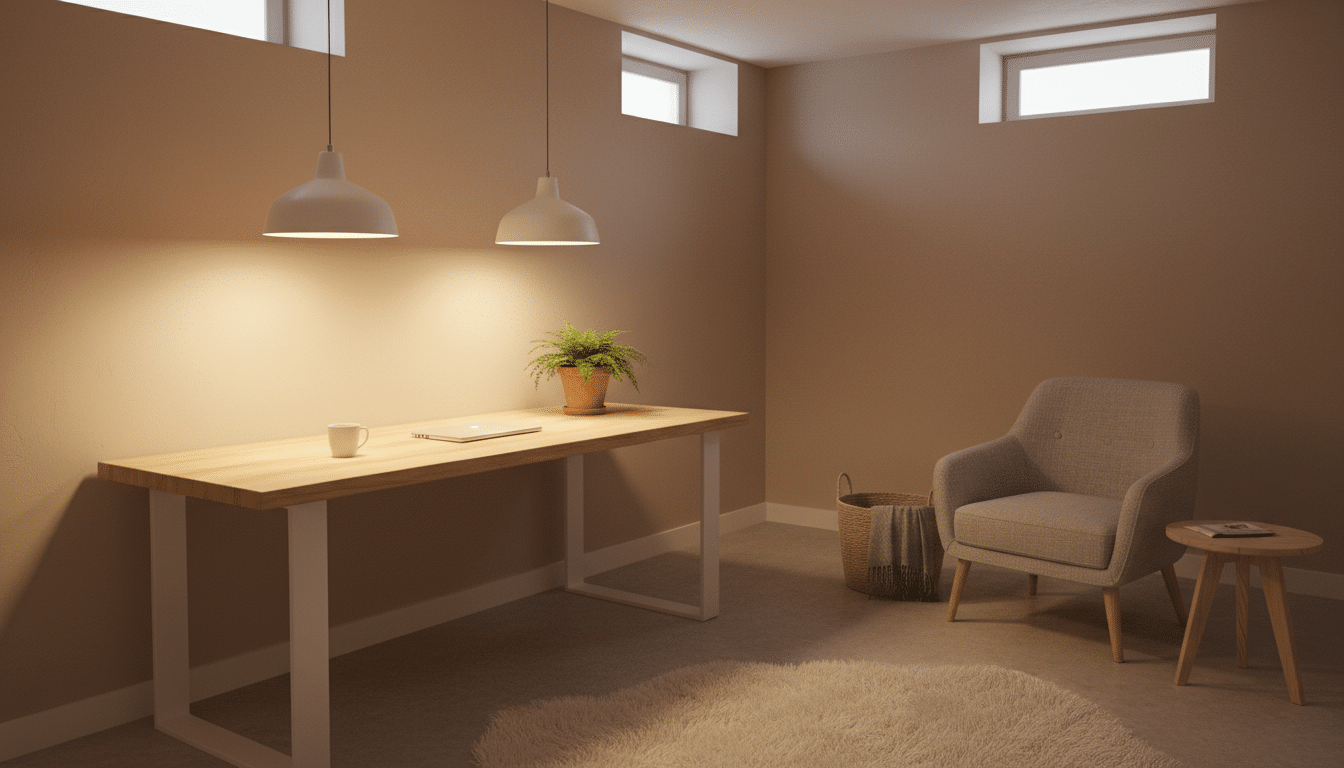
Neutral Basement Office Decor Ideas for a Calm Vibe
Table of Contents
Creating a peaceful workspace in a basement might seem like a challenge, but it’s actually one of the best opportunities to design a truly distraction-free environment. Without the interruptions of high-traffic areas, a basement office can become a quiet retreat—if designed thoughtfully.
Neutral basement office decor ideas focus on simplicity, balance, and subtle elegance. Instead of overwhelming the senses, they create a calming backdrop that supports deep focus and long working hours. Whether you’re dealing with limited light, low ceilings, or cold finishes, the right design choices can completely transform the space.
In this article, you’ll discover how to use neutral colors, lighting, textures, furniture, and layout strategies to turn your basement into a calm, inspiring office. Every idea is practical, visually appealing, and easy to adapt—no matter your budget or space size.
Why Neutral Colors Work Best for Basement Offices
Neutral colors are the foundation of a calm basement office. Unlike bold or saturated tones, neutrals create a soft, grounded atmosphere that helps reduce visual noise. This is especially important in basements, where natural light is limited and darker shades can make the space feel even more enclosed.
Shades like warm white, beige, soft gray, taupe, and muted earth tones reflect available light and make the room feel more open. These tones also provide flexibility, allowing you to add subtle accents without overwhelming the space.
A neutral palette supports mental clarity. When your surroundings are visually calm, your mind follows. This is why many productivity-focused workspaces lean heavily on neutral color schemes.
To avoid a flat or sterile look, layering is key. Combine different tones within the same palette—like creamy walls, light oak furniture, and soft gray textiles—to create depth without losing the calming effect.
Table: Neutral Color Palette Guide for Basement Offices
| Color Tone | Effect on Space | Best Use Case |
| Warm White | Brightens and opens space | Walls and ceilings |
| Soft Gray | Adds sophistication | Furniture and accents |
| Beige/Taupe | Creates warmth | Rugs and upholstery |
| Muted Green | Adds subtle freshness | Decorative elements |
| Light Wood | Natural and grounding | Desks and shelving |
Layering Lighting to Eliminate Basement Gloom
Lighting is one of the most important elements in any basement office. Since natural light is often limited or nonexistent, you need to recreate it using layered artificial lighting.
Start with ambient lighting—the overall light that fills the room. Ceiling-mounted fixtures or recessed lights work well here. Choose warm white bulbs to create a cozy yet functional atmosphere.
Next comes task lighting. A well-placed desk lamp ensures that your workspace is bright enough for focused work without straining your eyes. Adjustable lamps are especially useful for directing light exactly where you need it.
Accent lighting adds depth and warmth. Think LED strips under shelves, wall sconces, or soft floor lamps. These layers prevent harsh shadows and make the room feel more inviting.
Lighting placement matters just as much as the fixtures themselves. Avoid creating overly bright spots contrasted with dark corners. Even distribution helps the room feel balanced and open.
Table: Lighting Layers Breakdown
| Lighting Type | Purpose | Ideal Placement |
| Ambient | Overall illumination | Ceiling or recessed lights |
| Task | Focused work lighting | Desk or work surface |
| Accent | Mood and depth | Shelves, corners, walls |
| Natural Boost | Simulated daylight feel | Daylight bulbs or panels |
Choosing Minimalist Furniture for a Clutter-Free Feel
Furniture plays a crucial role in maintaining a calm vibe. In a basement office, bulky or overly decorative pieces can make the space feel cramped and chaotic.
Minimalist furniture focuses on clean lines, functionality, and simplicity. A streamlined desk, ergonomic chair, and compact storage solutions are all you really need. Choose pieces in neutral tones or natural materials like wood and matte finishes.
Avoid overfilling the room. Negative space is just as important as the furniture itself. Leaving breathing room between pieces creates a sense of openness—even in smaller basements.
Multi-functional furniture is especially valuable. A desk with built-in storage or a wall-mounted shelf system helps keep clutter out of sight without adding extra bulk.
Another key aspect is proportion. In basements with lower ceilings, opt for lower-profile furniture to maintain visual balance.
Table: Minimalist Furniture Essentials
| Furniture Item | Key Feature | Benefit |
| Desk | Clean lines, light finish | Keeps space open and airy |
| Chair | Ergonomic, neutral tone | Comfort without visual clutter |
| Shelving | Wall-mounted | Saves floor space |
| Storage Units | Hidden compartments | Reduces visible mess |
| Side Table | Compact design | Adds function without bulk |
Adding Texture for Warmth Without Visual Noise
One of the biggest risks of neutral basement office decor is making the space feel flat or lifeless. That’s where texture comes in. Texture adds depth, warmth, and personality—without disrupting the calm aesthetic.
Start with soft textiles. A woven rug, linen curtains, or a boucle chair can instantly soften the room. These elements absorb sound as well, making the space quieter and more comfortable.
Natural materials are another powerful tool. Wood, stone, ceramic, and clay introduce subtle variation while maintaining a cohesive neutral palette. A wooden desk paired with ceramic decor pieces creates a balanced, organic feel.
Wall textures can also make a big difference. Consider paneling, textured paint, or even fabric wall hangings. These add visual interest without relying on bold colors.
Layering is key here as well. Combine multiple textures—soft, rough, smooth—to create contrast that feels intentional rather than busy.
Table: Texture Elements for Neutral Offices
| Texture Type | Example Material | Effect on Space |
| Soft | Rugs, cushions | Cozy and inviting |
| Natural | Wood, stone | Grounded and organic |
| Smooth | Glass, metal | Clean and modern |
| Fabric | Linen, cotton | Softens overall look |
| Layered Mix | Combination of above | Adds depth without clutter |
Smart Storage Solutions to Maintain a Calm Environment
A calm workspace is impossible without organization. Clutter is one of the biggest sources of stress, especially in a basement where space is limited. Smart storage solutions are essential to maintaining a clean and focused environment.
The goal is to keep everything accessible but out of sight. Closed storage—like cabinets, drawers, and storage benches—helps maintain a visually calm space. Open shelving can work too, but it should be styled minimally.
Vertical storage is particularly effective in basement offices. Wall-mounted shelves and pegboards free up floor space and make the room feel larger.
Cable management is another often-overlooked detail. Tangled wires can instantly disrupt an otherwise serene setup. Use cable organizers, clips, and hidden channels to keep everything neat.
Consistency matters. Stick to storage containers in similar colors and materials to maintain a cohesive look.
Table: Storage Strategy Guide
| Storage Type | Best Use | Advantage |
| Closed Cabinets | Documents and supplies | Hides clutter completely |
| Open Shelves | Decor and essentials | Easy access |
| Wall Storage | Vertical organization | Saves floor space |
| Drawer Units | Small items | Keeps desk clear |
| Cable Systems | Tech organization | Clean, distraction-free look |
Incorporating Subtle Decor That Enhances Calmness
Decor should complement the space—not compete with it. In a neutral basement office, less is more. The goal is to add personality while maintaining a peaceful atmosphere.
Start with artwork. Choose pieces with soft tones, abstract patterns, or nature-inspired themes. Avoid overly busy or high-contrast designs.
Plants are another excellent addition. Even in a basement, low-light plants or high-quality artificial greenery can bring life into the space. Greenery pairs beautifully with neutral tones and adds a sense of freshness.
Functional decor is also a great approach. Items like elegant desk organizers, ceramic trays, or minimalist clocks serve a purpose while enhancing the aesthetic.
Scent can play a role too. A subtle candle or diffuser with calming scents like lavender or sandalwood can elevate the entire experience of the space.
Table: Calm Decor Elements
| Decor Item | Purpose | Effect |
| Artwork | Visual interest | Adds personality |
| Plants | Natural touch | Refreshes the space |
| Desk Decor | Functional styling | Keeps aesthetic cohesive |
| Lighting Accents | Warm ambiance | Enhances mood |
| Scent Elements | Sensory calm | Promotes relaxation |
Designing Layout for Flow and Focus
The layout of your basement office directly impacts how you feel and work within the space. A poorly arranged room can feel cramped and distracting, while a thoughtful layout promotes flow and clarity.
Start by positioning your desk strategically. If possible, place it facing the room rather than a wall. This creates a sense of openness and control over your environment.
Keep pathways clear. Even in small spaces, maintaining a natural flow of movement prevents the room from feeling cluttered.
Zoning can also be helpful. Separate your workspace from storage or relaxation areas—even subtly. A rug or lighting change can define different zones without adding walls.
Consider ergonomics as well. Ensure your chair, desk height, and screen position support comfortable long-term use.
Table: Layout Planning Essentials
| Layout Element | Key Consideration | Result |
| Desk Position | Facing open space | Improves focus and comfort |
| Pathways | Clear movement | Reduces cluttered feeling |
| Zoning | Defined areas | Better organization |
| Ergonomics | Proper setup | Long-term comfort |
| Balance | Even spacing | Visually calming layout |
Conclusion
Designing a basement office doesn’t have to feel limiting—in fact, it can be one of the most rewarding spaces to transform. By embracing neutral basement office decor ideas for a calm vibe, you create more than just a workspace—you build an environment that supports focus, clarity, and well-being.
From soft color palettes and layered lighting to minimalist furniture and thoughtful storage, every choice contributes to a space that feels intentional and peaceful. Texture and subtle decor add warmth without overwhelming the senses, while a well-planned layout ensures flow and comfort.
The beauty of a neutral design lies in its versatility. It adapts to your needs, grows with your style, and continues to feel timeless long after trends change.