
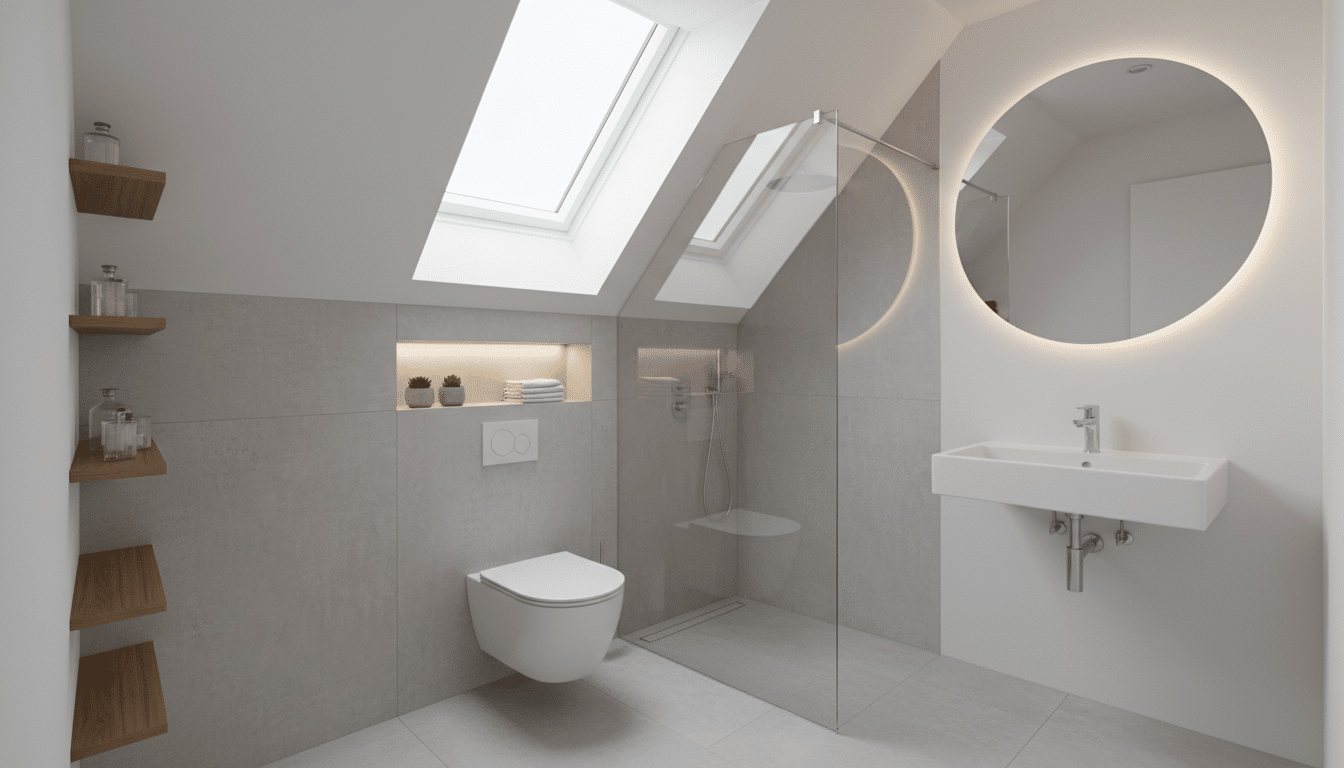
Small Upstairs Bathrooms That Maximize Space Beautifully: Smart Design Ideas for Stylish Compact Living
Table of Contents
Introduction
Have you ever stepped into a small upstairs bathroom and felt like every inch was working against you? Sloped ceilings, tight corners, and limited floor space can make these bathrooms one of the most challenging areas to design. Yet, with the right approach, they can also become some of the most charming and efficient spaces in your home.
Small upstairs bathrooms that maximize space beautifully are all about creativity and smart design choices. Instead of seeing limitations, designers are now embracing these unique layouts as opportunities to craft cozy, elegant retreats that feel both functional and visually stunning.
Whether you’re dealing with an attic bathroom, a compact guest bath, or a narrow ensuite, the key lies in thoughtful planning. From clever storage solutions to strategic lighting, space-saving fixtures, and cohesive styling, every decision plays a role in enhancing both usability and aesthetics.
This guide explores practical and inspiring ideas to help you transform even the smallest upstairs bathroom into a space that feels open, organized, and beautifully designed. With the right balance of function and style, you can turn a challenging layout into a standout feature of your home.
Smart Layout Planning for Small Upstairs Bathrooms
When it comes to small upstairs bathrooms, layout is everything. A well-planned layout can make a compact space feel surprisingly functional and even spacious. The goal is to use every inch wisely while maintaining comfort and flow.
Start by analyzing the structure of your bathroom. Upstairs spaces often come with sloped ceilings or awkward angles, especially in attic conversions. Instead of fighting these features, incorporate them into your design. Position fixtures like toilets or storage units under lower ceilings where standing height isn’t essential, reserving full-height areas for showers or sinks.
Keeping the layout simple is key. Avoid overcrowding the space with unnecessary elements. A streamlined arrangement allows for better movement and creates a more open feel. For example, placing fixtures along one wall can free up valuable floor space.
Another effective strategy is to prioritize functionality over size. Compact fixtures, such as corner sinks or wall-mounted toilets, can significantly improve usability without sacrificing style.
Layout Planning Guide
| Layout Element | Smart Placement Idea | Space-Saving Benefit |
| Sink | Wall-mounted or corner | Frees up floor space |
| Toilet | Under sloped ceiling | Utilizes low-height areas |
| Shower | Full-height section | Maximizes comfort |
| Storage | Built into niches | Reduces clutter |
Choosing Space-Saving Fixtures That Still Feel Luxurious
Selecting the right fixtures is essential when designing small upstairs bathrooms that maximize space beautifully. The challenge is to find pieces that are compact without feeling cramped or basic.
Wall-mounted sinks and toilets are excellent choices. By lifting these fixtures off the floor, you create the illusion of more space while making cleaning easier. Slim-profile vanities with built-in storage also offer a balance between functionality and style.
Showers often work better than bathtubs in smaller upstairs bathrooms. A walk-in shower with a glass enclosure keeps the space feeling open and uncluttered. Frameless glass is especially effective, as it allows light to flow freely throughout the room.
Don’t overlook the importance of proportion. Oversized fixtures can overwhelm a small space, while appropriately scaled pieces create harmony. Look for designs with clean lines and minimal detailing to maintain a modern aesthetic.
Even small upgrades, like sleek faucets or matching hardware, can elevate the overall look, making the bathroom feel more luxurious without taking up extra space.
Fixture Selection Table
| Fixture Type | Compact Option | Luxury Effect |
| Sink | Wall-mounted | Open, airy appearance |
| Toilet | Compact or wall-hung | Saves floor space |
| Shower | Glass walk-in | Modern, spacious feel |
| Vanity | Slim with storage | Functional elegance |
Clever Storage Solutions That Keep Clutter Hidden
Storage is often the biggest challenge in small upstairs bathrooms, but with thoughtful design, it can also become one of the most rewarding aspects. The key is to maximize vertical space while keeping the overall look clean and uncluttered.
Start by utilizing wall space. Floating shelves, recessed niches, and wall-mounted cabinets provide storage without taking up valuable floor area. These options are especially useful for storing toiletries, towels, and decorative items.
Built-in storage is another powerful solution. Custom cabinetry designed to fit awkward corners or sloped ceilings can turn unused areas into functional storage zones. Even small niches in shower walls can make a big difference.
Multi-functional furniture is also worth considering. Vanities with drawers, mirrored cabinets, or hidden compartments help keep everyday items organized and out of sight.
The goal is to maintain a balance between accessibility and minimalism. Everything should have a designated place, ensuring the bathroom remains tidy and visually appealing.
Storage Solutions Breakdown
| Storage Type | Best Use | Benefit |
| Floating shelves | Towels and decor | Saves floor space |
| Recessed niches | Shower essentials | Built-in convenience |
| Cabinets | Hidden storage | Reduces visible clutter |
| Multi-use vanity | Daily items | Combines function and style |
Using Light and Color to Open Up the Space
Light and color play a transformative role in small upstairs bathrooms. With the right combination, even the most compact space can feel bright, open, and inviting.
Start with a light color palette. Shades like white, soft gray, and pale beige reflect light, making the room appear larger. Adding subtle contrasts—such as darker accents or natural textures—can create depth without overwhelming the space.
Natural light is a valuable asset, especially in upstairs bathrooms with skylights or small windows. Keeping window treatments minimal allows sunlight to flow freely, enhancing the overall brightness.
Artificial lighting should be layered for maximum effect. Combining overhead lighting with wall sconces or mirror lighting ensures even illumination, eliminating shadows that can make the space feel smaller.
Mirrors are another essential element. A large mirror can visually double the space, reflecting both light and design elements. Positioning mirrors strategically can significantly enhance the sense of openness.
Light and Color Guide
| Element | Recommended Choice | Effect |
| Wall Color | Light neutrals | Expands visual space |
| Lighting | Layered warm lighting | Bright, inviting atmosphere |
| Mirrors | Large or wall-mounted | Reflects light and space |
| Accents | Subtle contrast tones | Adds depth without clutter |
Making the Most of Sloped Ceilings and Awkward Angles
One of the defining features of many small upstairs bathrooms is the presence of sloped ceilings and unconventional angles. While these architectural elements can initially feel limiting, they actually offer unique opportunities to create a space that feels custom-designed and full of character.
The first step is understanding how to work with the height variations rather than against them. Lower ceiling areas are perfect for features that don’t require standing room. For example, placing a bathtub, toilet, or built-in storage beneath a sloped section allows you to utilize space that might otherwise go unused. This strategic placement frees up the taller areas for more functional elements like showers or sinks, where vertical clearance is essential.
Custom storage is particularly effective in these spaces. Built-in cabinets or shelving units can be designed to follow the angle of the ceiling, creating seamless storage solutions that feel intentional rather than improvised. This approach not only maximizes space but also enhances the overall aesthetic by maintaining clean lines and a cohesive look.
Another important consideration is visual balance. Sloped ceilings can sometimes make a room feel uneven or cramped. To counter this, use consistent materials and colors throughout the space. For instance, extending the same tile or paint color across walls and ceilings can create a unified appearance, making the room feel larger and more harmonious.
Lighting also plays a crucial role. Installing recessed lighting along sloped ceilings can highlight architectural features while ensuring even illumination. This prevents darker corners and enhances the sense of openness.
Design Tips for Sloped Spaces
| Feature | Placement Strategy | Design Benefit |
| Bathtub | Under lowest slope | Efficient space usage |
| Storage | Custom built-ins | Seamless integration |
| Lighting | Recessed along slopes | Even illumination |
| Finishes | Consistent materials | Cohesive, spacious look |
Adding Elegant Details Without Overcrowding
In small upstairs bathrooms, every detail matters. While it’s tempting to add decorative elements to enhance the space, too much can quickly lead to visual clutter. The key is to focus on a few well-chosen details that elevate the design without overwhelming it.
Start with hardware and finishes. Coordinating elements like faucets, handles, and towel bars in a consistent finish—such as brushed nickel, matte black, or brass—creates a polished and cohesive look. These small details can have a surprisingly big impact on the overall aesthetic.
Textures are another way to add elegance. Incorporating materials like natural stone, wood accents, or textured tiles can introduce depth and interest without adding bulk. For example, a feature wall in the shower or a patterned backsplash can serve as a focal point while keeping the rest of the space simple.
Accessories should be minimal but intentional. A single decorative tray, a neatly folded set of towels, or a small plant can bring warmth and personality to the room. The goal is to enhance the space without disrupting its clean and organized feel.
Finally, consider the importance of symmetry and balance. Even in a small space, aligning elements and maintaining visual harmony can make the bathroom feel more refined and thoughtfully designed.
Detail Styling Table
| Detail Element | Minimalist Choice | Visual Impact |
| Hardware | Matching finishes | Cohesive design |
| Textures | Subtle tile or wood | Adds depth |
| Accessories | Few curated items | Clean elegance |
| Layout Balance | Symmetrical arrangement | Organized appearance |
Creating a Spa-Like Atmosphere in a Small Space
Transforming small upstairs bathrooms that maximize space beautifully into spa-like retreats is entirely possible with the right approach. Even limited square footage can feel luxurious when the design focuses on comfort, tranquility, and thoughtful details.
Start by focusing on sensory elements. Soft lighting, calming colors, and natural textures all contribute to a relaxing atmosphere. Warm, dimmable lighting can instantly shift the mood from functional to serene, especially during evening routines. Pair this with light, neutral tones to create a soothing visual environment.
Incorporating natural materials is another effective strategy. Wood accents, stone surfaces, or even woven baskets can bring a sense of warmth and organic beauty to the space. These elements help soften the clean lines of minimalist design, making the bathroom feel more inviting.
Scent and sound also play a role in creating a spa-like experience. Adding candles, essential oil diffusers, or even a small speaker for calming music can enhance the overall ambiance. These subtle touches transform the bathroom into a place of relaxation rather than just functionality.
Organization is equally important. A clutter-free environment is essential for achieving a spa-like feel. Keeping surfaces clear and storage well-organized ensures the space remains calm and visually appealing.
Spa Design Elements Table
| Element | Feature | Relaxation Benefit |
| Lighting | Warm, dimmable | Creates calming mood |
| Materials | Wood, stone accents | Natural, soothing feel |
| Scents | Candles or diffusers | Enhances atmosphere |
| Organization | Minimal clutter | Promotes tranquility |
Conclusion
Designing small upstairs bathrooms that maximize space beautifully is all about thoughtful planning and creative solutions. While these spaces often come with unique challenges, they also offer opportunities to create something truly special and personalized.
By focusing on smart layouts, space-saving fixtures, and efficient storage, you can make even the smallest bathroom feel functional and comfortable. Adding light, neutral colors and layered lighting enhances the sense of openness, while carefully chosen details bring elegance without clutter.
The key is to embrace the limitations and turn them into strengths. Sloped ceilings, compact layouts, and unique angles can all contribute to a design that feels both practical and visually appealing.
With the right balance of style and functionality, a small upstairs bathroom can become more than just a necessity—it can be a beautifully designed space that adds value and charm to your home.