
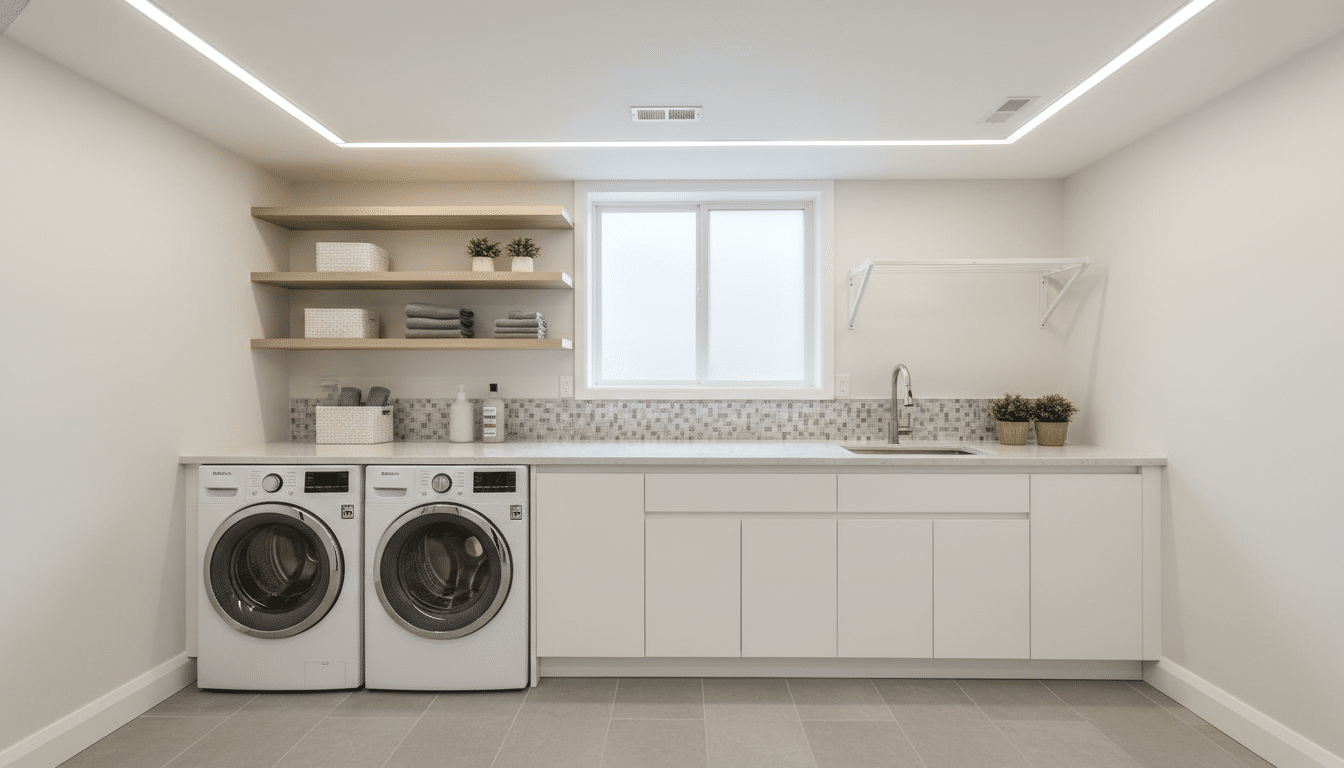
Basement Laundry Room Ideas with Folding Station and Organization: Smart Designs for a Clean and Functional Space
Table of Contents
Laundry rooms are often overlooked, tucked away in basements and treated as purely functional spaces. Yet, the average household spends hundreds of hours each year doing laundry. Imagine transforming that time into a more pleasant, efficient experience simply by upgrading your space.
A well-designed basement laundry room can do more than just house your washer and dryer—it can streamline your entire routine. With the right folding station and smart organization, you can eliminate clutter, reduce stress, and even enjoy the process a little more.
Basements present unique challenges: limited light, awkward layouts, and often minimal storage. But they also offer untapped potential. With thoughtful planning, you can turn your basement laundry area into a highly functional, stylish, and organized zone that works for your daily needs.
In this guide, you’ll explore basement laundry room ideas with folding station and organization that are practical, space-saving, and visually appealing. From layout strategies and storage solutions to lighting and material choices, each section is designed to help you create a laundry room that feels efficient, clean, and surprisingly enjoyable.
Designing a Functional Layout for Basement Laundry Efficiency
The foundation of any successful laundry room begins with its layout. In a basement setting, where space may be limited or irregular, planning becomes even more important.
Start by identifying your workflow. Washing, drying, folding, and storing should follow a natural sequence. Placing your washer and dryer side by side or stacked vertically can maximize space while keeping tasks streamlined.
A dedicated folding station should be positioned nearby, ideally above front-loading machines or as a separate countertop. This reduces unnecessary movement and keeps everything within reach.
Clear pathways are essential. Even in tight spaces, maintaining open areas around appliances ensures safety and comfort. Avoid cramming too many elements into one area.
Think about accessibility. Frequently used items like detergent, baskets, and hangers should be easy to reach without bending or stretching excessively.
Table: Laundry Room Layout Essentials
| Element | Placement Tip | Benefit |
| Washer & Dryer | Side-by-side or stacked | Efficient workflow |
| Folding Station | Adjacent or above machines | Saves time and effort |
| Storage Units | Within arm’s reach | Easy access |
| Pathways | Keep clear | Improves safety and comfort |
| Utility Sink | Near washer | Adds functionality |
Creating the Perfect Folding Station for Daily Use
A folding station is one of the most valuable additions to any basement laundry room. It transforms your workflow by giving you a designated space to sort, fold, and organize clothes immediately after drying.
There are several ways to incorporate a folding station depending on your space. A countertop installed over front-loading machines is one of the most efficient options. It uses existing space without requiring additional square footage.
If you have more room, a separate folding table or island can provide extra surface area. This is especially useful for larger households where laundry loads are frequent.
Material choice matters. Durable, easy-to-clean surfaces like laminate, quartz, or sealed wood are ideal. These materials withstand moisture and daily use while maintaining a clean look.
Height is another important factor. Your folding station should be at a comfortable level to prevent strain during repetitive tasks.
Table: Folding Station Options
| Type | Best For | Key Advantage |
| Countertop Over Units | Small spaces | Space-saving |
| Standalone Table | Larger rooms | More surface area |
| Wall-Mounted Fold | Compact areas | Flexible usage |
| Island Style | Multi-tasking spaces | Central workspace |
| Pull-Out Surface | Hidden solutions | Keeps room uncluttered |
Smart Storage Solutions to Keep Everything Organized
Organization is the backbone of a functional laundry room. Without proper storage, even the most beautiful space can quickly become cluttered and inefficient.
Start by categorizing your items. Separate cleaning supplies, laundry essentials, and household items. This makes it easier to assign dedicated storage zones.
Closed cabinets are ideal for hiding clutter and maintaining a clean aesthetic. Open shelving, on the other hand, provides quick access to frequently used items but should be styled carefully to avoid visual chaos.
Vertical storage is especially useful in basements. Wall-mounted shelves, pegboards, and hanging systems maximize space without taking up valuable floor area.
Baskets and bins are essential tools. They help group similar items together and make it easier to transport laundry between areas.
Labeling can take your organization to the next level. Clearly marked containers ensure everything has its place, reducing time spent searching for items.
Table: Storage Organization Guide
| Storage Type | Ideal Use | Benefit |
| Cabinets | Hidden storage | Clean, clutter-free look |
| Open Shelves | Everyday items | Easy access |
| Baskets/Bins | Sorting and grouping | Simplifies organization |
| Pegboards | Tools and accessories | Space-saving |
| Labels | Item identification | Improves efficiency |
Lighting Solutions to Brighten Basement Laundry Spaces
Basements often suffer from poor lighting, which can make laundry tasks feel more tedious than necessary. A well-lit space not only improves visibility but also enhances the overall atmosphere.
Layered lighting is the most effective approach. Start with ambient lighting to illuminate the entire room. Ceiling fixtures or recessed lights work well here.
Task lighting is equally important. Installing lights above your folding station or work areas ensures you can see clearly while handling detailed tasks like sorting or folding.
Accent lighting can add warmth and depth. LED strips under shelves or cabinets create a subtle glow that makes the space feel more inviting.
Choosing the right bulb color is crucial. Warm white lighting creates a cozy feel, while cooler tones provide a brighter, more energizing environment.
Table: Laundry Room Lighting Guide
| Lighting Type | Purpose | Placement |
| Ambient | Overall illumination | Ceiling fixtures |
| Task | Focused lighting | Folding station, sink area |
| Accent | Mood enhancement | Under shelves, corners |
| LED Strips | Subtle brightness | Cabinets and counters |
| Bulb Choice | Color temperature | Warm or neutral white |
Choosing Durable and Stylish Materials for Longevity
Selecting the right materials is essential for a basement laundry room, where moisture and frequent use are common challenges. Durability should always go hand in hand with style.
Start with flooring. Waterproof materials like vinyl, tile, or sealed concrete are ideal choices. They resist moisture and are easy to clean, making them perfect for laundry environments.
Countertops for folding stations should also be durable. Quartz, laminate, and treated wood provide both functionality and visual appeal. These materials can withstand daily wear while maintaining their look over time.
Cabinet materials should be moisture-resistant as well. MDF with proper sealing or solid wood with protective finishes can handle basement conditions effectively.
Wall finishes matter too. Light-colored, washable paint helps reflect light and makes maintenance easier.
Table: Material Selection Guide
| Material Type | Recommended Option | Benefit |
| Flooring | Vinyl or tile | Waterproof and durable |
| Countertops | Quartz or laminate | Easy maintenance |
| Cabinets | Sealed wood or MDF | Moisture-resistant |
| Walls | Washable paint | Easy cleaning |
| Hardware | Stainless steel | Long-lasting and rust-resistant |
Adding Functional Zones for a Streamlined Workflow
A well-organized laundry room isn’t just about storage—it’s about creating distinct zones that support each step of your routine. By dividing your space into functional areas, you can make laundry tasks more efficient and less overwhelming.
Start with the washing zone. This is where your washer, detergent, and pre-treatment supplies should be located. Keeping everything close together minimizes unnecessary movement and keeps the process efficient.
Next comes the drying zone. If your dryer is separate from your washer, ensure there’s a clear path between them. Adding a nearby hanging rod for air-drying delicate items can significantly improve functionality.
The folding zone is where your workflow comes together. A dedicated folding station ensures clothes are handled immediately after drying, preventing piles from building up.
Finally, consider a storage or sorting zone. This is where baskets, hampers, and organized supplies live. Having a designated area for sorting clothes before and after washing simplifies the entire process.
Zoning also improves the visual structure of the room. Even in smaller spaces, subtle distinctions—like different lighting or shelving—can define each area without making the room feel crowded.
Table: Functional Laundry Zones
| Zone | Purpose | Key Features |
| Washing Zone | Cleaning clothes | Washer, detergent storage |
| Drying Zone | Drying and air-drying | Dryer, hanging rod |
| Folding Zone | Organizing clothes | Folding station |
| Storage Zone | Supplies and baskets | Shelves, bins, cabinets |
| Sorting Area | Pre/post laundry sorting | Hampers, labeled baskets |
Small Basement Laundry Room Ideas with Folding Station and Organization
Designing a small basement laundry room requires creativity and smart planning. Limited space doesn’t mean you have to compromise on functionality or style—in fact, it often leads to more efficient solutions.
Start by maximizing vertical space. Installing shelves or cabinets above your washer and dryer allows you to store essentials without taking up additional floor space. This approach keeps the room organized while maintaining a clean layout.
Compact appliances can make a significant difference. Stackable washer and dryer units free up room for a folding station or additional storage. This is especially useful in narrow basement layouts.
Foldable or pull-out surfaces are ideal for small spaces. A wall-mounted folding table can be tucked away when not in use, keeping the room open and uncluttered.
Light colors and reflective surfaces help make the space feel larger. Neutral tones, glossy finishes, and mirrors can visually expand the room, making it feel less confined.
Multi-functional furniture is another smart solution. Storage benches, rolling carts, and modular shelving units adapt to your needs without overwhelming the space.
Even in small areas, maintaining organization is crucial. Keeping items neatly stored and labeled ensures the room remains functional and stress-free.
Table: Small Space Solutions
| Solution | Description | Benefit |
| Vertical Storage | Shelves and cabinets | Maximizes space |
| Stackable Units | Washer/dryer combo | Saves floor area |
| Foldable Surfaces | Wall-mounted tables | Flexible usage |
| Light Colors | Neutral palette | Expands visual space |
| Multi-Use Furniture | Dual-purpose items | Efficient functionality |
Conclusion
A thoughtfully designed basement laundry room can completely transform how you approach everyday chores. By incorporating basement laundry room ideas with folding station and organization, you create a space that is not only functional but also enjoyable to use.
From efficient layouts and dedicated folding stations to smart storage and durable materials, every element plays a role in improving your workflow. Proper lighting and clearly defined zones further enhance the experience, making tasks feel less overwhelming and more streamlined.
Even small basement spaces can become highly efficient with the right strategies. By focusing on simplicity, organization, and smart design choices, you can turn your laundry room into a clean, practical, and visually appealing environment that works seamlessly with your daily routine.