
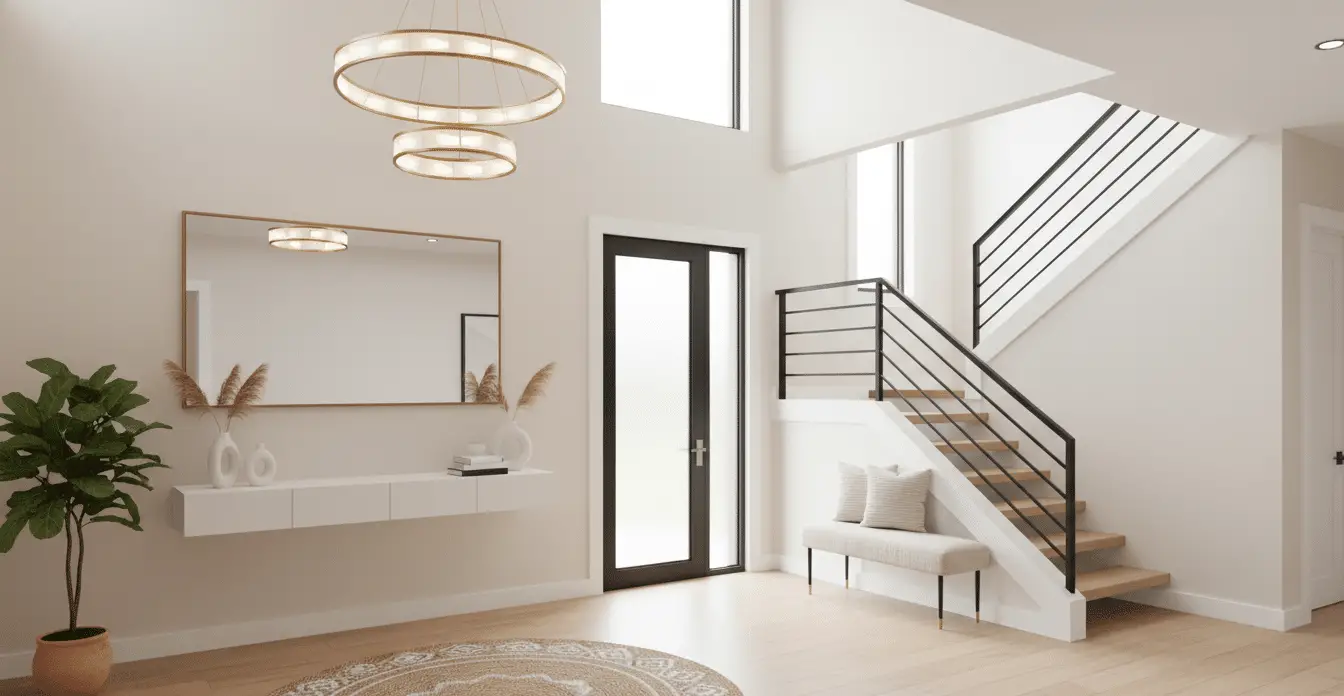
Beautiful Split Level Entryway Design Inspiration: Creative Ideas to Elevate Your Home’s First Impression
Table of Contents
Introduction
Split level homes offer unique architectural charm, but their entryways can sometimes feel narrow, dark, or disconnected from the rest of the home’s layout. Many homeowners struggle with how to make a split level entryway feel open, inviting, and functional—especially since this transitional space often leads both upstairs and downstairs. According to recent home design surveys, nearly 55% of split level homeowners say the entryway is the most challenging area to decorate, largely due to its compact footprint and staircase-driven flow. Yet when thoughtfully designed, this space can become a stunning focal point that sets the tone for the entire home.
A beautifully styled split level entryway blends practicality with aesthetics, ensuring the area welcomes guests, organizes household essentials, and enhances overall visual harmony. Whether you’re dealing with a tight foyer or a more expansive area, strategic updates can dramatically improve brightness, storage, and style. The right combination of décor, lighting, architectural details, and space-saving solutions turns the entryway into a polished transition zone rather than an overlooked threshold.
This guide offers beautiful split level entryway design inspiration with ideas suitable for every home. You’ll discover how to optimize lighting, make the most of limited space, incorporate functional storage, choose cohesive colors, and create elegant visual flow between levels. Each section includes helpful breakdowns, visuals, and thoughtful examples that make designing your perfect entryway straightforward and inspiring.
Maximizing Light and Space in a Split Level Entryway
Lighting and visual openness are two of the most significant challenges in split level entryways. Because these spaces are often compact with limited wall area, strategic design choices can help create a brighter, more expansive feel. The goal is to enhance natural light where possible, supplement with well-placed fixtures, and make the entire area feel connected to the floors above and below.
Start by evaluating the existing light sources. If the entryway has a small window, lighten the surrounding walls with soft neutrals such as warm white, pale ivory, or light greige. These shades reflect sunlight and give immediate lift to tight areas. Mirrors are another effective tool; placing one opposite a light source will visually double the space. For homes with darker flooring, consider adding a light runner or area rug to minimize contrast and create a seamless transition between levels.
Lighting fixtures should be both functional and stylish. A modern pendant, chandelier, or flush mount adds visual interest while illuminating staircases and hallways. Layered lighting, such as adding sconces or LED strip lighting along stair treads, provides depth and improves safety. Avoid heavy, bulky fixtures that visually shrink the ceiling.
Clean lines and minimal clutter help maintain a sense of openness. Stick to streamlined hooks, narrow consoles, or floating shelves that provide function without overwhelming the entryway.
Visual Breakdown: Light and Space Enhancers
| Design Element | Strategy | Benefit |
| Paint colors | Use soft neutrals | Reflects light and expands space |
| Mirrors | Place opposite windows or lights | Creates visual openness |
| Rugs | Add light-toned runners | Softens dark floors |
| Fixtures | Choose airy, modern lighting | Improves brightness and style |
| Minimal décor | Keep surfaces simple | Prevents overcrowding |
Creating Functional Storage Solutions That Fit Split Level Layouts
Storage is essential in any entryway, but split level homes require particularly efficient solutions because of compact footprints and multiple traffic paths. With people entering, exiting, heading upstairs, and moving to lower levels, the area must remain organized to avoid bottlenecks. Functional storage keeps clutter at bay while supporting the natural flow of the home.
Start with the essentials: shoes, coats, bags, keys, and seasonal accessories. Built-in benches are one of the most practical ways to incorporate storage without consuming too much space. A bench with drawers, cubbies, or baskets provides room for footwear while offering a place to sit when putting on shoes. In very small entryways, a fold-down bench mounted to the wall offers seating without taking up floor space.
Hooks are highly effective in split level homes. A row of staggered or decorative hooks keeps coats and bags accessible without overwhelming a small wall. For households with children, consider varying heights so everyone has a designated spot. Floating shelves above hook systems add additional space for baskets or decorative items.
Closets, if available, benefit from internal enhancements like shelves, shoe organizers, or labeled bins. Even a small closet can become incredibly efficient with adjustments that maximize vertical storage.
Entryway consoles can serve dual purposes: surface space for décor and drawers for keys, wallets, or mail. In extremely narrow areas, a slim wall-mounted shelf may be preferable.
Visual Breakdown: Storage Ideas for Split Level Entryways
| Storage Type | Best Use | Benefit |
| Built-in bench | Shoes, accessories | Provides seating and storage |
| Hooks | Coats, bags | Keeps items accessible |
| Floating shelves | Decorative baskets | Adds vertical storage |
| Closet systems | Seasonal items | Maximizes interior space |
| Slim console | Small essentials | Adds style without bulk |
Styling a Beautiful Split Level Entryway with Cohesive Decor
Styling a split level entryway involves balancing aesthetic appeal with practical needs. Because this area sets the tone for the upstairs and downstairs living zones, the décor should feel cohesive with the overall home design. A well-styled entryway offers a polished, welcoming look that enhances the home’s architectural character.
Begin with color scheme. Split level entryways benefit from a palette that flows naturally toward both levels, creating visual continuity. Choose colors that echo tones found in adjacent rooms, whether warm wood accents, cool grays, or earthy neutrals. Even in compact spaces, layered textures—like woven baskets, a wool rug, or a ceramic vase—add depth and character.
Artwork is a powerful styling element. A single statement piece can anchor the entryway without overwhelming it. Consider landscape prints, abstract art, or minimalist line drawings. Avoid overly busy gallery walls in tight spaces, as they can create visual clutter.
Greenery can soften the sharp lines of staircases and brighten darker corners. A small potted plant on a floating shelf or a tall faux tree beside the entry door adds life and vibrancy.
For décor placement, focus on intentionality. Keep surfaces uncluttered with a small tray, a vase, or a styled candle. In a split level design, symmetry helps maintain balance as the eye naturally travels up and down the stairs.
Visual Breakdown: Décor Elements That Elevate Entryways
| Décor Item | Use | Impact |
| Artwork | Wall focal point | Adds personality |
| Rug | Grounding element | Softens and defines space |
| Greenery | Natural accent | Brightens the room |
| Trays | Surface organization | Keeps small items tidy |
| Textured baskets | Conceal storage | Adds warmth |
Updating Stairs and Railings for a Modern Split Level Entryway
Stairs and railings play a major role in the look of a split level entryway since they dominate the space visually. Modernizing these architectural elements can transform an outdated foyer into a contemporary, eye-catching entrance.
Start with the stair treads. Refinishing wood stairs in a warm or cool stain can instantly update the look. Painted risers in crisp white or soft gray provide contrast and highlight the architectural lines. For homeowners who prefer carpeted stairs, a runner in a modern pattern—such as herringbone or subtle stripes—adds stylish traction and noise reduction.
Railings are equally influential. Replacing traditional wooden spindles with metal balusters or sleek horizontal rails gives the space a contemporary feel. Black metal railings are especially popular in modern and transitional homes because they add bold contrast while maintaining an open, airy look. If full replacement isn’t in the budget, painting existing railings can still provide a fresh, updated look.
When updating stairs and railings, consider how the design blends with the surrounding levels. Continuity matters—materials, colors, and lines should feel harmonious throughout the home.
Visual Breakdown: Stair and Railing Updates
| Update | Best For | Style Benefit |
| Wood refinishing | Traditional homes | Warmer, modern feel |
| Painted risers | Small entryways | Brightens and expands space |
| Metal balusters | Modern homes | Adds bold, sleek contrast |
| Stair runner | High traffic | Adds texture and safety |
| Painted railing | Budget updates | Provides refreshed look |
Creating Visual Flow Between Upstairs and Downstairs Levels
Visual flow is one of the most important aspects of designing a split level entryway. Because the entry sits between floors, it must serve as a transition point that feels cohesive, intentional, and aesthetically balanced. Successful visual flow enhances comfort and makes the home feel more unified.
Start by establishing consistent colors. A complementary palette that appears at both levels—whether through wall colors, flooring tones, or accent décor—creates a sense of connection. Even if the upstairs and downstairs serve different purposes, color continuity ties them together.
Flooring also plays a significant role. Where possible, coordinate materials or tones so the transition between levels feels smooth. If matching flooring isn’t feasible, use rugs or a runner to bridge the contrast.
Lighting helps guide the eye from one level to another. A central statement fixture visible from both floors creates cohesion and elegance. Accent lighting on stair risers or along the railing enhances the architectural detail while aiding visibility.
Decorative elements such as artwork or mirrors can strategically direct attention upward or downward. Choose items that complement both adjoining spaces to prevent the entryway from feeling disconnected.
Visual Breakdown: Elements That Improve Flow
| Element | Strategy | Benefit |
| Color palette | Coordinate across levels | Creates unity |
| Flooring | Use complementary tones | Smooths transitions |
| Lighting | Central fixtures | Enhances visual connection |
| Artwork | Balanced placement | Adds continuity |
| Rugs | Bridge contrasting floors | Grounds the space |
Adding Architectural Details to Elevate Your Split Level Entryway
Architectural details bring sophistication and depth to a split level entryway, turning an otherwise simple transition space into a design statement. Even small changes can create an elevated look that feels thoughtful and custom.
Consider adding wall paneling or wainscoting. These features introduce texture and visual interest while guiding the eye upward. Vertical paneling can make low ceilings feel taller, while board and batten adds a modern farmhouse or transitional touch.
Upgrading the front door is another impactful idea. A modern door with glass panels enhances natural light and sets a welcoming tone. Hardware updates—like a sleek handle set or a statement doorknocker—add refined detail.
Architectural lighting, such as a sculptural pendant or multi-light fixture, reinforces the home’s design style. For taller entryways, tiered lighting offers a grand, captivating look.
Finally, consider adding built-in niches or alcoves. These architectural accents offer display space and help soften the transitions between the stairs and landing.
Visual Breakdown: Architectural Enhancements
| Feature | Use | Impact |
| Wall paneling | Adds texture | Elevates visual interest |
| Updated door | Enhances entry | Improves natural light |
| Modern lighting | Architectural focal point | Adds drama and style |
| Alcoves | Decorative displays | Introduces dimension |
| Trim updates | Clean edges | Creates polished look |
Conclusion
A beautiful split level entryway sets the tone for the home by blending style, function, and thoughtful design. Through strategic lighting, efficient storage, cohesive décor, updated architectural elements, and visual flow enhancements, even the most compact entryway can feel welcoming and polished. Split level homes offer unique opportunities for creativity, and with intentional choices, you can transform this transitional space into an inspiring feature that elevates the entire home. The right design brings harmony to both levels and ensures the entryway reflects the warmth and style of the home it introduces.