
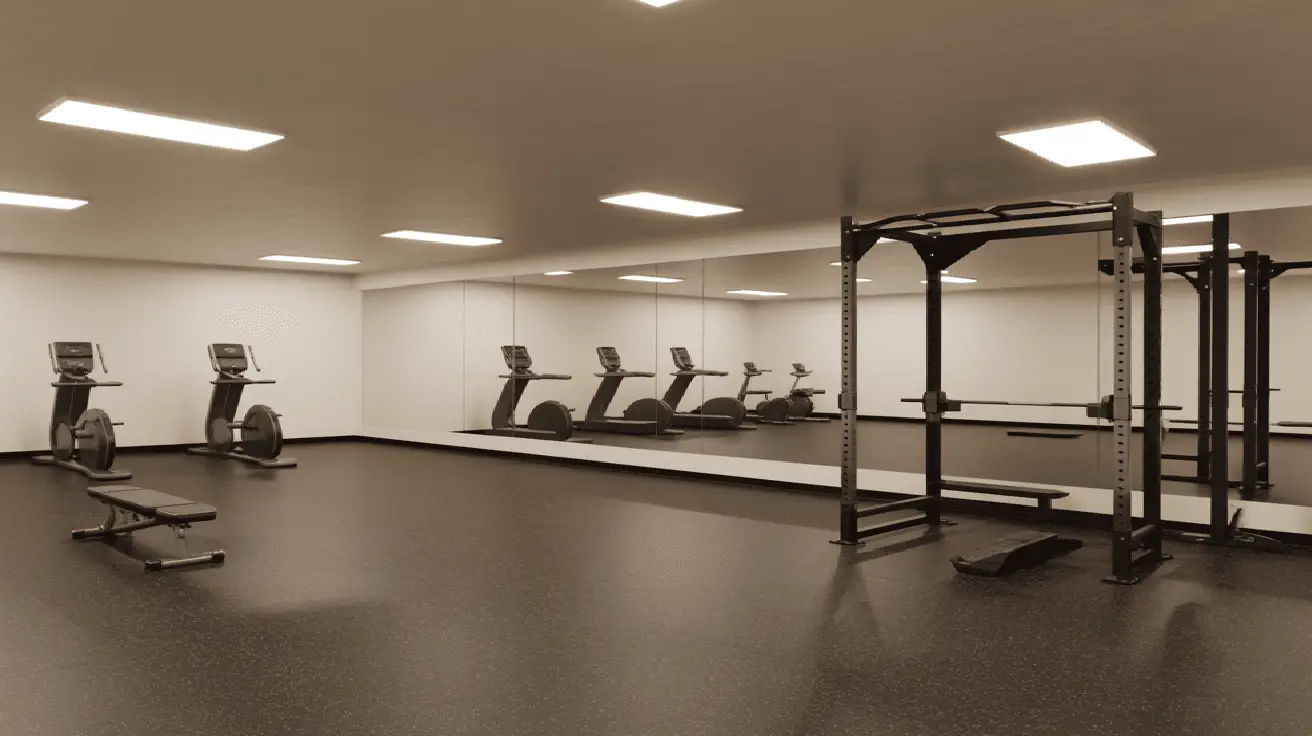
Compact Basement Gym Ideas for Low Ceilings That Maximize Space and Performance
Table of Contents
Introduction
Basements often hold enormous potential for home gyms—yet low ceilings can make the space feel cramped, limiting equipment choices and impacting the workout experience. Many homeowners assume that low ceilings make a gym impossible, but with smart planning and design, even the most compact basement can become a functional and motivating fitness area. In fact, studies on spatial perception show that thoughtful layout, lighting, and equipment selection can dramatically improve how open and comfortable a low-ceiling room feels.
Designing a compact basement gym requires creativity and intention. You must consider ceiling height, circulation, safety, and the right mix of equipment. But with clever design choices—like low-profile machines, wall-mounted solutions, and strategic lighting—you can turn a challenging basement layout into an efficient, inspiring workout zone. This guide explores practical ideas tailored specifically for low ceilings, ensuring every square foot works hard for you.
Throughout this article, you’ll discover storage solutions, equipment ideas, ceiling-friendly layouts, visual tricks to enhance perceived height, and tips for multi-use functionality. Whether your workout style leans toward strength training, cardio, yoga, or HIIT, these compact basement gym ideas will help you design a space that feels open, motivating, and perfectly customized to your fitness goals.
Choosing Low-Profile Equipment That Fits Tight Basement Spaces
Low-profile equipment is essential when designing a compact basement gym for low ceilings. Traditional machines such as tall cable towers or full squat racks may not fit comfortably, but many modern alternatives offer outstanding functionality in a smaller footprint. Adjustable dumbbells, collapsible benches, under-desk treadmills, compact rowing machines, and short power racks allow you to build a complete gym without sacrificing headroom.
Short squat racks or half racks are excellent for strength training. They provide stability and versatility while remaining safely below ceiling-level limitations. Adjustable benches can be stored flat when not in use, opening valuable floor space for stretching or bodyweight exercises. For cardio, consider compact machines like air bikes, small ellipticals, or foldable treadmills designed specifically for low spaces.
For functional training, resistance bands, suspension trainers, and kettlebells add dynamic range without requiring tall equipment. These pieces are ideal for varying intensities and targeting multiple muscle groups.
Low-Profile Equipment Guide
| Equipment Type | Height Efficiency | Best For | Key Benefit |
| Adjustable dumbbells | Very high | Strength | Replaces full rack |
| Compact bench | High | Full-body training | Easy storage |
| Short power rack | Moderate | Squats, presses | Fits low ceilings |
| Foldable treadmill | High | Cardio | Space-saving |
| Kettlebells/bands | Very high | Functional workouts | Versatile |
Using Smart Layout Designs to Maximize Low-Ceiling Basements
A successful compact basement gym relies on a layout that works with—not against—the limitations of the room. Low ceilings often reduce vertical movement, making layout decisions crucial for comfort, safety, and efficiency. The goal is to use the outer perimeter for equipment and keep the central area open for mobility.
Begin by measuring ceiling height and identifying the tallest equipment you plan to use. Place lower-profile machines beneath the lowest ceiling areas and reserve slightly higher sections for anything requiring additional clearance. Mirrors along side walls enhance depth while allowing you to monitor form during training. Placing mirrors higher on the wall can also visually lift the room’s height.
Position cardio machines near outlets and ventilation to maintain airflow. For strength zones, place benches and racks where you have unrestricted arm extensions. Create an open floor zone for stretching, yoga, or HIIT workouts—activities that benefit from unobstructed movement.
Equipment zoning helps keep the gym tidy and intuitive. Assign dedicated areas for cardio, strength, and recovery to ensure smooth transitions during workouts and reduce clutter.
Layout Planning Table
| Zone | Best Placement | Purpose | Space Benefit |
| Strength area | Tallest ceiling section | Lifts & benches | Maximizes clearance |
| Cardio zone | Near outlets/airflow | Treadmill/bike | Enhances comfort |
| Open floor | Center of room | HIIT, mobility | Creates openness |
| Storage area | Corners/walls | Equipment organization | Prevents clutter |
Maximizing Light and Color to Visually Expand Low Ceilings
Lighting and color dramatically shape how spacious your basement gym feels. Dark areas can make low ceilings appear even lower, while strategic illumination creates visual lift. Start with a layered lighting plan: recessed LED ceiling lights are ideal because they sit flush and avoid the drop-off effect of hanging fixtures. Supplement with wall sconces, under-cabinet lighting, or LED strip lights to soften shadows and distribute light evenly.
Light colors can visually expand the space. Soft whites, cool grays, and pale neutrals brighten the room while making ceilings feel higher. If you prefer some contrast, use darker tones only on lower walls or floors while keeping the ceiling bright. This directs the eye upward.
Mirrors multiply light and add depth. Installing a large mirror panel or a mirrored wall creates the illusion of height and dimension—especially effective in compact gyms. Reflective or satin-finish flooring materials also contribute to brightness.
Warm lighting evokes comfort for stretching or yoga sessions, while cooler lighting energizes strength and cardio workouts. A smart switch or dimmer allows you to adjust lighting based on your workout style.
Lighting & Color Planning Table
| Element | Ideal Choice | Visual Benefit | Mood Effect |
| Ceiling lights | Recessed LEDs | No downward hang | Bright & open |
| Wall color | Soft neutrals | Height illusion | Clean & modern |
| Mirrors | Large panels | Expands space | Motivational |
| Accent lighting | LED strips | Softens shadows | Ambiance |
Choosing Space-Saving Storage Solutions for Compact Gyms
Storage is essential in small basement gyms, where clutter quickly reduces usable space. Compact, wall-mounted, or multipurpose storage solutions keep items organized while preserving floor area. Begin by installing narrow wall-mounted racks for dumbbells, barbells, or kettlebells. Vertical storage makes excellent use of wall height—especially when horizontal space is tight.
Floating shelves or pegboards provide customizable storage for small accessories like resistance bands, jump ropes, yoga blocks, and towels. Pegboards allow dynamic rearrangement and maintain an industrial-modern aesthetic. Closed cabinets work well if your gym doubles as a multi-use room or you prefer a polished look.
Under-bench storage maximizes furniture utility. Rolling bins or drawers beneath a workout bench provide space for mats, sliders, and ankle weights. For cardio equipment, folding treadmills or collapsible rowing machines can be stored upright in a designated corner.
Labeling zones helps maintain long-term organization. By categorizing gear, you’ll streamline transitions during workouts and reduce clutter build-up.
Storage Solutions Table
| Storage Type | Best Use | Benefit | Space Efficiency |
| Wall racks | Dumbbells/bars | Clears floor | High |
| Pegboard | Accessories | Customizable | Very high |
| Under-bench storage | Small gear | Hidden storage | Moderate |
| Folding machines | Cardio equipment | Compact stowaway | High |
Flooring Options That Work Well in Low-Ceiling Gyms
Flooring impacts comfort, acoustics, and safety—especially in a compact basement gym. Rubber flooring remains one of the best choices due to its durability, shock absorption, and sound-dampening qualities. Interlocking tiles or rolled rubber both work well for low ceilings because they add minimal height while offering substantial cushioning.
Foam tiles are suitable for low-impact workouts like yoga or bodyweight routines. They provide comfort but are less durable under heavy equipment. Vinyl plank flooring offers a clean, modern look and works well for multipurpose basements where the gym shares space with other functions.
Thicker flooring is not ideal for low ceilings, so aim for materials that stay between 1/4 to 3/8 inch thick. Opt for dark tones if you want a grounding effect, or light tones to visually enhance openness. Paying attention to anti-slip textures is important for safety, especially in basement environments prone to humidity.
Flooring Guide
| Flooring Type | Best For | Thickness | Benefit |
| Rubber tiles | Heavy lifting | Thin–moderate | Durable & safe |
| Foam tiles | Stretch & yoga | Thin | Comfortable |
| Vinyl planks | Multi-use rooms | Very thin | Stylish & easy clean |
| Rubber rolls | Full-room coverage | Thin | Seamless look |
Creating Multi-Purpose Zones in Compact Basement Gyms
In small basement gyms, designing multi-purpose zones enhances usability and makes the space feel larger. Instead of dedicating the entire area to machines, divide the space into flexible sections that serve multiple workout needs.
A foldable weight bench can shift between strength and mobility exercises. A wall-mounted fold-down desk can turn the gym into a hybrid home office or recovery area. Using storage ottomans allows seating while hiding equipment. For cardio, choose portable machines like compact bikes that can be moved when extra floor space is needed.
Zoning with rugs or flooring transitions helps visually separate areas without needing additional walls. For instance, rubber flooring in the strength area and foam flooring in the stretching zone define purpose while maintaining cohesion. Lighting variation—cooler task lighting for cardio and warm lighting for yoga—also enhances multi-purpose functionality.
Multi-Purpose Zone Ideas
| Zone | Function | Best Features | Flexibility |
| Strength | Lifting | Bench, rack | High |
| Cardio | Movement | Portable machines | High |
| Stretching | Mobility | Foam flooring | Very high |
| Hybrid | Office/Recovery | Fold-down desk | Medium |
Visual Tricks to Make Low Ceilings Feel Higher
Low ceilings may seem restrictive, but clever design techniques can significantly enhance vertical perception. Start by painting ceilings a lighter shade than your walls to create lift. Another effective trick is vertical striping or tall decorative elements, which guide the eye upward.
Avoid overhead fixtures that hang down—these visually lower the ceiling. Instead, use recessed or flush lighting. Placing mirrors higher on the wall intensifies the illusion of height, especially when reflecting vertical elements.
Art pieces or framed prints arranged in vertical stacks help elongate visual lines. Keeping windows or window wells unobstructed amplifies natural light, which strongly contributes to the perception of height.
Minimal furniture and clear floor lines also prevent visual heaviness. If the room has exposed ductwork or pipes, painting them the same color as the ceiling helps blend them in rather than making them stand out.
Height-Enhancing Strategies Table
| Technique | Effect | Difficulty | Best Use |
| Light ceilings | Visual lift | Easy | Any gym |
| Recessed lighting | Clean overhead | Moderate | Low ceilings |
| Vertical décor | Elongates space | Easy | Wall areas |
| Uniform ceiling color | Hides ductwork | Easy | Older basements |
Conclusion
Creating a compact basement gym in a low-ceiling space requires strategic planning, but the results can be both functional and inspiring. With low-profile equipment, smart layouts, layered lighting, and clever storage solutions, even a tight basement can become an efficient workout haven. Flooring choices, zoning techniques, and visual enhancements all contribute to a space that feels larger, brighter, and more motivating. With thoughtful design, your basement can offer everything you need for strength, cardio, stretching, and wellness—regardless of ceiling height.