
Cozy Big Living Room Ideas for Creating Warm, Inviting, and Stylish Large Spaces
Table of Contents
Introduction
Large living rooms are a luxury many homeowners dream of, but when it comes to decorating them, the scale can feel surprisingly overwhelming. In a recent home design study, nearly 58% of respondents with spacious living rooms expressed difficulty in making the area feel warm and inviting. Big rooms offer endless potential—multiple seating zones, abundant natural light, and opportunities for creative layout—but without thoughtful design, they can feel empty, echo-filled, or lacking in cozy atmosphere.
Crafting a cozy big living room is all about balance. You want to preserve the openness and elegance of a large space while incorporating the warmth and intimacy typically found in smaller rooms. This requires strategic layering, intentional furniture placement, mood-enhancing lighting, and cohesive décor choices that bring harmony and comfort into the room.
This guide explores cozy big living room ideas designed specifically for large spaces. You’ll discover how to define zones without closing off the room, how to use textures to build warmth, how lighting can shape mood, and how furniture scale influences comfort. Each section includes practical tips, detailed explanations, and visual frameworks to help you create a big living room that feels welcoming, stylish, and deeply relaxing.
Creating Multiple Seating Zones for a Cozy and Functional Large Living Room
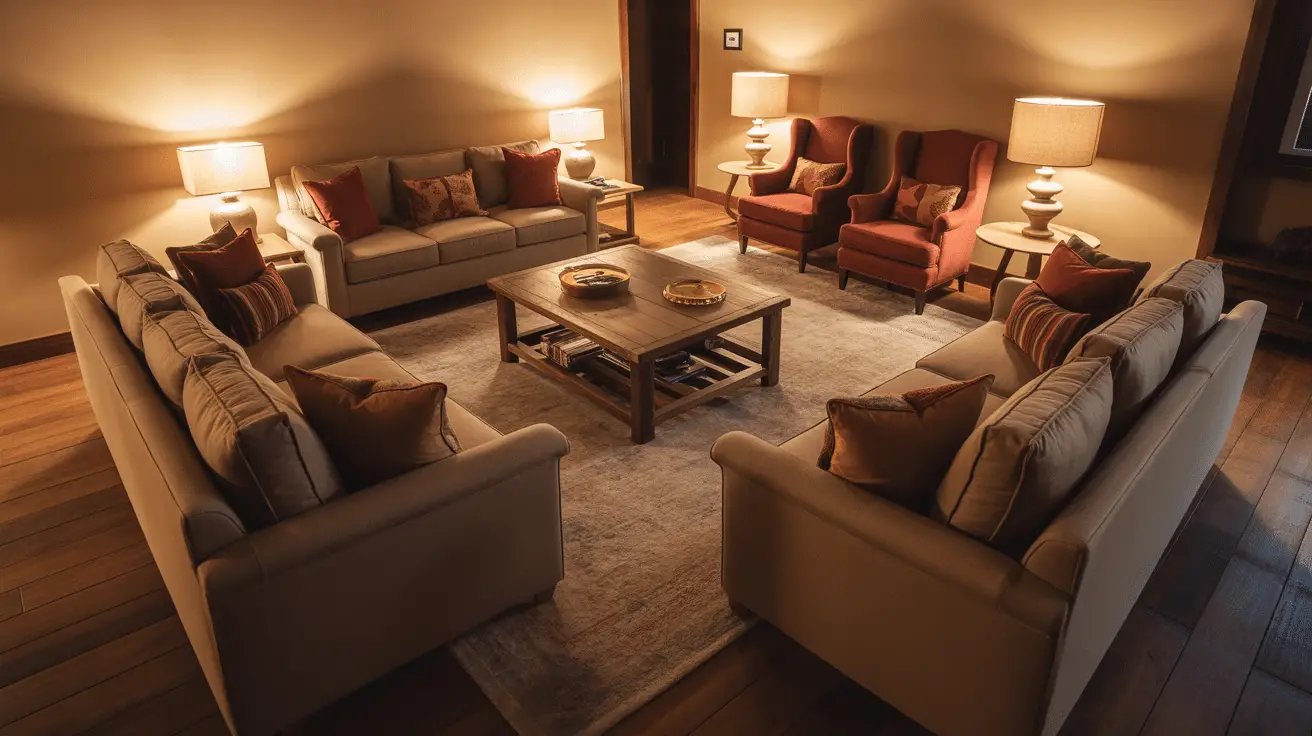
The key to making a big living room feel cozy is breaking it into intentional zones. Rather than leaving the furniture scattered along the perimeter, dividing the space into smaller functional areas helps establish intimacy, flow, and practical usability. A seating zone for conversation, a reading nook, an entertainment area, or even a small game table can transform an expansive room into a set of purposeful and comfortable spaces.
Start with your primary seating arrangement. Position a sectional or a pair of sofas around a central anchor elements such as a fireplace, coffee table, or media unit. This creates a natural gathering spot that feels warm and inviting. Next, use armchairs, accent chairs, or chaise lounges to form secondary seating clusters. Rug placement is especially important in large rooms—each zone should sit on its own rug to create visual boundaries without using walls.
Furniture arrangement can also guide traffic flow. Keeping pathways open while grouping furniture close together ensures the room feels intimate rather than spacious to the point of emptiness. Adding small functional zones—like a reading area near a window or a console table with storage near the entrance—also brings purpose and coziness to large, open layouts.
Zone Planning Table
| Zone Type | Purpose | Best Elements |
| Main seating | Gather & converse | Sofa, coffee table, rug |
| Reading nook | Relaxation | Armchair, lamp, small table |
| Entertainment zone | TV viewing | Sectional, media unit |
| Accent area | Visual interest | Console table, decor |
Layered Textures and Soft Materials That Add Warmth to Large Spaces
In big living rooms, textures play a crucial role in creating warmth, depth, and coziness. Without adequate layering, the space can feel flat or echoey. Rich materials—such as wool, velvet, boucle, knit fabrics, woven baskets, and natural woods—add tactile comfort and visual softness. The larger the room, the more essential these textural layers become.
Start with soft furnishings. Plush throw blankets, oversized pillows, and high-pile rugs ground the room and make seating areas feel intimate. Rugs, in particular, help absorb sound and reduce the sense of emptiness that sometimes comes with large open rooms. Choose rugs that are appropriately sized—too small and they will only highlight the vastness of the floor.
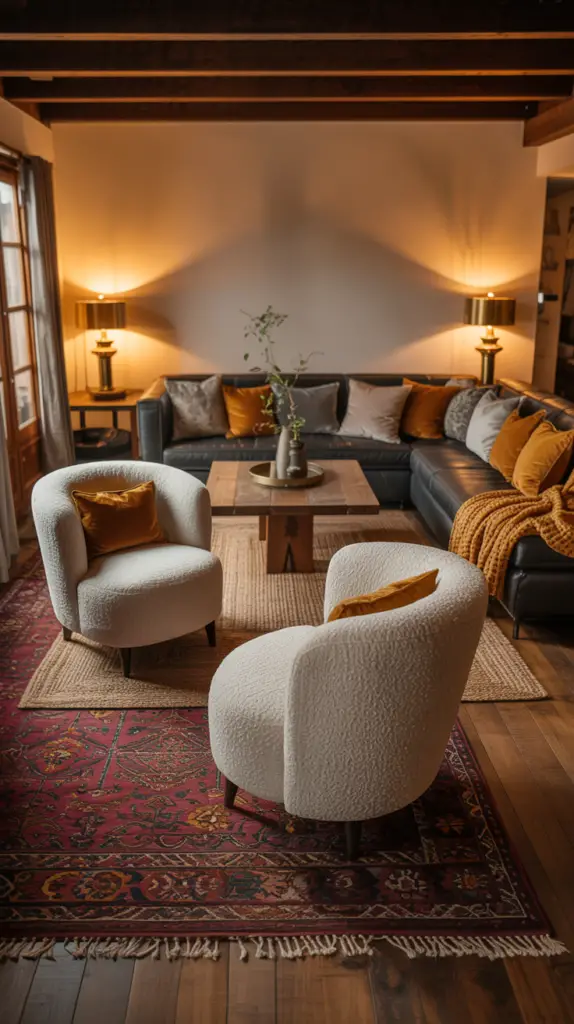
Textured upholstery, like boucle armchairs or a velvet sofa, also brings warmth. Wooden furniture pieces—coffee tables, sideboards, shelving—add organic grounding tones, balancing out the room’s scale. Curtains made of thick linen or cotton soften windows and create a cocoon-like feel. Even smaller details, such as woven lampshades or ceramic décor, contribute to the sensory richness of the space.
Textures not only add coziness, but they also create visual layers that make the room feel thoughtfully designed and lived-in.
Texture Layering Table
| Texture Type | Effect | Best Placement |
| Plush fabrics | Soft & cozy | Pillows, blankets |
| Natural wood | Warm & organic | Furniture |
| High-pile rugs | Grounding & soft | Seating areas |
| Linen or cotton | Airy warmth | Curtains |
Lighting Techniques That Make Big Living Rooms Feel Cozy and Inviting
Lighting has the power to transform a large living room from overwhelming to welcoming. In spacious layouts, relying solely on overhead lights can create harshness and flatten the room’s character. Instead, layered lighting—accent, ambient, and task—adds dimension and helps define zones. Warm light temperatures (2700K–3000K) create a soothing ambiance ideal for cozy environments.
Begin by softening overhead lighting with fixtures that diffuse illumination, such as pendant lights or chandeliers with fabric shades. Then bring the light level lower into the room with floor lamps, table lamps, and wall sconces. This draws the eye down and establishes intimacy in otherwise expansive areas. Placing lamps in multiple corners prevents dark pockets and ensures balanced illumination.
Accent lighting adds depth and character. Backlighting shelves, placing candles on coffee tables, or including LED strip lighting behind large furniture pieces can create a layered glow that feels warm and enveloping. Dimmer switches are essential for flexibility, allowing you to adjust mood based on time of day or activity.
Instead of thinking of lighting as functional alone, treat it as a design tool that shapes atmosphere, warmth, and the overall coziness of your large living room.
Lighting Strategy Guide
| Lighting Type | Purpose | Best Use |
| Ambient | General glow | Ceiling fixtures |
| Task | Activity lighting | Lamps near seating |
| Accent | Depth & mood | Shelf lights, candles |
| Decorative | Style element | Sculptural lighting |
Selecting the Right Furniture Scale to Fill Space Without Overcrowding
Choosing furniture for a big living room requires careful attention to scale. Too-small pieces can look lost, while oversized items can overwhelm the space. The right balance ensures both functionality and visual harmony. Sectionals, large sofas, oversized accent chairs, and full-length coffee tables often work best in large living rooms because they complement the room’s proportions.
Start with anchor pieces. A spacious sectional or a pair of full-sized sofas can create a meaningful seating area without leaving awkward empty space. Avoid placing furniture against the walls; instead, float pieces toward the center to create cozy grouping and improve flow. Coffee tables should be large enough to serve all seats comfortably—this enhances practicality while grounding the arrangement.
Side tables, console tables, and bookshelves help fill vertical and horizontal space without cluttering. For instance, taller shelving units or floor-to-ceiling built-ins add height and structure. Choosing substantial furniture not only fills the space but also makes the room feel luxurious and intentionally designed.
Large furniture doesn’t mean heavy design. Opt for clean lines, soft curves, or lighter tones if you want to preserve an airy feeling while still honoring the room’s scale.
Furniture Scale Table
| Furniture Type | Impact | Best Use |
| Sectional sofa | Anchors space | Main seating area |
| Oversized chairs | Adds comfort | Reading or lounge zones |
| Large coffee table | Grounds layout | Between seating |
| Tall bookshelves | Fills vertical space | Accent walls |
Warm Color Palettes That Make Big Living Rooms Feel Cozy
Color has a profound impact on the mood of a large living room. Warm tones—such as caramel, terracotta, deep taupe, olive green, and muted gold—create comfort and balance the openness of big spaces. While large rooms can handle darker hues, using them intentionally creates intimacy without sacrificing elegance.
Starting with a neutral base allows flexibility. Soft beige, cream, or warm white walls provide a cozy backdrop for layering richer colors in furniture and décor. Adding earthy tones through rugs, pillows, curtains, or artwork helps establish visual warmth. Deep hues like burnt sienna, charcoal, or olive can be used sparingly to add richness and contrast.
Color repetition is crucial in big living rooms. Introducing the same hues in multiple areas helps the room feel cohesive rather than scattered. For example, matching terracotta pillows with a warm-toned art piece across the room creates continuity.
Using warm metallic accents—brass, bronze, or copper—also enhances coziness by adding subtle glow. These reflective elements bounce warm light around the room, contributing to a softer atmosphere.
Color Palette Table
| Color Type | Mood | Best Use |
| Warm neutrals | Cozy & calm | Walls and large furniture |
| Earthy tones | Organic warmth | Textiles, décor |
| Deep hues | Mood & depth | Accent walls, art |
| Metallics | Soft glow | Lighting & accessories |
Using Rugs to Define Space and Add Comfort in Large Living Rooms
Rugs are essential in big living rooms because they anchor furniture, enhance comfort, and define separate zones. Without rugs, large areas can feel disjointed, echoey, and visually cold. Choosing the right size, material, and placement of rugs helps create structure and coziness.
In large living rooms, oversized rugs are often necessary. A rug should ideally be large enough for all seating furniture to sit fully or partially on top of it—this visually connects the pieces and forms a cohesive area. Using multiple rugs can delineate distinct zones, such as separating the main seating area from a reading nook or entertainment space.
Material choice influences comfort. High-pile or plush rugs offer warmth and softness underfoot, perfect for cozy seating areas. Flatweave or wool rugs add texture and durability while maintaining comfort. Patterns can be used strategically to introduce visual interest, but in minimalist spaces, neutral or subtle patterns help maintain calm.
Rug layering is another technique that adds dimension. Placing a smaller textured rug atop a larger neutral one enhances warmth and style, making the seating area feel even more inviting.
Rug Selection Table
| Rug Type | Benefit | Best Use |
| Oversized rug | Defines main zone | Under large seating |
| High-pile rug | Adds coziness | Lounge areas |
| Flatweave rug | Durable texture | High-traffic areas |
| Layered rugs | Style & depth | Accent seating areas |
Conclusion
Designing a cozy big living room is all about combining scale, warmth, and thoughtful layouts to bring intimacy into a spacious environment. By creating multiple seating zones, layering textures, choosing warm lighting, selecting appropriately scaled furniture, and incorporating grounding rugs, you transform a large room into a welcoming retreat. Warm color palettes, functional décor, and purposeful design choices ensure your space feels harmonious, inviting, and perfectly balanced. With the right approach, even the largest living room can become a cozy haven where relaxation and comfort come naturally.