
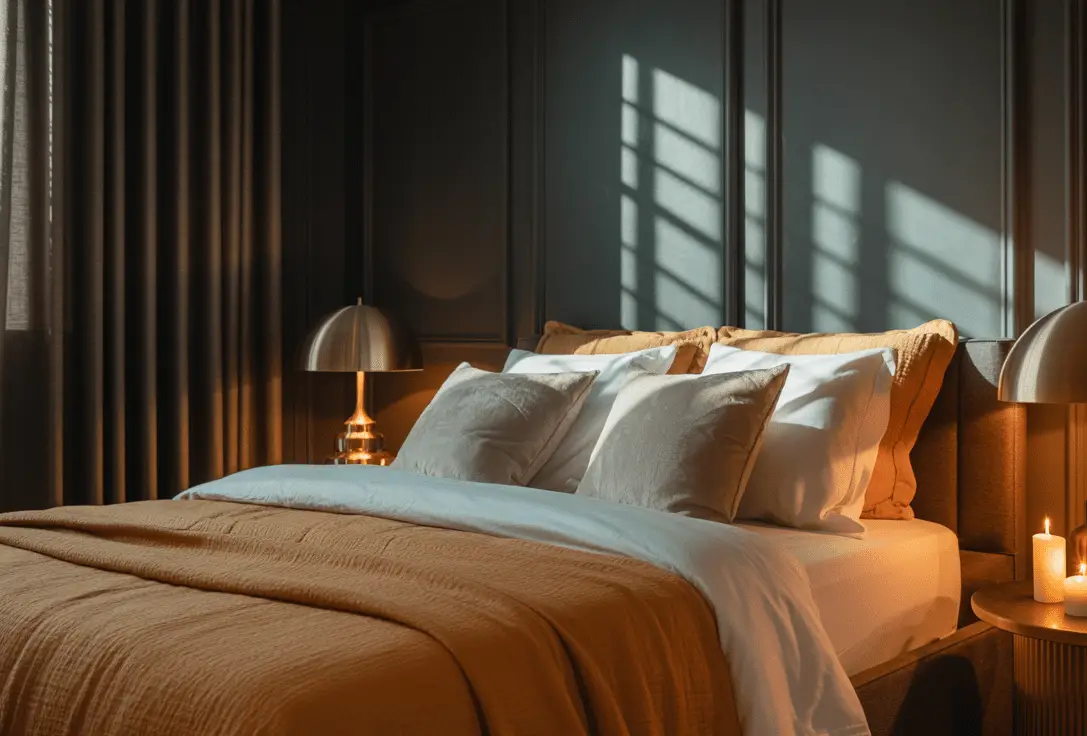
Create a Cozy Moody Bedroom That Feels Like a Personal Sanctuary
Table of Contents
Introduction
Imagine walking into a bedroom that instantly wraps you in calm—a place where deep tones, soft lighting, and layered textures make the world outside melt away. In a time when our homes have become havens of rest and restoration, the idea of creating a cozy moody bedroom has never been more appealing.
Studies show that our environment directly affects our mental well-being and sleep quality. A thoughtfully designed bedroom can reduce stress, improve rest, and help you recharge. The “moody” aesthetic, with its blend of shadowy hues, soft textures, and intimate lighting, offers a perfect balance of sophistication and comfort. It’s not dark or gloomy—it’s warm, enveloping, and deeply personal.
In this guide, we’ll explore how to create a cozy moody bedroom that feels like a true sanctuary. You’ll discover how to choose the right color palette, lighting, textures, and decor to transform your space into an elegant retreat. Whether your style is minimalist, rustic, or contemporary, these ideas will help you design a bedroom that feels both stylish and soul-soothing.
Embracing the Moody Aesthetic
The essence of a moody bedroom lies in its atmosphere—an artful interplay of darkness and light. Unlike bright, airy interiors, a moody room draws you in with rich tones and cozy textures that create a cocoon-like effect.
To achieve this, focus on depth. Deep shades like charcoal, forest green, navy blue, or aubergine anchor the room with sophistication. Pair them with warm neutrals or metallic accents—like brass, bronze, or gold—for balance and contrast. The goal is not to make the space dark, but to create a layered, emotive environment.
Lighting plays a critical role here. Instead of harsh overhead fixtures, use multiple light sources—wall sconces, bedside lamps, and candles—to cast a warm, inviting glow. The strategic use of shadows adds dimension and softness, making the space feel intimate and calm.
| Design Element | Example | Purpose |
| Wall Colors | Charcoal gray, forest green | Adds depth and coziness |
| Accents | Brass, gold, black metal | Creates elegant contrast |
| Lighting | Lamps, sconces, candles | Sets a warm, inviting mood |
Choosing the Perfect Color Palette
Color is the foundation of your bedroom’s mood. In a cozy moody space, it defines comfort and sophistication. Darker hues don’t just add drama—they create warmth and intimacy when paired with the right tones.
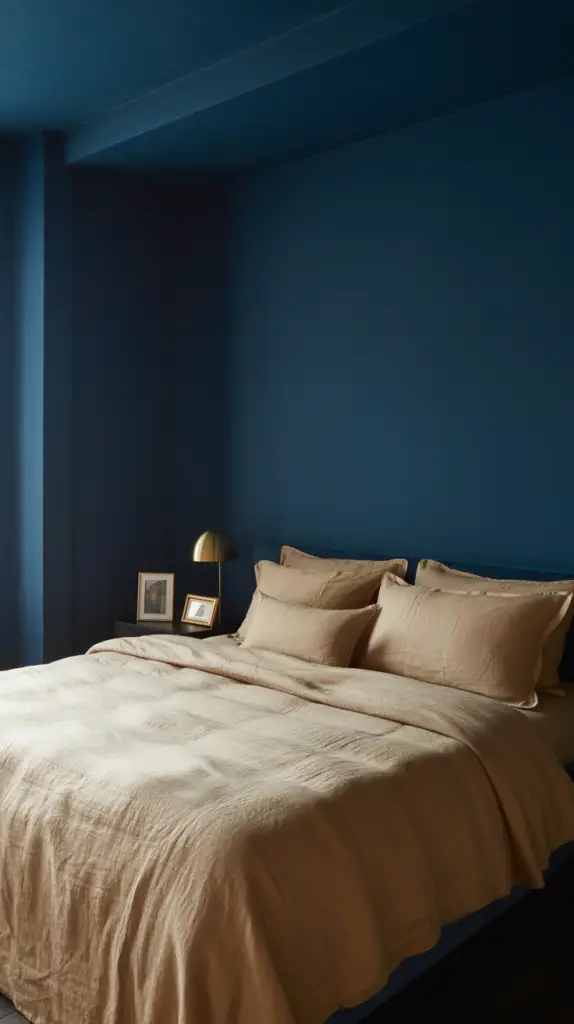
Start by selecting a dominant color that resonates with your personality. Deep blues and greens bring a tranquil, nature-inspired feel, while shades like wine, espresso, or soft black evoke luxury and calm. Then, balance these bold tones with muted neutrals—creams, taupes, or blush undertones—to prevent the room from feeling too heavy.
You can also experiment with monochromatic schemes. Using varying shades of the same color across walls, furniture, and decor maintains harmony while adding visual texture. For those hesitant to paint all walls dark, try an accent wall or wainscoting in a rich hue to anchor the design without overwhelming the space.
| Palette Type | Primary Color | Complementary Tone | Mood Effect |
| Classic | Deep navy | Soft white | Calm and timeless |
| Natural | Olive green | Warm beige | Grounded and earthy |
| Dramatic | Charcoal gray | Blush pink | Elegant and romantic |
Layering Textures for Comfort and Depth
A moody bedroom’s warmth often comes from its textures rather than its colors. Texture creates visual and tactile richness, transforming a plain room into a cozy haven.
Start with the basics—bedding and textiles. Choose plush materials like velvet, linen, and cotton blends for a luxurious yet approachable look. A soft, layered bedspread with throw pillows and blankets in contrasting fabrics creates comfort and visual interest.
Incorporate natural elements like wood, rattan, or wool to add warmth and balance to darker tones. A chunky knit throw or sheepskin rug adds softness, while wooden side tables or woven baskets ground the space with organic charm.
Layering textures also applies to walls and windows. Matte paint finishes, fabric headboards, and heavy curtains can add richness and sound absorption, making your room feel even more intimate.
| Texture Type | Example Material | Purpose |
| Soft | Velvet, linen, cotton | Comfort and warmth |
| Natural | Wood, rattan, wool | Adds grounding contrast |
| Cozy | Faux fur, knit, boucle | Invites relaxation |
Lighting That Enhances the Sanctuary Feel
Lighting is the soul of a cozy moody bedroom—it dictates how every color, shadow, and texture interacts. The right lighting creates atmosphere, depth, and serenity.
Start by layering light sources. Combine ambient (general), task (functional), and accent (decorative) lighting for flexibility. Ambient light can come from dimmable ceiling fixtures or floor lamps. Task lighting near the bed, such as wall-mounted reading lamps or pendant lights, adds convenience without harsh brightness. Accent lighting—like candles or LED strips behind the headboard—creates warmth and intimacy.
Consider the color temperature of your bulbs. Opt for warm white light (2700K–3000K) to mimic natural evening glow. Avoid cool or blue-toned bulbs, which can disrupt the calm aesthetic and your sleep cycle.
Lighting placement also matters. Positioning lights to highlight specific textures—like a velvet curtain or wooden panel—adds visual drama and dimension without cluttering the room.
| Lighting Type | Example Fixture | Mood Effect |
| Ambient | Pendant or flush mount | Soft overall glow |
| Task | Wall sconces, bedside lamps | Focused functionality |
| Accent | Candles, LED strips | Adds warmth and atmosphere |
Curating Furniture and Decor with Intention
In a cozy moody bedroom, every piece of furniture should feel intentional. Since the color palette and lighting already carry visual weight, focus on furniture that complements the aesthetic without overwhelming the space.
Opt for pieces with clean lines and natural materials. Wooden or upholstered bed frames in dark stains or neutral fabrics create the perfect foundation. Avoid overly glossy finishes—matte or textured surfaces maintain the moody feel.
When it comes to decor, less is more. Choose meaningful items that evoke calm or personal connection—framed art, candles, or ceramic vases in muted tones. Metallic accents, like brass lamps or bronze trays, introduce a subtle glow that catches light beautifully against darker surroundings.
If you have the space, include a cozy reading nook with a velvet chair and a small table. This not only adds function but also enhances the sanctuary vibe, offering a personal retreat within your bedroom.
| Decor Element | Material/Style | Purpose |
| Bed Frame | Wood, upholstered linen | Foundational comfort |
| Accent Pieces | Brass, ceramic | Adds elegance and texture |
| Seating | Velvet armchair | Creates relaxation zone |
Incorporating Nature for Tranquility
Bringing nature indoors adds softness and balance to moody interiors. The contrast of organic life against darker tones breathes freshness and vitality into the space.
Choose low-maintenance plants like snake plants, ferns, or pothos that thrive in low-light environments. Their green hues pop beautifully against dark walls, adding both texture and visual relief.
Natural materials like jute rugs, rattan baskets, and stone decor pieces introduce grounding elements. You can also incorporate natural scents—woodsy candles, eucalyptus bundles, or linen sprays—to enhance the sensory experience.
Even natural imagery—landscape paintings or botanical prints—can evoke serenity without cluttering your design. The goal is to create a quiet dialogue between the natural and the refined.
| Natural Element | Example | Benefit |
| Plants | Ferns, pothos | Adds freshness and color |
| Materials | Wood, stone | Brings warmth and balance |
| Scents | Candles, diffusers | Enhances sensory relaxation |
Styling the Finishing Touches
The final details transform your moody bedroom from stylish to soulful. Focus on balance—each accessory should contribute to the feeling of sanctuary rather than cluttering it.
Art plays a significant role. Choose pieces with soft, abstract forms or nature-inspired themes that echo your color palette. Large wall art can become a focal point, grounding the design without overwhelming it.
Add soft furnishings like throw pillows and layered rugs in complementary shades for warmth. Mixing textures—velvet, wool, linen—creates dimension and comfort. Don’t forget the sensory elements: diffused lighting, calming scents, and cozy music can elevate your nighttime routine into a ritual.
Lastly, keep surfaces minimal. A tidy nightstand with a candle, book, and lamp fosters calm and order—qualities that define a true sanctuary.
| Styling Element | Example | Mood Contribution |
| Artwork | Abstract prints, nature scenes | Visual harmony |
| Soft Furnishings | Throws, rugs, pillows | Adds comfort |
| Scents | Essential oils, candles | Deepens relaxation |
Conclusion
A cozy moody bedroom is more than a design choice—it’s a feeling. It invites rest, introspection, and comfort through thoughtful details that engage all the senses. Deep colors, soft lighting, natural textures, and intentional styling come together to create a space that feels deeply personal and restorative.
In a world that’s always rushing, your bedroom should be a place to pause. With these ideas, you can transform your space into a warm, intimate retreat—a sanctuary that speaks to your soul and welcomes you home every time you step inside.