
Creative Layout and Smart Storage Ideas for Small Boys Bedrooms
Table of Contents
Introduction
Designing a small boy’s bedroom often feels like trying to fit an entire world into just a few square feet. Toys, books, clothes, school supplies, and play essentials all compete for space, and without a thoughtful layout, the room can quickly become cluttered and overwhelming. Many parents report that keeping a small bedroom organized is one of the biggest household challenges, especially when the space must double as a play zone and study area. The good news is that with clever planning and strategic use of storage, even the tiniest bedroom can feel spacious, calm, and full of personality.
This article explores practical and creative solutions to make the most of limited square footage. From multifunctional furniture to vertical storage strategies and playful room layouts, you’ll find inspiration that blends design, function, and fun. Each section breaks down simple ways to improve flow, increase organization, and give your child a bedroom that grows with them. Whether you’re redesigning from scratch or refreshing what you already have, these ideas will help you create a small boy’s bedroom that feels both efficient and imaginative.
Multifunctional Furniture That Maximizes Space
In small boys bedrooms, furniture must work harder than usual. Multifunctional pieces allow you to layer usefulness without adding bulk, creating a room that feels open while still meeting all your child’s needs. Beds with built-in drawers, fold-out desks, and ottomans that double as toy chests are excellent choices for limited spaces because they help consolidate clutter while reducing the number of standalone items in the room.
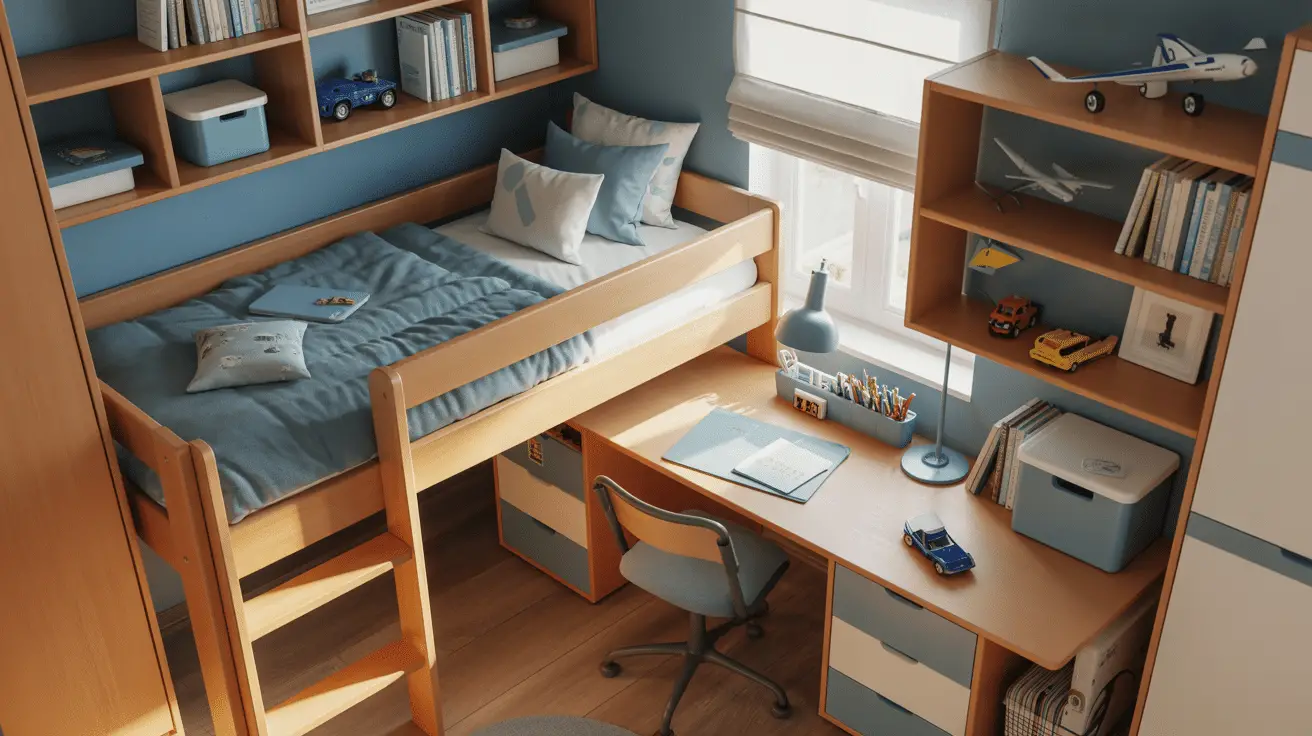
For example, a captain’s bed with underbed storage eliminates the need for a separate dresser. A loft bed can open an entirely new zone underneath, perfect for a study corner, reading nook, or compact play area. Selecting furniture with rounded or vertical profiles instead of wide, bulky silhouettes leaves more floor space free for movement and play. These adjustments not only improve organization but also make the room feel more breathable and visually balanced.
Here’s a simple breakdown to help guide furniture choices:
| Multifunctional Piece | Benefits | Best For |
| Loft bed with desk | Saves floor space; creates study zone | Small rooms needing multiple functions |
| Storage ottoman | Seating + hidden storage | Play areas and reading corners |
| Underbed drawers | Clothes, toys, bedding | Replacing dressers |
| Fold-out wall desk | Compact workspace | Older kids needing homework areas |
Vertical Storage Solutions That Open Up the Room
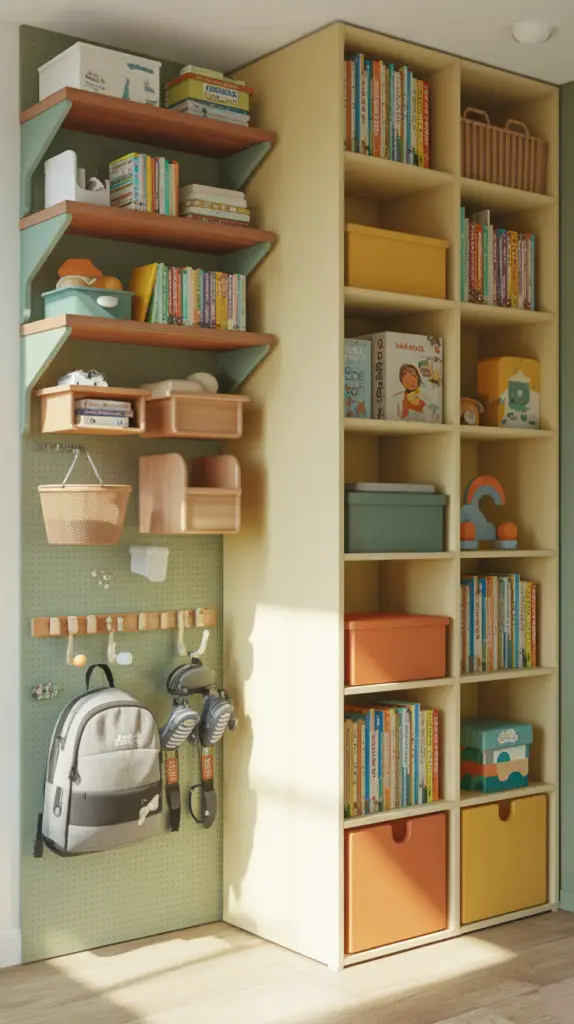
When floor space is limited, the walls become your greatest asset. Vertical storage helps lift clutter off the ground and makes use of empty wall areas that often go overlooked. Wall-mounted shelves, pegboards, tall bookcases, and overhead cabinets can instantly create structure and reduce congestion at floor level.
Tall shelving units are especially powerful in small boys bedrooms because they draw the eye upward, making the room feel taller and more spacious. Pegboards offer customizable storage for toys, art supplies, or hobby items, and they can evolve as your child’s interests change. Installing hooks at child-friendly heights also encourages independence, allowing your son to hang backpacks, jackets, and hats himself.
Here’s a quick comparison of vertical storage options:
| Vertical Storage Type | Ideal Use | Advantages |
| Wall shelves | Books, décor, toys | Saves floor space and visually lifts the room |
| Pegboard | Art supplies, tools, accessories | Adaptable and fun |
| Tall bookcase | Books, bins, baskets | Adds height and capacity |
| Overhead cabinets | Seasonal items or extras | Keeps clutter out of sight |
Smart Layout Planning for Play, Sleep, and Study Zones
Even in a small boys bedroom, creating defined zones can make the space feel more organized and functional. When each activity has a designated area, clutter naturally decreases, and your child can move through their day with ease. The key is identifying where space can multitask and arranging furniture so the room flows smoothly.
Start with the bed placement as the anchor. Positioning it against the longest wall frees up valuable floor area, while choosing a raised bed style creates additional usable space underneath. Next, carve out a study spot by placing a small desk near a window for natural light. For play, consider using a soft rug to visually differentiate the play zone without adding any physical barriers. This approach keeps the room cohesive yet clearly structured.
Below is a simple flow plan reference:
| Zone | Location Idea | Purpose |
| Sleep | Against long wall | Comfortable rest area and space-saving |
| Study | Near window | Boosts focus and natural light |
| Play | Open floor area with rug | Safe, designated activity spot |
| Storage | Corners, walls, and underbed | Keeps room clutter-free |
Built-In Storage for Seamless Organization
Built-in storage can dramatically transform a cramped bedroom into a streamlined, highly functional space. While custom carpentry may require investment, the payoff in organization and aesthetic cohesion is significant. Built-in wardrobes, window seats with hidden compartments, and full-wall shelving systems eliminate the visual noise of mismatched furniture and make the most of every inch.
A built-in wardrobe with adjustable shelves and hanging rods adapts easily as your child grows. Window seats offer extra seating while hiding toys, blankets, or seasonal items inside. Expanding built-ins vertically up to the ceiling creates even more storage and reduces the temptation to stack bins or boxes in the open. When everything has a designated place, the room stays neater with far less effort.
Table example for built-in planning:
| Built-In Type | Ideal Use | Key Benefit |
| Wardrobe wall | Clothes, shoes, accessories | Replaces standalone furniture |
| Window seat | Toys, bedding | Dual-purpose seating + storage |
| Floor-to-ceiling shelves | Books, décor, bins | Maximizes vertical space |
Underbed and Hidden Storage Ideas
Hidden storage is essential in a small boys bedroom because it reduces visual clutter while keeping everyday items accessible. The area under the bed is one of the most underutilized spaces in most homes, yet it offers an enormous opportunity for organization. Rolling bins, built-in drawers, or lift-up mattress beds can store toys, sports equipment, or extra clothes without intruding on the room’s limited floor area.
This approach helps maintain a tidy space while teaching your child simple organizational habits. Labeling bins or using color-coded containers can support independence and make cleanup quicker. Hidden storage also keeps the overall aesthetic calm and uncluttered, helping small rooms feel more airy and manageable.
Storage comparison:
| Hidden Storage Option | Best For | Why It Works |
| Rolling bins | Toys and small items | Easy access for kids |
| Drawer beds | Clothes and bedding | Replaces bulky dressers |
| Lift-up mattress storage | Large items | Conceals clutter completely |
Creative Toy Organization That Encourages Independence
Toy storage can make or break the function of a small boys bedroom. Without a good system, toys overflow into every corner. With the right setup, they remain accessible yet contained. Open bins, labeled baskets, and tiered shelving systems work well for young children because they allow quick cleanup and easy sorting. Rotating toys by keeping some stored away also maintains interest without overcrowding the room.
Creating a “toy library” zone with categorized bins—cars, building sets, plush toys—helps children understand exactly where items belong. For display-worthy items such as model cars or favorite figures, floating shelves provide a neat, visually appealing home. This balance of open and closed storage keeps the room lively but not chaotic.
Organization table:
| Storage Style | Recommended Items | Benefits |
| Open bins | Everyday toys | Easy for kids to use |
| Labeled baskets | Books, accessories | Supports organization habits |
| Display shelves | Collectibles | Adds personality |
Conclusion
Creating a functional, well-organized small boys bedroom is entirely achievable with intentional layout planning and smart storage solutions. By prioritizing multifunctional furniture, utilizing vertical and hidden storage, and dividing the room into activity zones, you can transform even the smallest space into a comfortable, imaginative, and highly efficient environment. These strategies not only reduce clutter but also create a room that supports your child’s independence, creativity, and daily routines. Thoughtful design has the power to make a small bedroom feel surprisingly spacious while reflecting the personality and needs of the boy who calls it home.