
Creative Toy Storage Ideas for Stylish and Organized Living Rooms
Table of Contents
Introduction
If you’ve ever tiptoed through your living room at night only to step on a rogue toy block, you’re not alone—nearly 80% of parents say toy clutter is their biggest daily home organization challenge. As family spaces shift to become multipurpose hubs for play, work, and relaxation, finding ways to organize without sacrificing style has become more important than ever. The living room, often the heart of the home, is also the place where toys mysteriously multiply and spread. The result? A space that feels overwhelming and far from the calm, inviting atmosphere you originally designed.
This is where creative toy storage solutions come in. With the right strategies, you can maintain a beautifully curated living room while giving kids the freedom to play and explore. The secret lies in merging practicality with aesthetics—choosing storage that complements your décor, supports easy cleanup, and encourages independent play habits.
In this guide, you’ll discover inspiring and highly functional ideas for creative toy storage in the living room. From hidden storage furniture to modular shelving, stylish baskets, and multifunctional zones, every section provides practical examples and detailed tips to help you regain harmony in your shared space.
Stylish Storage Furniture That Blends Seamlessly into Your Living Room
Storage furniture plays a major role in keeping a living room looking polished while quietly hiding the reality of family life. Stylish pieces like storage ottomans, lift-top coffee tables, and media consoles with deep drawers allow toys to be tucked away quickly and discreetly. The best part is that these items serve dual purposes—providing both organization and daily functionality without disrupting your home’s design aesthetic.
A storage ottoman, for example, offers seating, a footrest, and a spacious inner compartment perfect for plush toys or board games. Lift-top coffee tables are excellent for storing art supplies, small toys, and puzzles, especially when you need to transition the room from play zone to adult-friendly gathering space. Meanwhile, a modern credenza or media console can house everything from LEGO collections to electronic toys in dedicated compartments, helping maintain a sleek, clutter-free look.
Choosing pieces that match your décor ensures the storage feels like part of the room’s design rather than a distraction. Neutral tones, wood finishes, or upholstered textures blend naturally into most contemporary living rooms. Prioritizing quality materials also ensures the furniture withstands frequent use by little hands.
Storage Furniture Comparison Table
| Furniture Piece | Benefit | Best Use Case |
| Storage ottoman | Hidden storage + seating | Plush toys, quick cleanups |
| Lift-top coffee table | Multi-use work/play surface | Art supplies, small toys |
| Media console | Deep organized compartments | LEGO, games, electronics |
| Sideboards & credenzas | Large capacity | Mixed toy categories |
Decorative Baskets and Bins That Add Style While Controlling Clutter
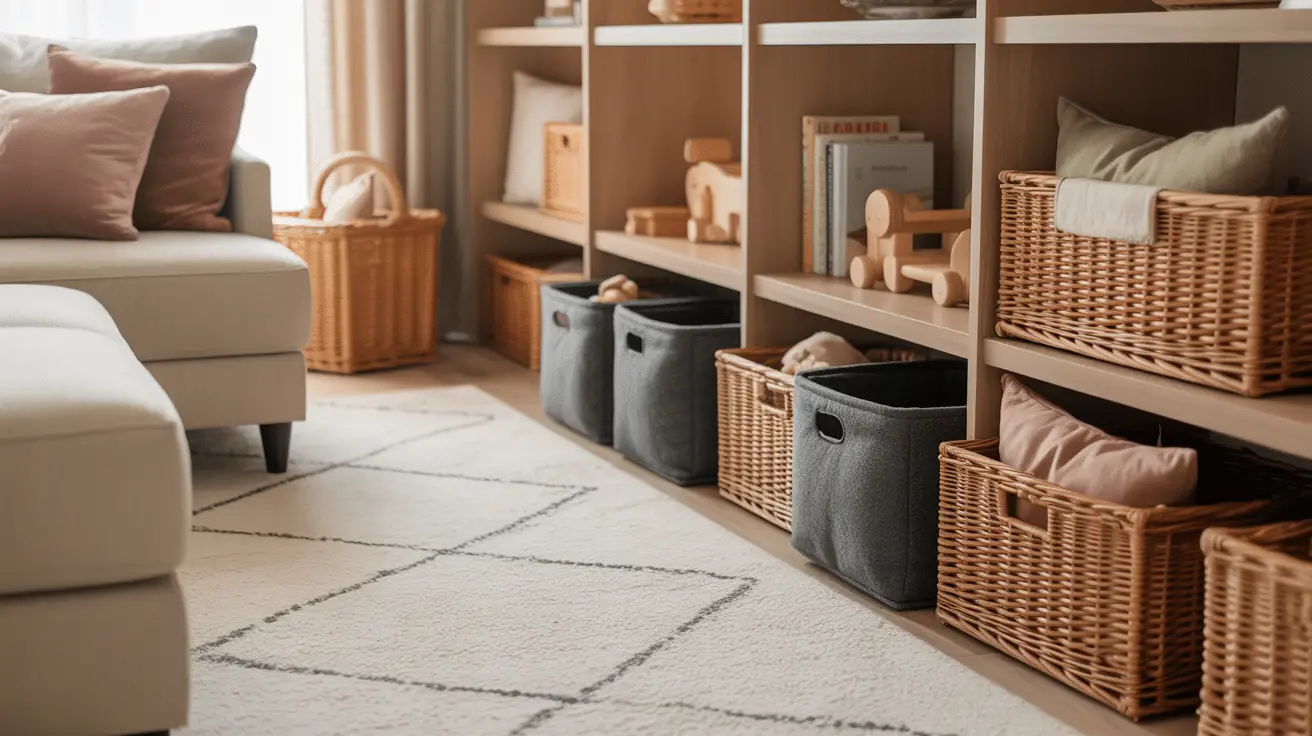
Decorative baskets and bins offer one of the simplest yet most effective ways to manage toy clutter in a living room. They are easy for kids to use, visually appealing for adults, and incredibly versatile. Woven baskets, felt bins, canvas totes, and stackable containers turn toy cleanup into a quick, intuitive process. When chosen in colors or textures that complement your living room décor, they become true design elements rather than necessary evils.
Larger floor baskets are ideal for bulky items like stuffed animals or building blocks. Their open-top design encourages independence, allowing children to toss toys inside without fuss. Smaller bins stored on shelves or inside furniture help categorize toys, making it easier to find specific items and maintain order. Felt and fabric bins are particularly helpful for quieter play environments since they reduce noise and prevent accidental scratches on furniture.
Beyond function, baskets introduce warmth and texture into the room. Natural materials like rattan, jute, or cotton soften modern interiors, while patterned or color-coded bins can energize a minimalist space. Selecting baskets in varying shapes and heights creates visual interest while supporting organization strategies that grow with your family.
Basket & Bin Style Guide
| Basket Type | Ideal For | Aesthetic Benefit |
| Woven rattan | Plush toys, blocks | Adds natural warmth |
| Felt bins | Small toys, cars, crafts | Soft, quiet storage |
| Canvas totes | Books, dolls | Casual, flexible |
| Stackable bins | Sorting categories | Clean, modern look |
Built-In Shelving Solutions for Everyday Toy Organization
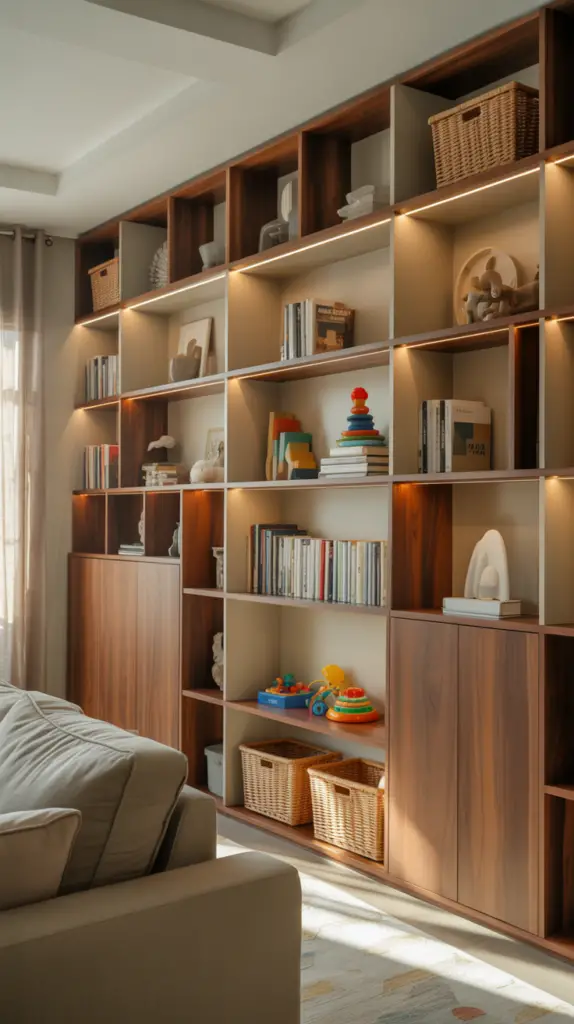
Built-in shelving is one of the most elegant and efficient ways to maintain toy organization in a shared living room. These customizable systems can incorporate open shelves, closed cabinets, and display niches that seamlessly blend storage with design. Built-ins maximize vertical space—especially valuable in smaller living rooms—while establishing a clear place for toys to live. This reduces clutter and creates a more intentional, cohesive layout.
Open shelving works well for displaying visually appealing toys, books, or decorative bins. Closed cabinets below can hide messier items that don’t need to be on display. Adding doors with soft-close hinges keeps everything quiet and safe for young children. Many families also integrate a low open shelf that kids can access independently, encouraging responsibility and cultivating organizational habits early on.
The beauty of built-ins lies in their adaptability. They can be designed to match the architectural style of your home, whether that’s modern, farmhouse, minimalist, or traditional. Incorporating LED lighting, natural wood finishes, or contrasting paint colors enhances not only functionality but the overall ambiance of the room. Built-ins ultimately transform storage into a design feature rather than an afterthought.
Built-In Shelving Planning Table
| Feature | Benefit | Best Placement |
| Open shelves | Display + easy access | Eye-level or above |
| Closed cabinets | Hide clutter | Lower sections |
| Adjustable shelves | Flexible storage | Growing families |
| Integrated lighting | Enhances aesthetics | Main focal wall |
Multipurpose Play Zones That Keep Living Rooms Functional
Designing a multipurpose play zone within the living room is essential for balancing family needs with everyday functionality. Rather than cordoning off the entire space for toys, the idea is to carve out a designated play area that blends naturally with the room. This approach helps contain toy clutter while giving kids a comfortable place to play close to family activity.
A well-designed play zone might include a soft rug, a low-storage unit, and easily accessible baskets to support independent cleanup. Placing the area near natural light creates an inviting environment that feels purposeful yet unobtrusive. Parents can intentionally choose furniture and décor that subtly distinguish the play zone without overwhelming the room—such as a colorful pouf, a small table, or wall-mounted peg rails for hanging dress-up items.
Play zones work beautifully in open-concept spaces because they give toys a defined home, preventing spillover into main walkways. They also encourage imaginative play by creating a cozy “spot” where kids feel ownership. Equally important, the rest of the living room remains functional for adult use—whether reading, working, or entertaining.
Play Zone Layout Guide
| Play Zone Element | Purpose | Location Tip |
| Low storage unit | Child independence | Along sidewall |
| Soft area rug | Defines play space | Center or corner |
| Small table/chairs | Crafts & activities | Near natural light |
| Wall hooks/rails | Dress-up & bags | Low height for kids |
Hidden Storage Solutions That Maintain a Minimalist Aesthetic
Hidden storage is essential for families who want a clean, minimalist living room without visible toy clutter. These clever solutions blend functionality with subtlety, allowing toys to disappear from sight while still remaining easy to access during playtime. From under-sofa drawers to wall-mounted cabinets and disguised niches, hidden storage supports a calm, visually streamlined environment.
One of the most effective approaches is using furniture with concealed compartments. Sofas with built-in drawers can store puzzles, games, and small toys discreetly. Coffee tables with hidden compartments keep art supplies organized and off the surface when not in use. Built-in benches along windows or walls can store large toys without interrupting the design aesthetic. Even using deep decorative trunks that double as side tables adds both charm and practicality.
Hidden storage also reinforces routines. When toys have a defined “invisible” home, cleanup becomes quick and straightforward. This helps the living room transition seamlessly into an adult-friendly space after bedtime or during gatherings. The goal is to keep everything accessible enough for children but invisible enough to maintain order.
Hidden Storage Inspiration Table
| Storage Solution | Benefit | Best For |
| Under-sofa drawers | Invisible storage | Small toys |
| Storage trunk | Adds décor charm | Mixed toys |
| Built-in bench | Large capacity | Oversized items |
| Hidden coffee table compartments | Quick cleanup | Daily-used toys |
Rotating Toys for Simpler Organization and More Engaged Play
Toy rotation is one of the most underrated yet powerful strategies for living room toy organization. Instead of keeping every toy available at all times, families rotate a curated selection on a weekly or monthly basis. This approach reduces clutter, increases appreciation for toys, and encourages deeper, more imaginative play. When fewer items are visible, children tend to engage more intentionally with what’s available rather than feeling overwhelmed by options.
The process is simple: keep a portion of toys stored away in closets, bins, or cabinet shelves while displaying the current “rotation set” in the living room’s storage units. Toys that haven’t been seen in weeks often feel new again, reducing the need for constant purchases. Rotating also keeps the living room visually tidy, as storage units no longer overflow or appear chaotic.
Parents can categorize toys by theme—such as puzzles, building toys, pretend play, and creative tools—and rotate categories systematically. This provides structure and ensures a balanced mix of developmental activities. Rotating also helps identify which toys kids genuinely love, making decluttering easier in the long run.
Toy Rotation Guide
| Rotation Step | Purpose | Frequency |
| Select categories | Balanced play variety | Monthly |
| Display 6–10 toys | Prevent clutter | Weekly–biweekly |
| Store extras away | Reduce overwhelm | Ongoing |
| Observe engagement | Guide future rotations | Continuous |
Stylish Labels and Categorization That Simplify Cleanup
Labeling is a simple yet powerful tool for maintaining toy organization in a busy living room. Clear labels help kids know exactly where items belong, making cleanup faster and more consistent. They also help adults maintain the overall system, reducing the frustration of searching through multiple bins for one missing item.
Labels can be functional and stylish. Wooden tags, chalkboard labels, engraved plaques, or printed stickers can all complement your existing décor. The key is choosing a labeling style that feels integrated rather than disruptive. Minimalist fonts match modern living rooms, while playful icons work beautifully in family-friendly spaces.
Categorization enhances the benefits of labeling. Sorting toys into logical groups—such as blocks, dolls, books, cars, art supplies, or games—creates an intuitive system kids can follow. When each category has its own bin or shelf, cleanup becomes part of the room’s natural rhythm. In turn, the living room maintains its cleanliness and charm.
Labeling & Categorization Table
| Category | Best Container | Label Style |
| Building toys | Deep bin | Minimal text |
| Books | Open basket | Wooden tags |
| Art supplies | Drawer organizer | Chalk labels |
| Pretend play | Canvas tote | Illustrated icons |
Conclusion
Living room toy organization doesn’t have to feel like a constant battle. With the right combination of hidden storage, stylish baskets, well-planned furniture, and intentional play zones, your living space can remain both functional and beautiful. Creative toy storage solutions allow families to embrace the joyful chaos of childhood while maintaining a calm, welcoming atmosphere for adults. By designing systems that support independence, flexibility, and visual harmony, you create a space that works for your whole family—today and as your needs evolve. Thoughtful organization turns the living room into a place where creativity thrives, comfort reigns, and clutter stays under control.