
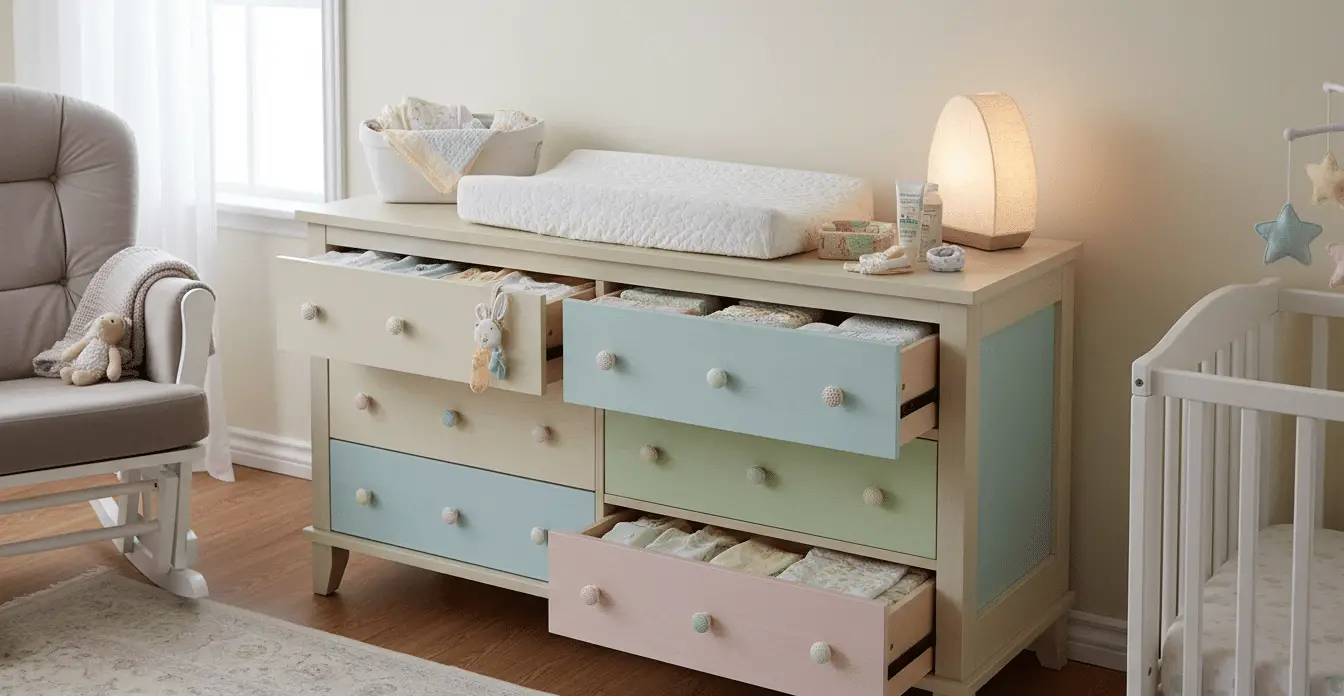
Cute Nursery Dresser Organization Ideas for Stylish and Functional Baby Rooms
Table of Contents
Introduction
One of the biggest challenges for new parents is keeping baby essentials organized while maintaining a beautifully styled nursery. Studies show that parents spend nearly 40% of their time in the first months searching for daily items like diapers, burp cloths, and bottles—proof that a well-organized dresser isn’t just convenient, but essential. A thoughtfully arranged nursery dresser can save time, reduce stress, and create a soothing environment that supports both function and aesthetic harmony.
Cute nursery dresser organization blends the charm of baby décor with practical systems that make day-to-day care easier. Instead of cluttered drawers or mismatched bins, each item has a purposeful home—whether it’s categorized by usage, size, or time of day. When done well, even the inside of a dresser becomes an extension of your nursery’s design, enhancing the room’s style while supporting seamless routines.
In this guide, you’ll learn how to choose the right dresser layout, categorize baby essentials, use drawer dividers, style the top surface attractively yet safely, incorporate hidden storage, and maintain a system that grows with your child. Every section offers practical insights, styling ideas, and organized breakdowns to help you create a functional and adorable dresser setup that fits your nursery’s personality.
Choosing the Right Nursery Dresser Layout for Cute and Functional Storage
The foundation of cute nursery dresser organization begins with selecting the right dresser layout. The size, number of drawers, and internal configuration all influence how easily you can sort diapers, onesies, swaddles, and other essentials. A dresser with at least six drawers is ideal for separating categories by frequency of use, ensuring daily items stay within quick reach.
The top drawers should be reserved for the items you grab constantly—diapers, wipes, creams, and onesies—while deeper lower drawers are perfect for blankets, extra clothing, or backup supplies. Dressers with a combination of narrow and wide drawers offer the best flexibility, allowing you to store both small accessories and bulkier items without crowding.
A cute dresser layout doesn’t have to prioritize beauty over function. Choose a dresser that complements the nursery’s style, whether modern, boho, vintage, or minimalist. Light wood, soft pastels, matte finishes, or even playful hardware can help the dresser blend into the visual story of the baby’s room. When aesthetics align with organization, the dresser becomes a functional design feature, not just a storage unit.
Nursery Dresser Layout Guide
| Drawer Type | Ideal Use | Organizational Benefit |
| Top Narrow Drawers | Diapers, wipes, creams | Quick access to essentials |
| Middle Wide Drawers | Onesies, pajamas | Easy folding and sorting |
| Lower Deep Drawers | Blankets, backups | Spacious and versatile |
Organizing Baby Essentials by Category for Stress-Free Routines
Categorizing items is the heart of an efficient nursery dresser system. Babies require dozens of small essentials, from socks to soothing balms, and without clear categories, drawers can quickly become a tangled mess. Start by grouping items based on use: diapering, feeding, clothing, bathing, and medical or grooming supplies. Place each category in its own drawer or sub-section so you can find everything instantly during busy moments.
Daily clothing deserves its own drawer—onesies, sleepers, and socks neatly folded or rolled to maximize space. Diapering supplies should take priority in the top left or top center drawer, depending on your changing station setup. Keeping everything in predictable places reduces the mental load, especially during late-night changes when clarity matters most.
Storage bins or drawer dividers help maintain these categories. Transparent or fabric bins add a cute aesthetic while keeping small items from shifting. Using labels on the inside tabs of drawers ensures everything returns to its designated spot, even when multiple caregivers access the dresser.
Categorized organization also makes restocking easier. When each drawer has a clear purpose, you can instantly see when essentials are running low, helping you stay ahead of baby’s needs.
Category Organization Breakdown
| Category | Drawer Placement | Examples |
| Diapering | Top drawer | Diapers, wipes, cream |
| Clothing | Middle drawers | Onesies, sleepers |
| Accessories | Small bins | Socks, hats, mittens |
Using Drawer Dividers and Inserts to Maximize Nursery Storage
Drawer dividers are one of the most transformative tools in nursery dresser organization. Without them, even the most intentional layout can become cluttered within days. Babies come with an abundance of small items—tiny socks, pacifiers, mittens, bows, burp cloths—and each requires a specific space to prevent mixing or overflowing. Dividers create clear boundaries that keep everything visible, accessible, and neatly contained.
Start by selecting adjustable dividers that fit the dimensions of your dresser drawers. Expandable bamboo dividers are stylish, durable, and align beautifully with most nursery design themes. For smaller items, opt for modular drawer inserts made of soft fabric, felt, or plastic with multiple compartments. These inserts create miniature “zones” that prevent items from shifting when drawers open and close.
One of the biggest benefits of using dividers is the ability to create micro-categories. Instead of a drawer full of accessories, you can separate socks by season, mittens by thickness, and hair bows by color or occasion. This enhances both functionality and visual appeal, turning the inside of each drawer into an organized display.
Dividers also help you store clothing using the file-fold method. By folding baby clothes vertically, you not only save space but also see everything at a glance. This eliminates the need to dig through piles, preserving neatness and making outfit selection easier.
When using dividers, consistency is key. Stick to the same materials or color scheme to maintain a cohesive look. Inserts that match the dresser’s interior tone add subtle charm and polish, elevating the organization to a designer level.
Divider System Reference Table
| Divider Type | Best For | Organizational Benefit |
| Adjustable Bamboo | Large drawers | Creates custom sections |
| Fabric Inserts | Small accessories | Gentle on delicate items |
| Plastic Compartments | Hygiene items | Easy to clean and maintain |
Creating a Stylish Changing Station on Top of the Nursery Dresser
The top of the dresser often doubles as a changing station, making it one of the most important zones in a baby’s room. A stylish yet practical setup enhances daily routines and adds charm to the nursery. Choose a wipeable changing pad with a cute cover for comfort and design continuity. Secure it with non-slip grips or dedicated changing tray attachments for safety.
Next, incorporate a small caddy or organizer that sits on the dresser’s surface. This should hold the diapering essentials you reach for dozens of times a day—wipes, creams, diapers, and a spare outfit. Opt for a caddy that matches your nursery’s aesthetic, whether woven, acrylic, or fabric-covered. This creates cohesion and prevents clutter from forming.
Decorative touches can coexist with practicality. A soft nightlight, a framed print, or a petite vase of dried flowers adds charm without taking up too much space. Just ensure all décor is placed away from the active changing zone to maintain safety and ease of movement.
The changing station should stay cute yet minimal, balancing convenience with style. When organized intentionally, it becomes a beautifully integrated part of your nursery design rather than a utilitarian afterthought.
Changing Station Setup Table
| Item | Purpose | Style Tip |
| Changing Pad | Safe diapering | Choose a print that matches nursery theme |
| Surface Caddy | Essential storage | Coordinate with dresser material |
| Soft Nightlight | Gentle glow | Use warm tones for soothing ambience |
Creative Ways to Store Baby Clothes for Cutely Organized Drawers
Baby clothing may be adorable, but it can quickly overwhelm a nursery if not managed intentionally. Cute nursery dresser organization relies heavily on thoughtful clothing storage methods that maximize space while keeping items accessible. Start by categorizing clothes by size, season, and type—this allows you to avoid mixing items that aren’t currently in use with those needed daily.
File folding is one of the most effective methods for baby clothes. By folding onesies, leggings, and sleepers vertically, each piece becomes visible from above, eliminating the need to rummage through stacks. This also makes drawers look exceptionally tidy and picture-perfect.
Outgrown clothes should be rotated out regularly. Keep a small “too small” basket within the dresser to collect items throughout the week. Once full, transfer them to long-term storage or donation bags. This prevents clutter while ensuring drawers only hold clothing that currently fits.
Color coordination also enhances the visual charm of drawers. Group items by soft pastels, neutrals, or bold prints to create a visually appealing gradient. The result is not just functional—it’s Instagram-worthy.
Clothing Storage Breakdown
| Method | Benefit | Practical Use |
| File Folding | Saves space | Ideal for daily clothing |
| Seasonal Rotation | Prevents clutter | Keeps current sizes accessible |
| Color Sorting | Enhances aesthetics | Makes outfits easier to choose |
Incorporating Bins and Baskets to Style and Organize Nursery Supplies
Bins and baskets play a vital role in maintaining both organization and style in a baby’s room. Their versatility allows you to store an array of nursery items—from extra diapers to blankets—while adding adorable texture and warmth to the space. Because babies require frequent access to different supplies, keeping storage functional yet visually cohesive helps reduce clutter and adds charm to your nursery décor.
Choose bins that match your overall style. Woven baskets add natural warmth, fabric bins create softness, and acrylic bins provide clean, modern lines. Mixing two or three styles can add interest without overwhelming the room, as long as the color palette stays consistent.
Bins are especially helpful for items that aren’t used daily but still need to be accessible, such as extra wipes, seasonal blankets, or milestone accessories. They can be stored on open shelving, inside dresser drawers, or beside the changing station. For drawers, smaller fabric bins are perfect for organizing items that shift easily, such as hats or burp cloths.
Labels make bins even more functional. Use simple tags or printed labels that suit the nursery’s aesthetic. This not only keeps you organized but also helps partners or caregivers navigate the system seamlessly.
Bins also support long-term organization. As your baby grows into toddlerhood, the bin system can be easily adapted to store toys, books, or clothing. This flexibility makes bins an investment in both style and practicality.
Bins and Baskets Reference Table
| Bin Type | Best Use | Visual Style Benefit |
| Woven Basket | Blankets, diapers | Adds warmth and texture |
| Fabric Bin | Accessories | Soft, cozy aesthetic |
| Acrylic Bin | Small items | Clean, modern look |
Maintaining a Cute and Functional System as Your Baby Grows
One of the most overlooked aspects of nursery organization is adaptability. Babies grow quickly, and a system that works for newborns may feel insufficient by toddlerhood. A functional dresser setup evolves with your baby’s routines, clothing sizes, and growing supply needs.
Regular maintenance keeps the system efficient. Every month, review the clothing drawers and swap out sizes that no longer fit. Adjust dividers to accommodate larger items like toddler pajamas, shirts, and pants. Reassign drawers based on shifting priorities—feeding tools may become less relevant, while art supplies or learning materials emerge.
Cute organization does not mean rigid. The goal is a dresser that remains intuitive, charming, and ready for change. With adaptable storage, the nursery dresser becomes a long-lasting anchor of the room’s style and function.
Maintenance Checklist
| Task | Frequency | Purpose |
| Size Rotation | Monthly | Prevents clutter |
| Drawer Reassignment | Quarterly | Matches evolving needs |
| Re-labeling Bins | As needed | Keeps system clear |
Conclusion
A beautifully organized nursery dresser transforms everyday moments into smoother, calmer experiences. With thoughtful layouts, categorized organization, drawer dividers, bins, and stylish changing stations, your baby’s room becomes a harmonious blend of charm and function. As your baby grows, maintaining adaptable systems ensures the dresser continues to support your routines while preserving the sweet, stylish aesthetic you’ve created. In the end, cute nursery dresser organization is less about perfection and more about creating a space filled with warmth, ease, and joy.