
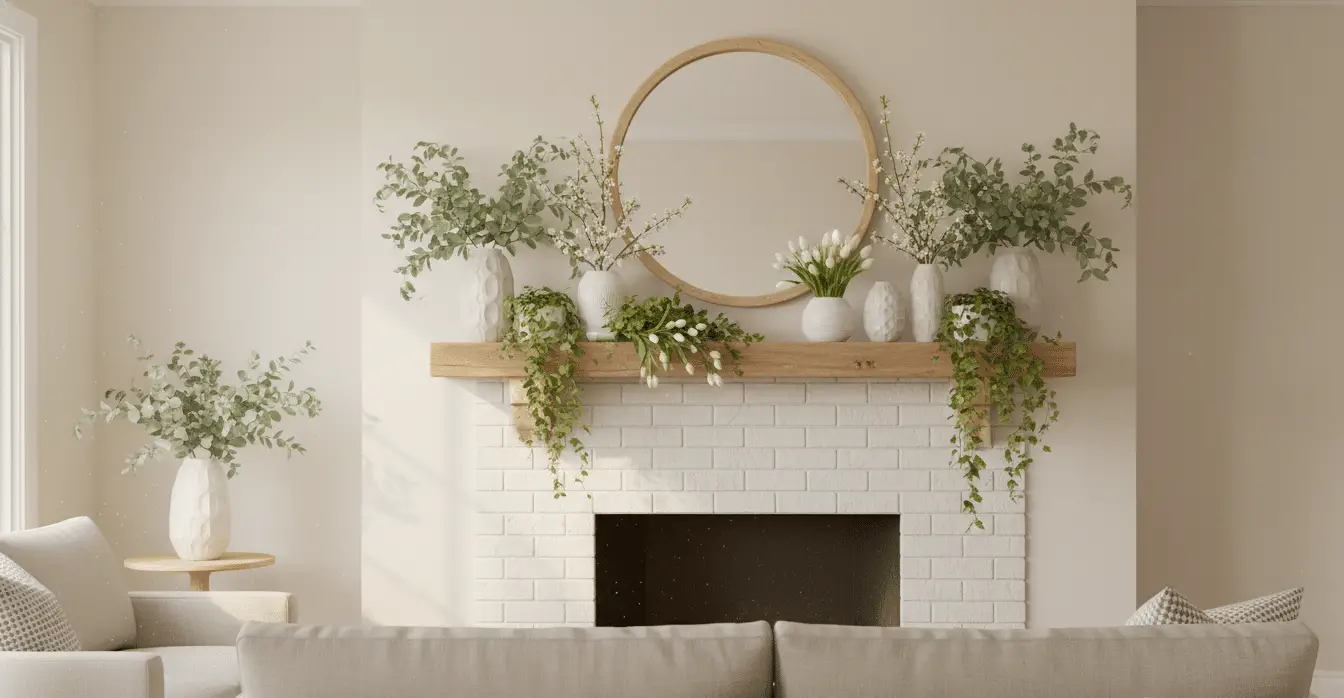
Fresh Spring Mantle Decor Ideas with Natural Elements for a Light and Airy Home
Table of Contents
Introduction
Spring has a way of breathing new life into every corner of the home, but few spaces respond as beautifully to seasonal updates as the fireplace mantle. In fact, design studies show that small surface refreshes—like a mantle redesign—can increase the perceived warmth and style of a room by nearly 40%. It’s no wonder so many homeowners look forward to the moment they can swap winter layers for fresh greenery and natural textures. A thoughtfully styled spring mantle doesn’t just look pretty; it sets the tone for the entire season, signaling the shift from heavy, cozy décor to airy, nature-inspired simplicity.
This post explores fresh spring mantle decor ideas grounded in natural elements that transform your space without overwhelming it. From branches and florals to stoneware, woven textures, and organic shapes, these ideas help you create a display that feels effortless, balanced, and deeply connected to the season. You’ll find detailed inspiration, style breakdowns, practical guides, and visual frameworks to spark your creativity. By the end, you’ll feel confident crafting a spring mantle that feels calm, cohesive, and beautifully aligned with what this season represents—renewal, growth, and light.
Bringing Fresh Greenery to Your Mantle
Nothing embodies spring more than fresh greenery, and incorporating it into your mantle instantly creates a sense of life and movement. Consider mixing various foliage textures, such as eucalyptus, fern fronds, or budding branches, to build a layered look that feels wild yet intentional. The beauty of greenery on a spring mantle lies in its versatility—you can allow it to drape softly over the edges, tuck it between décor pieces for added softness, or spotlight a single oversized arrangement as the focal point.
Fresh greenery also adds subtle color variation. Many spring plants include gentle undertones of sage, silver, or bright chartreuse, creating depth without overpowering the space. This makes greenery an excellent foundational element for coordinating additional natural décor like stone accents, wood candlesticks, or ceramic vases.
Using greenery isn’t just about aesthetics. It transforms the atmosphere of your home, adding freshness to the air and creating a visual cue that the colder months have passed. Even high-quality faux varieties carry this effect, thanks to realistic textures and botanical accuracy. To maintain cohesion, consider using one or two repeating elements—such as matching stems or consistent vase materials—to prevent the arrangement from looking too busy.
Greenery Styling Breakdown
| Styling Element | Purpose | Example Use |
| Cascading foliage | Softens edges | Ivy trailing off mantel corners |
| Upright stems | Adds height and structure | Tall eucalyptus in ceramic vase |
| Mixed textures | Creates visual depth | Ferns paired with budding branches |
Decorating with Natural Textures Like Wood, Stone, and Clay
Natural textures add dimension and authenticity to spring décor, especially on a mantle where objects are viewed up close. Wood, stone, and clay each offer a grounding quality that balances the freshness of greenery and florals. Wood brings warmth through its organic grains; stone introduces subtle variation and weight; clay provides handcrafted charm with matte finishes and curved silhouettes. Together, they establish a tactile foundation for your spring display.
Start by selecting one or two materials as the primary texture theme. For example, driftwood paired with smooth river stones creates a coastal spring look, while clay vessels and warm-toned wood evoke a rustic, earthy atmosphere. The key is to avoid overloading the mantle with too many contrasting textures. Instead, think of your mantle as a natural vignette where complementary materials tell a cohesive story.
The shapes of these items also influence the overall effect. Rounded clay pots soften the straight lines of a mantle, while tall wooden candleholders add vertical balance. Stone can serve as both a functional and visual anchor, especially when used as bookends or pedestal bases for smaller décor items.
Ultimately, natural textures work because they reflect the outdoors—an essential element in spring decorating. Whether you choose pale-toned pottery or richly grained wood, these materials evoke warmth and authenticity in a way that synthetic décor rarely matches.
Texture Inspiration Table
| Material | Visual Impact | Best Placement |
| Wood | Adds warmth + organic lines | Candleholders, frames |
| Stone | Creates grounding weight | Bookends, accent pieces |
| Clay | Offers handmade softness | Vases, bowls |
Using Seasonal Florals to Brighten the Mantle
Seasonal florals are one of the most joyful ways to enliven a mantle for spring. Whether you prefer fresh-cut flowers or realistic faux blooms, spring florals introduce vibrant color, delicate shapes, and a celebratory energy. Tulips, daffodils, cherry blossoms, and ranunculus are among the most iconic spring choices. Their soft petals and uplifting hues naturally complement the subtle earth tones often used in spring décor.
Layering florals with greenery elevates the arrangement, creating both fullness and movement. For example, a vase of pastel tulips surrounded by wispy branches instantly feels more dynamic than a standalone floral bouquet. Consider using various vase heights to create a sense of rhythm across the mantle, allowing your eye to travel from one floral moment to the next.
When choosing colors, think about what emotion you want the space to convey. Gentle blush and peach tones create a soothing and feminine look, while sunny yellows evoke cheerfulness. White florals bring elegance and serenity—a wonderful choice for minimalist homes.
Maintaining balance is key. Too many floral varieties can overwhelm, so focus on one main flower type and a few supportive stems. This ensures your mantle feels curated, not cluttered.
Floral Arrangement Guide
| Flower Type | Mood | Best Use |
| Tulips | Fresh + uplifting | Centerpiece vase |
| Cherry blossoms | Whimsical + airy | Tall branch accents |
| Daffodils | Cheerful + bright | Small clusters |
Creating Minimalist Spring Vignettes with Natural Elements
Minimalist vignettes are an excellent way to decorate your spring mantle without overwhelming the senses. Instead of filling the entire mantle with numerous items, a minimalist approach focuses on intentional selection and thoughtful placement. Each object—whether a ceramic vase, a sprig of greenery, or a hand-carved wooden bowl—holds purpose. The negative space around these objects becomes just as important as the pieces themselves, giving the arrangement room to breathe.
A minimalist spring vignette typically includes natural materials that evoke calmness, such as matte pottery, smooth stones, woven textures, and soft botanical accents. These materials work beautifully together because they share an organic, understated quality. They don’t demand attention; instead, they invite quiet admiration. This approach is especially effective in homes with modern, Scandinavian, or Japandi influences.
What makes minimalist vignettes so powerful is their ability to highlight the beauty of simplicity. When you reduce your décor to a handful of well-chosen elements, each one becomes more visually impactful. For example, a single branch of budding greenery in a tall vase can create a sculptural statement, while a bowl of natural stones offers grounding contrast.
The key is to balance height, shape, and spacing. A tall vase pairs well with a shorter bowl, while a rectangular tray provides structure for loose items. These relationships guide the viewer’s eye while maintaining serenity.
Minimalist Vignette Composition Table
| Element | Purpose | Example |
| Tall anchor piece | Establishes height | Ceramic vase with branches |
| Medium accent piece | Adds depth | Wooden bowl or stoneware jar |
| Small detail | Provides finishing touch | Single stone, sprig, or candle |
Incorporating Earthy Color Palettes for a Soft Spring Atmosphere
Color plays a transformative role in spring mantle decorating. An earthy palette—think soft greens, creamy whites, warm tans, muted terracotta, and gentle grays—creates an atmosphere of peace and balance. These colors reflect the tones of early spring: budding leaves, rain-washed soil, warm sunlight, and smooth stones. By grounding your décor in such hues, your mantle becomes a reflection of nature’s quiet transition into a new season.
Begin by selecting a dominant color. Sage green is a popular option because it pairs effortlessly with both warm and cool tones. From there, layer complementary colors to create harmony. For example, sage pairs beautifully with ivory ceramics, warm wood tones, and hints of clay-like terracotta. This palette feels soft yet inviting and works well across many décor styles.
Color placement also matters. Using lighter hues near the center of the mantle helps brighten the room, while darker tones along the edges provide visual stability. Earthy palettes thrive on subtle contrasts, such as matte pottery beside glossy foliage, or warm wood against cool stone. These natural variations help the mantle feel multidimensional.
Textures play a supporting role in color expression. A woven basket introduces warm beige tones, while a stoneware vase brings cool neutrals. Even the flowers you choose contribute color—white tulips for purity, peach ranunculus for warmth, or pale green hydrangeas for gentle freshness.
Earthy palettes offer a timeless approach to spring décor, providing both versatility and tranquility. They seamlessly integrate into existing room aesthetics, making them ideal for those wanting a meaningful yet understated seasonal update.
Earthy Palette Inspiration Table
| Color | Emotional Tone | Best Décor Pairing |
| Sage Green | Calm + organic | Greenery, pottery |
| Cream White | Soft + bright | Candles, ceramics |
| Terracotta | Warm + grounded | Clay vases |
Choosing Organic Shapes and Asymmetrical Arrangements
Spring décor celebrates nature’s imperfect beauty, making organic shapes and asymmetrical styling ideal for mantle arrangements. Unlike symmetrical displays—which feel formal and structured—an asymmetrical layout mimics the natural flow of the outdoors. This approach creates visual interest and keeps the eye moving, giving the mantle a fresh and modern look.
Organic shapes include curved vases, rounded stones, uneven pottery rims, and naturally shaped branches. These objects soften the rigid lines of the mantle and establish a more relaxed aesthetic. When paired together, these shapes build a sense of harmony rooted in nature’s irregular patterns.
To style an asymmetrical arrangement, begin with your tallest item placed slightly off-center—not at the far edge or exact middle. This anchors the composition. Add supporting pieces in varying sizes, gradually tapering the height on one side. Incorporate greenery or florals that drape subtly, reinforcing the natural flow. The goal is to create balance without mirroring.
This method works especially well when you want your space to feel contemporary, effortless, and elevated. Instead of a predictable arrangement, you achieve a dynamic display that feels curated yet approachable.
Asymmetry Styling Guide
| Element | Role | Placement Tip |
| Tall focal item | Anchor | Slightly off-center |
| Medium accents | Balance | Opposite side of focal piece |
| Flowing greenery | Movement | Allow slight drape |
Mixing Modern and Rustic Natural Elements
Blending modern and rustic natural décor creates a spring mantle that feels both polished and cozy. Modern design contributes clean lines, minimalism, and sleek materials, while rustic décor introduces warmth, texture, and character. Combined, they create a dynamic contrast that brings depth to your seasonal styling.
Start with whichever style dominates your home décor. If your space is modern, introduce rustic elements sparingly: a distressed wooden frame, woven grass baskets, or rough-textured clay pots. If your home leans rustic, add modern details like smooth ceramic cylinders, glass accents, or subtle metallic touches. The key is balance—neither style should overpower the other.
Natural elements unify both styles beautifully. Green stems soften modern edges, while stone accents complement rustic warmth. Even simple items—like a linen-covered book stack or a matte black candleholder—can bridge the two styles seamlessly.
By layering these styles thoughtfully, you create a mantle that feels curated, contemporary, and grounded in nature’s charm.
Modern + Rustic Balance Table
| Style Element | Modern Effect | Rustic Effect |
| Wood | Minimal, smooth finishes | Distressed, warm texture |
| Clay | Sculptural forms | Handmade feel |
| Stone | Sleek geometric cuts | Natural raw edges |
Conclusion
A spring mantle decorated with natural elements creates an atmosphere of renewal and connection to the season’s quiet beauty. Whether you incorporate greenery, florals, organic textures, or earthy tones, each piece contributes to a sense of harmony and freshness. These design ideas allow you to craft a mantle that feels authentic, calming, and reflective of spring’s gentle transition. By blending simplicity with thoughtful details, your mantle becomes more than a decorative feature—it becomes a celebration of nature’s evolving landscape and the peaceful joy it brings into your home.