
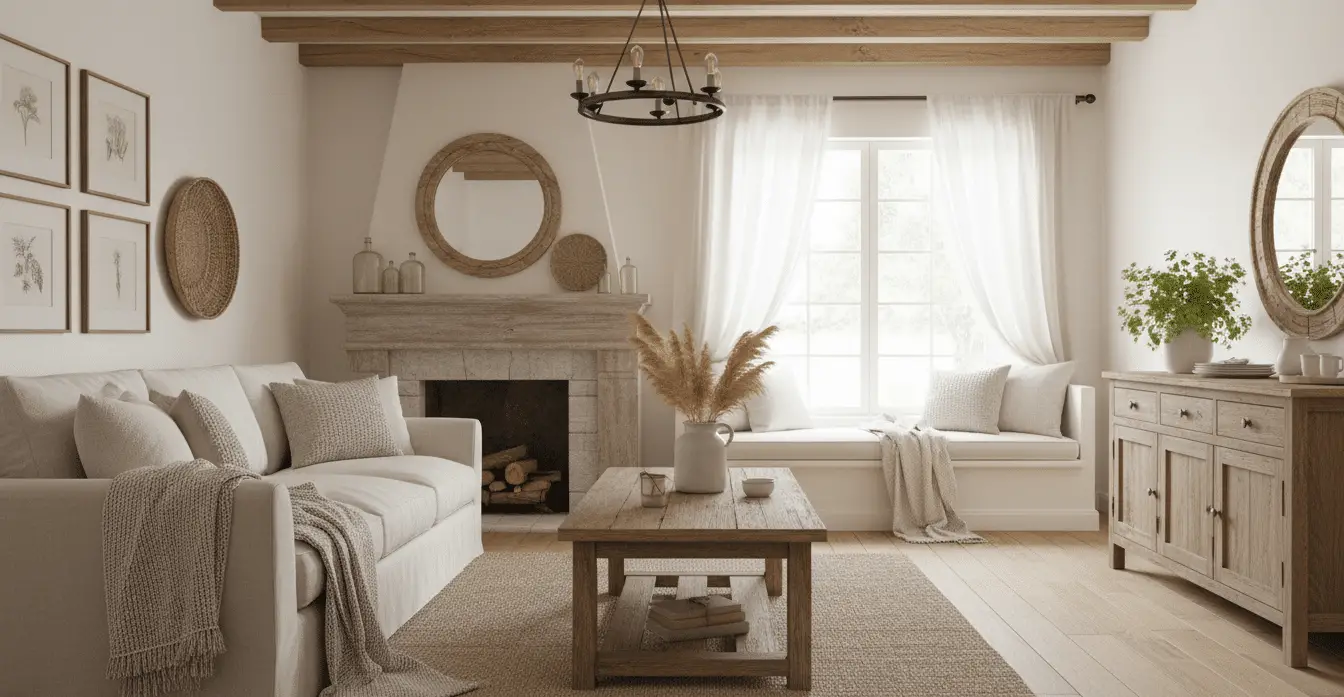
Layered Decor Farmhouse Ideas for Cozy Interiors That Feel Warm and Effortlessly Collected
Table of Contents
Introduction
There’s a reason layered farmhouse décor has become a lasting favorite in interior design. More than just a trend, this style reflects the desire for warmth, comfort, and character in a world filled with fast-paced, digital living. Many homeowners want their interiors to feel grounded and authentic—spaces where textures invite touch, lighting feels soft and natural, and every room feels collected over time rather than decorated all at once. According to design studies, layered textures and mixed materials significantly increase the feeling of comfort in a home, which explains why farmhouse interiors that embrace these principles resonate so deeply.
Layered decor farmhouse ideas focus on the art of intentional accumulation: blending textiles, vintage elements, wood tones, organic materials, and meaningful pieces that tell a story. This style avoids perfection and embraces charm, mixing old and new to create spaces that feel soulful and welcoming. If you’ve ever admired a farmhouse interior that looks effortlessly pulled together—cozy yet sophisticated—you were likely looking at a carefully layered design.
In this guide, you’ll learn how to master layered farmhouse décor through texture, color palettes, furniture styling, accessories, wall décor, and lighting. You’ll also discover how to balance elements so your space feels curated, not cluttered, while keeping warmth and comfort at the heart of every room. By the end, you’ll have a clear roadmap for designing farmhouse interiors rich in depth, character, and irresistible coziness.
Understanding the Foundations of Layered Farmhouse Décor
Layered farmhouse décor is rooted in simplicity, comfort, and authenticity. Rather than relying on bold trends or flashy elements, this style draws from materials and textures that feel timeworn and natural. Each layer adds dimension, helping a room feel lived-in and inviting.
One of the core principles of layered farmhouse décor is the use of natural materials. Wood, metal, cotton, linen, jute, pottery, and stone create a tactile environment that feels warm and honest. These materials carry visual weight and richness, allowing even minimalistic spaces to feel character-filled. The key is combining textures so the layers build on each other harmoniously.
Neutral colors also play a foundational role. Soft whites, warm creams, gentle grays, and muted earthy tones allow the textures to shine. These hues evoke calmness and enhance light, essential for creating the signature cozy farmhouse glow.
A final hallmark is the balance of old and new. Vintage décor, heirloom pieces, and rustic materials pair beautifully with modern silhouettes, clean lines, and updated finishes. This contrast creates a sense of depth that draws the eye without overwhelming the space.
Foundational Elements Table
| Foundation | Description | Benefit |
| Natural materials | Wood, linen, jute, metal, stone | Adds warmth and authenticity |
| Neutral palette | Whites, creams, grays | Enhances calm and softness |
| Textural contrast | Mixed fabrics and finishes | Creates depth and visual richness |
| Vintage + modern | Blended old and new | Keeps spaces timeless and interesting |
| Functional simplicity | Purposeful décor | Prevents clutter while adding charm |
Using Texture to Build Warmth and Visual Depth
Texture is the backbone of layered farmhouse design. When used with intention, texture transforms a simple space into a cozy haven full of dimension and warmth. Farmhouse interiors thrive on tactile experiences—fabrics that feel soft, woods that feel weathered, metals that feel aged, and surfaces that reflect the craftsmanship of natural materials.
Start by layering foundational textiles. Area rugs define the space and add softness underfoot. Jute or sisal rugs create organic warmth, while wool or cotton options bring comfort and durability. Layering a smaller patterned rug over a large neutral base is a classic farmhouse technique that adds depth without overwhelming the room.
Throw blankets and pillows introduce a second layer of texture. Choose a mix of knitted, woven, linen, and quilted fabrics to create visual variety. Varying the size and shape of pillows helps break monotony and adds relaxed charm. Using seasonal textiles, such as heavier throws in winter and lighter ones in summer, keeps the room adaptable and fresh.
Hard textures balance the softness. Weathered wood coffee tables, metal candle holders, stone vases, and hand-thrown pottery add substance. These materials create contrast, making the soft textiles feel even cozier.
Texture Layering Table
| Texture Type | Examples | Purpose |
| Soft textiles | Throws, pillows, rugs | Adds warmth and comfort |
| Natural fibers | Jute, linen, cotton | Creates organic farmhouse feel |
| Hard textures | Wood, metal, stone | Adds structure and contrast |
| Layered rugs | Base rug + accent rug | Enhances depth |
| Patterned fabrics | Plaids, stripes | Adds subtle personality |
Creating a Neutral Farmhouse Color Palette with Layered Tones
A neutral farmhouse palette is much more than white walls. It’s a composition of soft, layered tones that work harmoniously to produce a sense of calm and comfort. The beauty of this palette is its versatility—neutral tones let textures and natural materials take center stage.
Begin with a warm, muted base. Creams, off-whites, taupes, and light grays provide gentle warmth while making the space feel airy. These base tones should dominate the room, appearing on walls, major furniture pieces, or large textiles like curtains.
Next, add tonal variation to build richness. Sand, mushroom, beige, oatmeal, and greige create subtle contrast that adds depth without deviating from the soothing farmhouse mood. Each shade should complement the others, allowing you to build layers that feel cohesive rather than stark.
To avoid flatness, incorporate soft accent colors. Muted greens, dusty blues, warm terracotta, or charcoal details help define the space while maintaining the farmhouse aesthetic. These accents work best in smaller doses—vases, throw pillows, art frames, or area rugs.
The goal is to create a color story that feels connected, gentle, and timeless.
Color Palette Breakdown
| Color Category | Tone Examples | Best Use |
| Base neutrals | Cream, warm white | Walls, large pieces |
| Mid neutrals | Taupe, greige, oatmeal | Rugs, textiles |
| Deep neutrals | Charcoal, espresso | Frames, accents |
| Soft colors | Sage, dusty blue | Pillows, décor |
| Earth tones | Terracotta, clay | Ceramics, rustic accents |
Balancing Old and New for a Timeless Layered Farmhouse Look
Layered farmhouse décor thrives on the perfect marriage of old and new. This interplay is what gives the style its depth, warmth, and enduring charm. When done well, the room feels lived-in and storied—yet clean, polished, and relevant to modern living.
Vintage pieces are key. A weathered bench, reclaimed wood coffee table, or antique vase anchors the room with a sense of history. These items introduce soul into the space, helping the design feel collected rather than manufactured. Look for items with patina, imperfections, or craftsmanship that stands out.
Modern touches help prevent the room from feeling outdated. Sleek lighting fixtures, minimalistic shelving, updated fabrics, and simple silhouettes offer contrast. Modern furniture with clean lines keeps the room feeling open and balanced, reducing the risk of visual heaviness.
Blending old and new requires restraint. Not every corner should feature rustic décor, and not every surface should feel sleek. Thoughtful placement is essential—for example, pairing a modern sofa with a vintage trunk or hanging contemporary art above a distressed console.
Old + New Blend Table
| Category | Classic Farmhouse | Modern Complement |
| Furniture | Reclaimed wood | Clean-line upholstery |
| Décor | Vintage pottery | Minimalist vases |
| Lighting | Lantern-style fixtures | Simple metal sconces |
| Textiles | Quilts, woven throws | Neutral linen fabrics |
| Wall décor | Antique frames | Abstract or simple art |
Styling Farmhouse Furniture with Layers and Purpose
Styling furniture is one of the most impactful ways to bring layered farmhouse décor to life. The goal is to create arrangements that feel relaxed, functional, and inviting. Each furniture piece should contribute to the layered effect without overwhelming the room.
Start with anchor pieces. Sofas, dining tables, and beds define the main layout. In farmhouse décor, these pieces often feature soft fabrics, simple lines, and wood or metal frames. Choose pieces that feel substantial yet comfortable.
Layering comes from styling these pieces intentionally. A dining table might feature a linen table runner, a stack of ceramic plates, and a rustic vase filled with greenery. A coffee table might include a wood tray, a couple of books, and a stone candle holder. Each layer adds depth while maintaining a sense of purpose.
Side tables and consoles also benefit from layered styling. Use a mix of tall, medium, and small objects to create a balanced vignette. Incorporating natural elements like branches, pinecones, or pottery adds seasonal warmth.
Furniture Layering Breakdown
| Furniture Piece | Layering Ideas | Purpose |
| Coffee table | Trays, books, candles | Creates a focal vignette |
| Dining table | Runners, ceramics | Adds warmth and function |
| Sofa | Pillows, throws | Enhances comfort |
| Console table | Lamps, baskets | Supports organization |
| Bed | Layered bedding | Adds depth and coziness |
Adding Wall Decor That Enhances Farmhouse Layers
Wall décor plays a major role in enriching farmhouse layers. It adds vertical interest, creates balance, and provides opportunities to reinforce texture and warmth.
Start with art. Farmhouse wall art is often soft and understated—botanical prints, vintage landscapes, hand-drawn sketches, or muted abstract pieces. These visuals create emotional warmth without overpowering the space.
Wooden elements such as shelves, frames, or architectural salvage pieces deepen the rustic feel. These natural materials add dimension and texture against the softer palette.
Mirrors are especially effective in layered designs. They expand visual space, reflect light, and add elegance. Choose frames in wood, metal, or distressed finishes for added farmhouse charm.
Wall Decor Table
| Wall Element | Effect | Best Placement |
| Art prints | Adds personality | Above sofas or beds |
| Wooden shelves | Adds texture | Living rooms or kitchens |
| Mirrors | Expands space | Entryways, narrow walls |
| Architectural pieces | Adds rustic charm | Feature walls |
| Mixed gallery | Adds depth | Staircases |
Conclusion
Layered farmhouse décor creates spaces that are warm, welcoming, and rich with character. By understanding the importance of texture, neutral palettes, natural materials, and a blend of old and new, you can build interiors that feel both cozy and timeless. Each layer adds depth and meaning, transforming a room from simple to soulful. Thoughtful styling, intentional color choices, and purposeful décor ensure your farmhouse interiors remain harmonious, inviting, and beautifully collected over time.