
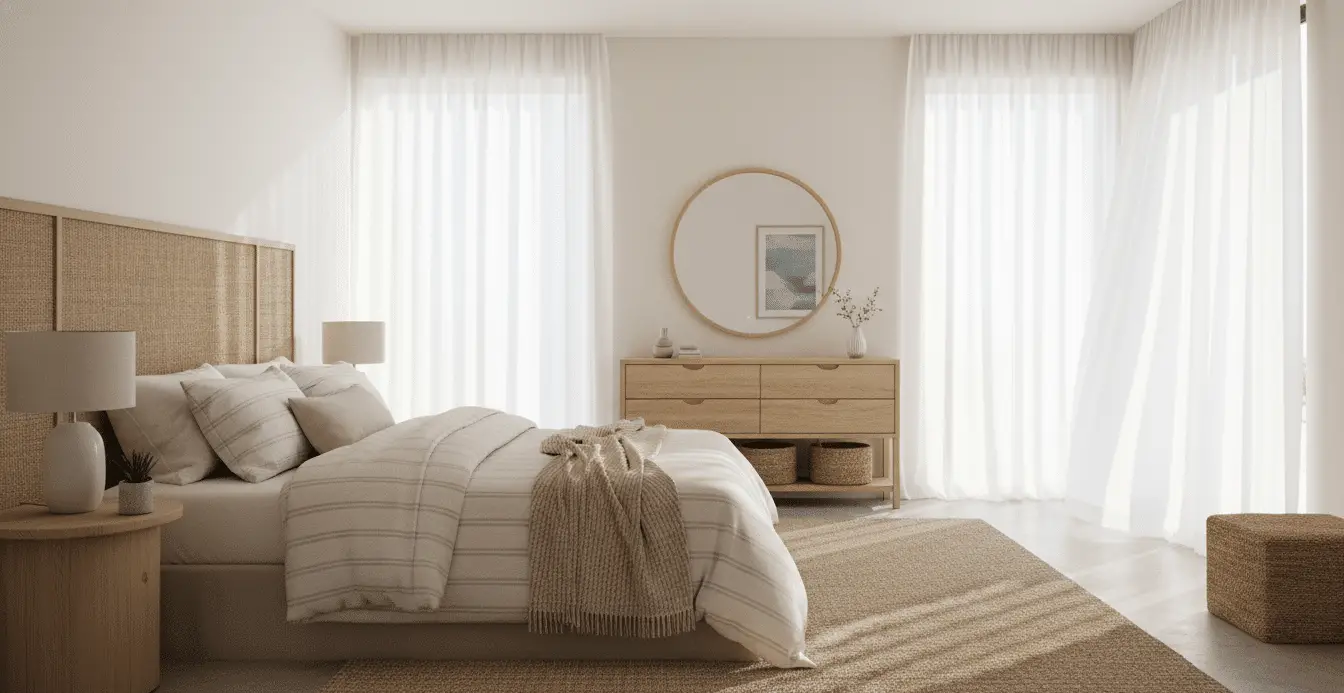
Minimalist Coastal Bedroom Decor for Peaceful Homes: A Serene Guide to Calm, Airy Living
Table of Contents
Introduction
Imagine stepping into your bedroom at the end of a long day and immediately feeling your shoulders drop, your breath deepen, and your mind quiet. Studies show that our physical environments significantly influence stress levels, sleep quality, and overall emotional well-being. Yet many bedrooms—despite being the place we rely on for rest—are filled with clutter, mismatched colors, and visual noise that make relaxation more difficult than it should be.
Minimalist coastal bedroom decor offers a gentle escape from this overwhelm. Inspired by the tranquility of shoreline landscapes, it combines simplicity with soothing natural elements to create spaces that feel airy, open, and deeply restorative. Unlike themed decor that leans heavily on nautical symbols, this style focuses on calmness: soft neutrals, organic textures, natural light, and intentionally chosen furnishings.
In this guide, you’ll learn how to transform a bedroom into a peaceful coastal-inspired retreat through mindful design choices. From choosing the right color palette to selecting furniture, incorporating natural materials, styling with subtle accents, and curating meaningful simplicity, these techniques will help you craft a room that feels serene and harmonious. Whether you live near the ocean or simply want to bring coastal calm into your everyday life, you’ll discover practical, beautiful methods to refresh your home with thoughtful minimalist design.
The Essence of Minimalist Coastal Bedroom Decor
Minimalist coastal decor is built on the idea that simplicity and nature are the foundation of serenity. This style avoids unnecessary ornamentation and replaces it with meaningful materials and calming colors that evoke the quiet rhythm of the shore. Instead of overwhelming the senses, every detail—from the bedding to the furniture finish—serves a purpose, contributing to the room’s sense of ease and tranquility.
What makes this approach so compelling is its emotional impact. The soft color palette, open flow of space, and natural textures mimic the peaceful environment of a beach setting. When you reduce visual clutter and focus on a curated selection of furnishings, the room becomes a place where you can truly breathe. Minimalism doesn’t mean empty; it means intentional. It means choosing pieces that enhance the mood of the space and removing anything that distracts from calmness.
Textures play a major role as well. Light woods, cotton, linen, jute, and softly woven textiles bring subtle depth without disrupting the minimalist ethos. These tactile elements mirror the textures found along coastlines—driftwood, grass, sand, and stone—which naturally promote relaxation.
Visual Breakdown: Core Principles of Minimalist Coastal Style
| Principle | Description | Why It Matters |
| Simplicity | Clean lines, uncluttered spaces | Reduces stress and visual overwhelm |
| Soft Neutrals | Whites, creams, sandy tones | Creates calm and expands space |
| Natural Textures | Wood, linen, jute, ceramics | Adds warmth and authenticity |
| Light & Air | Natural light, soft illumination | Enhances serenity and comfort |
Choosing the Perfect Coastal Color Palette
The right color palette is the heart of minimalist coastal decor. Coastal bedrooms rely on shades that mimic nature—soft whites, pale blues, sandy neutrals, and muted greens—all blended in a way that feels effortless and soothing. When these colors work in harmony, they create an atmosphere that reflects the peacefulness of shoreline landscapes.
Start with a base layer of whites or warm off-whites. These tones reflect natural light beautifully and establish an open, airy foundation. To avoid an overly sterile feel, mix in warm neutrals: sand, oatmeal, beige, and driftwood gray. These tones bring the grounding warmth of coastal environments and help the room feel inviting.
Next come the soft oceanic hues. Muted blue tones—mist, seafoam, stormy gray-blue, or pale aqua—infuse the space with gentle tranquility. A hint of sage or eucalyptus green adds organic freshness, reminiscent of coastal vegetation.
Layering these tones thoughtfully creates depth while keeping the room calm and cohesive. You don’t need many accent shades—just a few soft touches strategically placed through bedding, artwork, or decorative objects.
Table: Minimalist Coastal Color Combinations
| Base Colors | Complementary Neutrals | Accent Shades |
| Warm White | Sand, Oatmeal | Dusty Blue |
| Soft Cream | Driftwood Gray | Seafoam Green |
| Light Beige | Stone | Misty Aqua |
| Cloud White | Pale Taupe | Eucalyptus |
Furniture That Enhances a Minimalist Coastal Bedroom
Furniture in a minimalist coastal bedroom should feel light, intentional, and functional. Heavy pieces or ornate details disrupt the clean and airy atmosphere, while simple forms support the calm foundation you’re trying to create. Instead of bold or dark finishes, coastal minimalism thrives on soft, natural materials that echo the outdoors.
A bed frame made of whitewashed wood or pale oak naturally becomes the room’s anchor without overpowering it. Pairing this with linen bedding and soft cotton layers maintains the breathable, effortless look associated with coastal living. Nightstands and dressers should follow streamlined silhouettes, with minimal hardware to avoid visual clutter.
When selecting additional pieces—like a reading chair, bench, or shelving—focus on practicality and balance. Open shelving feels lighter than closed cabinets, while woven accent chairs add subtle texture. A small bench at the foot of the bed provides function without adding heaviness.
Avoid unnecessary pieces. In minimalist design, negative space is as important as the furniture itself. The openness between pieces contributes to the tranquil mood, allowing the room to feel uncluttered and free-flowing.
Furniture Breakdown Table
| Furniture Type | Style Suggestion | Purpose & Impact |
| Bed Frame | Light wood, rattan, whitewashed | Creates calm focal point |
| Nightstands | Simple, clean lines | Reduces clutter |
| Dressers | Soft wood tones | Adds organic warmth |
| Accent Seating | Linen or woven textures | Introduces natural depth |
| Shelving | Open, minimalist | Keeps space airy |
The Role of Natural Materials in Creating Peaceful Coastal Spaces
Natural materials serve as the emotional backbone of minimalist coastal style. They remind the senses of the outdoors—sunlight on wood, cool stone surfaces, soft woven fibers—and help create an environment that feels both grounding and serene.
Linen is one of the most iconic elements in coastal minimalism. Its airy texture and slightly relaxed appearance evoke breezy shorelines. Using linen for bedding or curtains enhances softness while maintaining a clean, understated aesthetic. Cotton, another breathable material, pairs beautifully with this look.
Wood plays a crucial role as well. Light oak, ash, bamboo, and driftwood tones introduce warmth without feeling heavy. These finishes echo organic seaside landscapes and create visual continuity.
Jute and rattan add gently rugged textures that balance the softness of fabrics. A jute rug under the bed or rattan baskets for storage improves functionality while keeping the design cohesive. Ceramic accents—such as table lamps, vases, or decorative bowls—offer subtle refinement and contrast against softer materials.
Table: Natural Materials and Their Emotional Effect
| Material | Texture | Emotional Impact |
| Linen | Airy, soft | Relaxation, breathability |
| Light Wood | Smooth grain | Warmth, grounding |
| Jute | Rough weave | Earthiness, stability |
| Ceramic | Matte, cool | Calm sophistication |
| Bamboo | Smooth, light | Natural brightness |
Decorative Accents That Elevate Coastal Simplicity
Decor in a minimalist coastal bedroom should be both subtle and intentional. Over-decorating can easily break the peaceful atmosphere, so the key is selecting a few meaningful items that enhance the natural aesthetic rather than distract from it.
Artwork should reflect the gentleness of coastal landscapes. Soft watercolor pieces, abstract interpretations of waves, or simple line drawings fit beautifully into this theme. Light wood or white frames keep the look cohesive without demanding attention.
Greenery also plays a powerful role. A small eucalyptus arrangement, a potted fern, or delicate dried grasses introduce organic movement and soften the structured lines of furniture. These natural elements contribute to freshness without disrupting minimalism.
Mirrors help expand the sense of space. Round mirrors with driftwood or light oak frames add coastal charm, while rectangular mirrors with clean edges enhance brightness.
When choosing decorative accents like candles, bowls, or baskets, opt for ceramics, woven textures, or soft-toned materials. Each item should feel like a quiet detail—something that enriches the room without overwhelming it.
Decor Accent Breakdown Table
| Accent | Material | Purpose |
| Wall Art | Watercolor, muted abstract | Adds soft visual interest |
| Plants | Green foliage, dried stems | Brings natural movement |
| Mirrors | Driftwood or light wood frames | Enhances light and space |
| Baskets | Jute, rattan | Adds texture and practical storage |
| Ceramic Pieces | Matte pottery | Provides subtle sophistication |
How Lighting Shapes the Coastal Minimalist Mood
Lighting transforms a minimalist coastal bedroom by enhancing warmth, highlighting natural textures, and creating an atmosphere that mimics soft coastal mornings. Harsh lighting disrupts the calm energy, whereas diffused, warm illumination nurtures a restful environment.
Natural light should be emphasized whenever possible. Sheer curtains soften sunlight without blocking it, filling the room with a gentle glow. For evening lighting, warm-white bulbs provide a soothing alternative to bright, cool-toned light.
Layered lighting matters. A mix of bedside lamps, wall sconces, and ambient lighting creates depth without clutter. Lamps with rattan, ceramic, or matte white bases work harmoniously with coastal minimalist themes, offering functional lighting with subtle style.
A coastal bedroom benefits from fixtures that feel light and understated. Woven pendant lamps, minimalist metal chandeliers, or sleek glass fixtures maintain simplicity while complementing the overall design.
Lighting Breakdown Table
| Lighting Type | Characteristic | Benefit |
| Natural Daylight | Softened through sheer curtains | Enhances openness |
| Bedside Lamps | Ceramic or rattan bases | Warm, calm illumination |
| Sconces | Clean silhouettes | Saves space, adds ambience |
| Ambient Lighting | Soft warm glow | Supports relaxation |
Conclusion
Minimalist coastal bedroom decor blends simplicity, natural beauty, and emotional calm into a single cohesive style. By focusing on gentle colors, organic textures, intentional furniture choices, and subtle decorative accents, you can create a bedroom that feels like a peaceful sanctuary. This design philosophy emphasizes tranquility at every level—from the color palette to the materials, the flow of the space, and the light that fills it. Whether you’re refreshing a few elements or transforming your entire bedroom, the minimalist coastal approach offers a timeless path to serenity and comfort, making your home a place where peace naturally thrives.