
Minimalist Landscape Design Ideas for Elegant and Serene Gardens
Table of Contents
Introduction
Minimalism is more than just a trend—it’s a lifestyle. The concept of “less is more” has transcended into all aspects of design, including landscape architecture. With the hustle and bustle of modern life, more homeowners are embracing minimalist landscape designs to create peaceful outdoor spaces. The focus is not on overcrowding your garden with too many elements, but on highlighting the natural beauty of your surroundings in a subtle yet powerful way.
In a world where everything is fast-paced and overstuffed, a minimalist garden can provide a sense of calm, order, and serenity. This approach doesn’t mean your garden will be boring or devoid of life. Instead, it’s about careful selection of elements that provide a strong impact while maintaining an uncluttered aesthetic.
In this blog post, we’ll explore minimalist landscape design ideas that will transform your garden into a beautiful, tranquil, and organized retreat. From creating clean lines with simple hardscapes to choosing the right plants, you’ll find ideas that embrace simplicity while ensuring your garden remains an elegant sanctuary. Whether you have a small backyard or a spacious garden, minimalist design can work for every space.
1. Clean Lines and Structured Layout
Minimalist gardens often feature clean lines and symmetrical shapes, which help to create a sense of order and calm. The layout should feel open and uncluttered, using hardscapes and natural elements to create balance and structure.
The Role of Geometry in Minimalist Gardens
A minimalist design embraces geometric shapes and structured layouts, which can be achieved through pathways, patios, or garden beds. Square, rectangular, or circular shapes work well because they provide symmetry and focus.
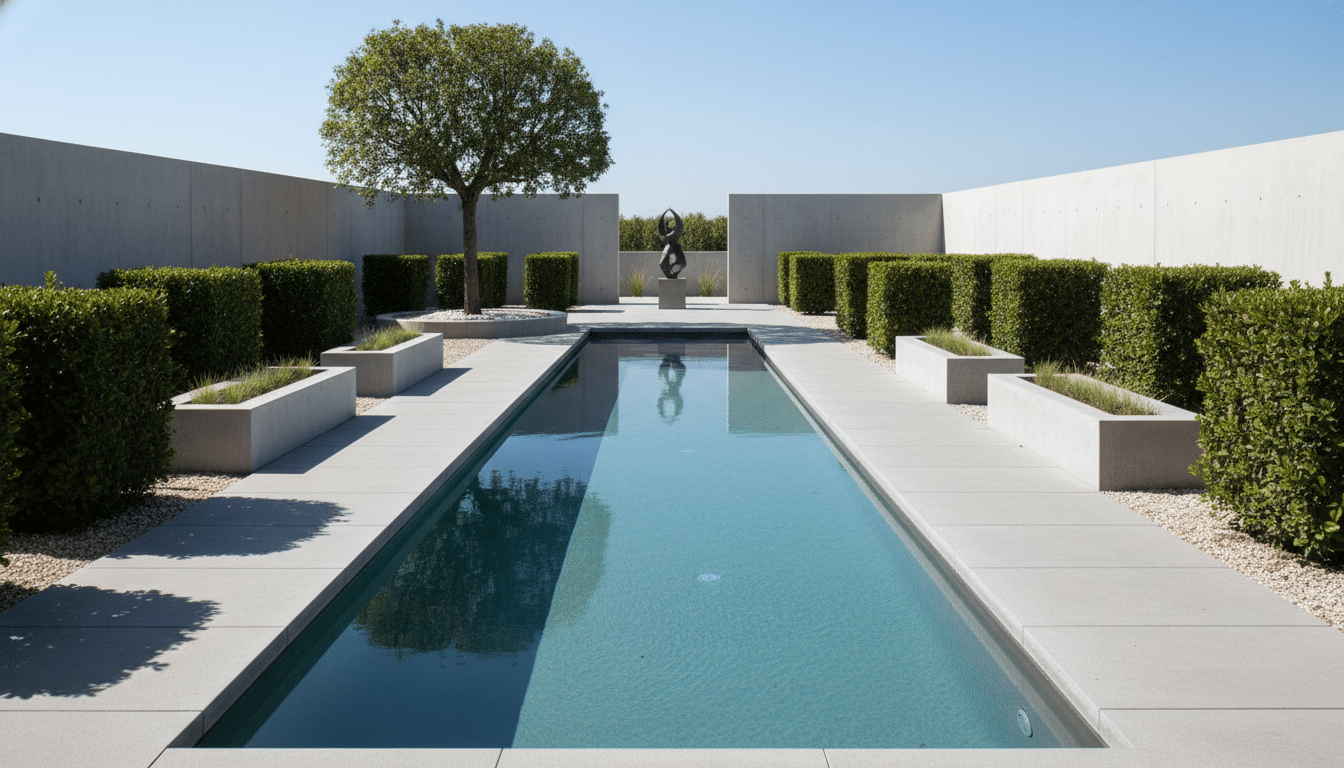
For instance, straight pathways leading to a central feature like a fountain or a seating area can direct the viewer’s attention and provide a sense of calm. Similarly, a rectangular pool with a simple stone border will create a sleek, modern focal point in your garden. This type of structure reduces distractions and ensures that each design element serves a purpose.
Choosing the Right Hardscapes
Hardscaping refers to non-plant elements like stones, wood, metal, or concrete, which provide texture, color, and structure to your garden. Minimalist gardens benefit from clean, smooth materials, such as polished concrete, flagstone, or gravel. These materials help define spaces without overwhelming the viewer with intricate details.
2. The Power of Negative Space
In minimalist landscape design, negative space is just as important as the plants and structures. Negative space refers to the areas in your garden where there is no physical element, giving your eyes a place to rest. This sense of openness adds to the tranquility of the garden.
How Negative Space Enhances Simplicity
Negative space allows the natural beauty of your garden’s features to shine without distraction. For example, wide spaces between plantings can make individual plants stand out more, giving each one its moment to shine. Large, open areas of lawn or gravel can contribute to the peaceful feeling of a minimalist garden by reducing the clutter of too many elements.
Creating Balance through Space
When designing your garden layout, it’s important to consider the balance between built elements (like walls or fences) and open space. Large expanses of lawn or simple gravel areas help balance the more intricate details, like a single tree or a well-placed bench. Achieving this balance gives your garden a harmonious, serene feel.
3. Choosing Minimalist Plants for Elegance
Minimalist gardens thrive on carefully chosen plants that contribute to a cohesive design. When selecting plants, think of form, texture, and color over quantity. Instead of planting a variety of species, focus on a few that fit well together and serve the overall aesthetic.
Selecting Plants with Simple Forms
In minimalist landscape design, plants with simple, bold forms are favored over intricate or overly decorative plants. Consider ornamental grasses, boxwoods, and bamboo for their clean lines and low-maintenance qualities. Succulents, like agave or aloe, are also excellent choices because of their sculptural quality and straightforward beauty.
Using Repetition for Cohesion
To create visual harmony, repeat plants or colors throughout the garden. This repetition ties everything together, creating a unified look. For example, planting rows of neatly trimmed boxwood hedges or repeating a single type of grass in different areas of the garden will add rhythm and flow.
4. Integrating Natural Materials with Modern Features
In minimalist landscape design, natural materials play a significant role in creating a calm, organic environment. Whether it’s stone, wood, or metal, these materials should be used thoughtfully to add texture and warmth without overpowering the design.
The Warmth of Wood
Wooden elements like benches, decks, or pergolas can soften the rigid lines of a minimalist garden. Using weathered wood or simple, untreated boards for outdoor furniture or walkways creates a natural, timeless feel. This texture contrasts beautifully with stone and concrete, creating a balanced, serene space.
Stone and Concrete for Modern Elegance
Stone, gravel, or concrete surfaces bring an industrial, clean look that complements the organic nature of plants. A minimalist garden might feature a polished stone patio, a sleek concrete retaining wall, or smooth gravel paths that lead to serene seating areas.
5. Subtle Water Features for Tranquility
Water features, when done in a minimalist style, can enhance the sense of calm in a garden. A simple, subtle fountain or small pond can serve as a focal point without overwhelming the senses.
The Power of Sound
A minimalist water feature doesn’t have to be elaborate. A small, gently flowing fountain can create soothing sounds that add to the peaceful ambiance. The sound of water is known for its stress-reducing effects and can contribute to the overall serenity of the garden.
Choosing the Right Water Feature
A minimalist water feature should complement the clean lines and simple design of the garden. Opt for a small, modern fountain or a sleek reflecting pool. The design should be simple, with the water feature serving as a peaceful, reflective element rather than a large, ornate centerpiece.
6. Lighting for Atmosphere
Minimalist gardens often incorporate lighting to highlight architectural features, plants, or pathways while maintaining the overall simple aesthetic. Thoughtful lighting design can transform the garden at night, adding elegance and ambiance.
Simple, Subtle Lighting Options
Instead of ornate light fixtures, opt for recessed lights, path lights, or wall-mounted sconces. These subtle, unobtrusive lighting options ensure that the lighting complements the minimalist design without drawing attention to itself. The goal is to create a soft glow that enhances the natural beauty of the space, rather than overwhelming it.
Highlighting Key Features
Use lighting to draw attention to particular elements in the garden, such as a feature plant, sculpture, or seating area. Low, soft lights can highlight these features, making them stand out without disrupting the overall flow of the garden.
7. Keeping Maintenance Low
Minimalist gardens are designed to be low-maintenance, making them ideal for those who want a beautiful outdoor space without spending too much time on upkeep. Choosing the right materials and plants can significantly reduce maintenance.
Low-Maintenance Plant Choices
Opt for plants that require minimal care, such as succulents, evergreen shrubs, or native plants that are suited to your local climate. These plants are hardy and can withstand varying weather conditions without frequent care or attention.
Easy-to-Clean Hardscapes
When selecting hardscapes, consider materials that are easy to maintain, such as smooth stone, concrete, or gravel. These materials are simple to clean and won’t require constant upkeep, allowing you to enjoy your garden without spending hours on maintenance.
Conclusion
Minimalist landscape design is about creating a serene and beautiful space that requires minimal effort to maintain. By focusing on clean lines, natural materials, and carefully selected plants, you can create an elegant garden that provides a peaceful retreat from the busy world. Whether you’re designing a small garden or a larger outdoor space, the principles of minimalist design can help you craft a tranquil, harmonious environment that brings beauty and simplicity into your life.
By embracing the power of negative space, choosing simple yet bold plants, and integrating modern materials, you’ll be well on your way to creating a minimalist landscape that exudes elegance and timeless appeal.