
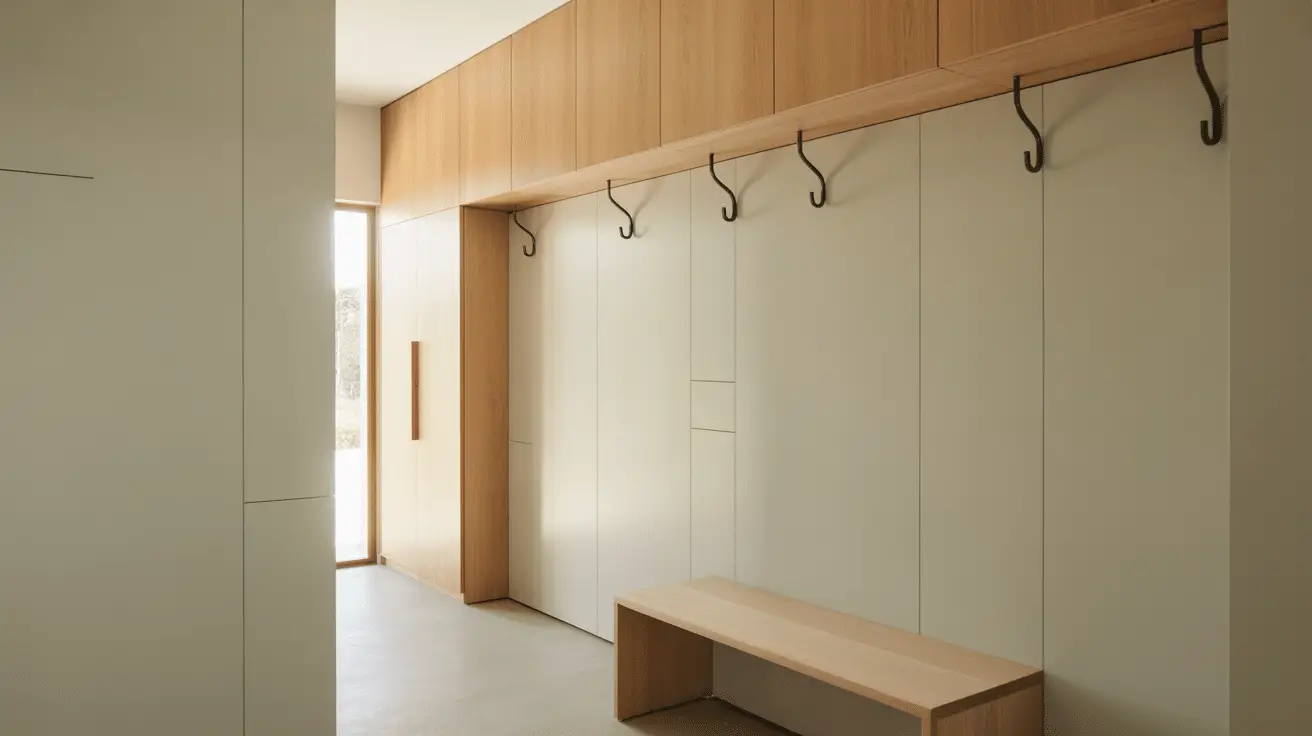
Minimalist Mudroom Entryway Design for Clean and Clutter-Free Spaces
Table of Contents
Introduction
A recent survey reported that over 60% of homeowners feel their entryway becomes the messiest part of the house—shoes scattered, bags piled up, and coats draped over random furniture. This everyday clutter can make even the most beautifully designed home feel chaotic the moment you walk in. That’s where a minimalist mudroom entryway becomes a game-changing solution. By blending simplicity with practical organization, a minimalist approach transforms the first point of entry into a calm, functional extension of your living space.
Minimalist mudroom design isn’t just about aesthetics—it’s about creating a system that reduces stress and streamlines daily routines. Whether you have a spacious foyer or a compact hallway, thoughtful organization techniques and clean design principles help maintain order effortlessly. This article explores how to design a minimalist mudroom entryway that enhances cleanliness, improves workflow, and aligns beautifully with a modern lifestyle.
Throughout this guide, you’ll learn the essentials of layout planning, storage solutions, visual simplicity, and daily maintenance strategies. You’ll also discover how small design choices can drastically improve both the appearance and functionality of your entryway. By the end, you’ll have a clear roadmap to designing a mudroom entryway that promotes peace, reduces clutter, and supports a seamless home environment.
Designing a Functional Minimalist Layout
A minimalist mudroom entryway begins with a clear, functional layout. Before bringing in décor or storage pieces, the foundation must support efficient movement and intuitive organization. Begin by evaluating traffic flow—how people enter and exit, where they pause, and where items naturally get dropped. This helps determine where each zone should be placed, such as shoe storage, coat hanging areas, or drop zones for daily essentials.
A functional layout often relies on straight lines, hidden storage, and open floor space. Avoid overcrowding the entryway with unnecessary pieces; instead, choose only what you truly need. Narrow benches, slim cabinets, or wall-mounted hooks make excellent use of compact areas without visually weighing the room down. By keeping everything streamlined, the space feels larger and more breathable.
Creating designated zones enhances clarity and efficiency. For example, a bench paired with a shoe drawer creates a purposeful seating and organization station. Adjacent hooks or a minimalist coat bar keeps outerwear accessible yet tidy. Open space between zones ensures the mudroom remains visually calm, preventing clutter build-up.
Layout Planning Table
| Zone | Purpose | Best Minimalist Solution | Space Requirement |
| Shoe area | Store daily footwear | Slim closed shoe cabinet | Small |
| Coat storage | Hang jackets and bags | Wall hooks or a rail | Small |
| Seating | Put on/take off shoes | Narrow bench | Medium |
| Drop zone | Keys, mail, essentials | Floating shelf | Small |
Choosing Minimalist Storage Solutions That Reduce Clutter
Storage is the backbone of an effective minimalist mudroom entryway. Without thoughtful storage solutions, even the most elegant layout can quickly become overwhelmed. The goal is to create systems that both hide visual clutter and make daily routines easier. Closed storage is especially effective in minimalist design because it maintains smooth lines and reduces visual noise.
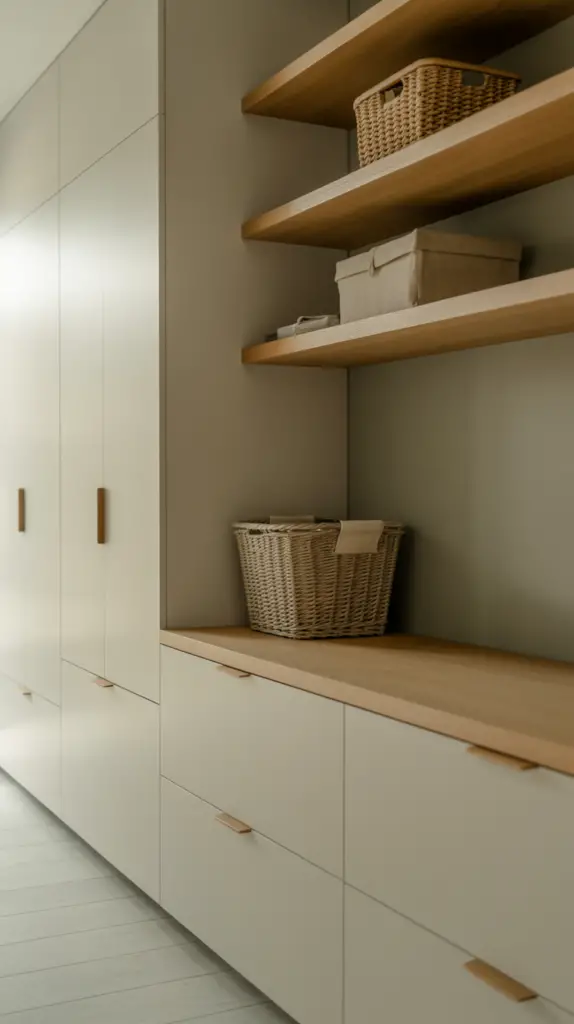
Cabinets with flat-panel doors or built-in units offer sleek, functional storage for seasonal items, backpacks, shoes, and pet accessories. For smaller spaces, floating shelves create room for essentials without sacrificing floor space. Slim cubbies provide individualized storage for each household member, preventing items from being misplaced.
Hooks are another minimalist-friendly solution. Strategically placed, they help keep coats, hats, and bags elevated and organized. Opt for materials such as matte black metal, natural wood, or brushed brass to maintain a clean visual tone. Keep the number of hooks minimal to avoid overcrowding the wall.
Storage baskets or bins add warmth while supporting the minimalist aesthetic. Neutral tones like cream, beige, or charcoal blend seamlessly with contemporary or Scandinavian-inspired mudrooms. Labeling bins subtly ensures the organization remains consistent.
Storage Strategy Breakdown
| Storage Type | Best Use | Benefits | Style Level |
| Closed cabinets | Shoes & gear | Hides clutter | High |
| Floating shelves | Essentials | Maximizes space | Medium |
| Wall hooks | Coats & bags | Easy access | Medium |
| Baskets & bins | Small items | Flexible, affordable | High |
Incorporating Natural Materials for Warm Minimalism
Minimalist mudroom entryway design doesn’t mean cold or sterile spaces. Natural materials add warmth, texture, and a grounded feeling while maintaining clean aesthetics. Wood, stone, cotton, rattan, and wool bring softness and organic charm without overpowering the minimalist look.
Start with a wood bench or shelving unit. Light oak, birch, or ash creates a calming Scandinavian vibe, while walnut offers rich contrast in modern spaces. Pairing natural wood with soft textures like cotton cushions or wool rugs provides comfort and visual balance. These materials also age beautifully, enhancing the timeless appeal of the entryway.
Stone accents—such as ceramic trays, stoneware bowls, or slate inserts—strengthen the grounding effect. These small touches keep the mudroom feeling serene and connected to nature. Natural fiber baskets made of jute or rattan offer both texture and storage functionality, blending seamlessly into minimalist palettes.
Incorporating greenery adds life without crowding the space. A single potted plant or a narrow vase containing simple stems introduces organic shapes that complement the clean lines of minimalist décor.
Natural Material Selection Guide
| Material | Best Use in Mudroom | Aesthetic Impact | Maintenance |
| Wood | Bench, shelves | Warm & inviting | Low |
| Stone | Trays, décor accents | Grounded & calm | Low |
| Cotton & wool | Cushions, rugs | Soft texture | Medium |
| Rattan/jute | Baskets & bins | Organic & airy | Low |
Maximizing Small Mudroom Entryways with Smart Space Optimization
Designing a minimalist mudroom entryway within a small footprint requires strategic planning. Every inch must hold purpose, and thoughtful choices ensure the space feels open rather than cramped. Vertical space becomes essential—tall cabinets, stacked storage, and high-mounted hooks dramatically increase function without sacrificing floor area.
One powerful approach is to install a built-in tower or slim wardrobe to store bulky coats or shoes. This creates a seamless, streamlined appearance. Foldable or retractable elements, such as collapsible stools or extendable shelves, offer flexible functionality. Mirrors are another essential tool. A tall mirror enlarges the visual perception of the mudroom, reflecting light and bringing depth to compact entryways.
Choose multifunctional pieces that serve more than one role. A bench with hidden storage beneath the seat or a cabinet with integrated charging stations enhances practicality. Keep the color palette minimal—whites, soft grays, beiges, and natural wood tones promote openness and clarity.
Wall-mounted organization boards can be used for keys, small notes, or mail while keeping countertops clean. Even tiny mudrooms can become high-functioning spaces when clutter is minimized and each design choice is intentional.
Small Space Optimization Table
| Strategy | Benefit | Best For | Visual Effect |
| Vertical storage | Use height effectively | Narrow spaces | Taller appearance |
| Foldable elements | Flexible use | Multi-purpose homes | Clean and adaptable |
| Mirrors | Enlarges space | Small entryways | Brighter & open |
| Multifunctional furniture | Saves space | Compact mudrooms | Minimalist cohesion |
Creating a Calm Minimalist Aesthetic with Color and Lighting
A minimalist mudroom entryway thrives on a clean, soothing color palette and intentional lighting. Soft neutrals such as warm white, muted gray, sand, or oatmeal create a serene backdrop for functional elements. By reducing visual noise, these tones make the mudroom feel more organized and inviting.
Lighting is equally important. A well-lit mudroom ensures the space feels open and practical during all hours. Wall sconces, overhead fixtures, and accent lighting help illuminate key areas such as storage zones or benches. Warm LED lighting softens the overall atmosphere, while cooler lighting can enhance crisp, modern lines.
Natural light should also be embraced where possible. Uncovered windows or light-filtering shades preserve openness without compromising privacy. If the entryway lacks direct windows, reflective materials—like mirrors or pale cabinetry—can help bounce light around the room.
Contrast is essential to avoid a flat appearance. Pairing neutral walls with matte black hooks or darker wood tones introduces depth while maintaining a minimalist ethos.
Color & Lighting Guide
| Element | Recommended Choice | Effect | Best Use |
| Wall color | Soft neutrals | Calm & clean | All mudrooms |
| Lighting | Warm LEDs | Cozy & welcoming | Evening use |
| Contrast accents | Matte black, walnut | Depth & interest | Hardware & décor |
| Reflective surfaces | Mirror, pale finishes | Brightening effect | Small spaces |
Streamlining Daily Routines with Efficient Minimalist Systems
An often-overlooked aspect of minimalist mudroom entryway design is daily workflow. A beautiful space is only useful if it supports seamless routines and helps maintain cleanliness over time. Creating micro-systems for everyday habits ensures that clutter stays at bay.
Designate specific homes for essentials—keys in a small tray, shoes in assigned cubbies, backpacks on hooks, and outerwear within arm’s reach. These predictable placements make it easier for everyone in the household to maintain order. Use labeled baskets or subtle dividers within drawers for smaller items like gloves, dog leashes, or seasonal accessories.
A mail-sorting area reduces visual clutter. Whether using a minimalist wall-mounted sorter or a compartment within a cabinet, keeping paperwork contained preserves the mudroom’s clean appearance. Consider adding a small charging station for phones or devices; this ensures technology remains organized as well.
Regular editing is vital. Minimalism encourages reviewing belongings often, removing unused items, and keeping only what adds value. By integrating these systems, the mudroom becomes not just a stylish entryway but a functional command center for everyday life.
Routine System Table
| System | Purpose | Result | Ideal Feature |
| Key station | Keep essentials accessible | Reduces misplacement | Small tray or hook |
| Shoe rotation | Organize daily footwear | Prevents clutter | Closed cabinet |
| Mail station | Sort new mail | Maintains cleanliness | Wall organizer |
| Seasonal edit | Remove old items | Sustains minimalism | Storage bins |
Conclusion
A minimalist mudroom entryway sets the tone for a clean and organized home. By combining functional layouts, thoughtful storage, natural materials, and calming aesthetics, this space becomes both practical and inviting. Small mudrooms can thrive with clever optimization, while lighting and color choices elevate the overall atmosphere. Establishing daily organization systems ensures the mudroom continues to perform smoothly long after the design is complete. With intentional design choices, your entryway can become a serene, structured transition point that supports a clutter-free lifestyle.