

Old English Living Room Furniture and Decor Ideas for a Timeless Historic Home Feel
Table of Contents
Introduction
There’s something deeply captivating about an Old English living room—where the scent of polished wood mingles with the glow of a roaring fire, and every piece of furniture tells a story. This timeless style exudes heritage, craftsmanship, and quiet luxury. It’s the aesthetic that turns an ordinary house into a historic home, blending centuries-old English elegance with cozy, lived-in warmth.
In recent years, design trends have seen a return to authenticity. According to a 2025 interior style survey by House & Home, over 60% of homeowners now seek “character-rich” interiors inspired by European heritage. The allure of Old English decor lies in its ability to ground a space with tradition while still feeling comfortable and inviting.
This article will guide you through designing a living room that captures the essence of Old English charm—from choosing the right furniture and color palette to integrating period-appropriate details like ornate moldings, vintage textiles, and aged brass fixtures. Whether you live in a modern home or an older property, these ideas will help you craft a space that feels steeped in history yet perfectly suited to modern comfort.
The Foundation of Old English Style
To achieve a truly historic Old English aesthetic, begin with architectural structure and tone. This design style embraces craftsmanship and natural materials, celebrating patina, depth, and imperfection. Key elements include wooden beams, paneled walls, carved mantels, and richly layered fabrics.
The color palette is equally important. Deep, earthy tones like oxblood, forest green, mahogany, and golden ochre provide the warmth and gravitas that define Old English interiors. Complement these with lighter neutrals—ivory, parchment, or soft taupe—to balance the richness.
| Element | Material/Color | Purpose |
| Walls | Dark paneling or textured wallpaper | Creates depth and historic warmth |
| Flooring | Oak or herringbone wood | Adds authenticity and durability |
| Accents | Brass, iron, or pewter | Introduces period-specific metallics |
| Textiles | Wool, velvet, or tapestry | Adds comfort and texture |
Focus on natural finishes that age gracefully. The appeal of Old English style comes from the subtle signs of use—a slightly worn leather chair or hand-carved table that shows decades of care. Every imperfection adds character and reinforces the sense of history.
Choosing Authentic Old English Furniture
Furniture selection is where the room’s character truly comes alive. Old English living room furniture is renowned for its solid craftsmanship, intricate detailing, and dignified presence. You’ll want to focus on pieces that feel substantial and timeless rather than trendy or sleek.
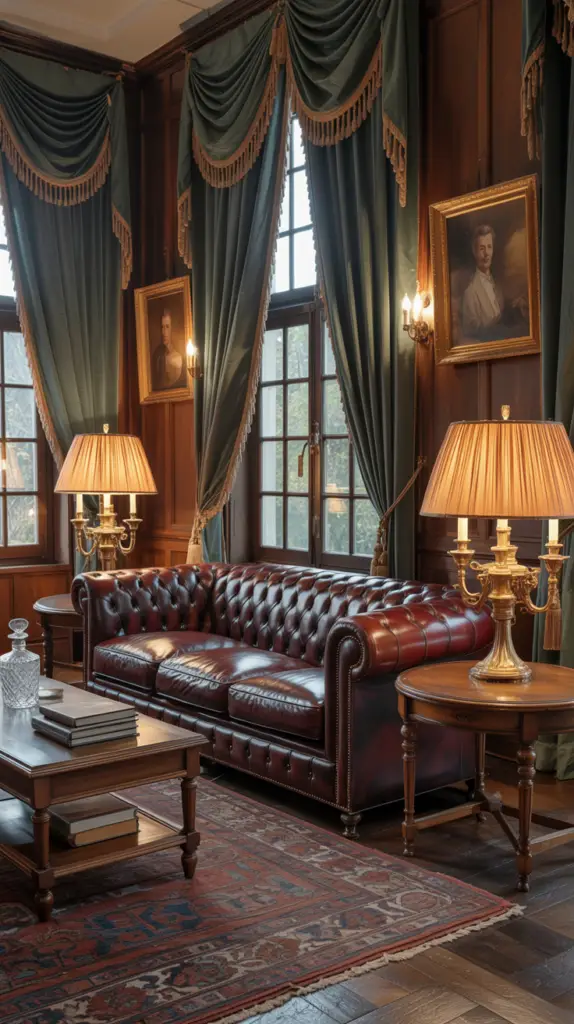
Start with a grand focal piece such as a Chesterfield sofa or a deep, tufted armchair in aged leather. Their classic silhouette and rolled arms instantly evoke English heritage. Complement these with sturdy wood tables—preferably in oak, walnut, or mahogany—with turned legs or carved accents.
For smaller items, look for antique or reproduction sideboards, writing desks, and nesting tables. The charm of mismatched pieces adds authenticity—Old English homes evolved over generations, with each item contributing its own story.
| Furniture Type | Classic Example | Design Feature |
| Sofa | Chesterfield | Deep button tufting, leather finish |
| Chair | Wingback | High back, nailhead trim |
| Table | Gateleg or pedestal | Ornate carvings, rich wood tones |
| Cabinet | Welsh dresser | Display shelves and lower storage |
Aim for balance: mix large statement pieces with understated accents to create a layered, harmonious environment that feels collected over time.
The Role of Color and Pattern in a Historic Space
Old English interiors are celebrated for their interplay of color and pattern. This style favors depth, richness, and visual storytelling over minimalism. Walls, textiles, and upholstery often feature a mix of florals, plaids, and damasks inspired by English countryside heritage.
For walls, consider moody hues—deep greens, burgundy, or navy balanced by soft creams or muted golds. Wallpaper featuring botanical or baroque-inspired motifs can instantly transform a plain room into a period masterpiece.
When layering patterns, start with one dominant design (like a damask wallpaper), then incorporate smaller, complementary patterns in upholstery, cushions, or curtains. Balance is key—patterns should harmonize rather than compete.
| Color/Pattern Type | Suggested Use | Historic Influence |
| Floral chintz | Curtains, cushions | Country estate charm |
| Plaid or tartan | Throws, rugs | Classic British heritage |
| Damask | Wallpaper or upholstery | Aristocratic elegance |
| Deep jewel tones | Wall paint | Warm, moody atmosphere |
Combine these tones and textures thoughtfully to recreate the layered richness that defines Old English interiors—a look that’s luxurious yet deeply comforting.
Classic English Lighting and Ambience
Lighting plays a vital role in evoking the soft, historic glow characteristic of Old English living rooms. Forget harsh overhead lights; instead, focus on layered illumination from various sources. Chandeliers, sconces, and lamps with warm, diffused shades will bring depth and warmth to your space.
Begin with a statement chandelier—perhaps wrought iron, brass, or crystal—that hangs gracefully above the main seating area. Complement this with wall sconces mounted near artwork or above wainscoting to cast gentle, ambient light. Finally, add table lamps with pleated or fringed fabric shades for localized glow and a touch of vintage charm.
Candles also play a traditional role, adding romance and authenticity. Group them on mantels or inside hurricane lanterns for a safe but classic touch.
| Lighting Type | Material/Style | Placement Tip |
| Chandelier | Brass or wrought iron | Central focal point |
| Sconces | Aged bronze or pewter | Flank mirrors or paintings |
| Table lamp | Porcelain or carved base | Beside sofa or reading nook |
| Candlelight | Beeswax tapers | Fireplace mantel |
Together, these layers create a soft, glowing atmosphere reminiscent of grand English manors and cozy countryside parlors.
Textiles and Upholstery That Define Comfort
In the Old English style, comfort is as important as elegance. Textiles are the secret ingredient that makes the room inviting—sumptuous yet practical. Think of lush velvet drapes, heavy wool throws, and richly patterned upholstery.
Curtains should be full-length and generously pleated, preferably lined for insulation. Fabrics like velvet, brocade, or damask enhance the sense of grandeur. For upholstery, choose natural fibers with texture—linen for lightness, leather for durability, or tapestry for depth.
Rugs play a grounding role. Persian or Oriental rugs with deep reds, blues, or greens provide color cohesion while adding warmth underfoot. To achieve authenticity, layer smaller rugs or place one beneath a coffee table for visual depth.
| Textile Type | Ideal Use | Effect |
| Velvet | Drapes, cushions | Luxurious and dramatic |
| Wool | Throws, blankets | Cozy and traditional |
| Leather | Chairs, ottomans | Durable with patina |
| Persian rug | Flooring | Adds heritage and warmth |
Textiles should engage all senses—rich in texture, visually layered, and soft to the touch. It’s these details that transform a room from mere décor into timeless living comfort.
Decorative Details That Capture History
No Old English living room is complete without thoughtful decorative touches. These small details bring authenticity, giving your space the soul of a historic home.
Artwork plays a key role—choose oil paintings, hunting scenes, or pastoral landscapes framed in ornate gold or dark wood. Mirrors with antique frames expand light while enhancing the sense of age and refinement.
Accessories like brass candlesticks, porcelain vases, and leather-bound books add warmth and visual storytelling. Display them on mantels, coffee tables, and shelves as if they’ve been collected over generations. Even something as simple as an embroidered cushion or ceramic teapot can contribute to the lived-in charm.
| Decorative Element | Material | Placement |
| Wall art | Oil or print | Above fireplace |
| Mirror | Gilded or carved wood | Opposite window for light |
| Accessories | Brass, porcelain, glass | Mantel or bookshelf |
| Books | Leather-bound classics | Side table or cabinet |
These details don’t just decorate—they narrate. Each object whispers a bit of history, tying your living room to centuries of English elegance.
Integrating a Fireplace as the Heart of the Room
Few features define an Old English living room more than the fireplace. It serves as both a literal and emotional centerpiece, a symbol of warmth, gathering, and tradition. Whether you have an original hearth or a modern reproduction, styling it correctly is key to achieving an authentic historic ambiance.
Stone or carved wooden mantels work beautifully. Choose materials like limestone or dark oak to frame the fire naturally. Above the mantel, display a vintage mirror, portrait, or clock—objects that evoke heritage. Flank the fireplace with armchairs to create a conversational arrangement, and keep a woven basket of logs nearby for practicality and charm.
Don’t forget accessories: a wrought-iron fireguard, andirons, and brass tools are as decorative as they are functional. In homes without a working fireplace, consider an electric insert with a classic surround to recreate the look.
| Fireplace Feature | Material | Historic Touch |
| Mantel | Stone or oak | Traditional English craftsmanship |
| Accessories | Brass or iron | Authentic hearth detailing |
| Décor above mantel | Mirror or portrait | Creates focal point |
The fireplace sets the tone for the entire room—a visual and emotional anchor that embodies the timeless spirit of the Old English home.
Conclusion
Designing a living room with Old English furniture and décor is more than recreating a historic aesthetic—it’s about embracing a lifestyle rooted in warmth, tradition, and artistry. The dark woods, rich fabrics, and aged metals tell stories of centuries past while offering enduring beauty and comfort.
By balancing heritage with livability—mixing authentic antiques with subtle modern updates—you can create a space that feels timeless rather than dated. The result is a living room filled with charm, history, and character: a place where every object has meaning and every detail feels intentional.
An Old English-inspired home isn’t just decorated—it’s curated, cherished, and beautifully alive with history.