Old Money Office Look: Elegant and Refined Workspace Ideas for a Timeless Aesthetic
Table of Contents
Introduction
There is a reason the old money aesthetic has surged back into the spotlight: in a world filled with fast trends and disposable décor, a timeless workspace feels like a breath of fresh, refined air. The old money office look is not loud or flashy—it’s quietly luxurious, deeply intentional, and grounded in craftsmanship. Think rich woods, curated antiques, distinguished textiles, and a color palette that whispers confidence rather than shouts for attention.
For many professionals, the workspace is more than a desk and a chair; it’s a sanctuary for thinking, creating, and making decisions that shape careers or businesses. A refined office environment influences mood, productivity, and even the energy you bring into your work. The old money style offers the structure, coziness, and elegance needed to build a room where excellence feels natural.
This blog will guide you through the essentials of designing an elegant, old-money-inspired office, from selecting heirloom-quality furnishings to perfecting ambient lighting and adding intellectual character through art and accessories. Each section provides practical design strategies, styling inspiration, and visual breakdowns to help you create a workspace that looks effortlessly sophisticated. Whether you’re redesigning a home office or elevating a corporate workspace, these ideas will help you cultivate an environment defined by refinement, longevity, and understated luxury.
Foundational Elements of an Old Money Office Look
A refined workspace begins with foundational elements that set the tone for timeless elegance. Colors, textures, and materials all play a crucial role in establishing the classic old money ambiance. Rich color palettes—deep greens, oxblood, navy, taupe—create a warm, intellectual environment. Traditional materials such as walnut, mahogany, brass, leather, and linen help anchor the room in heritage charm.
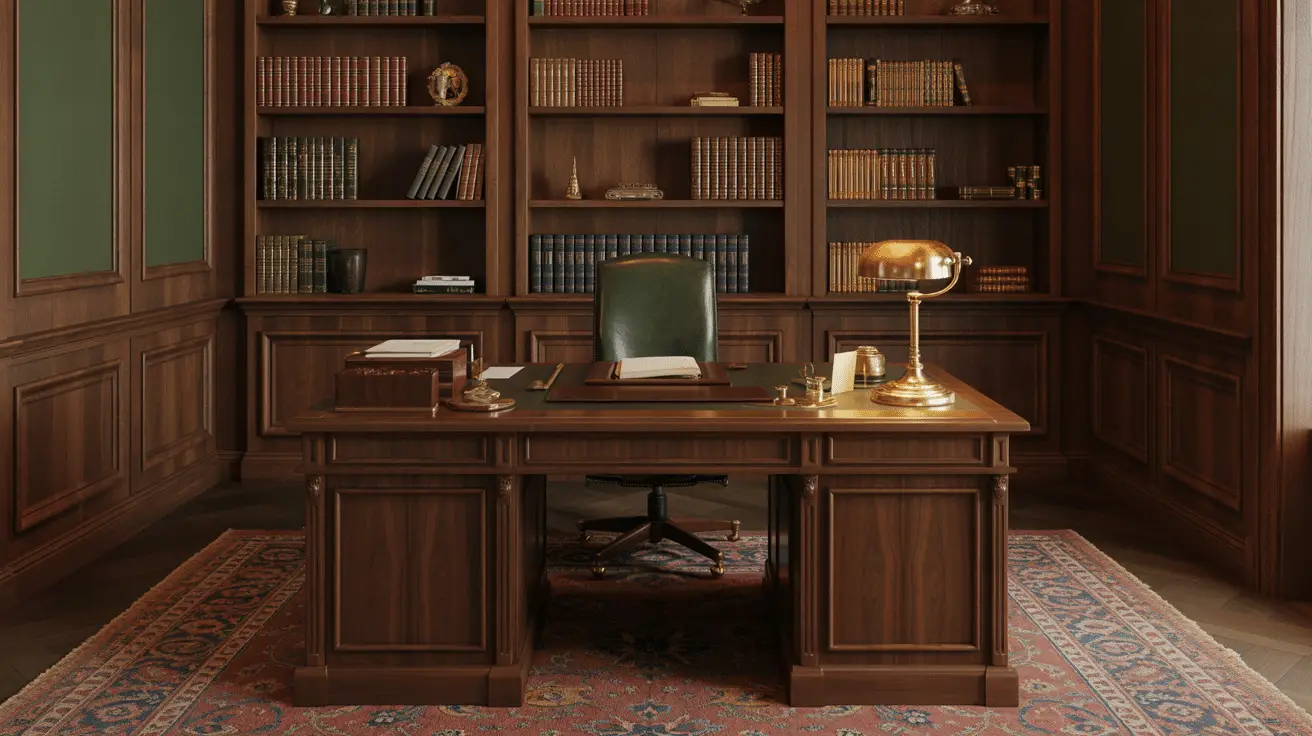
One defining feature of the old money style is its intentionality. Every item in the room has a purpose or a story, and nothing feels overly trendy. For example, a solid-wood desk with inset leather panels communicates longevity and craftsmanship. Vintage Persian rugs add character while providing warmth underfoot. Paneled walls or wainscoting, even when simply painted, bring architectural depth that instantly elevates the room.
Lighting also plays an important role in shaping the foundational atmosphere. Instead of bright overhead lights, think library lamps, banker’s lamps, or shaded sconces that create pools of warm, ambient glow. These lighting choices speak to a sense of study, reflection, and comfort—key themes in an old money aesthetic.
Visual Breakdown: Foundational Elements Table
| Element | Description | Impact on Style |
| Color Palette | Deep greens, navy, warm neutrals | Creates warmth and timeless sophistication |
| Materials | Walnut, leather, brass, linen | Reflects quality and heritage |
| Flooring | Persian rugs, dark wood floors | Adds texture and grounding luxury |
| Lighting | Warm-toned lamps, sconces | Enhances ambiance and intellectual mood |
Choosing the Perfect Desk and Seating for a Refined Workspace
The desk and seating you choose serve as the visual and functional core of an old money office. These elements must be both beautiful and practical—pieces that not only elevate the room but also withstand years of regular use. The classic choice for this aesthetic is a substantial wooden desk made of mahogany, walnut, or oak. Look for details such as carved edges, brass hardware, or leather inlays that echo traditional craftsmanship.
A partner desk or executive desk lends a strong presence, ideal for larger rooms. However, for smaller spaces, a writing desk with elegant tapered legs can still deliver a refined old world charm without overwhelming the room. The key is in the finish: matte wood with visible grain feels authentic, while glossy finishes may appear too modern or flashy for the intended style.
When selecting seating, consider comfort, durability, and aesthetic cohesiveness. A tufted leather chair—often called a Chesterfield-style office chair—creates an immediate sense of heritage. Dark brown or oxblood leather adds richness and texture. For additional seating, such as a reading nook or guest chairs, consider upholstered club chairs, wingbacks, or antique wooden chairs with linen cushions. These pieces contribute warmth and make the office feel layered and lived in.
To enhance the visual depth around your desk and seating, incorporate supporting elements such as a writing blotter, brass accessories, and a high-quality desk lamp. Items like vintage fountain pens, letter trays, or handcrafted organizers tie the theme together. The goal is to create an environment where the desk feels like a command center of sophisticated productivity.
Desk & Seating Style Guide
| Item | Recommended Style | Why It Works |
| Desk | Walnut executive desk with brass hardware | Conveys authority, craftsmanship, and timeless appeal |
| Office Chair | Tufted leather, dark tones | Adds texture, comfort, and luxury |
| Guest Chairs | Wingback or club chairs | Introduces warmth and traditional charm |
| Accessories | Brass lamp, leather blotter | Enhances old money authenticity |

Elevating the Space with Old Money Color Palettes and Textiles
Color and fabric choices can dramatically influence the mood of your workspace. Old money design favors colors rooted in history—tones once found in estate libraries, vintage studies, and old-world drawing rooms. Deep forest green, oxblood red, navy blue, cognac brown, and warm neutrals all help create a grounded, intellectual space.
Layering textiles is another essential aspect of capturing the old money aesthetic. Look for wool throws, linen curtains, velvet cushions, and Persian or Turkish rugs. These materials bring softness and warmth, balancing the solid masculinity of wood and leather. Even a simple wool runner along the floor can soften the acoustics of the room and add a touch of refinement.
When combining colors and textiles, aim for harmony rather than perfection. Old money interiors often feel collected over time, not purchased all at once. Mix patterned fabrics with solids, combine different textures, and use textiles to highlight reading corners or emphasize architectural features. You can also incorporate upholstery details like piping or tufting to reinforce traditional charm.
Textile & Color Matrix
| Category | Top Choices | Effect |
| Wall Colors | Forest green, navy, warm ivory | Creates a classic study-like atmosphere |
| Upholstery | Velvet, linen, tweed | Adds depth and tactile richness |
| Rugs | Persian, Oriental, Turkish | Grounds the space with heritage |
Curating Accessories That Capture Heritage and Intellectual Charm
Accessories tell the story of an old money office. They provide personality, communicate intellectualism, and anchor the room in tradition. Unlike modern minimalist décor, where surfaces are left bare, old money style embraces meaningful objects. These items should reflect history, craftsmanship, or scholarly pursuits.
Start with books—preferably hardcovers, leather-bound editions, or vintage volumes with textured spines. Books symbolize intellect and make the space feel inhabited by someone who values thought and culture. Arrange them horizontally and vertically for visual variety, and consider incorporating bookends made of brass, marble, or stone.
Art is another cornerstone of heritage-inspired design. Portraits, landscapes, architectural sketches, equestrian paintings, or antique maps are excellent choices. Gold or dark-wood frames complement the palette of an old money office beautifully. If you prefer a cleaner aesthetic, black-and-white photography of historical landmarks also works well.
Next, consider functional accessories. A brass clock, a vintage globe, or an antique magnifying glass introduces character without feeling decorative for decoration’s sake. Leather desk trays, fountain pens, and writing sets reflect a commitment to craftsmanship.
You can also add natural elements such as preserved greenery, bonsai trees, or small potted plants like English ivy. This introduces life into the space while keeping the aesthetic grounded and classic.
What makes accessories truly impactful is their arrangement. Group items by theme or material, and let negative space help balance the display. Avoid clutter—old money style is curated, not chaotic.
Heritage Accessory Table
| Accessory Type | Examples | Styling Purpose |
| Books | Leather-bound, vintage hardcovers | Adds intellectual depth |
| Art | Landscapes, portraits, antique maps | Enhances heritage atmosphere |
| Objects | Brass clocks, globes, magnifiers | Introduces character |
| Natural Elements | Ivy, preserved greenery | Softens and refreshes the space |
Lighting That Shapes Mood, Ambiance, and Productivity
Lighting is essential in creating a workspace that feels both elegant and functional. Old money interiors prioritize warm, low-intensity lighting that resembles traditional library settings. Overhead lights are minimal or softened through diffusers, while task lighting takes center stage.
Desk lamps with pleated shades, banker’s lamps with green glass, and brass sconces are all excellent options. These lighting features cast warm pools of light that encourage focus while adding charm. If you have shelves, consider integrated lighting to illuminate book spines and objects subtly.
Floor lamps help balance light distribution, especially in reading corners. Choose styles with fabric or parchment shades to maintain the classic feel. Dimmer switches are invaluable, allowing you to modulate the mood throughout the day.
Lighting Style Summary
| Lighting Type | Best Options | Benefits |
| Desk | Brass or banker’s lamp | Focused illumination, classic design |
| Wall | Sconces | Adds elegance and ambient glow |
| Floor | Fabric-shaded lamp | Creates cozy reading areas |
Incorporating Antiques and Vintage Pieces for Authenticity
An old money office gains depth from pieces that feel inherited or collected over generations. Antiques—whether furniture, art, or smaller objects—bring soul and history. Look for items with craftsmanship: dovetail joints, brass keys, hand-carved wood, or patinaed surfaces.
Vintage trunks can be converted into storage tables, while antique cabinets make excellent filing solutions. Antique clocks, framed letters, or historical artifacts also enrich the room’s story.
Antique Selection Table
| Item | Ideal Style | Contribution |
| Cabinets | Glass-front, dark wood | Adds storage and visual depth |
| Desks | Vintage mahogany | Enhances authenticity |
| Décor | Clocks, sculptures, documents | Adds historical charm |
Conclusion
Creating an old money office look is about far more than decorating a room—it’s about cultivating an atmosphere where refinement, intellect, and heritage coexist. Through thoughtful choices in furniture, color palettes, textiles, lighting, and accessories, you can design a workspace that feels both elegant and deeply personal. This aesthetic rewards patience and intentionality, encouraging you to select pieces with meaning and longevity.
Whether you are working with a spacious study or a compact home office, the principles of old money design remain the same: embrace quality, honor tradition, and curate your workspace as if it were a living legacy. Over time, the room will not only look beautiful but will also evolve into a sanctuary where creativity and focus naturally thrive.