

Smart Space Saving Ideas for Minimalist Small Bathrooms That Feel Spacious and Stylish
Table of Contents
Introduction
When it comes to home design, the bathroom is often the smallest room—but also one of the most used. Whether you live in an apartment, a tiny home, or a compact city loft, finding ways to make your small bathroom feel open and functional can seem like a design puzzle. The key? A minimalist approach paired with smart space saving ideas.
According to the National Association of Home Builders, the average bathroom size in urban homes has shrunk by 15% in the last decade. Yet, modern design innovations have made it possible to transform even the tiniest bathrooms into relaxing, stylish sanctuaries. By using space-efficient fixtures, clever organization strategies, and a minimalist design philosophy, you can create a bathroom that feels both luxurious and practical.
In this guide, we’ll explore space saving ideas for minimalist small bathrooms that maximize every inch without compromising beauty. From wall-mounted storage and floating vanities to clever lighting and color choices, each section will show you how to make your bathroom feel bigger, brighter, and effortlessly chic.
Choosing a Minimalist Design Foundation
Minimalism isn’t just an aesthetic—it’s a mindset. The minimalist small bathroom focuses on simplicity, functionality, and clean visual flow. This means eliminating unnecessary clutter, choosing purposeful furnishings, and embracing calm, open space.
Start by stripping back your bathroom to its essentials. Keep only what you truly use every day—everything else can be tucked away or removed. Choose fixtures with sleek lines and hidden storage compartments to maintain a tidy appearance.
Color plays a key role in minimalist design. Light, neutral tones like white, beige, or soft gray help open up a small room visually, while dark accents add contrast and sophistication. Reflective materials like glass, chrome, or glossy tiles further enhance the sense of space.
| Minimalist Element | Description | Effect on Space |
| Neutral Colors | Whites, light grays, beiges | Creates airy feel |
| Streamlined Fixtures | Wall-hung toilet, floating vanity | Maximizes floor space |
| Natural Light | Open window or skylight | Expands visual openness |
Focus on quality over quantity. A few well-chosen pieces—a frameless mirror, a matte black faucet, or a natural stone countertop—add understated elegance without overwhelming the space.
Floating Fixtures for Maximum Floor Space
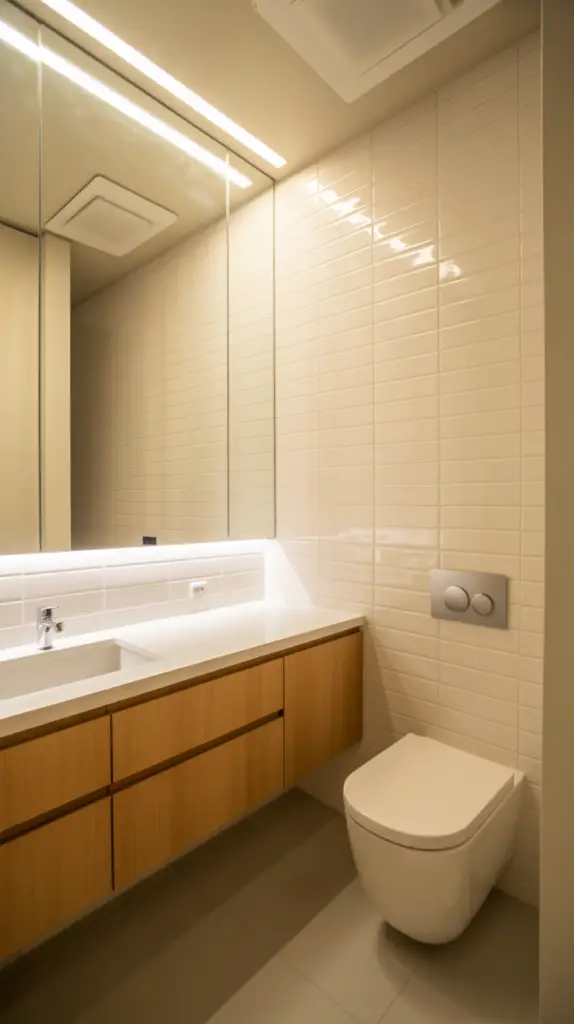
One of the most effective space saving ideas for minimalist small bathrooms is incorporating floating fixtures. Floating vanities, sinks, and toilets not only create visual space but also make cleaning easier.
A floating vanity, mounted slightly above the floor, gives the illusion of more room while providing valuable storage underneath. Choose compact designs with drawers or open shelving for essentials. Similarly, wall-hung toilets conceal plumbing and free up valuable floor area.
Floating shelves are another practical solution. Use them to display minimal décor—like candles, small plants, or neatly folded towels—while keeping surfaces uncluttered. Be mindful of placement; horizontal lines visually widen the room, while vertical arrangements can make it appear taller.
| Fixture | Function | Space Saving Benefit |
| Floating Vanity | Sink and storage | Opens floor area |
| Wall-Mounted Toilet | Streamlined fixture | Reduces bulk |
| Floating Shelves | Organization | Adds height or width illusion |
When combined with light-colored walls and mirrored finishes, floating fixtures can make even the smallest bathroom feel expansive, contemporary, and organized.
Smart Storage Solutions That Blend with Design
Storage is often the biggest challenge in small bathrooms, but with thoughtful design, it can become seamless and stylish. The key is to integrate storage into your layout in ways that enhance rather than clutter the space.
Built-in shelving and recessed niches are ideal for minimalist bathrooms. A recessed shelf in the shower keeps shampoo and soap neatly tucked away, while built-in wall shelves above the toilet or sink provide hidden storage for toiletries.
Multi-functional furniture also works wonders. A mirrored cabinet doubles as a reflection surface and a place to store daily essentials. Consider under-sink pull-out drawers or stackable bins that keep items organized and accessible.
| Storage Type | Description | Design Advantage |
| Recessed Shelves | Built into walls | Saves space, looks clean |
| Mirrored Cabinet | Dual-purpose | Adds reflection and function |
| Under-Sink Drawers | Compact storage | Keeps counters clutter-free |
The minimalist rule of thumb—a place for everything, and everything in its place—applies perfectly here. Hidden storage keeps the space serene, while visible items should be few, curated, and aesthetically pleasing.
The Power of Lighting and Mirrors
Lighting can transform a small, enclosed bathroom into a bright and welcoming retreat. In minimalist design, the right lighting and reflective surfaces work hand-in-hand to expand the perceived space.
Natural light is your best ally. If possible, maximize it with frosted or sheer window treatments that maintain privacy while allowing daylight to filter through. If your bathroom lacks windows, layered artificial lighting is essential—combine ambient ceiling lights, wall sconces, and task lighting around mirrors.
Mirrors amplify brightness and create depth. A large frameless mirror can make a narrow bathroom appear twice its size. For added drama, consider a backlit mirror—it adds soft, diffused light and a modern edge.
| Lighting Type | Example Fixture | Design Purpose |
| Ambient | Ceiling recessed lights | Overall illumination |
| Task | Vanity sconces, mirror light | Focused visibility |
| Accent | LED strips or candles | Adds warmth and luxury |
Use warm white light bulbs (2700–3000K) for a cozy glow, or daylight tones for a crisp, modern feel. Together, lighting and mirrors turn your minimalist bathroom into a serene, luminous escape.
Creative Use of Vertical Space
When floor space is limited, look up—vertical design is your secret weapon. Small bathrooms can gain both style and functionality by utilizing walls effectively.
Install tall, narrow shelving units or open ladder shelves to draw the eye upward. Hooks and rails mounted on walls can hold towels, robes, or baskets, freeing up cabinet space. Over-the-door organizers or hanging baskets can also maximize unused areas.
Adding vertical greenery—like a hanging plant or a small wall-mounted planter—introduces a touch of nature without crowding surfaces. Just ensure plants receive enough light and are suited for humid environments.
| Vertical Element | Function | Benefit |
| Ladder Shelf | Towels, décor | Adds height and storage |
| Wall Hooks | Robes, accessories | Saves cabinet space |
| Vertical Planters | Greenery | Adds freshness and visual interest |
By thinking vertically, you maintain a sense of spaciousness while ensuring everything has its place. The goal is a clutter-free, layered design that feels open from every angle.
Minimalist Color and Material Choices
In minimalist bathrooms, color and material harmony are key to achieving calm and cohesion. Simplicity in palette ensures that even the smallest spaces feel serene rather than cramped.
Stick to a neutral base—white, beige, gray, or soft taupe—and incorporate contrast subtly through textures and finishes rather than loud colors. For example, matte black hardware or wood accents can add warmth and sophistication without overpowering the space.
Natural materials like stone, bamboo, and marble reinforce the minimalist ethos while adding tactile interest. Opt for seamless finishes such as large-format tiles or continuous countertops to minimize visual breaks.
| Material | Use | Design Effect |
| Marble | Countertops or accents | Luxurious and timeless |
| Wood | Cabinets, decor | Adds warmth and balance |
| Matte Metal | Fixtures | Modern minimalist contrast |
Keeping colors cohesive creates flow and visual expansion. Add small accents—a soft beige towel, a ceramic soap dish, or a glass vase—to introduce personality without clutter.
Designing for Functionality and Flow
A minimalist small bathroom should feel effortless to use, with every design choice contributing to comfort and ease. Good layout planning ensures a smooth daily routine and maximizes space efficiency.
Start with your traffic flow—avoid blocking movement with large fixtures. Position the toilet and shower strategically to create openness, and consider frameless glass shower enclosures to eliminate visual barriers.
Keep daily-use items within easy reach while storing lesser-used products higher up or tucked away. Even minor changes, like repositioning towel bars or adding a recessed toilet paper holder, can make a noticeable difference.
| Design Consideration | Tip | Impact |
| Shower Layout | Frameless glass, corner unit | Opens visual space |
| Fixture Placement | Clear pathways | Enhances flow |
| Organization | Zones for essentials | Boosts efficiency |
Every choice should enhance usability while maintaining visual simplicity—proof that function and beauty can coexist seamlessly.
Conclusion
Designing a minimalist small bathroom is an exercise in intentionality—every fixture, color, and texture serves a purpose. By focusing on clean lines, smart storage, and natural light, you can transform a cramped bathroom into a serene retreat that feels double its size.
Whether you choose floating fixtures, vertical shelving, or a soothing neutral palette, the essence of minimalism lies in simplicity and calm. With thoughtful planning and a touch of creativity, even the smallest bathroom can embody elegance, comfort, and modern sophistication.
Your space doesn’t have to be big to feel beautiful—it just needs to be designed with purpose.