
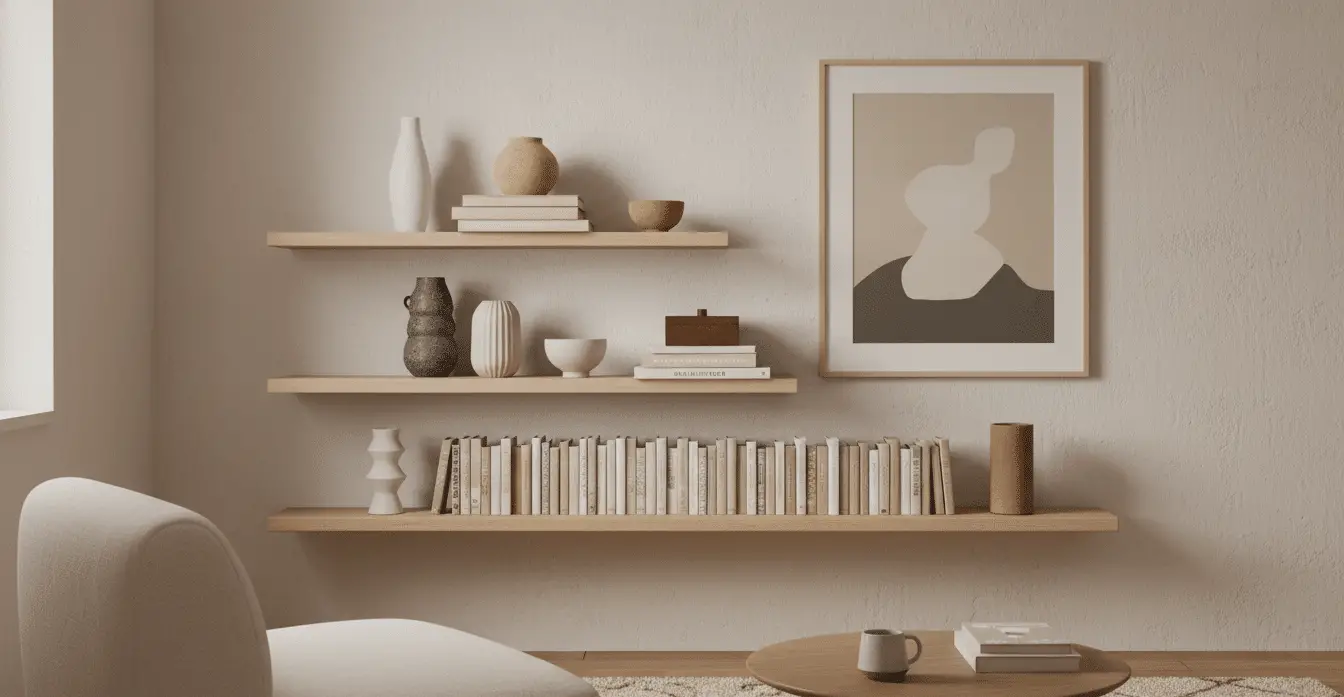
Wooden Shelves Styling Tips for Living Rooms: Chic, Functional, and Effortlessly Modern Decor Ideas
Table of Contents
Introduction
Wooden shelves have become one of the most versatile and beloved features in modern living room decor. A recent survey of homeowners revealed that over 70% incorporate shelving as both functional storage and a design statement—proof that stylish shelves have become essential in curated interiors. Whether floating, built-in, rustic, or minimalist, wooden shelves uniquely anchor a room, add warmth, and give you countless opportunities to express your personal style.
However, styling shelves can feel overwhelming. Many people struggle to find the right balance between functionality and aesthetic appeal. Too many items can make shelves look cluttered, while too few can leave the space feeling sparse. The secret lies in mastering composition, texture, scale, and color—elements that help turn simple shelves into beautifully arranged focal points.
In this article, you’ll learn thoughtful and practical wooden shelf styling tips tailored specifically for living rooms. From color coordination to displaying sentimental pieces, incorporating greenery, balancing vertical and horizontal lines, and using décor layers, we’ll explore everything you need to create visually compelling shelf displays. Each section includes in-depth insight, detailed examples, and practical tables to help guide your design decisions. By the end, you’ll feel confident designing shelves that elevate your living room and reflect your unique style.
Balancing Décor Elements for Visually Appealing Wooden Shelves
Styling wooden shelves effectively begins with understanding visual balance. Balance helps your shelf arrangement feel harmonious rather than chaotic, making every item feel thoughtfully placed. Wooden shelves already provide natural warmth, but the way you arrange décor determines whether the final look feels cohesive or disorganized. A well-balanced shelf blends height, texture, shape, and spacing to create a display that is both functional and visually satisfying.
Start by considering the shelf as a series of micro-vignettes. Each section should feel complete on its own while contributing to the larger composition. Incorporating items of varying heights—such as tall vases beside smaller ceramics—keeps the eye moving naturally. Similarly, mixing vertical and horizontal lines creates structure. For example, placing stacked books next to a tall plant or sculpture creates contrast while grounding the space.
Spacing matters just as much as object selection. Leaving intentional negative space prevents shelves from feeling cluttered and allows your favorite pieces to shine. Think of negative space as breathing room that gives your arrangement clarity.
Mixing materials—glass, ceramic, metal, woven elements—adds depth and prevents monotony. Because wood is warm and organic, pairing it with cool or reflective textures like glass helps balance the mood of the room.
Visual Breakdown: Creating Shelf Balance
| Element | Purpose | Example |
| Height Variation | Adds movement + prevents monotony | Tall vases, medium frames, small bowls |
| Negative Space | Creates breathing room | Empty gaps between décor |
| Material Contrast | Adds depth | Wood + glass + metal |
| Directional Balance | Guides the eye | Vertical sculptures + horizontal books |
Curating Decorative Objects for Wooden Shelves in the Living Room
Curating shelf décor is both an art and a personal expression. The pieces you choose—whether decorative or sentimental—tell a story about your home and lifestyle. Wooden shelves offer the perfect canvas because their natural texture enhances the visual appeal of whatever you place on them.
Start by selecting a mix of decorative objects that vary in size, material, and function. Books are foundational items that add height and color. You can display them both horizontally and vertically for visual diversity. Vases, bowls, and decorative boxes bring structure, while framed artwork or photos add personality. Sculptural pieces, such as abstract figurines or organic shapes, contribute a modern, elevated feel.
Personal items are often what make shelf styling feel warm and lived-in. Travel souvenirs, heirlooms, or handmade ceramics create connection and meaning within the display. The key is to curate purposefully—avoid overcrowding and instead choose pieces that reflect your style and complement the living room’s palette.
When arranging, think in odd-numbered groupings (three or five objects). Odd groups feel more organic and visually appealing. Another tip is to use a unifying theme—color, texture, or shape—to tie different objects together, ensuring the overall composition feels cohesive.
Visual Breakdown: Types of Shelf Décor
| Décor Category | Effect | Best Use |
| Books | Structure + color | Base for stacking |
| Sculptures | Artistic interest | Focal points |
| Frames | Personal touch | Anchor sections |
| Bowls + Vases | Shape + elegance | Fill negative space |
Incorporating Plants and Greenery to Add Life to Wooden Shelves
Plants bring instant freshness and warmth to living room shelves. Their organic shapes break up rigid lines and make the space feel more vibrant. Whether you prefer trailing vines, compact succulents, or lush leafy plants, greenery has a transformative effect on wooden shelves. Because wood already has a natural texture, pairing it with plants reinforces a grounded, nature-inspired aesthetic.
One of the best ways to incorporate plants is through varying their height and spread. Trailing plants like pothos or ivy add movement as they drape gracefully over the edges of shelves. Upright plants such as snake plants or ZZ plants introduce structure and height, while small succulents fill in subtle visual gaps. Mixing different plant forms prevents the display from feeling static.
Choosing the right planters is equally important. Neutral ceramic pots blend seamlessly with most styles, while textured clay pots echo rustic charm. Sleek, minimal planters complement modern interiors. The pot color should coordinate with your décor palette so that the greenery remains the star. Wooden shelves benefit from contrast, so light-colored pots against dark wood—or dark pots against light wood—help plants stand out beautifully.
If your living room has limited natural light, consider low-maintenance or artificial plants. High-quality faux plants can maintain a lush appearance without demanding ongoing care. When styling, distribute plants across different shelves to create visual continuity. Avoid clustering too many on a single shelf unless you’re aiming for a botanical-themed look.
Greenery also pairs exceptionally well with books and ceramics. The soft curves of leaves soften the straight edges of books, while the combination of plant textures with smooth ceramics adds visual harmony. Plants bring energy and movement, making your wooden shelf display feel alive and inviting.
Visual Breakdown: Ideal Plants for Wooden Shelf Styling
| Plant Type | Characteristics | Best Use |
| Trailing Vines | Cascading, soft | Edges of shelves |
| Succulents | Compact, minimal | Small gaps + accents |
| Upright Plants | Structured, tall | Height variation |
| Faux Greenery | Low-maintenance | Low-light living rooms |
Using Color Coordination to Create Cohesive Shelf Displays
Color coordination is one of the most underestimated techniques in shelf styling. Wooden shelves have inherent warmth, so using a thoughtful color palette helps create harmony throughout the entire living room. The goal isn’t to make everything match perfectly but to choose colors that complement one another and blend naturally with the room’s overall aesthetic.
Start by identifying your living room’s existing palette—whether it leans neutral, bold, earthy, or cool. Try to incorporate décor pieces that echo these tones. For neutral rooms, white ceramics, beige vases, woven baskets, and soft metal finishes like brass or black are excellent choices. If your room includes bold or saturated colors, incorporate small pops of those hues in art prints, books, or decorative objects.
Grouping décor by color can create a visually satisfying arrangement. For instance, grouping blue-toned objects on one side of the shelf while placing warm-toned items on the other creates balance without rigidity. If you prefer a more curated look, choose 2–3 primary accent colors and stick with them throughout your shelves.
Remember that wood counts as part of the color palette. Lighter woods pair well with pastels, whites, and cool tones, while dark woods complement deep greens, brass accents, and earthy hues.
Visual Breakdown: Color Coordination Tips
| Color Scheme | Benefits | Ideal Décor Pairings |
| Neutral Tones | Calm + timeless | Beige, white, wood, light metals |
| Cool Tones | Fresh + airy | Blues, greens, silver |
| Warm Tones | Cozy + inviting | Terracotta, brass, amber |
| Mixed Palette | Modern + personalized | Balanced contrasting hues |
Creating Shelf Depth Through Layering and Placement Techniques
Depth is a vital component of well-styled wooden shelves. Without layering, shelf displays can appear flat or one-dimensional. Layering involves strategically placing items in front of others to create a dynamic arrangement that draws the eye deeper into the shelf.
A simple way to add depth is by starting with a backdrop piece. This could be a framed print, a cutting board, or a large ceramic plate leaning against the wall. Next, place medium-sized objects—books, vases, bowls—in front of the backdrop to build the mid-layer. Finally, add a smaller item as the front layer, such as a candle or miniature sculpture. This creates a visually rich vignette that feels curated and complete.
Varying the depth between items also helps. Leaving some pieces flush against the wall while placing others closer to the front edge makes the styling feel more organic. Books are great tools for creating different levels. A small stack can elevate an object, making it more prominent. Likewise, leaning items slightly instead of placing them perfectly perpendicular creates movement.
Layering is also about contrast. Pair smooth ceramics with textured items, or light objects with dark ones, to enhance dimension. Lighting can further accentuate depth—placing décor near natural light sources or incorporating shelf lighting allows shadows to create visual drama.
Visual Breakdown: Layering Steps
| Step | Action | Example |
| Back Layer | Anchor the vignette | Leaned frames or art |
| Mid Layer | Add structure | Books, medium vases |
| Front Layer | Finish with accents | Candles, small bowls |
Choosing the Right Lighting to Highlight Wooden Shelf Styling
Lighting is one of the most powerful yet overlooked components of shelf styling. Wooden shelves absorb and reflect light beautifully, enhancing the warmth of the living room when lit strategically. Whether natural or artificial, light can transform your shelves into a glowing focal point that elevates the room’s ambiance.
If your shelves sit near windows, take advantage of natural light. Bright, indirect sunlight brings out wood grain, highlights textures, and enhances the details of your décor. For evening or windowless rooms, adding accent lighting is essential. LED strip lights installed underneath shelves create a soft halo effect, while picture lights mounted above shelves spotlight artwork or central objects.
Warm-toned bulbs often complement wood best, intensifying its golden hues. Task lighting—such as a floor lamp adjacent to shelving—can cast additional glow and elevate the overall styling. The key is balance: light should highlight, not overpower.
Visual Breakdown: Best Lighting Types for Shelves
| Lighting Type | Effect | Best Use |
| LED Strip Lights | Subtle, modern | Under-shelf lighting |
| Picture Lights | Focused highlight | Art or centerpieces |
| Natural Light | Soft + warm | Near windows |
| Floor/Accent Lamps | Ambient glow | Adjacent corners |
Incorporating Art and Personal Items for Meaningful Shelf Displays
Art and personal items transform wooden shelves from decorative features into meaningful visual stories. Living rooms often serve as gathering places, so incorporating personal pieces makes the space feel intimate and authentic. These items can create emotional resonance, making your shelves more than just décor.
Framed photographs, travel souvenirs, handwritten notes, or heirlooms are perfect additions. Art prints add personality and style, whether bold and modern or soft and minimalist. When incorporating personal items, consider placement carefully. Highlight sentimental pieces by giving them space or pairing them with neutral décor to draw attention.
Mixing sentimental items with decorative ones keeps the shelves stylish and cohesive. Small keepsakes can sit atop book stacks or inside shallow bowls. Personal art can lean behind vases or candles, adding depth and meaning.
Visual Breakdown: Personal Touch Elements
| Item Type | Meaning | Placement Tip |
| Photos | Family + memory | Center of vignette |
| Souvenirs | Travel stories | Paired with books |
| Handmade Art | Personalized style | Leaned on back layer |
| Heirlooms | Emotional significance | Highlighted with spacing |
Conclusion
Wooden shelves offer endless styling possibilities for living rooms. Their natural warmth, versatility, and visual appeal make them ideal for showcasing curated décor, personal items, plants, and art. Whether you prefer minimalist arrangements or richly layered displays, mastering balance, color coordination, texture, and depth will help you create shelves that enhance the room’s character. By thoughtfully curating objects and embracing both functionality and beauty, your wooden shelves can become one of the most compelling features in your home—reflective of your personality and perfectly suited to your living space.