
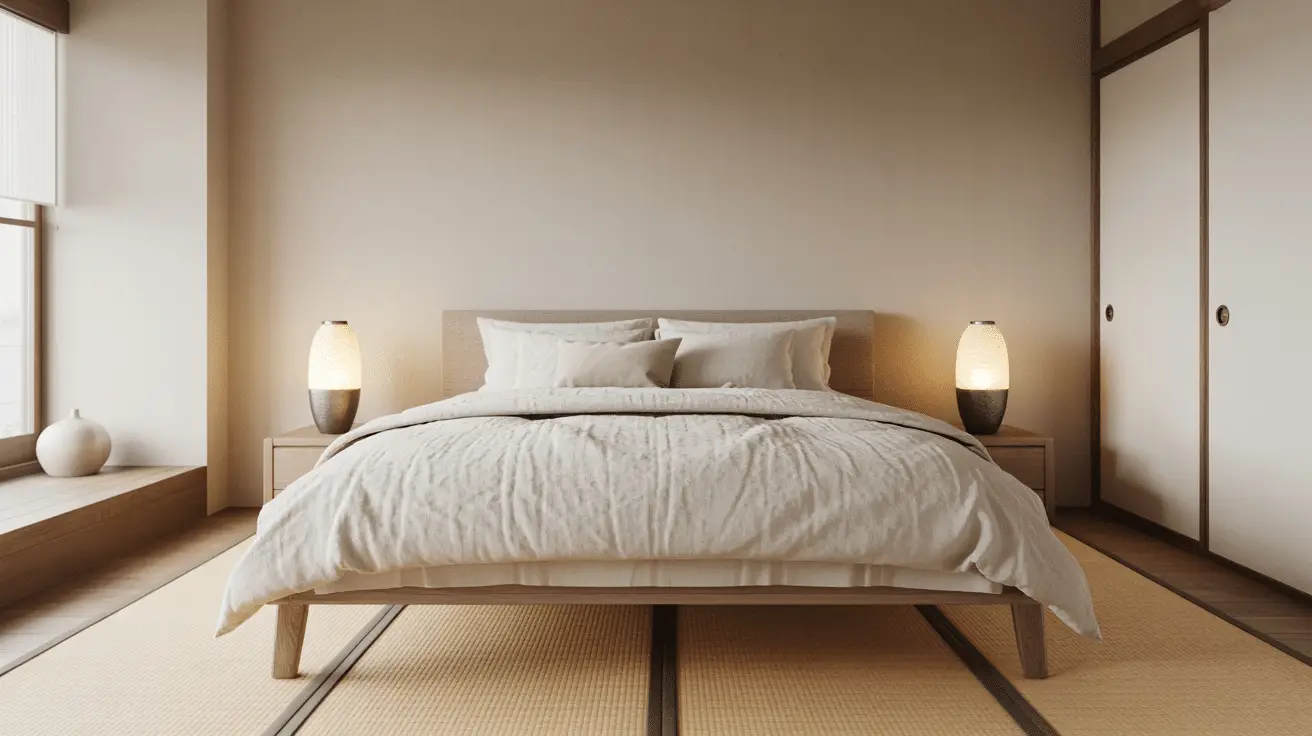
Zen Japanese Bedroom Decor Ideas for a Restful Sleep Space: Create Calm, Balance, and Beauty
Table of Contents
Introduction
In today’s fast-paced world, the search for tranquility at home has never been more essential. According to a recent study by the Sleep Foundation, nearly 60% of adults report that their bedroom environment directly impacts their sleep quality. This growing awareness has led many homeowners to embrace the calming principles of Japanese Zen design—a philosophy centered on harmony, simplicity, and mindfulness.
A Zen Japanese bedroom isn’t just about visual beauty; it’s about creating a retreat that nourishes both body and mind. The design draws on natural materials, muted tones, and thoughtful spatial flow to encourage relaxation and balance. The atmosphere feels effortlessly calm, where every object serves a purpose and contributes to peaceful living.
In this guide, we’ll explore how to infuse your bedroom with the tranquil essence of Zen and Japanese aesthetics. From minimalist furniture and neutral color palettes to natural textures and lighting, you’ll learn how to design a restful sleep space that promotes inner stillness. Whether you live in a compact apartment or a spacious home, these Zen Japanese bedroom décor ideas will help you create a sanctuary that restores calm and clarity every night.
The Essence of Zen: Understanding Japanese Minimalism
At the heart of every Zen Japanese bedroom lies minimalism—an approach that embraces the beauty of simplicity. In Japanese design, this concept is known as Ma, the balance between space and objects. Instead of filling a room with décor, Zen interiors emphasize emptiness as a form of expression.
A minimalist layout allows energy to flow freely, eliminating visual noise that can cause mental clutter. Furniture is often low to the ground, such as platform beds and short dressers, reflecting humility and closeness to nature. Each item should serve a function, with clean lines and organic materials that exude calm rather than command attention.
When curating a Zen-inspired space, focus on quality over quantity. Fewer pieces made from wood, bamboo, or linen create a stronger sense of authenticity than an abundance of trendy accessories. The result is a bedroom that feels intentional, airy, and deeply restorative.
Minimalist Design Checklist
| Element | Description | Purpose |
| Low-profile furniture | Beds and tables close to the floor | Encourages grounding and calm |
| Open space | Avoid clutter or excess décor | Promotes visual and mental clarity |
| Natural textures | Wood, bamboo, linen | Connects with organic calmness |
Natural Harmony: Using Earthy Materials and Organic Textures
Nature is central to Japanese interior design. Every element—wood, stone, bamboo, or cotton—reflects a connection to the natural world. To create a Zen bedroom, begin by incorporating materials that feel authentic and tactile.
Wooden furniture, particularly in lighter tones like oak or ash, brings warmth without heaviness. Tatami mats, woven from straw, add subtle texture and a traditional Japanese touch. Pair these with linen or cotton bedding to maintain breathability and softness. Natural stones, ceramic vases, or bonsai plants can also introduce grounding energy without overwhelming the minimalist aesthetic.
This harmony with nature extends to color. Stick to neutral, earthy tones: think sand, clay, ivory, or muted greens. These shades soothe the senses and mirror the tranquility found outdoors.
Material and Texture Guide
| Material | Use | Effect on Space |
| Wood | Furniture, wall panels | Adds warmth and balance |
| Linen | Bedding, curtains | Enhances softness and breathability |
| Bamboo | Decor accents or shades | Brings natural texture and calm |
| Stone | Small décor pieces | Grounds the design in nature |
Balance Through Color: Crafting a Calming Palette
Color is one of the most powerful tools in creating a Zen Japanese bedroom. Instead of bold hues, this style relies on subtle variations of neutrals that evoke balance and calm. Start with a soft base—off-white, beige, or taupe—and layer in muted shades like sage green, warm gray, or pale brown for depth.
Each color should blend seamlessly rather than contrast sharply. The result is a palette that feels effortless, like mist over a mountain or sand under soft light. Introduce black or charcoal accents sparingly through furniture legs, lamp bases, or picture frames for grounding.
A harmonious color scheme supports relaxation and aids better sleep by reducing overstimulation. It allows your mind to unwind and your space to breathe.
Color Mood Table
| Color Tone | Symbolism | Ideal Placement |
| Soft Beige | Tranquility | Walls and textiles |
| Muted Green | Renewal and balance | Accents or plants |
| Warm Gray | Stability | Bedding or furniture |
| Charcoal | Grounding | Framed art or lighting fixtures |
Furniture Simplicity: Designing with Function and Flow
Zen-inspired furniture emphasizes simplicity, clean lines, and open flow. Start with a low platform bed, the centerpiece of the room, symbolizing stability and grounding. A tatami base or wooden frame in light oak or walnut maintains the natural feel.
Complement this with simple nightstands or a floating shelf instead of bulky furniture. Keep storage hidden within built-in drawers or sliding-door wardrobes to maintain visual serenity. Avoid ornate details; instead, look for handcrafted pieces that celebrate craftsmanship and texture.
Spatial balance is equally crucial. Arrange furniture with intention, leaving open pathways that allow movement and energy to flow unobstructed. Each element should feel harmonious and purposeful, creating an unspoken rhythm within the room.
Functional Furniture Guide
| Item | Material | Function | Design Tip |
| Platform Bed | Wood | Centerpiece for rest | Keep low and simple |
| Storage Cabinet | Bamboo or wood | Conceals clutter | Sliding doors preferred |
| Tatami Mat | Straw | Adds texture | Place under bed or as area rug |
Serene Lighting: Setting the Mood for Relaxation
Lighting defines the mood of a Zen Japanese bedroom. Harsh, bright lights disrupt tranquility, while soft, layered lighting enhances peace. Begin with natural light—sheer curtains or shoji screens filter sunlight beautifully, creating a warm, diffused glow.
For evenings, use a combination of floor lamps, paper lanterns, and wall sconces with warm bulbs. These mimic the soft illumination of candlelight, promoting relaxation before sleep. Choose materials like rice paper, rattan, or linen for lampshades to maintain the organic aesthetic.
The goal is to create a gentle transition from day to night, aligning with natural circadian rhythms. Dimmable lights or warm LEDs help sustain this serene atmosphere.
Lighting Design Table
| Type | Material | Lighting Effect | Placement |
| Rice Paper Lantern | Paper and bamboo | Warm ambient glow | Ceiling or corner |
| Floor Lamp | Linen shade | Soft task lighting | Beside seating area |
| Wall Sconce | Wood frame | Gentle accent light | Above headboard or wall art |
Nature’s Presence: Incorporating Plants and Natural Décor
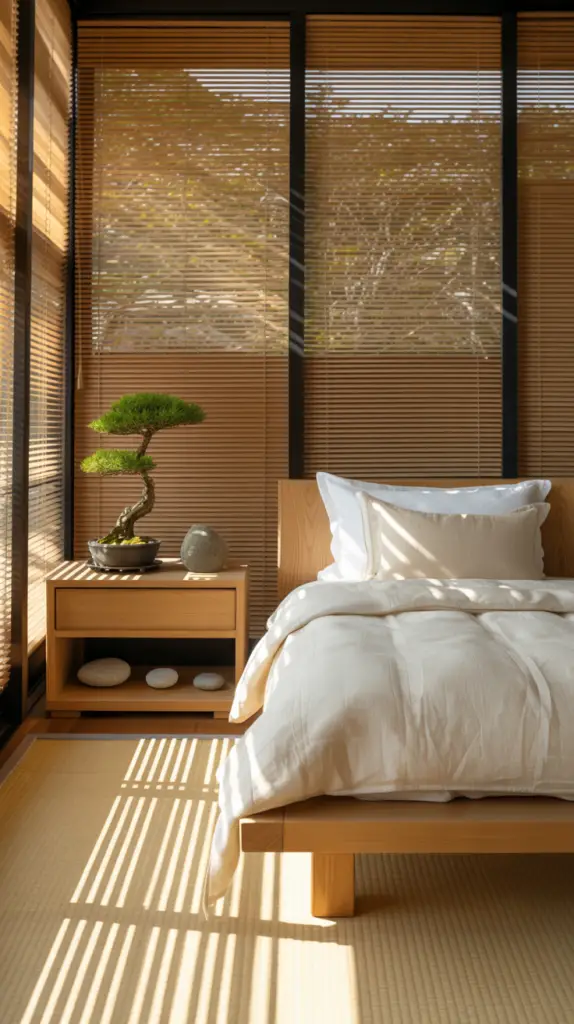
Plants play a vital role in Japanese design, symbolizing balance, growth, and harmony with nature. In a Zen bedroom, greenery softens minimal lines and adds a breath of life. Opt for plants with elegant shapes and low maintenance, such as bonsai trees, bamboo stalks, or peace lilies.
Place them mindfully—one or two well-positioned plants can do more than a cluster. Avoid overfilling the space to preserve visual calm. Complement plants with natural décor like stones, water bowls, or driftwood sculptures that evoke the tranquility of outdoor landscapes.
Living décor not only enhances beauty but also purifies the air, contributing to a healthier sleep environment.
Natural Décor Plan
| Element | Example | Benefit | Placement |
| Indoor Plant | Bamboo, peace lily | Purifies air | Near window |
| Stone Element | River pebbles, bowl | Grounding focus | On side table |
| Water Feature | Small fountain | Soothing sound | Corner accent |
Mindful Accents: The Art of Subtle Décor
Decorating a Zen Japanese bedroom requires restraint. Every piece should have meaning, whether it’s a handmade ceramic vase, a single scroll of calligraphy, or a delicate ikebana flower arrangement. Choose décor that complements, not competes.
Wall art should evoke serenity—perhaps a minimalist ink painting or a framed nature photograph. Textiles like a simple linen throw or a neutral tatami cushion can add gentle layers without breaking harmony.
The Japanese philosophy of wabi-sabi, finding beauty in imperfection, encourages appreciation for the simple and imperfect. A slightly uneven pottery bowl or a natural wood knot can remind you of authenticity and impermanence—core values of Zen living.
Décor Selection Table
| Accent Type | Inspiration | Function | Style Note |
| Wall Art | Calligraphy or nature scenes | Adds visual calm | Keep monochromatic |
| Ceramic Vases | Handcrafted | Organic texture | Use single flower stems |
| Textiles | Linen or cotton | Adds softness | Stick to neutral palette |
Conclusion
Designing a Zen Japanese bedroom is about more than aesthetics—it’s a journey toward harmony, mindfulness, and balance. By blending natural materials, muted tones, minimal furniture, and soft lighting, you create not just a sleep space, but a personal sanctuary.
Every design choice, from the placement of a bonsai to the warmth of a linen curtain, contributes to an atmosphere of calm reflection. This style invites you to slow down, breathe deeply, and rediscover the peaceful rhythm of simplicity. A Zen Japanese bedroom reminds us that true comfort doesn’t come from abundance—but from balance, intention, and stillness.