
Nursery Closet Ideas for a Beautiful and Organized Space: Smart Storage Solutions for Modern Parents
Table of Contents
Introduction
Preparing a nursery is one of the most exciting parts of welcoming a baby—but it also comes with a surprising amount of stuff. From tiny clothes and blankets to diapers, toys, swaddles, and seasonal items, even a minimalist family can feel overwhelmed by how quickly a nursery fills up. Research shows that new parents often underestimate how much storage they’ll need during the first year, making an organized closet one of the most valuable features of any nursery. A well-planned closet not only adds beauty and order but also reduces daily stress by keeping essentials easy to find.
This topic matters because the nursery closet often becomes the central hub of organization. A thoughtfully designed closet helps streamline routines, supports easy access during nighttime changes, and grows with your baby through toddlerhood and beyond. Many parents overlook the importance of customizing this space, but simple, strategic upgrades—from closet systems to labeled bins and adjustable shelves—can transform even the smallest closet into a functional masterpiece.
In this guide, you’ll discover nursery closet ideas that blend practicality with style. We’ll explore layout concepts, storage solutions, aesthetic touches, and smart organizing hacks that make the space feel both beautiful and efficient. Whether you’re working with a reach-in closet, a walk-in, or no built-in closet at all, these ideas will help you create an organized nursery that feels peaceful, intentional, and easy to maintain.
Designing the Perfect Nursery Closet Layout
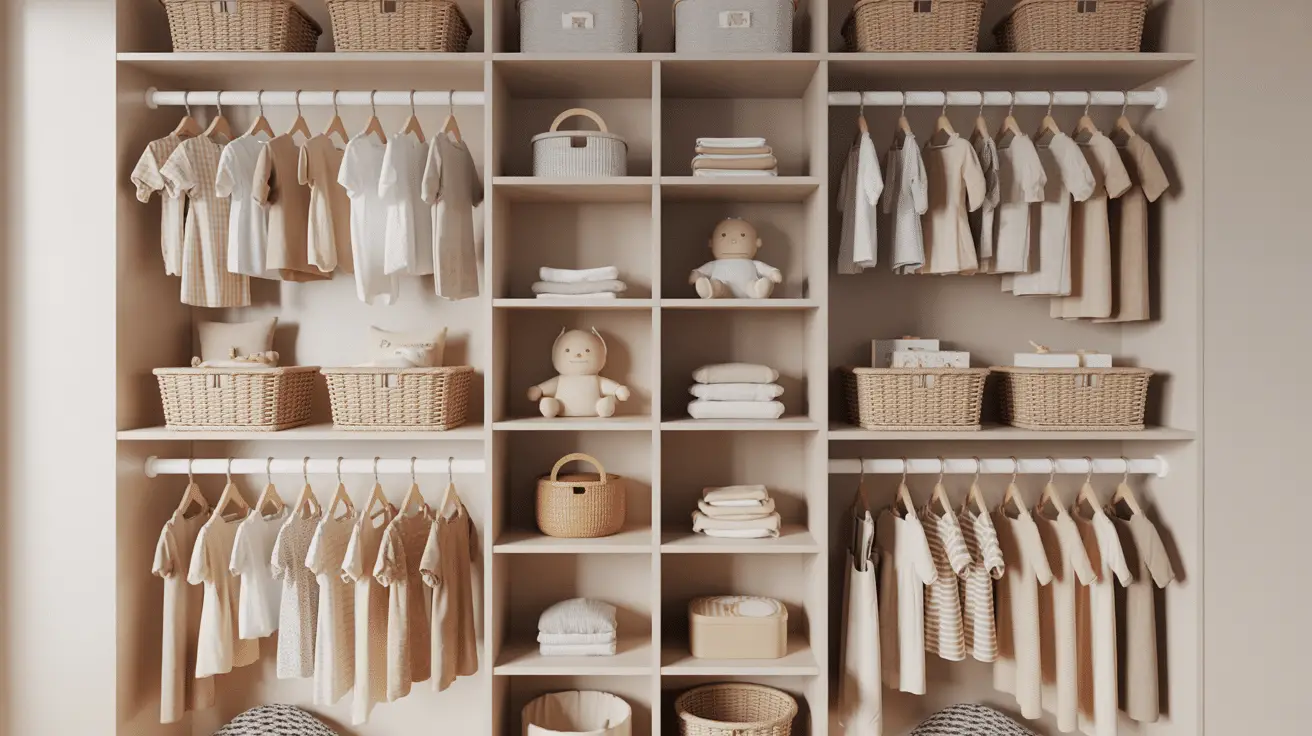
A beautiful and organized nursery closet begins with a thoughtful layout. Before adding storage solutions or décor, start by evaluating how much space you have and how you plan to use it. Baby clothes are small, lightweight, and often grouped by size, which means traditional adult closet layouts rarely make the best use of vertical space. Creating zones helps you maximize every inch while keeping daily essentials accessible.
Begin by establishing primary zones for hanging clothes. Because infant garments are short, you can easily install two or even three hanging rods to double or triple your storage capacity. This layout allows you to separate clothing by size, season, or type without overcrowding. Shelving should be placed above and below hanging sections to accommodate bins, baskets, and folded items.
Consider incorporating a dedicated diapering or essentials station. A small dresser or cube organizer inside the closet can hold diapers, wipes, lotions, grooming tools, and backup supplies. Adding drawer dividers helps maintain order, especially when dealing with tiny clothing items like socks and hats.
Built-in shelves or adjustable units allow your closet to grow with your child. As your baby transitions to toddlerhood, hanging space requirements change—so flexibility is key. Leave a section of your closet for longer hanging items such as special-occasion outfits, coats, or swaddle blankets that need more room.
Nursery Closet Layout Guide
| Layout Element | Purpose | Benefit |
| Double/Triple Rods | Maximize hanging space | Perfect for small baby clothes |
| Adjustable Shelving | Adaptable storage | Grows with your child |
| Dresser or Cube Unit | Store essentials and folded items | Easy access for daily routines |
| Open Zones | Allow for larger or taller items | Flexible and future-proof |
Using Bins, Baskets, and Containers for a Perfectly Organized Closet
Storage containers are the backbone of any organized nursery closet. Babies come with many small items that can easily become chaotic without a structured system. Bins and baskets help segment these items, making it easier to find what you need quickly—especially during those middle-of-the-night diaper changes.
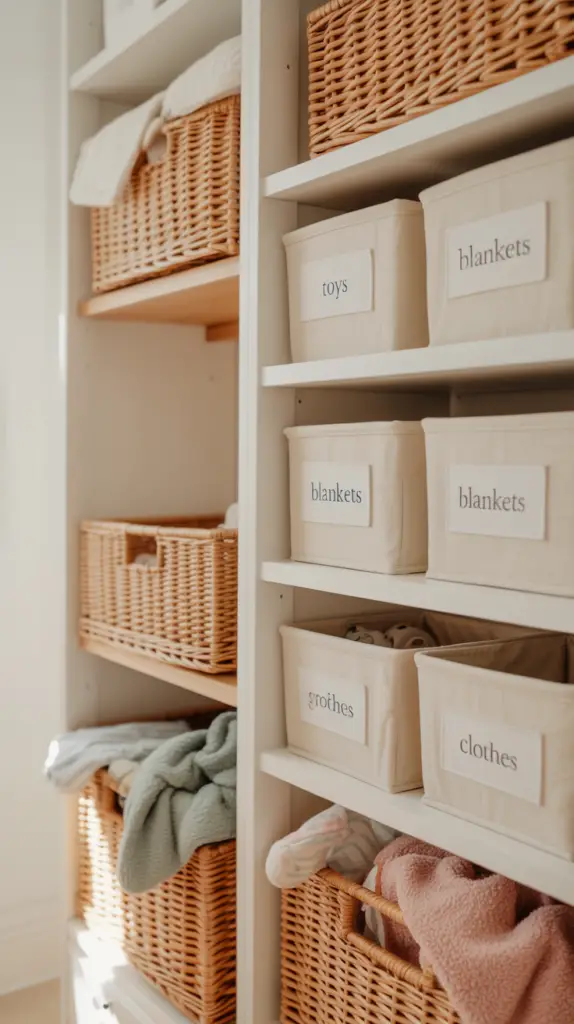
Start by choosing containers that match the nursery’s aesthetic. Woven baskets bring warmth and natural texture, while clear plastic bins make it easy to see contents at a glance. Fabric cubes offer a soft, child-friendly option and work especially well in cubby-style shelving.
Labeling each bin helps maintain order over time. You can categorize them by item type, size, or frequency of use. For example, designate bins for newborn clothes, 0–3 months, socks, accessories, sleep sacks, toiletries, and sentimental items. This saves you time and eliminates guesswork for anyone helping with childcare.
When organizing shelves, place frequently used items at eye level. Seasonal or rarely used items can go on higher shelves. For small accessories, drawer organizers or mini containers keep tiny pieces easily accessible yet neatly tucked away.
Storage Container Breakdown
| Container Type | Ideal Use | Why It’s Effective |
| Woven Baskets | Clothes, blankets, bulky items | Soft aesthetic + hides clutter |
| Clear Plastic Bins | Seasonal clothes, toys | Easy visibility |
| Fabric Cubes | Daily essentials | Lightweight + versatile |
| Drawer Organizers | Socks, hats, accessories | Prevents small items from mixing |
Styling a Nursery Closet With Decorative Touches
An organized nursery closet doesn’t just function well—it also contributes to the overall beauty of the room. Decorative touches turn the closet into a charming extension of the nursery rather than a purely utilitarian space. These elements help create a cohesive design that feels intentional, warm, and inviting.
Start by choosing a soft, neutral paint color or a whimsical wallpaper for the back wall of the closet. This adds depth, dimension, and a touch of personality without overwhelming the space. Delicate florals, subtle geometrics, or modern stripes are timeless choices that pair well with most nursery themes.
Coordinating hangers elevate the visual appeal instantly. Wooden or velvet hangers create a polished, cohesive look. Matching hangers also help prevent slippage, keeping baby clothes neatly aligned.
Adding a statement shelf or display zone gives the closet charm. You can showcase tiny shoes, heirloom toys, framed quotes, or decorative baskets. This creates a boutique-like feel that makes organizing more enjoyable.
Lighting upgrades can transform even the simplest closet. LED strips, sconces, or battery-powered touch lights add warmth and visibility, making the closet feel like a beautiful part of the nursery rather than an afterthought.
Decorative Styling Table
| Decorative Element | Style Effect | Placement |
| Wallpaper/Accent Paint | Adds personality and visual depth | Back wall of closet |
| Matching Hangers | Creates clean and polished look | Full hanging section |
| Display Shelf | Adds charm + personal touches | Eye-level shelf |
| Soft Lighting | Enhances warmth + visibility | Ceiling or shelf underside |
Making the Most of Small Nursery Closets
Many nurseries have small or narrow closets, but even the tiniest space can become highly functional with the right approach. When working with limited square footage, creativity and vertical storage become essential.
Begin by installing multiple rods. One rod at adult height and a second rod halfway down doubles your hanging space instantly. Because baby clothes are short, this arrangement feels natural and efficient. Narrow shelves or cubbies can fit along one side or above the rods, adding room for bins and folded items.
Hooks on the inside of the door offer extra storage without taking up interior space. These are perfect for sleep sacks, small bags, hats, or baby carriers. Over-the-door pocket organizers are another excellent solution for storing diapers, wipes, toiletries, or accessories.
When floor space is limited, stackable drawers or slim rolling carts provide compact, mobile storage. These can hold everything from changing supplies to backstock diapers. Small closets benefit from a clean, uncluttered aesthetic—so choose matching bins and stick to a consistent color palette.
Small Closet Maximization Table
| Space-Saving Feature | Purpose | Best For |
| Double Hanging Rods | Multiply garment storage | Tiny reach-in closets |
| Door Hooks/Organizers | Add vertical storage | Sleep sacks, diaper bags |
| Slim Carts/Stackable Drawers | Use floor efficiently | Daily essentials |
| Narrow Shelving | Fit within tight spaces | Bins, books, accessories |
Creating a Functional System That Grows With Your Baby
A nursery closet should be beautiful today but also adaptable for years to come. Babies grow quickly, and their storage needs evolve from tiny onesies and swaddles to larger clothing, toys, books, and eventually school supplies. Planning for longevity saves time, money, and effort in the future.
Start with adjustable shelving. Shelves that can be raised or lowered allow you to customize the layout as your child grows. Cube organizers and modular drawers offer flexibility and can be rearranged to accommodate new types of items.
Choose storage containers that remain useful beyond infancy. Clear bins transition easily into toy or craft storage. Larger baskets can later store blankets, puzzles, or stuffed animals. Neutral colors ensure these items blend into any evolving décor.
Designating long-hanging sections prepares the closet for toddler dresses, coats, and bigger clothing. As your child becomes more independent, you can lower a rod to create easy-reach hanging space, encouraging them to pick out outfits and participate in organizing.
Finally, maintain open zones that can adapt to new needs—whether it’s space for backpacks, sports gear, or seasonal clothing.
Growing-With-Your-Child Table
| Adaptable Feature | Future Benefit | Examples |
| Adjustable Shelves | Fits larger items with age | Books, games, folded clothes |
| Modular Storage Units | Can be rearranged as needs change | Cubbies, drawers, rolling carts |
| Multi-Use Baskets | Long-term versatility | Toys, linens, outerwear |
| Lowered Hanging Rods | Encourages child independence | Self-serve clothing area |
Incorporating Aesthetic Storage for a Boutique-Like Nursery
A nursery closet can feel just as curated and delightful as a boutique display when you choose aesthetically pleasing storage. This approach creates a unified, beautiful visual experience and makes the closet feel like part of the nursery’s overall design rather than simply functional.
Matching storage solutions are key. Whether you choose all woven baskets, all acrylic bins, or all fabric cubes, consistency makes the space feel professionally styled. Neutral tones—like cream, beige, sage, or charcoal—offer timeless appeal.
Add soft textures like cotton rope baskets or linen bins to create a gentle, cozy atmosphere. These pair beautifully with natural wood shelves or delicate metal rods. Consider incorporating small accent labels made of wood, acrylic, or fabric tags for a polished finish.
Display a few special items—like a tiny pair of shoes, a muslin swaddle with a beautiful print, or a sentimental keepsake—to give the closet personality. Keep displays minimal to maintain functionality and avoid clutter.
Lighting also enhances the boutique feel. LED strips installed under shelves illuminate bins from above, creating a warm glow and helping you easily identify items.
Boutique-Style Storage Table
| Aesthetic Element | Style Impact | Best Use |
| Matching Baskets | Clean, unified appearance | Shelving and cubbies |
| Rope or Linen Bins | Softly textured look | Larger items or blanket storage |
| Accent Labels | Elegant organization | Clothing categories, essentials |
| Shelf Lighting | Boutique-like ambience | Upper shelves, display areas |
Conclusion
An organized nursery closet is one of the most powerful ways to bring calm and beauty into your baby’s room. By thoughtfully designing the layout, choosing versatile storage solutions, incorporating a cohesive aesthetic, and planning for long-term use, you create a space that supports your daily routines with ease. A beautiful closet doesn’t just store items—it simplifies parenthood, enhances the nursery’s design, and evolves gracefully through each new stage of your child’s life. With these ideas, your nursery closet becomes both a functional hub and a charming extension of the room’s personality.