
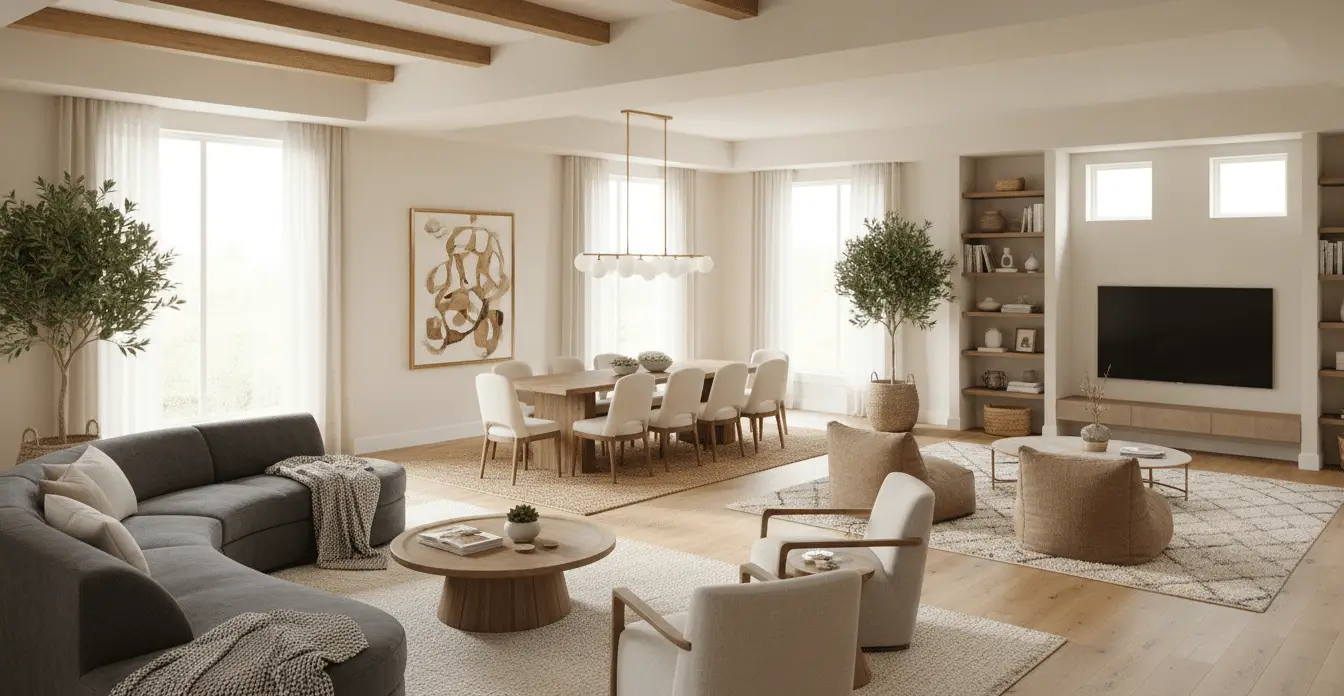
Breathtaking Great Room Interiors for Open Floor Plans: Stunning Ideas for Modern Homes
Table of Contents
Introduction
Great rooms have become the heart of modern home design, especially as open floor plans continue to rise in popularity. These expansive, connected spaces bring the living room, dining area, and sometimes kitchen together in one flowing layout, allowing families to gather, entertain, and move freely. According to recent home design reports, nearly 70% of new homes feature some form of open-concept living, highlighting the growing demand for shared, multifunctional spaces that feel both airy and inviting. Yet designing a great room can be intimidating. With fewer walls and larger footprints, homeowners often struggle to create definition, harmony, and visual balance across zones.
Understanding how great room interiors work is essential to crafting a space that feels cohesive rather than overwhelming. From furniture layout and lighting strategies to materials, color palettes, and architectural elements, every detail influences how an open floor plan functions. The beauty of these spaces lies in their flexibility: they can be grand and dramatic or warm and intimate, depending on how you approach the design.
This guide explores breathtaking great room interiors suited for a wide range of open floor plans. Each section dives into practical tips, design ideas, and thoughtful enhancements that help you maximize both elegance and usability. Whether your great room is a soaring two-story space or a more modest open-concept layout, you’ll find inspiration to create a beautifully balanced interior that feels purposeful, inviting, and distinctly yours.
Creating Layout Harmony in Open Floor Plan Great Rooms
Great rooms thrive on flow, and achieving harmony across your open floor plan begins with an intentional layout. Because these spaces combine multiple functional zones—living, dining, and often kitchen—defining each area while maintaining connection is key. Layout harmony ensures your great room feels cohesive rather than fragmented, allowing movement to feel natural and uninterrupted.
One effective approach is to use furniture placement as a tool for spatial distinction. For example, positioning a sofa with its back toward the dining area subtly separates the living zone without requiring a wall. Rugs also serve as visual anchors, creating edges and boundaries that support organization. Larger great rooms often work best with layered seating arrangements, while smaller open-concept spaces benefit from streamlined layouts that avoid congestion.
Scale and proportion are essential factors. Oversized furniture pieces can overpower a compact great room, while too-small pieces may look lost in a spacious one. Balancing vertical elements like tall bookcases or sculptures with horizontal expanses helps maintain equilibrium. Creating clear pathways ensures that each zone feels accessible and purposeful.
Table: Layout Elements for Great Room Harmony
| Design Feature | Purpose | Effect |
| Area Rugs | Defines zones | Creates visual separation |
| Sofa Placement | Directs flow | Shapes seating areas |
| Lighting Zones | Highlights function | Enhances usability |
| Scale of Furniture | Balances proportions | Avoids visual imbalance |
Using Architectural Features to Add Drama and Dimension
Architectural features are a powerful way to turn a great room into a breathtaking interior. Because open floor plans often include expansive walls and high ceilings, architectural elements help break up the vertical space and add visual interest. Whether through exposed beams, built-in shelving, stone fireplaces, or dramatic ceiling details, these features provide structure and personality.
Ceiling beams—especially wood or faux wood—add warmth and create a grounded, rustic-luxe feel. Tray ceilings and coffered ceilings add sophistication while subtly enhancing room depth. A grand fireplace acts as an anchor, giving the living area a focal point that draws the eye. In great rooms with two-story ceilings, floor-to-ceiling stone or tile designs add incredible drama without overwhelming the space.
Built-ins are another valuable addition. They offer functional storage while giving the architecture of the room a custom, polished feel. Integrating shelving around a fireplace or along a feature wall creates symmetry and balance, helping unify the vastness of an open layout.
Table: Architectural Features for Great Rooms
| Feature | Impact | Best Application |
| Ceiling Beams | Adds warmth & structure | Large ceilings |
| Stone Fireplace | Creates focal point | Living zone |
| Built-In Shelving | Enhances function | Media or display walls |
| Coffered Ceiling | Adds elegance | Formal great rooms |
Choosing Color Palettes for Seamless Great Room Interiors
Color plays a pivotal role in tying an open floor plan together. Because multiple zones share the same visual field, the palette must flow smoothly from one area to the next. The most successful great room color schemes rely on a cohesive blend of neutrals, accent tones, and subtle variations that create unity without monotony.
Neutral foundations—such as soft whites, warm beiges, or muted greiges—provide continuity across large spaces. They create a serene backdrop that allows architectural features and furniture to shine. Accent colors can then be layered thoughtfully through décor, pillows, artwork, and rugs. To maintain balance, choose accent tones that repeat throughout each zone, creating rhythm and harmony.
In great rooms with abundant natural light, deeper hues like navy, olive, or charcoal can look striking. For more intimate atmospheres, earth tones or warm neutrals create comfort. The key is consistency: selecting a palette that travels seamlessly between the living room, dining area, and kitchen.
Table: Color Palette Approaches
| Palette Style | Mood | Works Best In |
| Neutral + Soft Accents | Calm and cohesive | Large open rooms |
| Earthy Naturals | Warm and organic | Family-oriented spaces |
| Bold Contrast | Modern and dramatic | High ceilings, ample light |
| Monochrome Layers | Clean and elegant | Minimalist designs |
Layered Lighting Strategies for Beautiful Open Floor Plans
Lighting can make or break the ambiance of a great room. Because open floor plans encompass multiple functions, a well-layered lighting strategy ensures your space remains inviting, bright, and visually dynamic. This includes a balanced blend of ambient lighting, task lighting, and accent lighting—each serving a specific purpose.
Chandeliers and pendant lights set the tone for the entire great room. Oversized fixtures can anchor the living or dining zone, offering scale that matches the expanse of the layout. Recessed lighting enhances general illumination and helps distribute light evenly across wide areas. Sconces, floor lamps, and table lamps add warmth and layer light at eye level, making the space feel more intimate.
Accent lighting highlights architectural details such as fireplaces, artwork, or built-ins. Dimmer switches allow flexibility, enabling the atmosphere to shift from bright and lively to soft and cozy depending on the moment. In open spaces with tall ceilings or large windows, lighting also helps visually balance the height and structural proportions.
Table: Layered Lighting Breakdown
| Lighting Type | Purpose | Examples |
| Ambient | Overall illumination | Chandeliers, recessed lighting |
| Task | Functional lighting | Reading lamps, kitchen pendants |
| Accent | Highlight features | Wall sconces, spotlights |
Creating Functional Zones for Multifaceted Great Rooms
A hallmark of breathtaking great room interiors is clarity of purpose in each zone. Because open floor plans merge several living functions, defining areas helps the space feel organized rather than chaotic. Functional zoning ensures every part of the great room meets a need while maintaining visual coherence.
Start by identifying your lifestyle priorities. For families who enjoy hosting, a spacious dining zone can become the heart of the layout. If relaxation is key, an oversized seating arrangement or corner reading nook may take precedence. Using furniture, rugs, and lighting to differentiate zones keeps the overall space unified without losing individuality.
Adding functional elements like console tables between zones or floating furniture arrangements creates natural transitions. Decorative elements—plants, artwork, or shelving—help reinforce boundaries while elevating style.
Table: Great Room Zoning Ideas
| Zone | Purpose | Key Elements |
| Living Zone | Gather & relax | Sofa, rug, coffee table |
| Dining Zone | Meals & hosting | Table, lighting fixture |
| Reading Nook | Quiet retreat | Chair, lamp, side table |
| Entertainment Corner | Media & games | TV area, storage |
Elevating Great Rooms with Textures, Layers, and Materials
Texture is one of the most powerful tools in designing breathtaking great room interiors. Because open floor plans rely heavily on visual continuity, texture introduces depth, warmth, and contrast. A rich interplay of materials—linen, wool, leather, wood, stone, and metal—creates a layered environment that feels sophisticated and inviting.
Soft textures, such as plush area rugs and oversized throw blankets, counterbalance sleek surfaces like polished stone or metal finishes. Layering cushions, drapes, and textiles introduces comfort while softening architectural lines. Natural materials like reclaimed wood, rattan, or woven baskets enhance an organic aesthetic that pairs beautifully with open spaces.
Hard materials like stone fireplaces or metal accents create structure and definition. By mixing textures intentionally, you ensure your great room feels balanced, cohesive, and visually engaging from every angle.
Table: Texture Pairings for Depth
| Material | Effect | Best Use |
| Linen | Airy and soft | Drapes, cushions |
| Leather | Warm and refined | Sofas, chairs |
| Stone | Structured and grounding | Fireplaces |
| Wood | Organic warmth | Flooring, beams |
Conclusion
Great rooms offer boundless opportunities for creative expression, comfort, and connection. Their open floor plans encourage flow and flexibility, allowing homeowners to craft multifunctional spaces that adapt to everyday living. Whether defined by dramatic architectural features, cohesive color palettes, layered lighting, or thoughtful zoning, breathtaking great room interiors blend beauty with practicality. When each element—from texture to materials to layout—works in harmony, the result is a space that feels expansive yet intimate, elegant yet inviting. Ultimately, the best great rooms are those that reflect your lifestyle while enhancing the way you gather, relax, and experience home.