
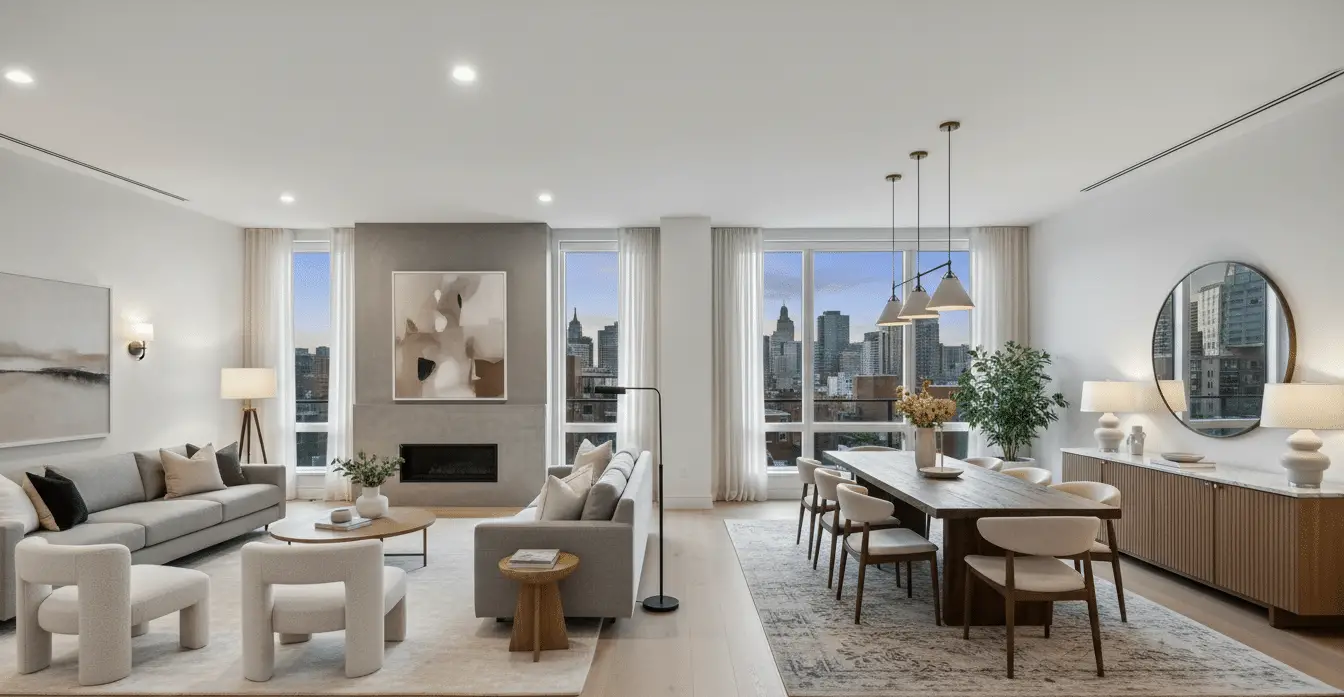
Great Room Ideas for a Stylish and Comfortable Home with Smart Layouts and Cozy Design
Table of Contents
Introduction
Open-concept living has transformed modern homes, and at the heart of this design trend is the great room. Combining living, dining, and sometimes kitchen spaces into one expansive area, the great room serves as the central hub for gathering, entertaining, and everyday relaxation. According to home design surveys, open-plan layouts remain one of the most desirable features for homeowners, offering both flexibility and a sense of spaciousness.
However, designing a great room can feel overwhelming. Without walls to define each area, it’s easy for the space to feel cluttered, disjointed, or lacking warmth. The challenge lies in creating distinct zones while maintaining visual harmony throughout the room.
Great room ideas for a stylish and comfortable home focus on balancing openness with coziness. Thoughtful furniture placement, cohesive color palettes, layered lighting, and intentional decor choices can transform a large open space into an inviting and functional environment.
In this guide, you’ll explore practical and inspiring ideas to design a great room that feels both elegant and livable. From layout strategies and furniture selection to lighting, textures, storage solutions, and decor styling, each section will help you create a cohesive and welcoming heart of the home.
Define Functional Zones Within the Great Room
One of the most important great room ideas for a stylish and comfortable home is defining clear functional zones. In an open-plan layout, the absence of walls means you must rely on design elements to establish purpose within each area.
Start by identifying how you use the space. Most great rooms combine living and dining areas, and sometimes the kitchen as well. Use area rugs to visually anchor each zone. A large rug beneath the sofa and coffee table defines the living area, while a separate rug under the dining table distinguishes that space.
Furniture placement also helps create boundaries. Position sofas and chairs to form a conversational grouping. A console table placed behind a sofa can subtly divide the living space from the dining area without blocking sightlines.
Lighting plays a role in zoning as well. Pendant lights over the dining table and a statement chandelier or ceiling fixture in the living area provide visual separation while maintaining cohesion.
Zoning Guide for Great Rooms
| Zone | Design Tool | Purpose |
| Living Area | Area rug | Visual anchor |
| Dining Space | Pendant light | Defined dining zone |
| Entry Flow | Console table | Soft divider |
| Kitchen | Island lighting | Functional focus |
Choose Cohesive Color Palettes for Harmony
A cohesive color palette is essential in a large open space. Because the eye can see the entire room at once, inconsistent colors may disrupt the sense of harmony.
Neutral palettes work particularly well in great rooms. Shades of beige, soft gray, warm white, or muted earth tones create a calm foundation. These tones allow different areas of the room to feel connected rather than segmented.
Accent colors can be introduced through decor, textiles, and artwork. Repeating these accents across zones—such as matching throw pillows in the living area and placemats in the dining space—maintains continuity.
Using similar finishes in furniture and flooring further enhances visual flow. For example, wood tones in the dining table can echo those in shelving or coffee tables.
Color Palette Guide
| Base Color | Accent Option | Effect |
| Warm White | Navy | Crisp contrast |
| Light Gray | Mustard | Modern warmth |
| Beige | Sage Green | Soft elegance |
| Taupe | Terracotta | Earthy charm |
Select Comfortable and Scaled Furniture
Furniture selection plays a vital role in balancing style and comfort. In a great room, scale is everything. Furniture that is too small can look lost, while oversized pieces can overwhelm the space.
Choose a substantial sofa that anchors the living area. Sectionals are popular choices because they create natural boundaries and maximize seating. Pair with accent chairs that complement the style without crowding the space.
Dining tables should match the scale of the room. A large rectangular or round table works well in expansive layouts. Opt for chairs that are both supportive and visually cohesive with the rest of the room.
Furniture Selection Table
| Furniture Piece | Design Tip | Benefit |
| Sectional Sofa | Anchor living area | Cozy seating |
| Accent Chairs | Complement color scheme | Visual balance |
| Dining Table | Match room scale | Proportional design |
| Storage Console | Add function | Organized flow |
Layer Lighting for Warmth and Dimension
Lighting is one of the most powerful tools in designing a great room. Because the space serves multiple purposes, it requires layered lighting that supports both functionality and ambiance.
Combine ambient lighting (ceiling fixtures), task lighting (table lamps, floor lamps), and accent lighting (wall sconces or recessed lights). This layering creates depth and prevents the room from feeling flat.
Dimmers are especially valuable in great rooms, allowing you to adjust brightness depending on the time of day or activity.
Lighting Layer Guide
| Lighting Type | Placement | Purpose |
| Chandelier | Living zone | Ambient glow |
| Pendant Lights | Dining area | Task lighting |
| Floor Lamp | Seating area | Reading light |
| Recessed Lights | Ceiling | Even illumination |
Add Texture and Soft Furnishings for Comfort
Open spaces can sometimes feel echo-prone or sterile. Introducing texture softens the environment and enhances comfort.
Layer throw blankets, decorative pillows, upholstered chairs, and plush rugs to create warmth. Natural materials like wood, linen, wool, and woven baskets add visual interest.
Texture Layering Table
| Element | Material | Benefit |
| Throw Blanket | Wool | Cozy warmth |
| Area Rug | Plush | Sound absorption |
| Upholstered Chair | Linen | Soft contrast |
| Woven Basket | Natural fiber | Functional decor |
Incorporate Storage Without Sacrificing Style
A stylish and comfortable great room should remain clutter-free. Built-in shelving, cabinets, or multi-functional furniture provide storage while maintaining design integrity.
Floating shelves allow decorative displays while keeping surfaces tidy. Storage ottomans or benches offer hidden compartments for everyday items.
Storage Solution Guide
| Storage Type | Style Tip | Benefit |
| Built-in Shelves | Paint to match walls | Seamless look |
| Storage Ottoman | Neutral fabric | Hidden storage |
| Sideboard | Sleek finish | Dining organization |
| Basket Storage | Coordinated color | Casual charm |
Style with Intentional Decor
Decor should enhance rather than overwhelm the space. Choose a few statement pieces such as oversized artwork, sculptural decor, or greenery.
Repetition of shapes and colors creates cohesion. For example, matching vases on both dining and living tables ties the areas together.
Decor Styling Guide
| Decor Item | Placement | Effect |
| Large Artwork | Main wall | Focal point |
| Indoor Plants | Corners | Fresh energy |
| Sculptural Vase | Coffee table | Visual interest |
| Coordinated Textiles | Across zones | Cohesion |
Conclusion
Designing a great room requires thoughtful planning, but the result is a stylish and comfortable home that feels open yet inviting. By defining functional zones, selecting cohesive colors, choosing appropriately scaled furniture, layering lighting, adding texture, incorporating smart storage, and styling with intention, you can create a space that supports both everyday living and memorable gatherings.
A well-designed great room becomes more than just an open space—it becomes the heart of the home, where comfort and elegance come together seamlessly.