
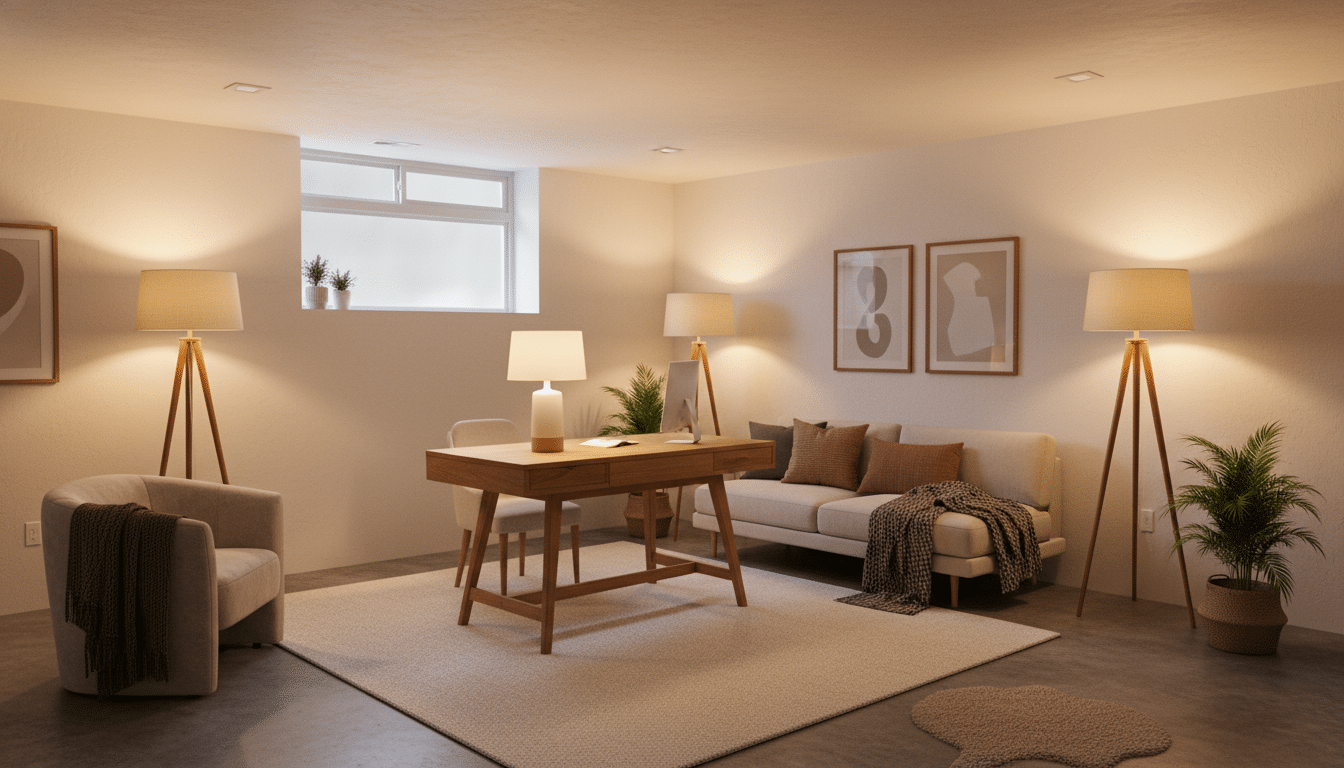
Cozy Basement Office Ideas for a Productive Space That Inspires Focus and Comfort
Table of Contents
Introduction
Did you know that your workspace can significantly influence how productive and focused you feel each day? Yet many homes overlook one of the most valuable areas for creating a quiet, distraction-free office—the basement. While often seen as dark, underused, or purely functional, a basement can be transformed into one of the coziest and most effective workspaces in your home.
The real challenge lies in overcoming common basement issues like limited natural light, cooler temperatures, and an unfinished aesthetic. Without thoughtful design, the space can feel uninspiring or even uncomfortable. But with the right approach, it can become a warm, inviting retreat that encourages deep focus and creativity.
In this guide, you’ll discover cozy basement office ideas for a productive space that combine comfort, smart design, and efficiency. From lighting and layout to furniture and decor, each section will walk you through practical strategies to turn your basement into a workspace you actually enjoy spending time in. Whether you work from home full-time or need a quiet corner for occasional tasks, these ideas will help you create a space that truly works for you.
Layered Lighting That Transforms a Dark Basement into a Cozy Workspace
Lighting is the single most important factor when designing a basement office. Since basements often lack natural light, relying on a single overhead fixture can make the space feel dull and uninviting. Instead, a layered lighting approach can completely transform the atmosphere.
Start with ambient lighting to evenly illuminate the entire room. Recessed lights or flush-mount ceiling fixtures work well because they provide consistent brightness without taking up visual space. Next, incorporate task lighting, such as a desk lamp, to ensure your workspace is well-lit for focused activities like reading or typing.
Accent lighting adds the final cozy touch. Floor lamps, wall sconces, or LED strip lights can highlight certain areas and create a warm, inviting glow. Choosing warm white bulbs rather than cool tones helps soften the environment and make the space feel more comfortable.
Strategically placing mirrors can also amplify light by reflecting it across the room. This trick is especially useful in smaller basements where maximizing brightness is essential.
Table: Basement Office Lighting Plan
| Lighting Type | Purpose | Best Placement |
| Ambient | Overall room brightness | Ceiling fixtures |
| Task | Focused work lighting | Desk or workstation |
| Accent | Adds warmth and depth | Corners, shelves, walls |
| Reflective | Enhances brightness | Near mirrors or light walls |
Smart Layout Planning for Maximum Productivity in a Basement Office
Designing an efficient layout is essential when creating a cozy basement office. Unlike other rooms, basements often have unique shapes, lower ceilings, or structural elements like beams that require thoughtful planning.
Start by identifying the best location for your desk. Ideally, position it near any available natural light source, such as a small basement window. If natural light is limited, place your desk where artificial lighting can be most effective without creating shadows or glare.
Creating distinct zones within your basement office can also improve productivity. For example, designate one area strictly for work, another for storage, and possibly a small corner for relaxation or reading. This separation helps your brain associate each area with a specific function, improving focus.
Cable management is another crucial consideration. A clutter of wires can quickly make a small space feel chaotic. Using cable organizers, under-desk trays, or wall-mounted solutions keeps everything tidy and visually appealing.
Furniture placement should prioritize flow. Even in a compact basement, leaving enough space to move comfortably prevents the room from feeling cramped.
Table: Basement Office Layout Essentials
| Element | Recommendation | Benefit |
| Desk placement | Near light source | Reduces eye strain |
| Zoning | Separate work/storage areas | Improves focus |
| Cable management | Use organizers | Keeps space clean |
| Walkways | Leave open paths | Enhances comfort |
Warm Color Palettes and Textures That Create a Cozy Basement Office
Color and texture play a powerful role in transforming a basement into a warm and inviting office. Since basements can feel cold or sterile, choosing the right palette is essential for creating a cozy atmosphere.
Warm neutrals such as beige, soft gray, taupe, and creamy whites are excellent choices. These colors reflect light while maintaining a comforting feel. Adding earthy tones like terracotta or muted greens can introduce depth without overwhelming the space.
Textures are equally important. Soft rugs, upholstered chairs, and wooden furniture bring warmth and balance to the room. Layering different materials—such as fabric, wood, and metal—creates visual interest and prevents the space from feeling flat.
Wall treatments can also enhance coziness. Consider adding wallpaper, paneling, or even a gallery wall to make the space feel more personalized. These details help transform the basement from a utilitarian area into a space that feels intentionally designed.
Lighting and color should work together. Warm lighting enhances warm tones, creating a harmonious and inviting environment.
Table: Cozy Color and Texture Combinations
| Element | Options | Effect |
| Wall colors | Beige, soft gray, taupe | Bright yet warm |
| Accent colors | Terracotta, olive green | Adds depth |
| Textures | Rugs, wood, fabric | Creates comfort |
| Finishes | Matte, natural | Softens the space |
Space-Saving Furniture Ideas for a Functional Basement Office
In many homes, basement offices need to fit into compact or shared spaces. Choosing the right furniture can make the difference between a cramped room and a highly functional workspace.
Start with a desk that suits your needs without overwhelming the space. Wall-mounted desks or floating desks are excellent options for smaller basements. They provide functionality while keeping the floor area open.
Multi-purpose furniture is another smart choice. A storage ottoman can double as seating and hidden storage, while a desk with built-in shelves reduces the need for additional units. Foldable or extendable furniture can also be useful for adapting the space as needed.
Vertical storage is key in small basement offices. Tall shelving units or wall-mounted cabinets maximize storage without taking up valuable floor space. This helps keep your workspace organized and clutter-free.
Comfort should not be sacrificed. Even in a small space, investing in an ergonomic chair ensures long-term comfort and productivity.
Table: Space-Saving Furniture Options
| Furniture Type | Benefit | Ideal Use |
| Floating desk | Saves floor space | Small rooms |
| Storage ottoman | Dual-purpose | Extra seating/storage |
| Wall shelves | Vertical storage | Organizing supplies |
| Compact chair | Fits tight areas | Comfortable seating |
Soundproofing and Insulation for a Quiet and Comfortable Workspace
One of the biggest advantages of a basement office is the potential for privacy—but without proper insulation, noise and temperature issues can still affect comfort and productivity. Addressing soundproofing and insulation can turn your basement into a truly peaceful workspace.
Basements often carry sound from above floors, especially footsteps or household activity. Adding acoustic panels to walls helps absorb sound and reduce echo, making the space quieter and more focused. Rugs and carpets also play a major role in minimizing noise while adding warmth.
Insulation is equally important for maintaining a comfortable temperature. Basements can feel colder than the rest of the house, which can be distracting during long work sessions. Installing proper wall insulation or using thermal curtains can help regulate temperature effectively.
Sealing gaps around doors and windows prevents drafts and reduces external noise. Weather stripping is a simple yet effective solution that improves both comfort and energy efficiency.
For those who need a highly focused environment, white noise machines or soft background sounds can further enhance concentration by masking unwanted noise.
Table: Soundproofing and Insulation Solutions
| Solution | Purpose | Effectiveness |
| Acoustic panels | Reduce echo and noise | High |
| Rugs/carpets | Absorb sound | Medium |
| Wall insulation | Maintain temperature | High |
| Weather stripping | Block drafts/noise | Medium |
Personal Touches That Make Your Basement Office Feel Inspiring
A productive space isn’t just functional—it should also feel inspiring. Adding personal touches can transform your basement office into a place where you genuinely enjoy spending time.
Start with decor that reflects your personality. Artwork, framed photos, or even a vision board can make the space feel uniquely yours. These elements create emotional connection and motivation throughout your workday.
Plants are another powerful addition. Even in a basement, low-light plants like snake plants or pothos can thrive and bring life into the room. They also improve air quality and create a calming atmosphere.
Incorporating cozy elements such as throw blankets, cushions, or soft lighting enhances comfort. These details make the space feel less like a workspace and more like a retreat.
Scent can also play a role. Candles or diffusers with subtle fragrances like lavender or citrus can boost mood and focus without being overwhelming.
Table: Personalization Ideas
| Element | Purpose | Impact |
| Artwork | Visual inspiration | Boosts creativity |
| Plants | Natural touch | Improves mood |
| Textiles | Adds comfort | Cozy atmosphere |
| Scent elements | Enhances environment | Promotes relaxation |
Conclusion
Transforming your basement into a cozy and productive workspace is not only possible—it can be one of the most rewarding home upgrades. With thoughtful planning, the right lighting, and intentional design choices, even the darkest basement can become a warm and inspiring office.
By focusing on key elements like layout, furniture, color, and comfort, you can create a space that supports both productivity and well-being. Smart storage solutions and soundproofing ensure functionality, while personal touches bring character and motivation.
Ultimately, a well-designed basement office is more than just a place to work—it’s a space that helps you focus, think clearly, and feel comfortable throughout your day.