
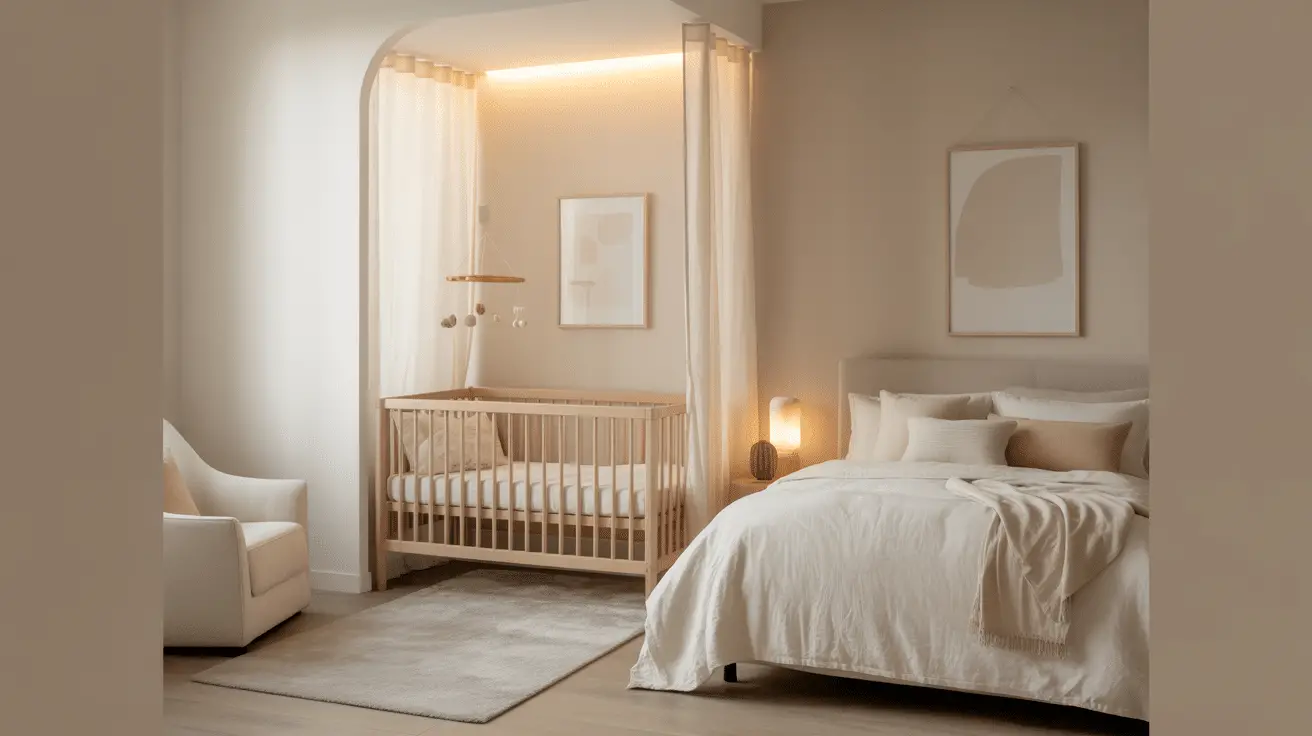
Baby Nursery Corner in Parents Room Layout Inspiration: Smart, Stylish Ideas for Shared Spaces
Table of Contents
Introduction
Creating a baby nursery corner within the parents’ bedroom has become increasingly popular, especially among families seeking closeness, convenience, and a calming environment during the newborn stage. Studies show that over 60% of new parents choose room-sharing for at least the first six months, making thoughtful nursery corner design more important than ever. A beautifully arranged space supports better sleep, easier nighttime feeding, and a greater sense of security for both baby and parents.
But shared-room layouts can feel overwhelming: How do you balance functionality with style? Where should the crib go? How can you maintain a peaceful adult space while incorporating baby essentials? The good news is that the right design approach allows you to create an intimate, organized, and visually cohesive nursery nook that fits seamlessly into your bedroom—no large renovation required.
This guide provides baby nursery corner in parents’ room layout inspiration with detailed tips on zoning, crib placement, décor, storage strategies, lighting techniques, and calming color palettes. Whether you’re working with a small apartment bedroom, a spacious primary suite, or anything in between, you’ll find practical, stylish, and nurturing ideas to help you build a nursery corner that supports rest, bonding, and beautiful everyday moments.
Identifying the Best Location for a Nursery Corner
Choosing the right location is the foundation of creating an effective baby nursery corner in parents’ room layout inspiration. The ideal spot promotes accessibility during nighttime awakenings, minimizes disruptions, and complements the natural flow of the room. This decision also influences how well the nursery blends aesthetically with the existing bedroom.
Start by assessing your room’s layout. Corners near a wall but away from exterior drafts, windows, or direct air vents are generally ideal. Many parents prefer placing the crib within an arm’s reach of their bed during the early months for easy nighttime soothing. However, maintaining a few feet of clearance helps support safe sleep and ease of movement around the bed.
Consider how visibility plays a role. Being able to glance at your baby without sitting up creates comfort, but the crib shouldn’t obstruct essential pathways, doors, or closets. If your bedroom is asymmetrical or uniquely shaped, alcoves or recessed areas work beautifully to form a natural nursery nook.
Nursery Location Guide
| Location Feature | Why It Works | Considerations |
| Corner or alcove | Creates defined zone | Ideal for privacy + neat layouts |
| Beside the bed (within 3–5 ft) | Supports night feedings | Ensure safe clearance + airflow |
| Opposite wall | Enhances sleep independence | Works well for older infants |
| Near wall outlets | Convenient for lamps, monitors | Use cord safety covers |
Choosing the Right Crib and Essential Furniture
Your furniture choices shape both the functionality and the aesthetics of your nursery corner. Compact, thoughtfully designed pieces allow you to maximize style even in tight spaces. Because a baby nursery corner in parents’ room layout inspiration relies heavily on multi-purpose or space-saving furniture, selecting the right pieces is essential.
Mini cribs and bassinets are excellent for small rooms. They take up significantly less space than full-size cribs while still offering safe, comfortable sleep zones. For parents who prefer long-term solutions, a sleek full-size crib can still work—especially if it doubles as a storage piece or features minimalist lines that blend with your bedroom décor.
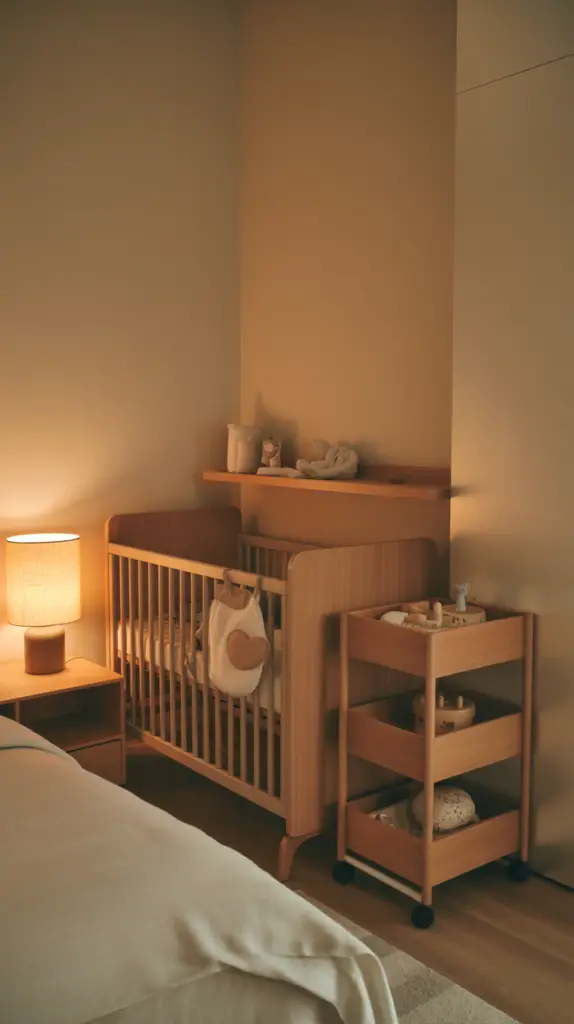
Additional pieces like a small dresser, diaper caddy, or compact changing table may be useful, but they should remain proportional to the room. Many parents opt for hybrid furniture: a changing pad on top of a dresser, a bedside table that doubles as storage, or a rolling cart that carries diapers and essentials without requiring extra floor space.
Furniture Selection Breakdown
| Furniture Piece | Purpose | Space-Saving Tip |
| Mini crib/bassinet | Safe newborn sleep | Ideal for small rooms |
| Full-size crib | Long-term solution | Choose slender or open-frame designs |
| Dresser w/ changing pad | Storage + diapering | Eliminates need for standalone changer |
| Rolling cart | Essentials organizer | Tucks away when not in use |
Designing a Calming and Cohesive Aesthetic
A cohesive, calming aesthetic ensures the nursery corner blends naturally with the parents’ bedroom while nurturing a tranquil environment for sleep. Many parents worry that adding baby items will disrupt the bedroom’s overall style, but with intentional design choices, the two spaces can harmonize beautifully.
Start with a unified color palette. Choose shades that complement your existing bedroom colors—soft neutrals like cream, warm grey, sage green, dusty pink, or muted blues work exceptionally well. These tones offer a soothing ambiance for the baby while maintaining the sophistication of an adult space. If your bedroom already has a specific palette, pull one or two shared tones into the nursery décor to create visual continuity.
Textiles play a major role in establishing mood. A crib skirt, swaddle blankets, curtains, or rugs with gentle patterns—stars, clouds, simple stripes—add whimsical charm without feeling overly themed. The key is subtlety: let the baby’s corner feel magical but not disconnected.
Wall décor should be minimal and intentional. A single framed print, a small gallery wall of soft illustrations, or floating shelves displaying tiny books and plush animals add personality without clutter. Avoid bold wallpapers or oversized murals in shared rooms; opt for removable decals or delicate patterns if you want extra visual interest.
Your lighting choices influence the room’s emotional tone. Soft warm lights, dimmable lamps, or nightlight projectors help soothe both baby and parents during nighttime routines. Matching the lighting fixtures or finishes with your existing bedroom décor ensures cohesion.
Aesthetic Planning Table
| Design Element | How It Helps | Tips for Cohesion |
| Colour palette | Creates harmony | Pull tones from adult bedroom |
| Textures & patterns | Adds comfort + charm | Keep patterns minimal + soft |
| Wall décor | Adds personality | Use subtle, framed art or small shelves |
| Lighting | Supports calm routines | Choose warm, dimmable bulbs |
Smart Storage Solutions That Keep Everything Organized
Well-planned storage transforms a nursery corner from cluttered to streamlined. Because shared bedrooms must stay tidy for both parents and baby, organization becomes especially important. A baby nursery corner in parents’ room layout inspiration thrives on compact, intentional storage systems.
Start with vertical storage—floating shelves, wall-mounted baskets, or slim book ledges help maximize limited space while keeping everyday items accessible. Beneath-crib storage is ideal for swaddles, extra sheets, or seasonal items. Choose bins with soft lids to maintain a clean aesthetic.
Dressers serve double duty as both clothing storage and diapering stations. Drawer dividers are essential for baby items, which are smaller and need categorization to prevent chaos. Rolling carts offer additional flexibility, allowing you to move diaper supplies, pacifiers, and nighttime essentials closer to the bed.
Laundry management is also important. A soft hamper placed near the crib makes late-night changes easier and prevents clutter buildup.
Storage Strategy Table
| Storage Type | Best For | Benefit |
| Floating shelves | Books, décor | Saves floor space |
| Under-crib bins | Linens, extra clothing | Keeps items hidden |
| Dresser w/ dividers | Daily outfits | Efficient organization |
| Rolling cart | Diapering essentials | Portable and practical |
Lighting the Nursery Corner for Nighttime Comfort
Lighting dramatically affects sleep quality and parental convenience. Thoughtful lighting design supports softer nighttime routines and reduces stimulation for the baby.
Avoid bright overhead lighting during evening feedings and diaper changes. Instead, incorporate soft warm lighting—lamps with dimmers, LED nightlights, or motion-activated lights placed strategically near the crib or changing station.
A bedside lamp on the parents’ nightstand helps with quick nighttime check-ins, while a small clip-on crib light can gently illuminate without waking your partner. If your room allows, string lights or soft wall sconces add warmth and make nighttime routines feel less disruptive.
Lighting Breakdown
| Lighting Type | Placement | Benefit |
| Nightlight | Near crib | Gentle visibility |
| Dimmable lamp | Parents’ nightstand | Supports calm feedings |
| Motion light | Changing area | Hands-free convenience |
Creating Functional Zones Within a Shared Bedroom
Zoning is a powerful strategy when designing a nursery corner within a parents’ room. Defining clear zones for sleep, diapering, storage, and relaxation ensures the room feels organized rather than cramped. Done well, zoning transforms the shared room into a functional, harmonious environment for both adults and baby.
Start by identifying the main areas: baby sleep zone, parent sleep zone, diapering station, and storage. Each zone should feel visually distinct but still cohesive. Rugs work beautifully to define spaces without requiring physical dividers. A soft rug under the crib creates a designated nursery zone, while a different texture or colour near the parents’ side of the room subtly separates the adult space.
Furniture placement is a key zoning tool. Position the crib so it feels naturally grouped with relevant items, such as a small dresser or feeding chair. Meanwhile, keep adult essentials—vanity, reading lamps, personal storage—visually separated to avoid blending the two environments.
Low partitions, open shelving, or curtains can serve as gentle dividers without sacrificing airflow or visibility. Some parents use canopy-style drapes around the crib to create a cocoon-like sleep environment, though these should be placed safely away from the infant’s reach.
Symmetry helps balance the room. Even if the nursery occupies just one corner, echoing colours or furniture finishes across the space ensures unity.
Zoning Strategy Table
| Zone | Key Features | Helpful Tip |
| Baby sleep zone | Crib, soft rug, nightlight | Keep clutter minimal |
| Changing zone | Dresser + pad, cart | Use washable mats |
| Storage zone | Shelves, bins | Label bins for easy access |
| Parent zone | Bed, lamps, personal décor | Maintain separation through colour |
Personalizing the Nursery Corner with Sentimental Touches
Personal details make a nursery corner feel warm, meaningful, and unique to your family. Even in a shared bedroom, small custom touches create a sense of belonging for the baby without overwhelming the space.
Monogrammed blankets, framed ultrasound photos, soft name signs, or heirloom keepsakes display emotion without clutter. Tiny shelves with baby books or plush animals create charm while staying practical. Maintain balance by pairing sentimental pieces with your bedroom’s existing décor style.
Personalization Table
| Item | Best Use | Why It Works |
| Name sign | Above crib | Adds identity |
| Framed art | Nursery wall | Aesthetic + emotional |
| Baby books | Shelf or ledge | Encourages early bonding |
Conclusion
Creating a baby nursery corner in parents’ room layout inspiration is about achieving harmony between functionality, comfort, and intentional design. With well-planned zones, thoughtful furniture choices, cohesive aesthetics, practical storage, and calming lighting, you can build a nurturing environment that supports both baby and parents. Even in small spaces, a beautifully arranged nursery corner adds convenience, emotional warmth, and a sense of closeness that defines the early months of parenthood. When thoughtfully designed, a shared bedroom becomes a peaceful retreat where family life begins and memories are made.