
Classic Bedroom Layout Ideas for Chic Spaces: Timeless Designs That Blend Elegance and Function
Table of Contents
Introduction
A beautifully arranged bedroom has the power to influence your mood, productivity, and overall sense of sanctuary at home. In fact, studies suggest that thoughtfully designed bedrooms can improve rest and reduce stress—two things most people crave in today’s fast-paced world. Yet, arranging a bedroom in a way that feels chic, timeless, and functional can feel like a puzzle with endless possibilities. Whether you’re working with a spacious primary suite or a compact guest room, the right layout can completely transform how the room looks and lives.
This topic matters because the bedroom is one of the most personal spaces in any home. It’s where you recharge, unwind, and express your individual style. A classic layout acts as a reliable foundation—one that never goes out of fashion and makes your room feel polished and cohesive. With thoughtful placement of furniture, intentional styling, and clever use of negative space, even the simplest bedroom can become a chic retreat.
In this guide, you’ll explore a range of classic bedroom layout ideas designed to elevate your space. From the ideal bed placement to the art of balancing décor and function, each section provides practical insights and inspiring details. By the end, you’ll have a clearer vision of how to design a stylish, timeless bedroom that feels both elegant and effortlessly inviting.
Bed Placement Strategies for a Timeless, Classic Bedroom
Bed placement is the anchor of any classic bedroom layout, setting the tone for how the rest of the space is arranged. In timeless design, the bed is typically centered on the main wall—often the first wall you see when entering the room. This creates symmetry, balance, and a natural focal point. A well-positioned bed provides visual stability and helps guide the placement of complementary furniture like nightstands, benches, or dressers.
Centering the bed also enhances movement flow. It ensures there’s enough space on either side for easy access, which is practical for both aesthetic harmony and everyday use. If the room layout includes windows on multiple walls, placing the bed beneath a large window can create a dramatic, elegant look. With the right window treatments, the bed feels framed in a way that enhances the chic, classic vibe.
Rooms with architectural quirks—like angled walls, alcoves, or narrow layouts—may require creative interpretation of classic placement principles. Floating the bed away from the wall or angling it can introduce charm while still honoring traditional balance. The key is making intentional choices that maintain symmetry, ensure comfort, and create a sense of grounding.
Bed Placement Strategy Table
| Layout Option | Best For | Benefits | Visual Impact |
| Centered on Main Wall | Most bedroom sizes | Balanced traffic flow | Creates focal point |
| Beneath a Window | Tall windows or small rooms | Saves wall space | Adds dramatic framing |
| Corner Placement | Small or irregular rooms | Maximizes walking space | Cozy & intimate |
Symmetry and Balance Techniques for Chic Bedroom Styling
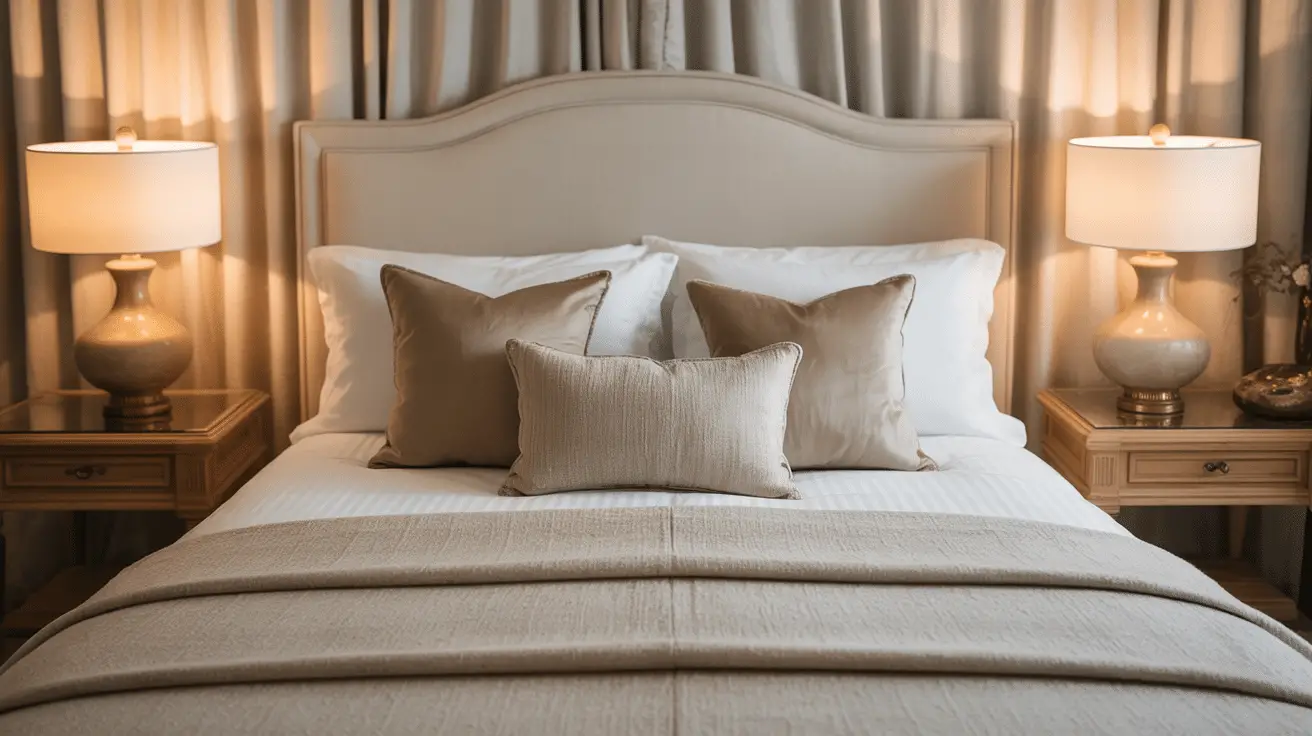
Creating symmetry and balance is a hallmark of chic, classic bedroom design. Symmetry brings visual calm and order to the room, making it feel sophisticated and well-styled without feeling overly formal. One of the most common ways to achieve this is through matching nightstands and lamps placed on each side of the bed. This simple pairing instantly establishes harmony and sets the tone for the rest of the décor.
Symmetry doesn’t have to mean perfect mirroring. Even a loosely balanced arrangement can achieve the same effect. For example, you might place a tall dresser on one side of the room and balance it with a gallery wall or larger artwork on the opposite side. The idea is to distribute visual weight evenly so the eye flows naturally around the space.
Balance also plays a role in color and texture. Combining soft fabrics with clean lines—such as pairing crisp bedding with a plush bench or velvet pillows—creates contrast that feels elegant rather than overwhelming. Layering these elements thoughtfully helps maintain cohesiveness without sacrificing personality.
Symmetry & Balance Checklist
| Symmetry Technique | How It Works | Why It Matters |
| Matching Nightstands & Lamps | Creates equal visual weight | Establishes foundation for décor |
| Balanced Artwork Placement | Aligns wall height and spacing | Maintains cohesive flow |
| Distributed Furnishings | Avoids one-sided heaviness | Enhances visual harmony |
Furniture Arrangement That Maximizes Space and Style
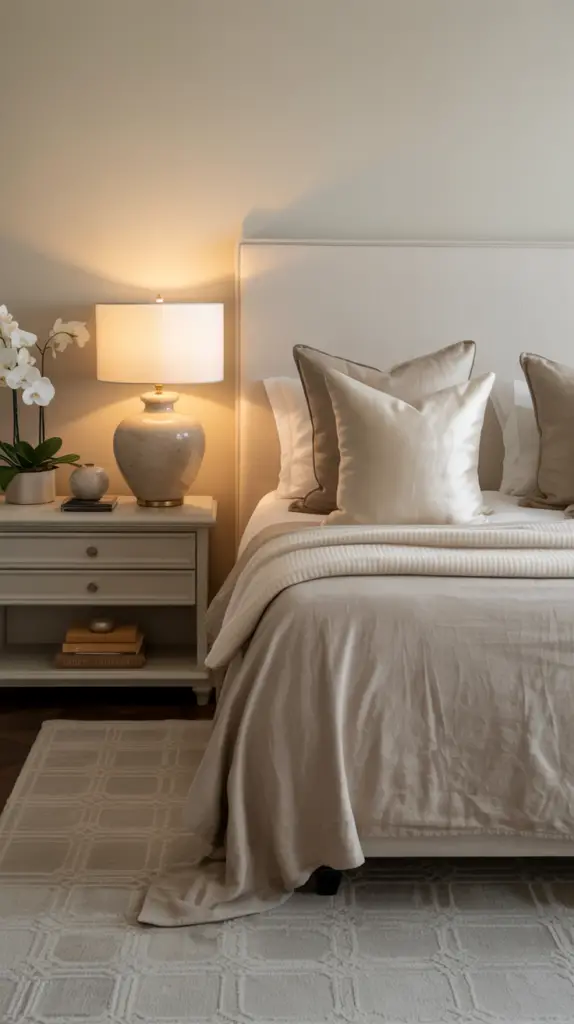
A chic bedroom layout relies on strategic furniture placement that enhances both aesthetics and function. Classic arrangements prioritize clear pathways, balanced spacing, and purposeful positioning. The dresser often sits opposite the bed to complement the room’s focal point, while additional seating—like a chaise, accent chair, or upholstered bench—may be added depending on the room’s size.
In smaller bedrooms, furniture should be scaled appropriately to avoid visual clutter. A slim-profile dresser, floating shelves, or compact nightstands can offer storage without overwhelming the room. Maximizing vertical space helps maintain open floor areas, which is essential for creating a clean, modern-classic look. For larger rooms, zoning becomes useful; you can designate separate areas for reading, dressing, or lounging.
Furniture arrangement also impacts lighting and functionality. Positioning a desk near a window allows natural light to enhance your workspace, while placing mirrors opposite windows helps reflect brightness and visually expand the room. Every piece should contribute to a cohesive layout that supports how you use the space daily.
Furniture Arrangement Guide
| Furniture Piece | Ideal Location | Function | Effect on Space |
| Dresser | Opposite the bed | Storage & balance | Completes focal alignment |
| Bench or Chaise | End of bed or near window | Seating | Adds luxurious detail |
| Accent Chair | Corner or near vanity | Reading or dressing | Creates secondary zone |
Lighting Layers for a Warm, Chic Classic Bedroom
Lighting is essential in shaping the mood of a chic, classic bedroom. Layered lighting combines different types—ambient, task, and accent—to create a space that is functional during the day and atmospheric at night. A central ceiling fixture, such as a chandelier or flush mount, offers ambient illumination. This foundational light sets the room’s overall tone and pairs beautifully with classic décor styles.
Task lighting, often seen in nightstand lamps or sconces, provides focused illumination for reading or nighttime routines. Chic bedrooms often use soft, warm-toned bulbs to create an inviting glow that encourages relaxation. Adjustable task lighting near a vanity or desk also adds practical refinement to your nighttime rituals.
Accent lighting adds depth and highlights architectural details or décor pieces. Think of picture lights above artwork, LED strips beneath floating shelves, or a small lamp on a dresser. These subtle touches help create layered warmth and enhance the room’s classic charm.
Lighting Layer Breakdown
| Lighting Type | Purpose | Best Placement | Mood Created |
| Ambient | Overall illumination | Ceiling fixture | Bright, clean foundation |
| Task | Focused lighting | Bedside, desk, vanity | Cozy & functional |
| Accent | Dramatic effect | Artwork, shelves | Soft, layered depth |
Storage Solutions That Keep Classic Bedrooms Chic and Uncluttered
A chic bedroom isn’t just about décor—it’s about maintaining a space that feels calm, organized, and free from unnecessary clutter. Classic bedroom layouts rely heavily on smart storage solutions that blend seamlessly into the design without disrupting the room’s elegance. Closed storage, such as built-in wardrobes or tall dressers, provides essential space for clothing while keeping surfaces clean and minimal.
Under-bed storage is another excellent option, especially for smaller rooms. Storage bins, rolling drawers, or built-in bed frames allow you to utilize overlooked space while maintaining a tidy appearance. For those who prefer open shelving, styling is crucial. Items displayed should be intentional and aesthetically pleasing—think curated books, elegant boxes, or decorative objects that complement the room’s palette.
Even nightstands provide valuable storage opportunities. Choosing designs with drawers helps hide nighttime essentials while preserving a sleek look. Incorporating baskets or decorative bins adds texture while keeping soft items accessible yet neatly tucked away.
Clear organization directly influences the room’s atmosphere. When everything has a designated place, the bedroom feels more luxurious, spacious, and restful—qualities that define chic and classic design.
Storage Options Comparison Table
| Storage Type | Best Use | Design Benefit | Visual Impact |
| Built-in Wardrobes | Clothing & accessories | Seamless integration | Clean, classic lines |
| Under-Bed Storage | Seasonal items | Maximizes hidden space | Clutter-free floors |
| Decorative Baskets | Linens, décor | Adds texture | Warm, stylish detail |
| Drawer Nightstands | Personal items | Keeps essentials hidden | Sleek & tidy surfaces |
Creating a Timeless Color Palette for Chic Bedroom Spaces
Color is one of the most defining elements of a bedroom layout. In classic design, palettes tend to be soft, muted, and refined—tones that evoke calm and sophistication. Neutrals like ivory, warm beige, dove gray, and soft taupe serve as ideal foundation colors. They create visual serenity and pair effortlessly with a variety of décor styles, from modern minimalism to traditional elegance.
Accent colors add depth and personality. Muted pastels such as blush, sage, or powder blue introduce a gentle elegance without overpowering the room. Darker accents like navy, charcoal, or forest green can ground the space and highlight architectural features. These tones pair beautifully with classic materials like wood, linen, and metal.
Choosing the right color palette also influences perception of space. Light shades help smaller bedrooms appear more open and airy, while deeper hues create intimacy in larger rooms. Layering colors through bedding, drapery, rugs, and upholstery introduces cohesion and dimension, allowing the room to feel intentionally curated.
Patterns can also enhance the palette. Stripes, florals, or subtle geometric prints bring movement while maintaining harmony. The goal is to select colors and patterns that evoke timeless beauty and allow the bedroom layout to shine.
Color Palette Guide Table
| Color Type | Examples | Best For | Effect |
| Neutral Base | Ivory, Taupe, Gray | Walls, large furniture | Calm, clean foundation |
| Soft Accents | Blush, Sage, Blue | Bedding, art, décor | Adds subtle elegance |
| Deep Contrasts | Navy, Forest Green | Pillows, trims | Creates dimension |
Incorporating Seating and Functional Zones in Classic Bedrooms
Creating functional zones within your bedroom layout adds convenience and luxury. Classic layouts often include additional seating—such as an accent chair, chaise lounge, or cushioned bench—as a way to break up the space and encourage relaxation. These pieces elevate the room, making it feel more like a personal sanctuary rather than just a sleeping area.
A reading nook can be created by placing a comfortable chair near a window with natural light. Adding a small side table or floor lamp completes the setup, offering a stylish retreat within the bedroom. At the foot of the bed, a bench not only brings elegance but also serves as a practical spot for dressing or placing items.
If space allows, creating a vanity zone with a small desk or dressing table adds functional beauty. Mirrors and soft lighting enhance this area, making it ideal for self-care routines. Thoughtful zoning ensures the room feels spacious, organized, and tailored to your lifestyle.
Functional Zone Placement Table
| Zone | Location | Purpose | Benefit |
| Reading Nook | Window area | Relaxation | Quiet retreat |
| Bed Bench | Foot of bed | Dressing & seating | Adds elegance |
| Vanity Area | Corner or wall | Grooming | Enhances daily routine |
Conclusion
A classic bedroom layout creates a foundation of timeless style, comfort, and balance. Through thoughtful bed placement, harmony in décor, strategic furniture arrangement, layered lighting, curated storage, and refined color palettes, your bedroom can become a polished sanctuary that reflects both function and beauty. The best layouts work with your lifestyle, enhancing movement flow and shaping a room that feels serene, intentional, and effortlessly chic. With these ideas, any space—large or small—can be transformed into a classic bedroom retreat that stands the test of time.