
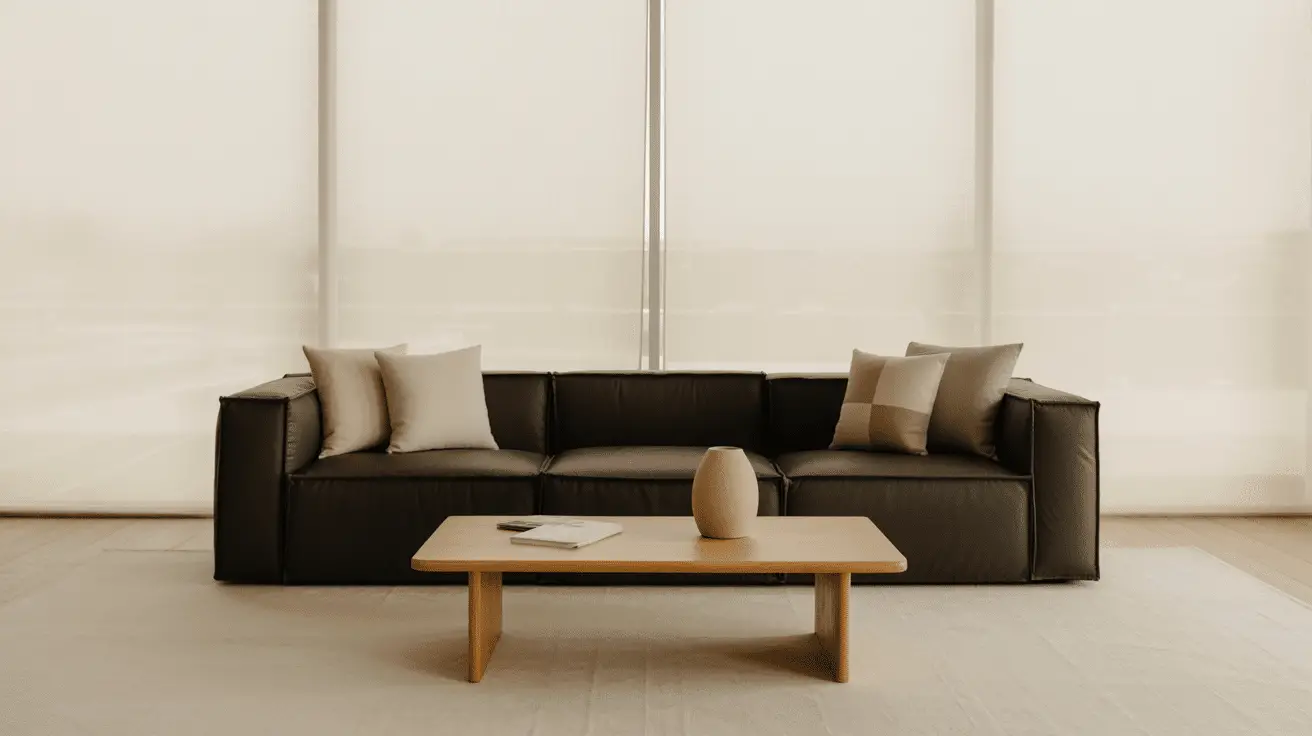
Dark Gray Couch Living Room Ideas for Modern, Minimalist Home Design
Table of Contents
Introduction
Minimalist living rooms continue to rise in popularity, with search interest increasing over 40% in the past three years. Homeowners are increasingly drawn to pared-back aesthetics that emphasize clarity, calm, and function—and the dark gray couch has become a favorite anchor piece within this design movement. Its versatility, sophistication, and sleek presence make it an ideal foundation for creating a minimalist-inspired space that still feels warm and livable. Yet, many people struggle with styling darker furniture, fearing it may make a room look heavy or cold.
Understanding how to balance color, light, and texture is key to ensuring your dark gray couch enhances—not overwhelms—your living room. This guide unpacks practical and inspiring ways to incorporate minimalist décor principles while using a dark gray sofa as the room’s focal point. You’ll learn how to pair the couch with the right color palette, textures, lighting, accessories, and layout strategies to create a cohesive, modern space. Each section offers valuable insight tailored to minimalist design while maintaining comfort and visual interest. By the end, you’ll have a well-rounded approach to styling a dark gray couch in ways that feel intentional, refined, and perfectly aligned with minimalist living.
Choosing a Minimalist Color Palette for a Dark Gray Couch
A successful minimalist living room begins with color, and the dark gray couch gives you an elegant, neutral foundation to build upon. Its cool undertone works beautifully with crisp whites, warm beiges, soft taupes, muted charcoals, and natural wood tones. These combinations create a balanced environment where each element feels purposeful and uncluttered. The goal is not to use as few colors as possible, but to curate a palette where everything works in harmony.
When styling around a dark gray couch, think of your walls as a canvas. White or light-neutral paint helps prevent the room from feeling heavy. If you want a moodier minimalist look, deep charcoal or muted slate can work beautifully—but pair them with abundant natural light to avoid visual weight. Neutrals with warm undertones, like oat or cream, can contrast subtly with the cool gray, adding warmth without clutter.
Accent colors should be minimal and understated. A soft olive green throw, sand-colored pillows, or light wood tones introduce organic warmth that pairs well with dark gray. If you prefer a cleaner ultra-minimalist look, stick with monochromatic shades of gray and white for a sleek finish.
Minimalist Color Palette Table
| Color Theme | Best Pairings | Effect on Space |
| White + Gray | Light wood, matte black | Clean and modern |
| Beige + Gray | Warm metals, linen fabrics | Cozy minimalist |
| Charcoal + Stone | Glass accents, soft lighting | Moody elegance |
| Soft Neutrals | Olive, taupe, cream | Earthy minimalism |
Furniture Pairings That Complement a Dark Gray Couch
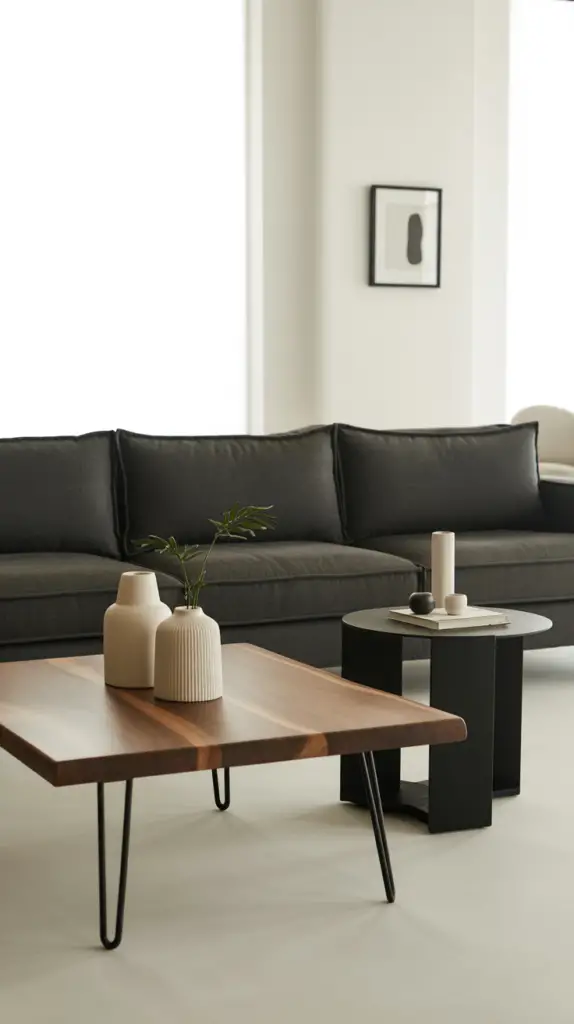
Choosing the right furniture is essential for creating balance in a minimalist living room. A dark gray couch performs best when paired with simple, streamlined pieces that echo minimalist principles. Opt for coffee tables with clean lines—think natural wood, matte black metal, or clear glass. Each creates a different effect: wood warms the room, black metal adds contrast, and glass keeps the space open and unobtrusive.
Side tables, shelving units, and media stands should follow similar simplicity. Avoid overly ornate designs or heavy finishes that distract from the room’s calmness. Instead, choose pieces that float visually—thin legs, open frames, and neutral tones keep the environment light and seamless. Storage is important in minimalist spaces, so multifunctional items like hidden compartments or low-profile cabinets work exceptionally well.
Textural furniture, such as a woven accent chair or boucle ottoman, adds depth while keeping the palette understated. When selecting furniture shapes, favor rounded edges or soft curves. These shapes break up the angular presence of modern minimalist décor and make the dark gray couch feel more inviting.
Minimalist Furniture Table
| Furniture Type | Best Material/Finish | Why It Complements Gray |
| Coffee Table | Light wood | Warms cool undertones |
| Side Table | Matte black metal | Adds contrast, stays minimal |
| Accent Chair | Boucle or woven texture | Softens the overall look |
| Media Console | White or oak | Keeps space visually open |
Using Textures and Layers to Create Warm Minimalism
Minimalist spaces don’t need to feel sterile. Texture is your secret weapon for creating warmth and depth around a dark gray couch. By layering tactile elements—throw blankets, pillows, rugs, fabrics—you introduce visual softness that complements the room’s clean aesthetic.
Start with textiles. A woven wool blanket draped over the arm of the couch adds subtle coziness, while linen or cotton pillow covers keep the look breathable. Keep patterns minimal: thin stripes, organic shapes, or tone-on-tone designs work well without dominating the minimalist theme. Rugs are essential for anchoring the space—choose natural fibers like jute, sisal, or soft low-pile wool in neutral tones.
Texture also comes from the materials you place around the room. Ceramic vases, matte clay pottery, textured lampshades, and lightly grained wood contribute quiet detail. The trick is restraint: focus on a few thoughtfully chosen textures rather than over-layering. Each texture should feel intentional, enhancing the atmosphere without compromising simplicity.
Lighting plays a supporting role in highlighting texture. Soft, diffused lighting gently reveals each layer, ensuring the room feels warm, calm, and cohesive.
Texture Layering Table
| Texture | Best Application | Minimalist Benefit |
| Linen | Pillows, curtains | Light and breathable |
| Wool | Throws, rugs | Adds warmth and depth |
| Clay Ceramics | Vases, decor accents | Natural minimalism |
| Matte Metals | Lamps, side tables | Clean and modern |
Lighting Techniques That Enhance Minimalist Style with a Dark Gray Couch
Lighting shapes mood, depth, and clarity in minimalist interiors. For living rooms with a dark gray couch, lighting becomes even more important because it keeps the space from feeling overly dark or flat. A combination of natural light, ambient lighting, and accent fixtures creates balance and enhances the clean lines of minimalist décor.
Begin with natural light. Keep window treatments light and simple—sheer curtains, linen drapes, or no curtains at all if privacy allows. Natural light brightens the dark gray couch, bringing out its richness and elevating the room’s neutral palette.
Layered lighting is essential after sunset. Ambient lighting from ceiling fixtures or minimalist pendants provides general illumination, while table lamps or floor lamps add warmth. Select lamps with soft diffusers, frosted shades, or warm LED bulbs to maintain a comfortable evening glow. Accent lighting, such as LED strips behind shelving or under cabinets, enhances architectural features without adding clutter.
Minimalist lighting prioritizes simplicity. Choose fixtures with clean lines, matte finishes, or natural textures. Avoid ornate or oversized designs that conflict with the minimalist ethos.
Lighting Strategy Table
| Lighting Type | Ideal Placement | Effect on Space |
| Ambient | Ceiling, central | Overall brightness |
| Task Lamps | Desk, reading corner | Focused illumination |
| Accent LED | Shelves, behind TV | Subtle enhancement |
| Natural Light | Windows | Softens dark furniture |
Styling Minimalist Decor Accents with a Dark Gray Couch
Minimalist décor thrives on intentionality. When styling around a dark gray couch, each decorative item should have a purpose—whether for function, aesthetic balance, or subtle visual interest. Common minimalist decor includes ceramic vases, monochrome artwork, simple geometric sculptures, and neatly stacked books. These items add personality without overwhelming the clean aesthetic.
Artwork should be understated yet striking. Black-and-white prints, abstract line drawings, or muted neutral landscapes complement the dark gray sofa beautifully. Stick with frames in black, white, or light wood to maintain simplicity. Coffee table styling should remain minimal: a ceramic vase, a candle, and a sculptural object are often enough to add presence without clutter.
Greenery can also uplift a minimalist space. Consider simple plants in matte pots—snake plants, olive trees, or eucalyptus stems. Their organic shapes break up the linear minimalist design and bring natural warmth to the room.
Minimalist Decor Table
| Decor Element | Why It Works | Ideal Placement |
| Ceramic Vase | Adds texture and calm | Coffee table |
| Abstract Art | Clean visual interest | Above sofa |
| Green Plants | Natural contrast | Corner or console |
| Sculptural Pieces | Subtle personality | Shelves |
Arranging the Living Room Layout for Simplicity and Flow
Layout is foundational to minimalist success. A dark gray couch should anchor the room in a way that supports both flow and function. The placement of each piece should feel intentional, open, and well-balanced. Start by positioning the couch against a primary wall or facing a natural light source—this ensures the room feels spacious and welcoming.
Minimalist layouts benefit from negative space: the empty areas around furniture that allow the eye to rest. Avoid pushing too many pieces into one area or filling every gap. Instead, create clean lines of movement with fewer but more functional items. Floating furniture, such as chairs with open legs or slim-frame tables, contributes to visual lightness.
Consider sight lines. When entering the room, the dark gray couch should appear grounded, not obstructive. Ensure there’s adequate breathing room around it—typically 30–36 inches for walkways. Rugs can define zones without adding bulk, and their placement under the front legs of the sofa helps anchor seating areas.
Minimalist Layout Table
| Layout Technique | Benefit | Application |
| Negative Space | Creates calm | Around main furniture |
| Open Furniture | Visual lightness | Chairs, tables |
| Defined Zones | Keeps order | Rugs for seating areas |
| Symmetry or Intentional Asymmetry | Enhances design clarity | Sofa and accent pieces |
Introduction of Natural Materials for Balanced Minimalism
Natural materials bring calmness and organic warmth to minimalist spaces, especially when paired with a dark gray couch. Wood, stone, jute, wool, and clay help soften the cool tones of gray and introduce earthy textures that balance minimalism’s structured feel.
Choose light or medium-toned woods for coffee tables, shelving, or floor décor. These tones create visual warmth and break up the darker elements in the room. Stone accents in the form of trays, side tables, or candle holders enhance sophistication with subtle variation. Rugs made from jute or wool deliver warmth and tactile depth, preventing the space from feeling too rigid.
Natural materials also complement environmental light beautifully. Their textures reflect illumination softly, making the minimalist room feel more dynamic. This interplay between light and texture helps create a minimalist space that is not just sleek, but also emotionally inviting.
Natural Material Table
| Material | Best Use | Aesthetic Benefit |
| Light Wood | Tables, shelves | Adds warmth |
| Stone | Accent décor | Refined minimalist feel |
| Jute | Rugs | Organic texture |
| Clay | Vases, bowls | Earthy balance |
Conclusion
A dark gray couch offers endless styling possibilities within a minimalist living room. Its cool tone, neutral elegance, and timeless appeal make it the perfect anchor for clean-lined design. By pairing it with a thoughtful color palette, intentional furniture selections, curated textures, layered lighting, and natural materials, you can create a space that feels both modern and inviting. Minimalism is not about removing personality but distilling design into its most meaningful elements. With these ideas, your dark gray couch becomes the centerpiece of a serene, refined living room that feels refreshing, balanced, and effortlessly stylish.