
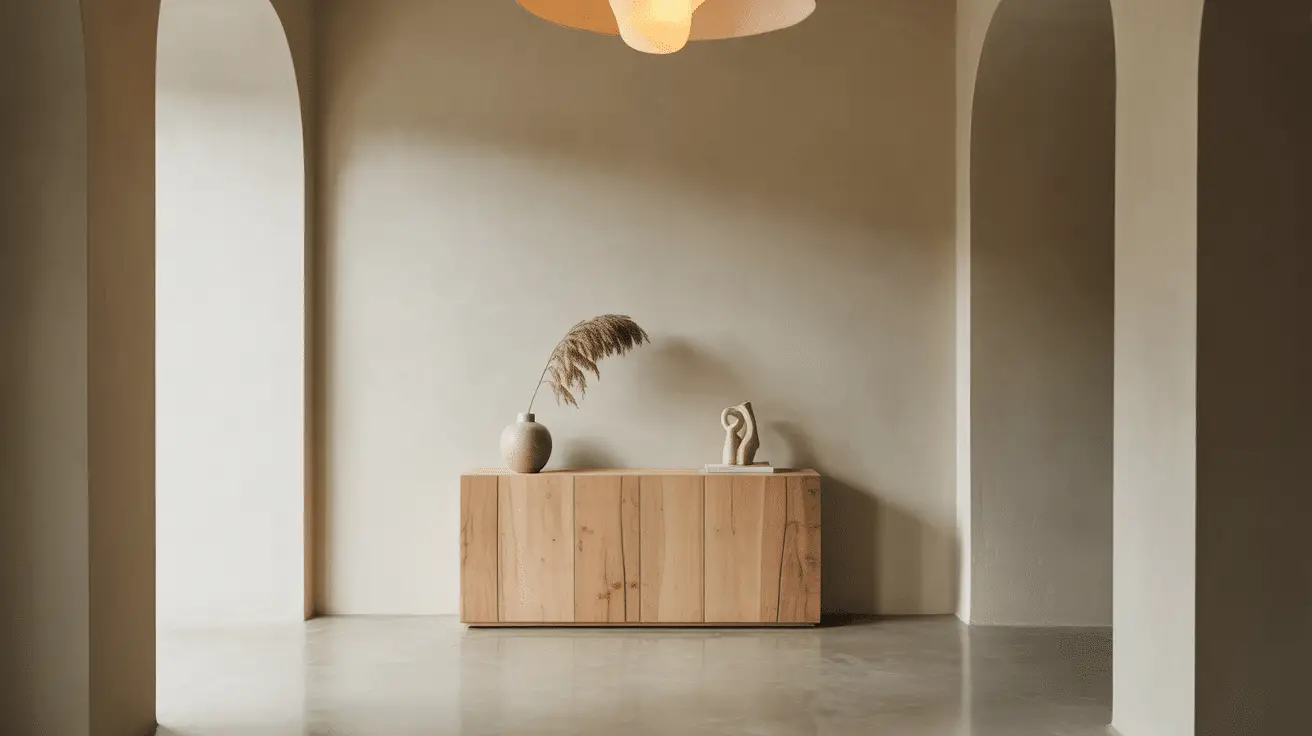
Foyer Ideas for a Calming Minimal Entryway: Simple Elegance That Welcomes You Home
Table of Contents
Introduction
The foyer is the first impression your home makes—an unspoken welcome that sets the tone for everything beyond it. Yet, this small space is often overlooked, cluttered, or overloaded with decor that feels anything but calming. In a world where chaos often begins the moment we step through the door, the idea of a minimalist, serene entryway feels like a breath of fresh air.
A calming minimal foyer isn’t about emptiness—it’s about purpose. Every object, surface, and color contributes to a quiet elegance that immediately puts you at ease. By embracing minimalism, you create space not just for design, but for calm, function, and flow. Whether you live in a small apartment or a spacious home, this approach helps transform your entryway into a stylish retreat that welcomes you gently each day.
In this guide, we’ll explore how to design a calming minimal foyer from the ground up—covering color palettes, layout strategies, storage ideas, natural elements, and decor details that balance simplicity with warmth. You’ll learn how to blend aesthetics and practicality to create an entryway that’s both functional and tranquil, perfectly suited to modern living.
Defining the Essence of a Calming Minimal Entryway
A calming minimal foyer revolves around balance—creating a space that feels serene, open, and intentionally curated. The key is restraint: every design choice should have a purpose, both aesthetic and functional. Minimalism here doesn’t mean stark or sterile; it means thoughtful simplicity.
Start by visualizing what you want your entryway to communicate. Calmness can be expressed through soft neutral tones, clean lines, and a sense of order. Materials like wood, linen, and stone introduce organic texture without cluttering the eye. Keep the space visually light by limiting the number of decorative items and ensuring negative space (the “empty” areas) feels as important as the filled ones.
Lighting also plays a major role. Natural light softens sharp edges, while warm bulbs create a welcoming glow in the evening. When in doubt, focus on cohesion: your foyer should flow seamlessly into the rest of your home, reflecting the same tranquil atmosphere.
Design Elements Breakdown:
| Element | Description | Why It Works |
| Neutral Palette | Whites, creams, greige, and taupe | Creates visual calm and continuity |
| Clean Lines | Simple furniture shapes | Adds order and sophistication |
| Natural Materials | Wood, linen, stone | Evokes warmth and grounding |
| Balanced Lighting | Mix of natural and warm artificial | Enhances serenity and depth |
Choosing a Soothing Color Palette for the Entryway
Color shapes emotion—and in a minimal foyer, the right palette transforms your mood the moment you step inside. Stick to calming neutrals inspired by nature. Think shades of beige, cream, sand, or soft gray paired with organic accents like wood or stone.
Monochromatic color schemes work especially well, giving a seamless flow that feels cohesive. If you crave contrast, opt for gentle variations—like pairing warm oak tones with white walls or matte black hardware for a refined modern edge. The goal is harmony, not high contrast.
Avoid overly bright or cold tones. Instead, select hues with warm undertones to prevent the space from feeling clinical. Paint finishes matter too: matte or eggshell finishes diffuse light softly, while glossy textures can feel harsh.
Color Palette Guide:
| Base Color | Complementary Shade | Texture or Accent | Effect |
| Soft White | Warm Beige | Oak Wood | Bright yet cozy |
| Greige | Charcoal | Linen Fabric | Modern calm |
| Cream | Stone Gray | Woven Basket | Natural elegance |
| Warm Taupe | Sage Green | Ceramic Decor | Organic tranquility |
Streamlining Furniture and Layout for Flow
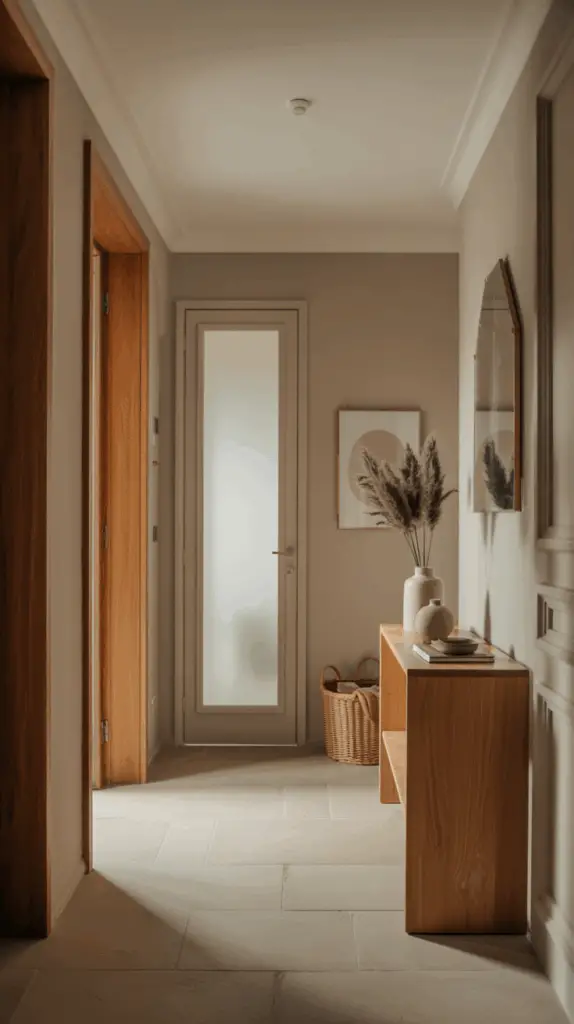
A minimal foyer thrives on open space and functionality. The arrangement of furniture determines whether your entryway feels peaceful or chaotic. Choose only essential pieces—typically a console table, a bench, a mirror, and perhaps a small storage element.
The goal is to guide movement naturally. A narrow console along the wall keeps the entry clear, while a bench provides a spot to remove shoes without obstructing traffic. Floating furniture, like a wall-mounted shelf or mirror, adds visual space.
Keep the pathway uncluttered and symmetrical when possible. If your foyer is small, use vertical space efficiently: install hooks, open shelving, or a tall, slender cabinet for hidden storage. Every inch should serve a purpose without overwhelming the design.
Furniture Planning Table:
| Item | Purpose | Ideal Placement | Style Tip |
| Console Table | Drop keys and mail | Centered or side wall | Choose slim legs to enhance openness |
| Bench | Seating & storage | Beside console or door | Add soft cushion in neutral tone |
| Mirror | Light reflection | Opposite light source | Round or arched shape adds softness |
| Storage Cabinet | Hidden organization | Corner or niche | Keep hardware minimal |
Integrating Smart and Minimal Storage Solutions
Clutter is the enemy of calm. A truly serene foyer conceals the essentials gracefully—keys, shoes, bags—without compromising beauty. The secret lies in integrated, hidden, or dual-purpose storage.
Start with closed compartments. A console with drawers hides smaller items, while woven baskets or lidded bins maintain aesthetic harmony. Wall-mounted hooks provide quick access to coats but should be limited to a few items to preserve order.
Shoes can easily disrupt the visual flow. Opt for a discreet cabinet or bench with hidden compartments. If space allows, a built-in nook or wardrobe keeps bulkier items out of sight. Remember, organization isn’t about storing more—it’s about owning less and storing better.
Storage Idea Breakdown:
| Storage Type | Ideal Use | Visual Benefit |
| Closed Drawers | Small essentials | Maintains tidy appearance |
| Woven Baskets | Seasonal accessories | Adds organic warmth |
| Hidden Shoe Bench | Footwear storage | Streamlined floor space |
| Floating Shelf | Decorative items | Lightens the overall look |
Adding Warmth Through Natural Elements
Minimal doesn’t mean cold. A calming entryway relies on warmth from nature—through materials, plants, and organic textures that balance the sleekness of simplicity.
Incorporate wood tones through flooring, furniture, or small accents like trays and frames. Plants or branches introduce vitality without clutter; a single olive tree in a ceramic pot or a vase of pampas grass can instantly soften the aesthetic.
Textures matter just as much as color. Layer natural fibers like jute rugs or linen cushions to ground the space. Stone bowls or ceramic vases add tactile interest. This harmony between organic and refined design keeps the foyer visually engaging but peaceful.
Natural Decor Table:
| Element | Material | Design Effect |
| Rug | Jute or Wool | Adds softness and definition |
| Planter | Ceramic or Terracotta | Brings organic texture |
| Bowl/Tray | Stone or Wood | Functional accent |
| Artwork | Botanical Print | Completes natural theme |
Enhancing Ambience with Lighting and Reflection
Lighting transforms the foyer from ordinary to extraordinary. The right illumination evokes warmth, clarity, and welcome. A combination of natural and artificial light enhances both function and mood.
Pendant lighting or a sculptural wall sconce creates a focal point while maintaining simplicity. For softer ambience, consider a diffused lampshade or frosted bulb. Warm white light (2700–3000K) mimics daylight’s softness and avoids harsh glare.
Mirrors double the effect of lighting by reflecting it beautifully. A well-placed round or oval mirror expands visual space, adds symmetry, and creates balance. If your entryway lacks windows, strategically position mirrors to bounce artificial light around.
Lighting and Reflection Table:
| Element | Placement | Purpose | Ideal Finish |
| Pendant Light | Center or above console | Ambient glow | Brushed brass or matte black |
| Wall Sconce | Beside mirror or door | Task lighting | Soft metallic |
| Mirror | Opposite light source | Expands space | Arched or round shape |
| Floor Lamp | Corner or nook | Accent warmth | Minimal stand design |
Styling Finishing Touches with Purpose
The final touches bring personality to your minimal foyer. The art is in moderation—curate decor items that speak to calm and balance.
Choose one or two statement pieces like a ceramic vase with dried florals, a framed minimalist artwork, or a textured lamp. Keep surfaces mostly clear to allow breathing space. Incorporate scents subtly through natural candles or diffusers with notes of sandalwood or bergamot for a sensory welcome.
Textural variation completes the look. A linen runner on a console or a wool throw on a bench adds quiet charm. The beauty of minimal styling lies in intentionality—when every detail feels chosen, not crowded.
Styling Essentials Table:
| Item | Function | Best Material | Styling Tip |
| Decorative Bowl | Catch keys | Stone or wood | Keep single-tone |
| Scent Diffuser | Add aroma | Glass or ceramic | Use subtle natural scents |
| Artwork | Focal point | Canvas or print | Hang at eye level |
| Textile Layer | Add warmth | Linen or wool | Coordinate with wall tone |
Conclusion
Designing a calming minimal foyer is about more than appearance—it’s about creating a transition space that restores peace the moment you step inside. Through careful selection of colors, textures, furniture, and light, you craft an environment that’s simple yet deeply comforting.
When every element has a purpose, the result is effortless beauty. The space feels alive but never busy, welcoming but never overwhelming. A well-designed foyer reminds us that tranquility begins at the threshold—and simplicity, when executed with care, is the ultimate form of elegance.