
Guest Room Office Ideas for Apartments and Small Homes: Smart Dual-Purpose Design Tips
Table of Contents
Introduction
If you’ve ever struggled to balance the need for a productive workspace with the desire to host guests comfortably, you’re in good company. With remote work on the rise and living spaces becoming increasingly compact, homeowners and renters are looking for creative ways to make every square foot count. The idea of blending a guest room with a home office may seem challenging at first, but with thoughtful planning, this hybrid setup can become one of the most efficient and inviting spaces in your home.
A guest room office is more than just a bed and a desk sharing the same room—it’s a purposeful design approach that marries hospitality, practicality, and aesthetic harmony. When executed well, this dual-purpose room can support focused work during the day and transform seamlessly into a cozy retreat for overnight visitors. Whether you’re optimizing a small apartment, giving new life to an underused spare room, or simply aiming for a cleaner, multifunctional layout, you’ll find that the right furniture choices, layout strategies, and storage solutions can dramatically improve how you live and work.
This article explores a range of guest room office ideas tailored for apartments and small homes. You’ll discover layout techniques, essential furniture recommendations, décor strategies, and smart space-saving solutions to create a room that feels balanced, stylish, and truly functional.
Multifunctional Furniture That Maximizes Every Inch
A successful guest room office begins with furniture that works overtime. In small homes, pieces that fold, convert, or serve more than one purpose are indispensable. Instead of filling the room with separate items, multifunctional furniture allows you to maintain an open, spacious feel while still addressing both work and guest needs.
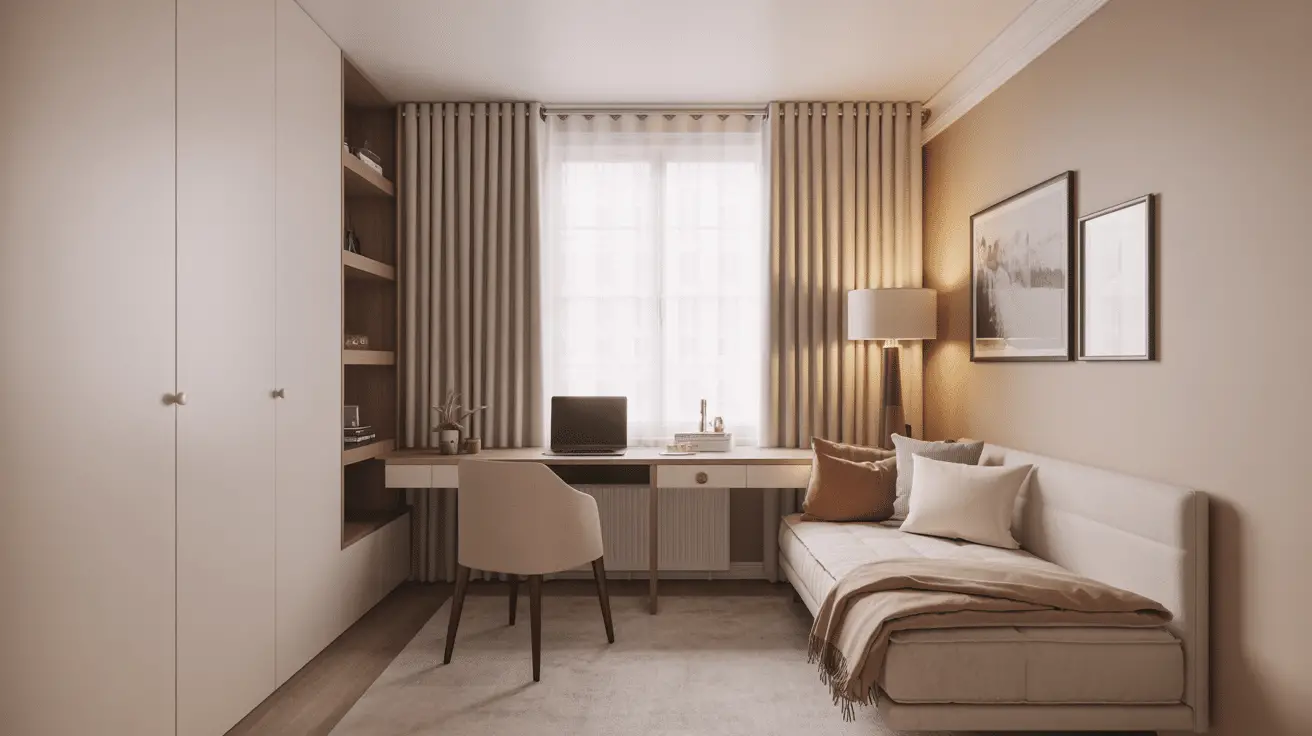
For example, a high-quality sleeper sofa or daybed can act as a comfortable seating area during the day and a proper sleeping space at night. Pair it with a compact desk that includes built-in storage, and you immediately reduce the need for additional cabinets. The goal is to eliminate redundancy—every piece in the room should earn its place. In many cases, furniture designed specifically for small spaces, such as wall-mounted desks or nesting side tables, can dramatically enhance flexibility without sacrificing style.
To keep the space visually light, choose furniture in coordinating colors or materials. Wood finishes, soft neutrals, and slim silhouettes help unify the room. When visitors arrive, the space remains inviting and uncluttered, and when it’s time to work, everything you need is within easy reach without crowding the room.
Furniture Function Breakdown
| Furniture Piece | Primary Use | Secondary Function |
| Sleeper Sofa / Daybed | Guest sleeping | Seating for work breaks |
| Fold-down Wall Desk | Workspace surface | Folds flat to free space |
| Nesting Tables | Nightstand | Movable surfaces for work |
| Storage Ottoman | Seating | Hidden storage |
| Bookshelf with Bins | Office organization | Linen storage for guests |
Strategic Layouts for Maximum Comfort and Workflow
Designing an effective layout for a guest room office is all about balance. The room must accommodate two distinct functions without either feeling compromised. Start by identifying the primary wall for your workspace. Ideally, this should be a location with good natural light and enough room for a desk and chair without obstructing foot traffic. Once the desk area is defined, place the guest sleeping area—whether that’s a compact bed, futon, or daybed—on the opposite side to create natural zoning.
Dividing the room into zones helps ensure each purpose remains clear and comfortable. You can reinforce separation with décor choices like rugs or lighting. For example, a task lamp in the office zone and softer ambient lighting near the guest bed can create a natural distinction without adding physical barriers. If privacy is important, consider using a folding room divider or a curtain rod installed along the ceiling. These lightweight solutions keep the room airy but allow you to visually separate the space as needed.
The best layouts prioritize flow. Furniture should allow guests to move comfortably, yet your workspace should feel cocooned enough to stay productive. By keeping storage vertical and surfaces streamlined, you maintain an open environment that adapts effortlessly whether you’re hosting visitors or logging work hours.
Functional Layout Guide
| Layout Style | Best For Small Spaces | Key Features |
| Opposing Zones | Yes | Desk on one wall, bed opposite |
| Corner Workspace | Yes | Utilizes underused corners |
| Floating Furniture | Moderate | Enhances flow around the room |
| Divider-Friendly | Yes | Curtain or screen separation |
Smart Storage Solutions That Keep the Space Clutter-Free
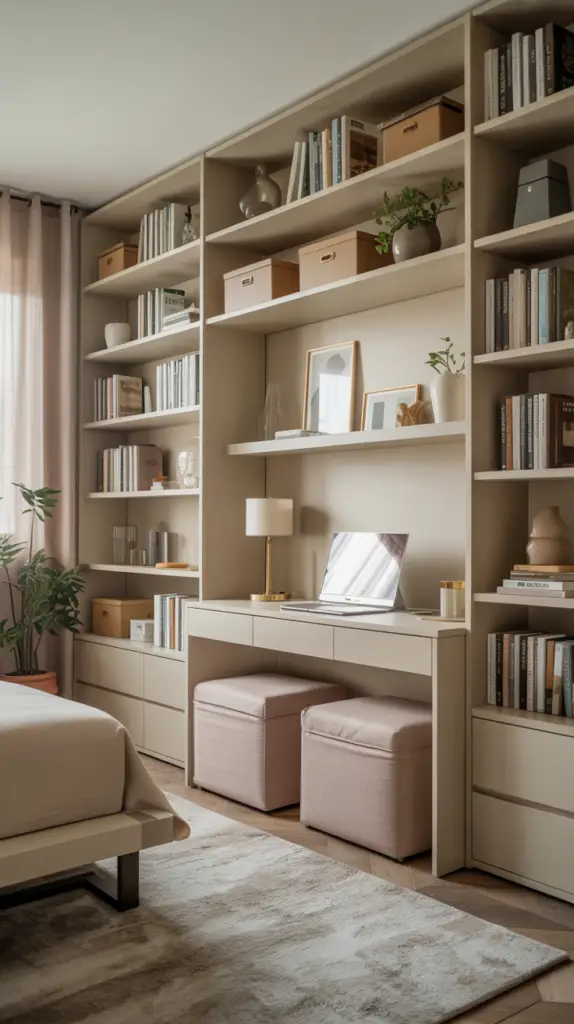
Storage is the backbone of every successful dual-purpose room. With limited square footage, organization becomes essential not only for maintaining a calming guest environment but also for ensuring your work tools remain easily accessible. One of the most effective strategies is to rely on vertical space—tall bookcases, floating shelves, and wall hooks help store items without crowding the floor.
Multi-compartment storage furniture, such as modular cubes or drawers hidden within ottomans, offers another layer of functionality. These pieces allow you to divide guest items from office supplies, making transitions seamless. If a closet is available, optimize it with stackable boxes, narrow rolling carts, or over-the-door organizers. These additions maximize capacity while keeping the room visually clean.
Maintaining a clutter-free appearance helps the room feel larger and more inviting. Store office supplies in stylish containers or coordinating bins to ensure your workspace blends harmoniously with the room’s décor. And when guests arrive, you can quickly tuck away anything work-related without effort, ensuring they feel welcomed rather than intruding into your workspace.
Storage Options Overview
| Storage Type | Ideal Use | Benefits |
| Vertical Shelving | Books, décor, office tools | Saves floor space |
| Under-Bed Storage | Guest linens or seasonal items | Hidden and efficient |
| Modular Cubes | Mixed-use items | Easily reconfigured |
| Closet Organizers | Extra supplies or guest essentials | Maximizes existing space |
Creating a Welcoming Atmosphere for Guests Without Compromising Workspace Efficiency
Crafting a room that feels both productive and inviting is an art. The guest room office should exude warmth and comfort while also supporting daily focus. Start by choosing a soothing color palette—soft greens, warm neutrals, muted blues, or earthy tones can create a calm backdrop for both work and relaxation. Layering textures through textiles such as throws, cushions, and rugs adds depth without overwhelming the space.
Lighting plays a key role in shaping ambiance. Desk lamps with adjustable brightness support productivity, while warm ambient lighting sets a welcoming tone for guests. Scent also enhances comfort—a subtle essential oil diffuser or linen spray can make the room feel cared for.
Thoughtful guest touches elevate the experience: a small tray with essentials, fresh towels, a spare blanket, or a bedside shelf for their belongings. These comforts ensure your guest feels well-considered without cluttering the workspace.
For your own productivity, ergonomic seating, proper monitor height, and cable management help keep your workflow smooth. The beauty of a dual-purpose room is its adaptability—you can maintain a professional environment during working hours while quickly transitioning the space into a restful retreat when guests arrive.
Atmosphere Enhancer Guide
| Element | Purpose | Why It Works |
| Color Palette | Sets mood | Promotes calm and visual harmony |
| Layered Lighting | Work + relaxation | Adapts to task and guest needs |
| Textures | Comfort and depth | Makes small spaces feel inviting |
| Guest Essentials | Hospitality | Shows care without clutter |
Space-Saving Tech and Productivity Tools for Small Guest Room Offices
Technology can greatly influence the efficiency and feel of your guest room office. Compact and wireless-forward tools reduce clutter while elevating your productivity. Start with lightweight, streamlined equipment such as Bluetooth keyboards, wireless mice, and slim monitors. Devices that can easily be stored—or even mounted—allow you to shift the space from work to hospitality in a matter of minutes.
Cable management is essential in tight spaces. Adhesive clips, under-desk trays, and braided cords help create a clean look and prevent tangles. A small charging station or docking hub keeps electronics organized and provides guests with easy power access for their devices.
Consider adding a multifunctional printer tucked inside a cabinet or shelving unit. While small homes may not need heavy office equipment, having compact versions available ensures you remain capable without overwhelming the space. Sound machines, smart bulbs, or compact air purifiers enhance comfort without adding bulk.
These small tech choices help support productivity and preserve tranquility. Guests will appreciate the neatness, and you’ll enjoy a workspace that feels efficient without visual noise.
Tech Essentials Table
| Tool/Tech Item | Benefit | Space-Saving Advantage |
| Slim Monitor | Enhances productivity | Mountable or easily stored |
| Wireless Keyboard/Mouse | Reduces cable clutter | Portable and compact |
| Desk Lamp w/ USB Ports | Lighting + charging | Consolidates functions |
| Cable Management Clips | Keeps wires tidy | Clean aesthetic |
| Compact Printer | Office functionality in small size | Fits hidden areas |
Decorating Tips That Blend Style With Function
Designing a guest room office gives you the opportunity to express your style in a way that feels cohesive and intentional. Begin by selecting a unifying design theme—modern minimalist, Scandinavian cozy, soft contemporary, or warm rustic can all work beautifully in small multifunctional spaces. A consistent theme prevents visual fragmentation, which is especially important in compact rooms.
Artwork can anchor the space, but choose pieces that complement both work and guest functions. Abstract art, calming landscapes, or botanical prints can elevate the room without overwhelming it. Keep frames simple and cohesive to maintain visual flow.
Plants are another valuable element; they offer life and freshness even in tight spaces. Small potted plants on shelves, a single statement plant in the corner, or trailing vines help soften the room’s edges. Additionally, mirrors can enhance natural light and give the illusion of a larger space.
Textiles are often the finishing touch. A plush rug under the guest bed zone, a soft throw on the daybed, or fabric storage bins can introduce color and texture. These elements help balance the room—professional enough for daily work, but cozy enough to welcome overnight guests.
Design Elements Breakdown
| Design Element | Purpose | Impact on Space |
| Artwork | Visual anchor | Adds personality without clutter |
| Plants | Freshness + warmth | Enhances airiness and calm |
| Textiles | Comfort + softness | Makes dual zones feel intentional |
| Mirrors | Light + depth | Makes room feel larger |
Conclusion
Designing a guest room office for an apartment or small home is all about finding harmony between comfort and functionality. When you combine purposeful furniture, thoughtful layout choices, smart storage, and a curated design approach, the result is a room that adapts gracefully to the needs of both everyday work and hospitality. The most successful dual-purpose spaces are those that feel balanced—inviting for guests yet fully supportive of your workflow. With the right strategies, this blend becomes not only achievable but deeply satisfying, enhancing both the comfort and productivity of your home.