
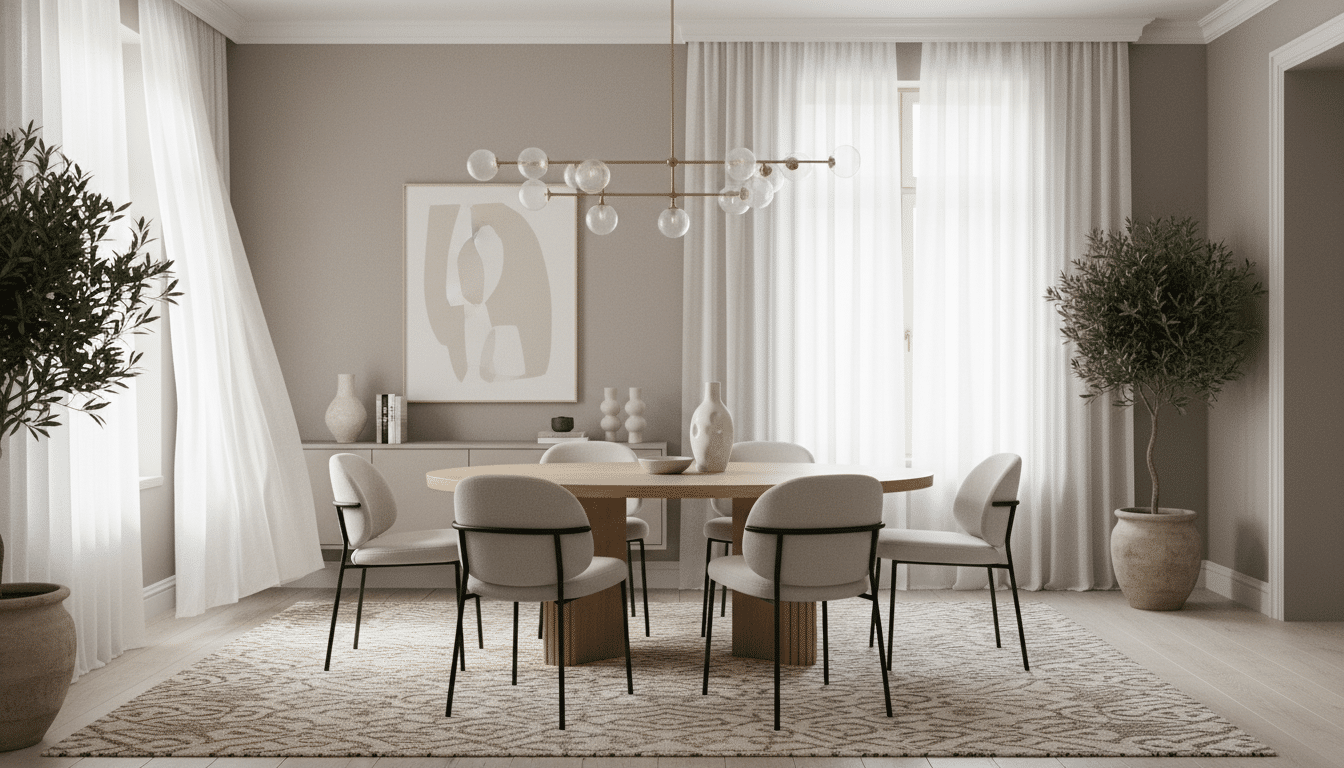
Improve Your Layout with Dining Room Curtain Ideas for Apartments: Stylish Solutions for Small Spaces
Table of Contents
Introduction
Have you ever felt like your dining area just doesn’t quite “flow” with the rest of your apartment? You’re not alone. In small apartments, every design decision matters, and even something as simple as curtains can dramatically affect how a space looks and feels. Surprisingly, interior designers often consider window treatments one of the most impactful—and most overlooked—elements in a room.
Dining room curtain ideas for apartments are more than just decorative touches. They shape natural light, define boundaries in open layouts, and even make ceilings appear higher or spaces feel larger. The right curtain choice can turn a cramped dining corner into a cozy, elegant focal point that enhances your entire home.
In this guide, you’ll discover how to improve your layout with dining room curtain ideas for apartments that are both functional and visually appealing. From selecting fabrics and colors to optimizing small spaces and layering textures, each section offers practical, stylish solutions tailored specifically for apartment living. Whether your goal is to brighten the room, add privacy, or create a cohesive aesthetic, these ideas will help you achieve a refined and comfortable dining space.
Choosing the Right Curtain Length to Transform Apartment Layouts
Curtain length plays a powerful role in how your dining room is perceived. In apartments where space is limited, visual tricks can make all the difference. Floor-length curtains, for example, create the illusion of taller ceilings and a more expansive room.
Short curtains may seem practical, but they often break the visual flow and make the space feel smaller. Instead, opt for curtains that either lightly touch the floor or puddle slightly for a more luxurious feel. Mounting curtain rods higher than the window frame can further enhance vertical space.
Another important consideration is how curtains interact with your furniture. In compact dining areas, avoid bulky fabrics that crowd the space. Lightweight, flowing materials allow for movement and openness.
| Curtain Length | Visual Effect | Best Use |
| Floor-length | Makes ceilings appear taller | Small apartments |
| Slight puddle | Adds elegance | Formal dining spaces |
| Below sill | Casual look | Minimalist settings |
| Above sill | Compact but limiting | Very tight spaces |
Light and Airy Fabrics That Open Up Small Dining Areas
Fabric choice is essential when selecting dining room curtain ideas for apartments. Heavy materials can overwhelm a small space, while light, breathable fabrics help create an open and inviting atmosphere.
Sheer curtains are particularly effective in apartments because they allow natural light to flow freely while still offering a degree of privacy. Linen and cotton blends are also excellent choices, as they provide structure without feeling too heavy. These materials soften the room while maintaining a clean, uncluttered look.
Layering can also enhance functionality. Combining sheer curtains with slightly thicker drapes allows you to control light levels throughout the day. During daylight hours, sheer panels keep the space bright, while heavier layers can be drawn in the evening for privacy.
| Fabric Type | Benefits | Ideal For |
| Sheer | Maximizes light | Small dining areas |
| Linen | Natural texture | Cozy aesthetics |
| Cotton blend | Balanced weight | Everyday use |
| Velvet | Rich look but heavy | Larger apartments |
Color Strategies That Improve Your Layout with Dining Room Curtain Ideas for Apartments
Color is one of the most powerful tools in interior design, especially in apartments where space is limited. Choosing the right curtain color can visually expand your dining area, define zones, and tie together different elements of your home.
Neutral tones such as white, beige, and soft gray are ideal for small dining spaces because they reflect light and create a sense of openness. These colors blend seamlessly with most décor styles, making the room feel cohesive rather than crowded.
If you want to add personality, consider muted tones like sage green, dusty blue, or warm terracotta. These shades introduce color without overwhelming the space. Bold colors can work too, but they should be used strategically—perhaps as an accent in an otherwise neutral room.
Another effective technique is matching your curtain color with your wall shade. This creates a seamless look that visually enlarges the space. Alternatively, using slightly darker curtains can frame the window and add depth.
| Color Choice | Effect on Space | Design Tip |
| White/neutral | Expands space | Best for small rooms |
| Soft pastels | Adds subtle color | Keeps light feel |
| Bold tones | Creates focal point | Use sparingly |
| Matching walls | Seamless look | Makes room feel bigger |
Space-Saving Curtain Styles Perfect for Apartment Dining Rooms
In apartments, maximizing every inch of space is essential. Traditional curtain setups may not always be the most practical option, especially in compact dining areas. Choosing space-saving curtain styles can significantly improve both functionality and layout.
One popular option is using rod-pocket or tab-top curtains, which are simple and lightweight. These styles reduce bulk and maintain a clean appearance. Another smart choice is using ceiling-mounted tracks, which eliminate the need for bulky rods and create a sleek, modern look.
For extremely tight spaces, consider using sliding panel curtains. These work similarly to room dividers and are perfect for open-plan apartments where the dining area blends into the living space. They allow you to define zones without adding permanent structures.
Roman shades are another excellent alternative. They provide the softness of curtains while taking up minimal space when raised. This makes them ideal for dining areas where space around the table is limited.
| Style | Space Efficiency | Best Feature |
| Rod-pocket | Moderate | Simple design |
| Ceiling track | High | Modern and sleek |
| Sliding panels | Very high | Space division |
| Roman shades | High | Compact and elegant |
Layering Curtains for Functionality and Style
Layering curtains is one of the most effective ways to improve your layout with dining room curtain ideas for apartments. It allows you to combine beauty and practicality while adapting your space to different lighting needs throughout the day.
Start with a base layer of sheer curtains. These provide softness and allow natural light to filter into the dining area, making the space feel larger and more inviting. Over this, add a secondary layer of thicker drapes. These can be drawn when you need privacy or want to create a more intimate atmosphere during evening meals.
Layering also adds visual depth. Instead of a flat look, your windows become a focal point with texture and dimension. This is especially useful in apartments where architectural features may be limited.
Another advantage of layering is flexibility. You can experiment with different combinations of colors and fabrics to match seasonal changes or evolving décor preferences.
| Layer Type | Function | Visual Impact |
| Sheer layer | Light diffusion | Airy feel |
| Thick drape | Privacy | Cozy atmosphere |
| Mixed textures | Depth | Stylish finish |
| Neutral combo | Versatility | Timeless look |
Using Curtains to Define Open-Concept Dining Spaces
Open-concept apartments are popular, but they can sometimes feel undefined or cluttered. Curtains offer a simple and flexible way to create visual boundaries without permanent walls.
By placing curtains strategically, you can separate your dining area from the living room or kitchen. This not only improves the layout but also adds a sense of structure to your home. For example, hanging curtains along a ceiling track can create a soft partition that can be opened or closed as needed.
This approach is particularly useful for small apartments where multifunctional spaces are common. Curtains allow you to transform the atmosphere instantly—open for a spacious feel during the day, closed for a more intimate dining experience in the evening.
Choosing lightweight fabrics ensures that the space doesn’t feel closed off. Instead, it maintains a sense of flow while still offering definition.
| Curtain Placement | Purpose | Result |
| Between rooms | Separation | Defined zones |
| Along walls | Framing | Structured layout |
| Near windows | Light control | Balanced space |
| Ceiling track | Flexibility | Adaptable design |
Styling Details That Elevate Apartment Dining Room Curtains
Small details can make a significant difference when implementing dining room curtain ideas for apartments. Hardware, tiebacks, and finishing touches all contribute to the overall look.
Curtain rods, for instance, should complement your interior style. Slim, minimal rods work well in modern apartments, while decorative rods add character to more traditional spaces. Tiebacks can also enhance both function and style, allowing you to control how curtains fall while adding a decorative element.
Consider incorporating subtle patterns or textures into your curtains. Even a simple stripe or woven detail can add depth without overwhelming the space. Accessories like curtain rings or clips can further refine the look.
Lighting also interacts with curtains in important ways. Positioning curtains to catch natural light enhances their texture and creates a warm, inviting glow throughout the dining area.
| Detail | Purpose | Design Effect |
| Curtain rods | Support + style | Completes look |
| Tiebacks | Functionality | Elegant draping |
| Patterns | Visual interest | Adds depth |
| Rings/clips | Structure | Polished finish |
Conclusion
Improving your layout with dining room curtain ideas for apartments is about more than aesthetics—it’s about creating a space that feels open, functional, and inviting. From choosing the right length and fabric to experimenting with color and layering, each decision plays a role in shaping your dining area.
Curtains have the unique ability to transform a room without requiring major renovations. They can brighten a space, add privacy, define zones, and introduce style—all while working within the limitations of apartment living.
By focusing on thoughtful design choices and practical solutions, you can elevate your dining area into a cohesive and comfortable environment. The result is a space that not only looks beautiful but also enhances the way you live and interact within your home.