
Kid’s Bathroom Ideas for Shared Spaces and Easy Storage: Smart Organization Solutions for Busy Families
Table of Contents
Introduction
If you’ve ever walked into a shared kids’ bathroom and felt instantly overwhelmed by clutter, you’re not alone. From mismatched toothbrushes to overflowing toy bins and towels that never seem to stay put, this space can quickly turn into one of the most chaotic areas in the home. When multiple children share a bathroom, the challenge isn’t just about space—it’s about creating a system that works for everyone.
A well-organized kids’ bathroom can make daily routines smoother, reduce stress, and even teach children valuable habits. The key is designing a space that balances functionality, accessibility, and a bit of fun. When everything has a place and is easy for kids to reach, they’re far more likely to keep things tidy.
In this guide, we’ll explore practical and creative kid’s bathroom ideas for shared spaces and easy storage. From clever storage solutions and personalized zones to smart layouts and daily organization habits, you’ll discover how to transform a cluttered bathroom into a calm, efficient, and kid-friendly environment.
Create Personalized Storage Zones for Each Child
One of the most effective kid’s bathroom ideas for shared spaces is assigning each child their own storage zone. When kids have a clearly defined space for their belongings, it reduces confusion, minimizes arguments, and encourages responsibility.
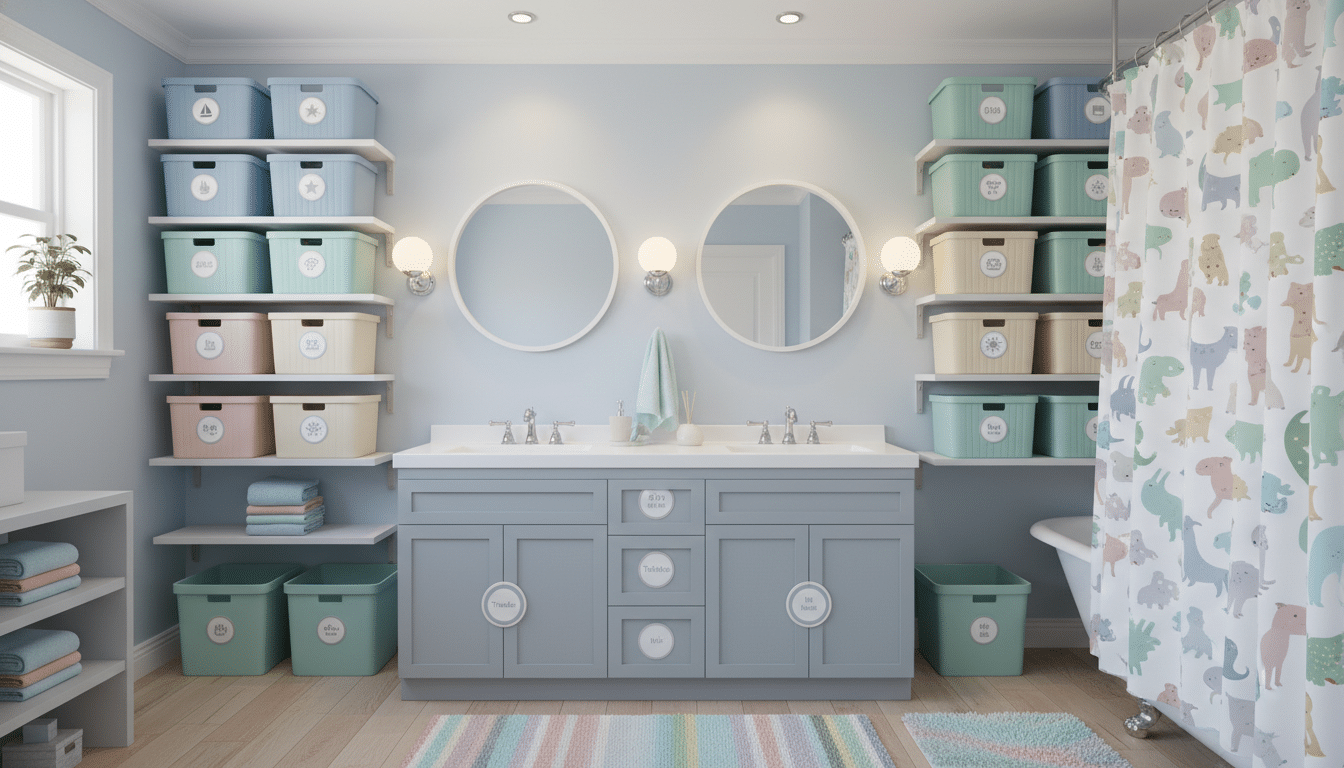
Start by dividing storage areas such as drawers, shelves, or baskets into individual sections. You can use color-coding, labels, or even fun themes to distinguish each child’s zone. For example, one child might have a blue bin while another uses a green one. This visual separation makes it easy for kids to recognize their items and put them back in the right place.
Personalized zones also help streamline morning and bedtime routines. Each child knows exactly where to find their toothbrush, hairbrush, and toiletries without searching through shared clutter. Over time, this builds independence and keeps the bathroom more organized overall.
Even in smaller bathrooms, this concept works well with compact solutions like hanging organizers or labeled containers. The goal is not to create more space, but to use the available space more efficiently.
| Storage Zone Idea | Best Use | Benefit |
| Color-coded bins | Toiletries | Easy identification |
| Labeled drawers | Personal items | Reduces mix-ups |
| Hanging organizers | Small spaces | Saves counter space |
| Individual baskets | Daily essentials | Encourages responsibility |
Use Vertical Storage to Maximize Small Bathrooms
When dealing with limited square footage, vertical storage becomes essential. Utilizing wall space is one of the smartest kid’s bathroom ideas for shared spaces and easy storage because it frees up counters and floors while keeping everything accessible.
Install floating shelves above sinks or toilets to store towels, baskets, or decorative containers. Wall-mounted hooks are perfect for hanging towels, robes, or even small baskets. Over-the-door organizers can hold toiletries, hair accessories, or bath toys without taking up additional space.
Another effective solution is stacking storage units. These allow you to build upward instead of outward, making the most of every inch. For shared bathrooms, placing frequently used items at lower levels ensures children can reach them easily.
Vertical storage also improves visibility. When items are displayed neatly rather than stacked in drawers, kids can quickly find what they need and return it after use.
| Vertical Storage Option | Ideal For | Advantage |
| Floating shelves | Towels & decor | Saves counter space |
| Wall hooks | Towels & robes | Easy access |
| Over-door organizers | Toiletries | Hidden storage |
| Stackable units | Bins & baskets | Maximizes height |
Choose Multi-Functional Storage Solutions
In a shared kids’ bathroom, every item should work harder. Multi-functional storage is key to maintaining order without overcrowding the space. Instead of adding more furniture or containers, focus on solutions that serve multiple purposes.
For example, a bench with hidden storage can hold towels or bath toys while also providing seating. Mirror cabinets offer storage for toiletries while keeping surfaces clear. Even simple items like baskets can double as decorative elements and storage units.
Another smart option is modular storage systems. These can be adjusted as your children grow, allowing you to reconfigure the layout without replacing everything. This flexibility ensures your bathroom remains functional over time.
Multi-functional storage not only saves space but also simplifies organization. With fewer items to manage, it becomes easier to maintain a clean and clutter-free environment.
| Storage Type | Dual Function | Benefit |
| Storage bench | Seating + storage | Saves space |
| Mirror cabinet | Reflection + storage | Reduces clutter |
| Decorative baskets | Style + storage | Aesthetic appeal |
| Modular shelves | Adjustable storage | Long-term use |
Keep Everyday Essentials Within Easy Reach
Accessibility plays a major role in maintaining an organized shared bathroom. If children struggle to reach their items, they’re less likely to put them away properly. Designing the space with their height and needs in mind can make a significant difference.
Place frequently used items like toothbrushes, soap, and towels at lower levels. Use step stools to help younger children reach sinks and shelves safely. Drawer organizers can keep smaller items separated and easy to find.
Another effective approach is creating a “daily essentials station.” This is a designated area where each child keeps items they use every day. By centralizing these essentials, you reduce clutter and streamline routines.
Accessibility doesn’t just improve organization—it also encourages independence. When children can manage their own items, they develop habits that keep the bathroom tidy over time.
| Item Placement | Purpose | Result |
| Low shelves | Easy access | Encourages use |
| Step stools | Reach higher areas | Promotes independence |
| Drawer organizers | Small items | Reduces clutter |
| Essentials station | Daily use items | Faster routines |
Make Storage Fun and Kid-Friendly
Creating an engaging and visually appealing bathroom can motivate children to stay organized. When storage solutions are fun, kids are more likely to use them consistently.
Incorporate bright colors, playful patterns, or themed containers that match your children’s interests. For example, animal-shaped baskets or colorful hooks can make tidying up feel like part of playtime rather than a chore.
You can also use interactive elements like chalkboard labels or customizable bins. These allow kids to personalize their space, giving them a sense of ownership. When children feel connected to their environment, they’re more invested in keeping it clean.
The goal is to blend functionality with creativity. A kid-friendly design doesn’t have to sacrifice organization—it enhances it.
| Fun Storage Idea | Purpose | Benefit |
| Colorful bins | Toy storage | Engaging design |
| Themed hooks | Hanging items | Encourages use |
| Chalkboard labels | Customization | Interactive |
| Patterned baskets | Organization | Adds personality |
Maintain Simple Daily Organization Habits
Even the best-designed bathroom needs consistent habits to stay organized. Establishing simple daily routines can prevent clutter from building up and keep the space functional for everyone.
Encourage children to put items back after use. This might take time to develop, but consistency is key. A quick daily reset—such as tidying up before bedtime—can make a big difference.
Weekly organization checks are also helpful. Use this time to clean surfaces, restock supplies, and remove items that are no longer needed. This prevents overcrowding and keeps the system running smoothly.
Teaching kids these habits not only maintains the bathroom but also builds lifelong organizational skills.
| Habit | Frequency | Benefit |
| Put items back | Daily | Maintains order |
| Nightly reset | Daily | Prevents mess |
| Weekly clean | Weekly | Keeps space fresh |
| Declutter | Monthly | Saves space |
Optimize Layout for Shared Use
The layout of a shared kids’ bathroom can significantly impact how well it functions. Even small adjustments can improve flow, reduce congestion, and make the space more efficient for multiple users.
Start by analyzing how the space is used throughout the day. Morning routines are often the busiest, so ensuring that key areas like the sink and storage zones are easily accessible can prevent bottlenecks. If possible, separate functions—such as placing storage away from the sink—so multiple children can use the space at once.
Another important factor is spacing. Avoid overcrowding the bathroom with too many storage units or decorative items. Instead, focus on creating clear pathways and open areas that allow for easy movement.
Consider using compact furniture or wall-mounted fixtures to free up floor space. Even small changes, like repositioning a shelf or adding a narrow cabinet, can improve functionality.
Lighting also plays a role. A well-lit bathroom feels more spacious and makes it easier for kids to find what they need quickly.
| Layout Element | Improvement | Result |
| Separate zones | Reduces overlap | Smoother flow |
| Wall-mounted fixtures | Saves space | More room |
| Open pathways | Easy movement | Less congestion |
| Good lighting | Better visibility | Faster routines |
Conclusion
Designing a shared kids’ bathroom that is both functional and organized doesn’t require a complete renovation—it simply requires thoughtful planning and smart solutions. By incorporating personalized storage zones, vertical organization, and multi-functional designs, you can maximize even the smallest space.
Accessibility and fun design elements play a crucial role in encouraging children to maintain order, while consistent daily habits ensure the system stays effective over time. Small adjustments in layout and storage placement can make a big difference in how smoothly the space operates.
Ultimately, the best kid’s bathroom ideas for shared spaces and easy storage focus on simplicity, practicality, and adaptability. When everything has a place and is easy to use, the bathroom becomes less of a source of stress and more of a space that supports your family’s daily routine.