
Small Entryway Ideas That Feel Stylish, Functional, and Effortlessly Organized
Table of Contents
Introduction
Small entryways often get overlooked, yet they’re the first impression of your home. According to recent interior design surveys, nearly 60% of homeowners say their entryway feels cluttered, cramped, or underutilized—proof that this tiny area holds more power than most people realize. Whether your entryway opens directly into a living room, connects to a narrow hallway, or is barely more than a door swing, it sets the tone for how you experience your home every day. And when designed thoughtfully, even the smallest spaces can become stylish, functional, and perfectly tailored to your lifestyle.
This guide explores practical and aesthetic small entryway ideas that transform limited square footage into an organized, beautiful, and welcoming area. From clever storage solutions and minimalist furniture to lighting choices, color palettes, and décor techniques, you’ll discover how to make the most out of your entryway without overcrowding it. Each section provides detailed, actionable tips meant to help you maximize efficiency while maintaining style and personality.
By the end of this post, you’ll have a complete toolkit for designing a small entryway that feels intentional, polished, and effortlessly functional—no matter how little space you’re working with.
Designing a Layout That Maximizes Small Entryway Flow
The foundation of an effective small entryway is a layout that supports movement and minimizes clutter. When space is tight, understanding how people naturally enter, exit, and navigate your home helps you create a design that feels open rather than cramped. Begin by identifying the key functions of your entryway: where you set down belongings, hang outerwear, or store everyday items. Once you understand your habits, you can designate zones for each purpose without overcrowding the area.
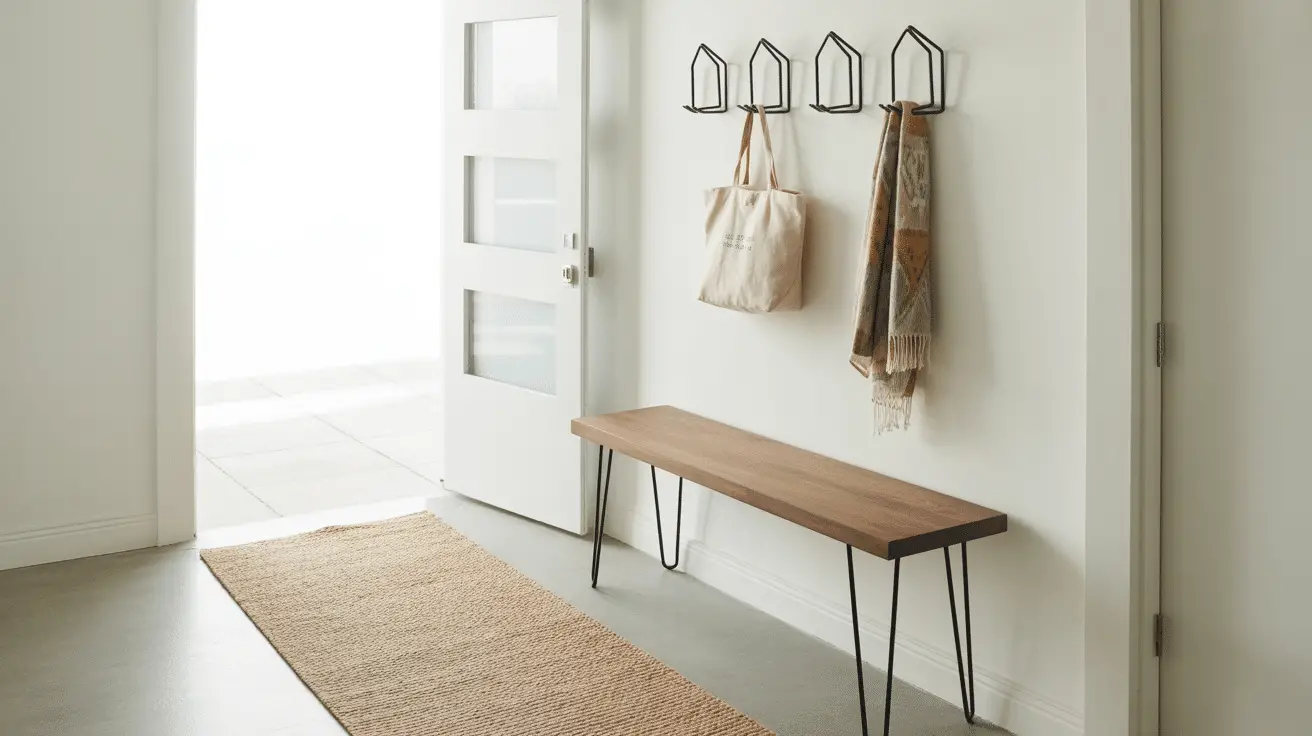
A narrow, linear entryway benefits from wall-mounted solutions—hooks, slim benches, or floating shelves—to keep the floor clear. If your entry opens directly into a room, positioning a rug or small console visually defines the area without adding physical barriers. Corners are especially valuable; placing a compact corner shelf, umbrella holder, or basket here helps maintain flow while offering discreet storage. Traffic patterns should always remain unobstructed, with at least a small pathway available for comfortable entry.
Furniture scale also matters. A compact bench, half-depth console, or wall-mounted ledge makes a big difference in creating visual openness. Carefully chosen pieces anchor the space without consuming it, turning your small entryway into a strategic, intuitive transition area.
Entryway Flow Table
| Layout Feature | Best Use | Benefits |
| Wall-Mounted Hooks | Narrow entrances | Keeps floor clear |
| Slim Console Table | Open-entry formats | Adds function without bulk |
| Corner Storage | Tight corners | Maximizes unused space |
| Defined Rug Area | Rooms without walls | Creates visual boundaries |
Storage Solutions That Keep Your Entryway Stylish and Clutter-Free
Storage is the backbone of any small entryway, and finding solutions that look stylish while reducing clutter transforms even the tiniest spaces. Start with vertical storage. Wall hooks, floating shelves, and mounted cubbies keep belongings accessible without occupying valuable floor space. Choose designs that complement your décor style—matte black hooks for modern homes, brushed brass for a sophisticated look, or natural wood for a warm, organic feel.
Closed storage is essential for maintaining a tidy appearance. Opt for baskets, bins, and drawer-style consoles to hide items like gloves, scarves, keys, or small accessories. A narrow shoe cabinet or bench with built-in compartments gives you a sleek way to organize footwear, preventing piles of shoes from crowding the entryway. If you lack space for larger furniture, use stackable baskets along the wall or under a floating shelf.
Consider how often you use each item, rotational storage allows seasonal gear to move out of sight and into less trafficked areas of the home. The goal is to make your entryway visually calm while ensuring everything you need is easy to grab when heading out the door.
Entryway Storage Table
| Storage Type | Best for Small Spaces | Visual Benefit |
| Floating Shelves | Keys, décor, mail | Minimal footprint |
| Shoe Cabinets | Footwear organization | Clean, streamlined look |
| Baskets & Bins | Small accessories | Softens space |
| Wall Hooks | Coats, bags | Keeps surfaces clear |
Choosing Furniture That Balances Style and Function
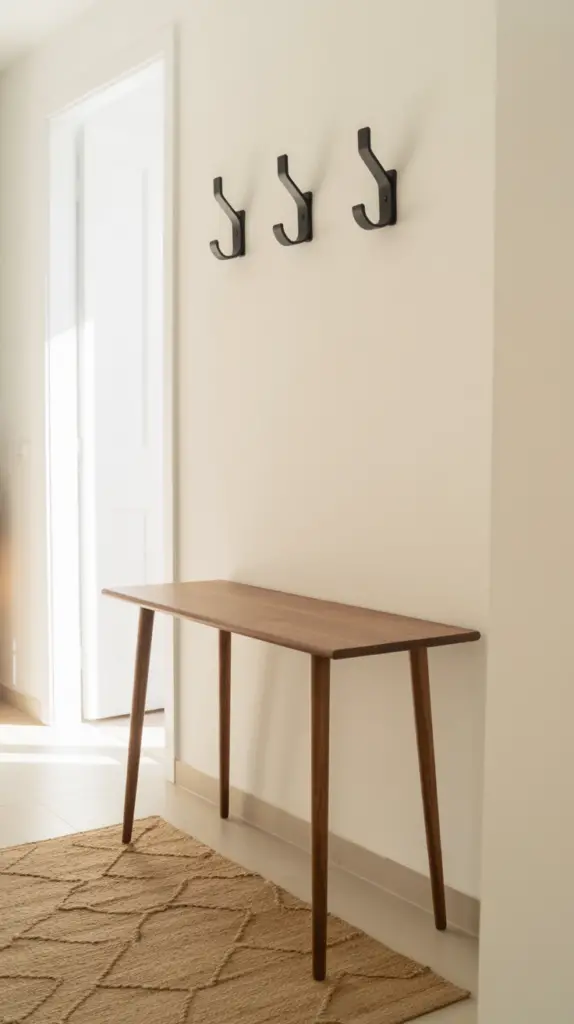
Furniture in a small entryway needs to work harder than furniture in larger spaces. Every piece should either offer storage, serve a purpose, or visually anchor the area without overwhelming it. Start with multi-functional furniture: a storage bench provides seating, shoe storage, and a stylish focal point in one compact solution. Slim console tables, especially those with drawers or shelves, also add both beauty and practicality.
Proportion is key in small spaces. Choose furniture with slim legs or open bases to maintain visual lightness, even if the surface area is minimal. Rounded edges can soften narrow or angular entryways and reduce the risk of bumping into corners. For extremely tight entryways, a floating console or wall-mounted shelf acts as a catch-all without adding floor bulk.
Material selection shapes your entryway’s tone. Natural wood brings warmth, metal offers modern structure, and acrylic creates a barely-there effect ideal for ultra-small areas. Pair these materials intentionally to create balance rather than visual clutter.
Furniture Selection Table
| Furniture Type | Function | Best for Small Entryways |
| Storage Bench | Seating + storage | Narrow but long spaces |
| Slim Console Table | Quick-drop zone | Open layouts |
| Wall-Mounted Shelf | Minimalist landing spot | Extremely small areas |
| Rounded Side Table | Softens edges | Corner placements |
Using Lighting to Make a Small Entryway Feel Bright and Open
Lighting has the power to completely reshape a small entryway, making it feel larger, brighter, and more welcoming. Because many entryways lack windows, artificial lighting must work smarter—layering brightness and reducing shadows to create openness. Overhead lighting, such as flush mounts or compact pendants, anchors the space with practicality. Choose fixtures with clean lines and diffused bulbs to prevent harsh glares in narrow areas.
Accent lighting enhances depth and adds an intentional design element. Wall sconces or picture lights can highlight artwork or architectural details, making the space feel curated rather than utilitarian. Table lamps or LED strips beneath floating consoles bring a subtle glow that emphasizes warmth and dimension.
Mirrors pair beautifully with lighting, doubling brightness and expanding visual space. Placing a mirror across from a light source amplifies illumination naturally and gives the entryway a sophisticated touch. Choose frames that complement your décor and opt for shapes that reinforce the room’s style—oval for softness, rectangular for structure, or arched for elegance.
Lighting Enhancement Table
| Lighting Type | Best Placement | Design Benefit |
| Flush Mount | Ceiling | Brightens without crowding |
| Wall Sconces | Along narrow walls | Adds depth and symmetry |
| Table Lamp | Console surface | Provides warm, soft glow |
| LED Strips | Under shelves | Creates ambient modern effect |
Styling Small Entryways with Thoughtful Decor
Décor plays a transformative role in defining a small entryway’s personality. With limited space, your décor choices must be purposeful, creating visual interest without clutter. Artwork adds character instantly. A single large piece feels bold and streamlined, while a small gallery of minimalist prints adds charm without overwhelming the wall. Choose colors that complement your broader home style—neutrals for calm, muted blues or greens for subtle interest, or warm metallics for elegance.
Decorative trays on console tables help organize small items like keys or mail while making the space feel polished. Vases with greenery or dried florals introduce texture and life, even in tight corners. Wall décor—such as small shelves, peg rails, or sculptural hooks—adds functionality disguised as art.
Rugs help define the space while adding warmth underfoot. A narrow runner or textured doormat sets the tone for the home and visually anchors the floor. Choose durable materials that hold up to frequent use.
Decor Styling Table
| Decor Item | Purpose | Visual Impact |
| Large Artwork | Focal point | Clean, stylish look |
| Decorative Tray | Organizing essentials | Adds polish |
| Vases with Greenery | Softens hard edges | Fresh and lively |
| Narrow Runner Rug | Grounding the space | Adds depth |
Making Use of Vertical Space in Small Entryways
Vertical space is your greatest ally in a small entryway. Because floor space is limited, your walls can do much of the heavy lifting. Hooks, shelves, tall mirrors, vertical artwork, and mounted storage maximize functionality without occupying square footage.
Start by installing a vertical row of hooks for coats, bags, and hats. This instantly expands storage capacity while keeping everything accessible. Above the hooks, add floating shelves for decorative items or lightweight storage—using the wall height creates efficient layers without clutter. Tall mirrors visually stretch the space, reflecting light upward and adding sophistication.
Lean into vertical décor by selecting artwork with portrait orientation or arranging multiple smaller pieces in a vertical cluster. These techniques draw the eye upward, making tight entryways feel taller and more open. Choosing slim, streamlined pieces ensures the walls feel functional but not visually crowded.
Vertical Space Maximization Table
| Vertical Feature | Best Use | Small Entryway Benefit |
| Hooks in Rows | Outerwear storage | Clears floor space |
| Floating Shelves | Décor + small items | Adds layered organization |
| Tall Mirror | Height expansion | Brightens and enlarges space |
| Vertical Art | Styling accent | Makes room feel taller |
Creating a Cohesive Style That Flows into the Rest of the Home
A small entryway should feel connected to the rest of your living space, especially since it acts as the visual gateway into your home. The best way to achieve this connection is through cohesive styling—matching color palettes, pairing complementary materials, and using décor choices that echo the broader aesthetic.
Start with color. If your living room uses neutrals and warm wood tones, bring those elements into the entryway through a rug, console, or wall décor. This continuity makes the transition from entryway to home seamless. Materials like metal, wood, rattan, or glass should also appear consistently across spaces in subtle ways.
Scent can also play a role in cohesion. A candle or diffuser in the entryway sets the mood the moment you walk in, creating a sensory connection to the home’s interior style.
Cohesive Style Table
| Style Element | How to Apply | Homewide Benefit |
| Matching Colors | Rugs, décor accents | Creates visual flow |
| Similar Materials | Wood, metal, glass | Builds consistency |
| Coordinated Textures | Fabrics + finishes | Adds depth and harmony |
| Scent Choices | Diffusers, candles | Immediate ambiance |
Conclusion
A small entryway may be compact, but its potential for style and functionality is immense. With thoughtful layouts, smart storage, intentional furniture choices, and well-curated décor, even the tiniest spaces can feel open, inviting, and beautifully cohesive. Lighting, vertical design, and harmonious styling further enhance the entryway’s impact, ensuring it reflects both practicality and personality. By integrating these ideas, your small entryway becomes more than just a passageway—it becomes a meaningful introduction to your home.