
Small Light Blue Living Room Ideas That Maximize Space and Style
Table of Contents
Introduction
Small living rooms present a unique challenge: how do you make a compact space feel open, airy, and stylish without sacrificing comfort? Color plays one of the most crucial roles in the answer, and light blue has quickly become a favorite among interior designers for its ability to brighten rooms while creating a sense of calm. Studies in color psychology show that soft blue hues can lower stress and visually expand enclosed areas, making them perfect for homes where square footage is limited.
Small light blue living room ideas go far beyond simply painting the walls. This color acts as a foundation for thoughtful furniture choices, cohesive décor, smart storage, and layout decisions that work together to maximize space. Whether you’re decorating an apartment, a cozy cottage room, or a compact family living space, light blue provides the versatility needed to design a room that feels both fresh and functional.
In this guide, you’ll find inspiration for creating visual depth, enhancing natural light, choosing the right furniture scale, layering textures, and integrating complementary colors that elevate your room’s style. Each section breaks down practical concepts and creative insights to help transform your small living room into a serene, spacious-feeling retreat—all anchored by the charm and softness of light blue.
Using Light Blue Walls to Visually Expand a Small Living Room
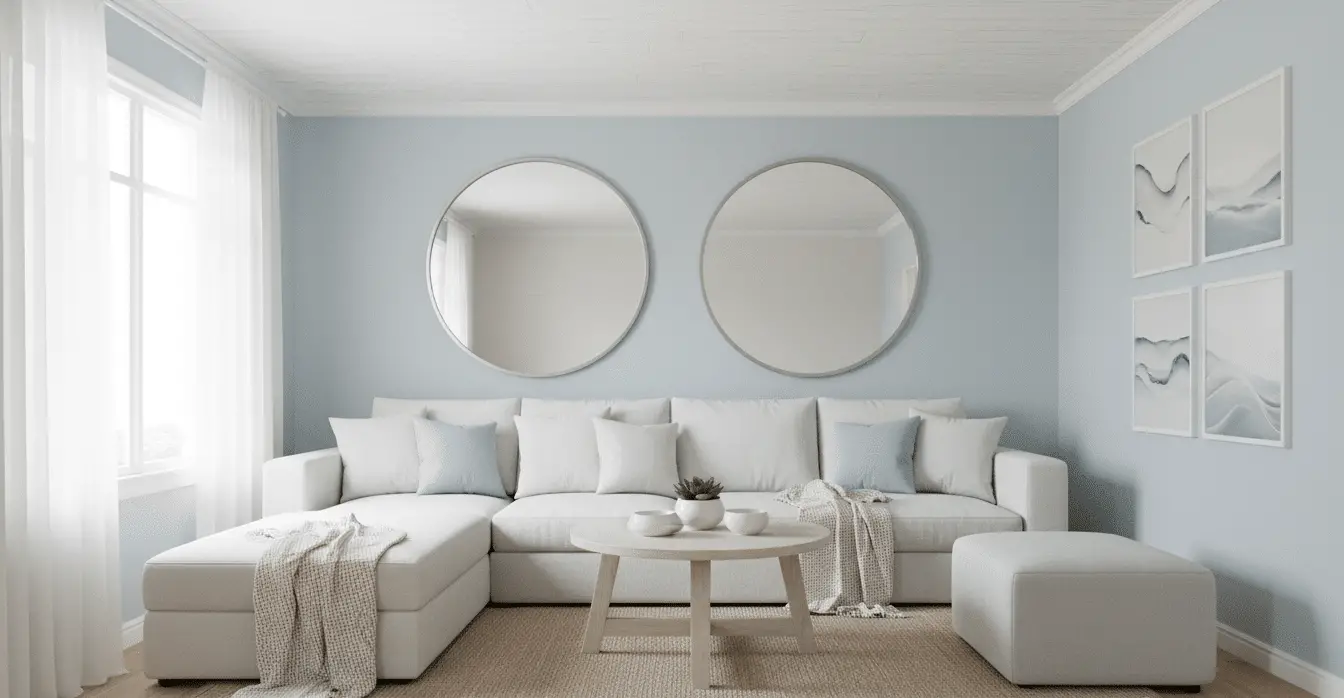
Light blue walls are one of the most effective ways to instantly open up a compact living space. This color reflects natural and artificial light beautifully, creating a soothing glow that makes walls feel like they’re receding rather than enclosing the room. Soft blue tones such as powder blue, misty aqua, or cool sky blue work especially well in small rooms because they sit in the same visual family as the horizon—symbolizing openness and depth.
To maximize this effect, pair light blue walls with white or off-white ceilings to create vertical lift. Matte or eggshell finishes enhance softness, allowing the color to diffuse gently across the room. If your living room lacks sunlight, choose a warmer light blue with subtle grey undertones to maintain comfort without feeling cold.
Integrating light blue walls with neutral décor helps maintain an airy aesthetic. Consider warm beige, crisp white, or soft grey furniture to balance the cool tones. Large mirrors, strategically placed opposite windows or lamps, enhance spaciousness by reflecting light blue hues throughout the room.
Complementary accents like silver frames, glass coffee tables, and minimalistic floor lamps work effortlessly in this color scheme, allowing the room to feel uncluttered and serene.
Table: Best Light Blue Shades for Small Living Rooms
| Shade Name | Undertone | Best For | Effect |
| Powder Blue | Cool | Very small rooms | Maximizes brightness |
| Soft Aqua | Warm | Low-light rooms | Adds warmth without heaviness |
| Grey-Blue | Neutral | Modern spaces | Creates calm sophistication |
| Sky Blue | Fresh | Rooms with natural light | Enhances tranquility |
Choosing Space-Saving Furniture in a Light Blue Color Scheme
Furnishing a small living room requires a careful balance between comfort, scale, and visual flow. When working with a light blue color palette, the right furniture choices enhance spaciousness without overpowering the room’s delicate atmosphere. Opting for space-saving pieces—such as sleek loveseats, armless chairs, or nesting tables—keeps the layout open and functional.
Start with a sofa that fits the proportions of your room. Compact sectionals or two-seater sofas in soft neutrals like ivory, oatmeal, or grey pair beautifully with light blue walls while ensuring the space feels balanced. Avoid bulky furniture with oversized arms or deep seating, as these make the room appear smaller. Choosing raised-leg furniture exposes more floor area, which subtly expands the room visually.
Acrylic or glass coffee tables are excellent additions because they take up functional space without adding visual weight. Storage ottomans serve dual purposes—seating and organization—allowing clutter to remain out of sight. Floating shelves also work well to showcase décor without crowding floor space.
To maintain coherence with the light blue theme, incorporate furniture with natural finishes like light oak or whitewashed wood. These tones blend easily with cool blue hues, creating a breezy, harmonious look. Metal finishes in brushed nickel or chrome add modern appeal without overwhelming the palette.
The key is to create a layout that allows easy movement. Avoid placing too many items near pathways or doorways. Instead, center the room around a single focal point—whether a window, TV wall, or artwork—to ensure the design feels thoughtfully curated rather than congested.
Table: Space-Saving Furniture for Small Light Blue Living Rooms
| Furniture Type | Benefit | How It Supports Space |
| Loveseats | Compact seating | Fits small layouts without bulk |
| Floating Shelves | Vertical storage | Frees up valuable floor space |
| Glass Tables | Minimal visual weight | Keeps room open and airy |
| Storage Ottomans | Dual-purpose | Reduces clutter, adds seating |
| Armless Chairs | Low profile | Enhances movement flow |
Layering Textures to Add Depth and Warmth
Light blue’s cool and serene nature can be beautifully enhanced through layered textures that bring warmth and tactile richness. Textures prevent the room from feeling flat or overly minimal, especially in smaller spaces where simplicity is key but softness is essential. A combination of woven fabrics, natural fibers, and cozy textiles helps balance the coolness of the color palette.
Area rugs are one of the best starting points. A cream or sand-tone rug with subtle patterns visually defines the seating area and provides grounding. Throw blankets in chunky knits or soft cotton add comfort to sofas and chairs. Pair pillows in varying fabrics—velvet, linen, and cotton—to create dimension without overwhelming the eye.
For added warmth, incorporate wood textures. Light oak coffee tables, wicker baskets, or bamboo accents balance blue tones while maintaining an organic feel. Metallic finishes like brushed brass or gold work well with warmer blues, adding sophistication and a touch of elegance.
Layering textures also supports acoustics in smaller spaces, reducing echo and creating a cozier atmosphere. The key is to balance contrasting textures without introducing excessive patterns.
Texture Layering Breakdown
| Texture Type | Ideal Use | Effect on Space |
| Chunky Knit | Throws | Adds softness and warmth |
| Woven Fibers | Rugs, baskets | Enhances natural elements |
| Velvet | Pillows | Introduces luxury and depth |
| Wood | Furniture | Balances cool light blue tones |
Incorporating White and Neutral Accents for Brightness
Pairing light blue with white and neutral colors is one of the most effective ways to maximize brightness in a small living room. White trim, light-toned curtains, and pale furniture amplify natural light and create clean visual lines that help the room feel crisp and airy.
Neutral accents prevent the blue from overwhelming the space while offering a timeless aesthetic. Beige, sand, taupe, and soft grey complement blue beautifully, adding warmth and sophistication. Curtains in off-white linen bring flow, while light wood frames and neutral throw pillows tie the palette together with ease.
Neutral Pairing Table
| Neutral Shade | Pairing Effect | Ideal Use |
| White | Brightens space | Curtains, trim |
| Taupe | Adds subtle warmth | Rugs, pillows |
| Beige | Softens cool tones | Sofas, throws |
| Light Grey | Adds structure | Accent furniture |
Smart Lighting Techniques for Enhancing Space
Lighting plays a crucial role in how well a small light blue living room performs visually. Soft blue walls can appear flat without proper illumination, but when paired with smart lighting decisions, the space glows beautifully.
Use layered lighting—ambient, task, and accent—to create depth. Wall sconces free up floor space, while pendant lights draw the eye upward, making ceilings feel higher. Warm LED bulbs contrast cool blue tones gently, creating a relaxing atmosphere without harsh brightness.
Lighting Strategy Table
| Lighting Type | Purpose | Best Placement |
| Ambient | Overall glow | Ceiling fixtures |
| Task | Focused light | Reading nooks |
| Accent | Highlights décor | Wall art, shelves |
Designing with Mirrors and Reflective Surfaces
Mirrors and reflective surfaces are essential tools for maximizing space in a small living room. When light blue walls reflect in mirrors, they visually double the perceived width of the room. Large wall mirrors or mirrored furniture pieces make the space feel expansive without adding clutter.
Mirror Placement Ideas
| Mirror Type | Best Placement | Effect |
| Oversized Mirror | Opposite window | Reflects natural light |
| Round Mirror | Above console | Softens room lines |
| Mirrored Furniture | Side tables | Adds subtle shine |
Creating a Cohesive décor Palette with Blue as the Anchor
Using light blue as the anchor for a cohesive décor palette makes styling your small living room simple and intentional. Anchor pieces—such as art, throw pillows, vases, or area rugs—can carry varying blue tones that complement the walls without clashing.
Decor Palette Guide
| Blue Shade | Complement | Décor Example |
| Ice Blue | White | Abstract art |
| Aquamarine | Beige | Textured pillows |
| Dusty Blue | Wood | Lamps, frames |
Conclusion
A small living room can feel stylish, spacious, and incredibly inviting when designed with thoughtful intention and the soothing charm of light blue. This versatile color brings calm, brightness, and visual openness, making it a perfect foundation for smart layouts, layered textures, neutral accents, and space-saving furniture. By combining strategic lighting, reflective surfaces, and cohesive décor choices, you can transform even the tiniest living room into a serene retreat that feels both elegant and functional. Light blue not only broadens the visual space—it elevates the entire atmosphere, proving that small rooms can carry big style when designed with care.