
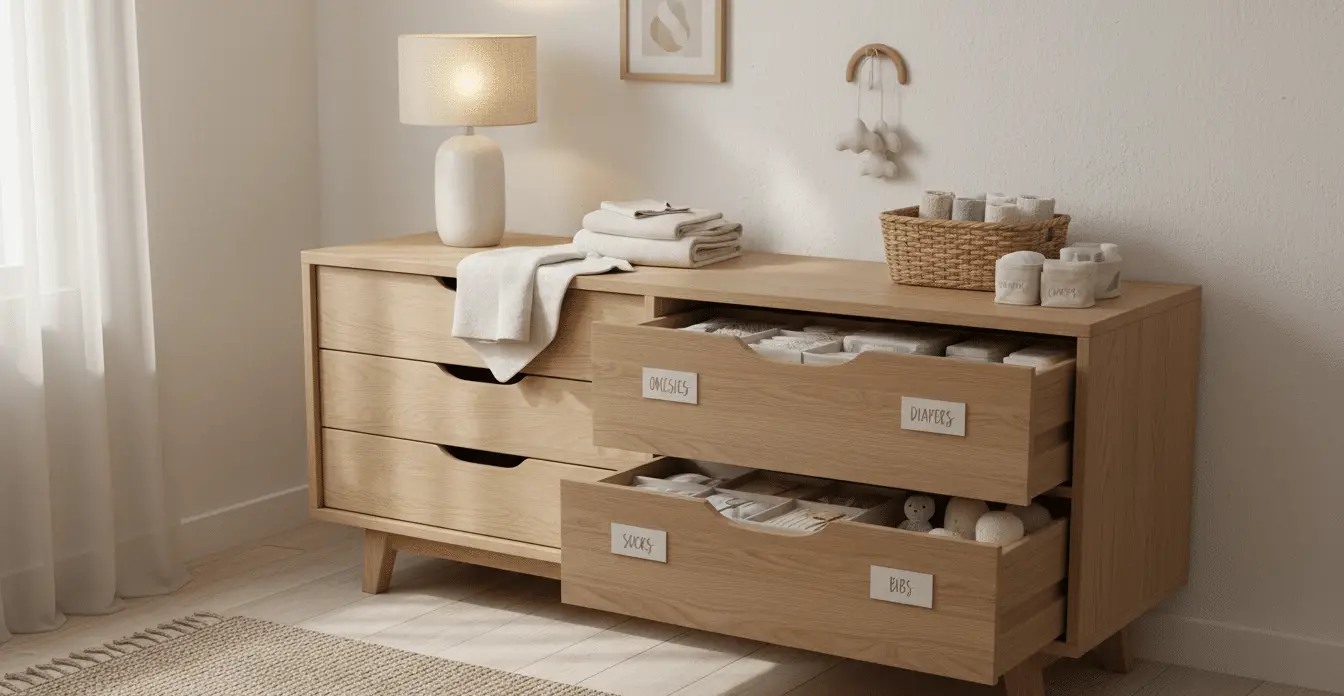
Ultimate Nursery Dresser Organization Guide for New Parents: Smart Storage Solutions for a Stress-Free Routine
Table of Contents
Introduction
Preparing a nursery is one of the most exciting milestones for expecting parents, but it can also be one of the most overwhelming. According to recent home organization surveys, nearly 70% of new parents say the dresser becomes the most chaotic part of the nursery within the first three months. Between tiny clothes, diapering accessories, feeding supplies, and keepsakes, it’s easy for clutter to accumulate fast. Yet an organized dresser has a surprisingly powerful impact—it can streamline daily routines, reduce stress, and create a calmer environment for both parent and baby.
Nursery dresser organization matters because it directly influences how smoothly everyday tasks run. Late-night diaper changes, quick outfit swaps after spills, or locating pacifiers in a moment of urgency all depend on a system that’s logical, accessible, and sustainable. A thoughtful dresser setup helps new parents save time, avoid frustration, and maintain a clean, soothing nursery environment.
This guide breaks down everything you need to create the ultimate nursery dresser organization system. You’ll learn how to categorize baby essentials, choose the right storage tools, arrange drawers, rotate clothing sizes, and maintain order as your baby grows. Whether you’re preparing before birth or reorganizing postpartum, these insights will help you build a dresser system that supports your needs from day one.
Creating a Logical Nursery Dresser Layout That Works for New Parents
One of the most important steps in nursery dresser organization is establishing a layout that aligns with daily routines. New parents need quick access to diapering essentials, clean clothing, burp cloths, and swaddles—all without rummaging. A clear, intuitive layout transforms the dresser into a well-flowing system that saves time and reduces stress.
The top drawers should contain the items you reach for constantly. This often includes diapers, wipes, diaper cream, lotions, and onesies. Keeping these items at waist level ensures easy access during diaper changes and late-night care. Middle drawers work well for sleepers, pajamas, leggings, socks, and bibs—items used frequently but not urgently. Bottom drawers are ideal for bulkier or less frequently used items such as blankets, extra towels, keepsakes, and out-of-season clothes.
Organizing from most-used to least-used maximizes efficiency. This structure also empowers other caregivers, like grandparents or babysitters, to find what they need without confusion. The goal is clarity: every drawer has a purpose, and everything inside it has a defined home.
Nursery Dresser Layout Table
| Drawer Level | Best Items to Store | Reason |
| Top Drawers | Diapers, wipes, creams, onesies | High-use essentials at easy reach |
| Middle Drawers | Pajamas, socks, bibs, everyday outfits | Used often but not urgently |
| Bottom Drawers | Blankets, towels, backup supplies | Bulkier or less-used items |
Choosing the Right Storage Tools for Effective Nursery Dresser Organization
Storage tools are the backbone of any well-organized nursery dresser. Without dividers, bins, and trays, even the most well-intentioned organization system will gradually become a jumble of small, mismatched baby items. New parents benefit from tools that help create structure and maintain it with little effort.
Drawer dividers are essential, especially for organizing tiny clothing items that can quickly shift or become chaotic. Adjustable bamboo or plastic dividers allow personalization within each drawer. Fabric bins and small organizers are perfect for separating onesies, socks, bibs, and washcloths. Labels—whether on the bins themselves or inside drawers—provide clarity and ensure that anyone accessing the dresser understands the system.
Clear containers help parents see exactly what supplies are running low. They’re ideal for storing backup wipes, lotions, pacifiers, and grooming tools. Over-the-dresser caddies or changing table attachments can also extend valuable space, keeping diapering accessories within reach.
The most successful organization system blends aesthetics with practicality: tools should make the dresser visually appealing and functionally efficient.
Storage Tool Comparison Table
| Storage Tool | Best Use | Benefit for Parents |
| Drawer Dividers | Onesies, socks, small clothing | Prevents clutter and shifting |
| Fabric Bins | Pajamas, bibs, burp cloths | Soft, lightweight, easy to label |
| Clear Containers | Lotions, backup wipes | Visibility for quick restocking |
| Caddies | Diapering essentials | Extends space and increases accessibility |
Category-Based Sorting Systems That Simplify Daily Routines
One of the most effective nursery organization strategies is sorting items by category rather than by size or color alone. Category-based systems help new parents instantly locate exactly what they need during busy or stressful moments. For example, grouping all diapering items together ensures that nighttime changes happen smoothly without unnecessary searching.
Clothing categories simplify the laundry process: onesies grouped in one divider, pajamas in another, seasonal items in a third. This structure prevents drawers from becoming mixed over time and ensures that everything returns to its designated space after washing. Having a separate spot for accessories—such as mittens, hats, or bows—keeps tiny items from disappearing or becoming tangled in clothing.
This type of sorting also helps parents manage growth transitions. It becomes much easier to remove outgrown items or reorganize seasonal clothing when each category is clearly defined. New parents often appreciate that a category-based system reduces cognitive load, making everyday care feel smoother and more intuitive.
Category System Overview Table
| Category | Items Included | Organizational Benefit |
| Diapering | Diapers, wipes, creams | Streamlines diaper changes |
| Clothing | Onesies, pajamas, tops | Makes dressing more efficient |
| Accessories | Socks, hats, mittens | Prevents loss of small items |
| Linens | Swaddles, blankets | Keeps bulkier items contained |
Smart Folding and Filing Techniques That Maximize Nursery Dresser Space
Folding techniques are often overlooked in nursery organization, yet they dramatically affect how efficiently a dresser functions. Because baby clothes are so small—and often multiply quickly—having a consistent folding method helps maximize space and maintain visibility.
The file-folding method, inspired by minimalist organization philosophies, is especially popular among new parents. Instead of stacking clothes vertically, items are folded into compact rectangles and stored upright in rows. This allows parents to see every garment at a glance without disturbing the rest, preventing frustrating digging or refolding.
Onesies, pants, leggings, and sleepwear all adapt well to file-folding. Even tiny socks or mittens can be paired and stored upright in small bins. Swaddles, muslin blankets, and towels benefit from a tri-fold technique that keeps them compact while maintaining softness.
Folding with consistency also improves aesthetics, making the dresser pleasing to look at every time it’s opened. When parents feel visually soothed by their organization system, they’re more likely to keep up with it during the hectic postpartum period.
Folding Technique Table
| Item Type | Best Folding Method | Benefit |
| Onesies | File fold | Saves space, easy visibility |
| Pajamas | Upright fold | Keeps sets together |
| Swaddles | Tri-fold | Compact but soft |
| Socks | Paired roll | Prevents mismatches |
Efficient Systems for Rotating Baby Clothes and Seasonal Items
Babies grow quickly—sometimes changing sizes in a matter of weeks. That’s why an efficient rotation system is essential for maintaining an organized nursery dresser. Treating rotation as a routine instead of a chore helps parents stay ahead of clutter and ensures current items remain accessible.
One effective approach is using three storage categories: current size, next size up, and retired clothing. Only the current size should live in the dresser. Larger sizes can be stored in labeled bins on shelves or under the crib. As soon as an outfit becomes snug, it moves to the retired bin. This prevents overcrowding and saves time when dressing your baby.
Seasonal rotation follows a similar structure. Off-season items should be stored separately so they don’t interfere with everyday outfits. When the weather changes, swap items into the dresser, always maintaining a category-based structure.
Many parents also find it helpful to schedule check-ins every four weeks to assess the dresser: removing outgrown items, refolding, and restocking essentials. These small efforts maintain long-term organization.
Clothing Rotation Table
| Category | Location | Purpose |
| Current Size | Dresser drawers | Daily use |
| Next Size | Labeled storage bin | Quick transition |
| Retired Items | Donation/keepsake bin | Prevents clutter |
| Seasonal Items | Separate container | Keeps dresser efficient |
Maintaining Long-Term Nursery Dresser Organization as Baby Grows
A well-organized nursery dresser isn’t a one-time accomplishment—it’s a system that evolves with your baby’s needs. Long-term maintenance requires adaptable strategies that support changing routines, new supplies, and shifting priorities. Fortunately, with the right foundation, organization becomes simple to sustain.
The first key to long-term success is choosing storage tools that age well. As your baby grows into toddlerhood, those same drawer dividers and bins can store underwear, small toys, art supplies, or learning materials. Investing in flexible, neutral organizers ensures longevity beyond the newborn stage.
Another important factor is the “reset ritual.” Parents who spend just 5–10 minutes once a week tidying the dresser—refolding visible items, relabeling bins if needed, or restocking diapering supplies—maintain a high-functioning system with minimal effort. These resets prevent overwhelming reorganizations later.
Adjusting categories with age is also essential. For example, bibs and burp cloths eventually get replaced by socks, underwear, or school essentials. The dresser should shift naturally with these stages, always reflecting current needs.
Finally, parents may consider integrating simple labeling methods that grow with the child. Picture labels can evolve into word labels, helping toddlers learn independence by locating their own items. This transforms the dresser from a parent-only tool into a child-friendly system that supports self-sufficiency.
Long-Term Maintenance Table
| Maintenance Task | Frequency | Benefit |
| Weekly Reset | 5–10 minutes weekly | Prevents clutter buildup |
| Size Check | Every 4–6 weeks | Ensures correct sizing |
| Category Update | As child grows | Aligns system with new needs |
| Label Refresh | Every 6–12 months | Supports independence |
Using Décor and Styling to Enhance a Functional Nursery Dresser
Beyond organization, the aesthetic of the nursery dresser matters too. A visually pleasing dresser makes the nursery feel intentional, soothing, and cohesive. Many parents enjoy incorporating décor elements that complement the room while keeping the dresser functional.
A simple, attractive changing pad cover adds softness while allowing the dresser to double as a changing station. Matching baskets or bins in woven, cotton, or felt materials create harmony in color and texture. Soft pastels, warm neutrals, or muted patterns give the space a calm, comforting feel.
Minimalist décor items—such as a framed print, a small vase, a wooden toy, or a gentle night-light—can elevate the dresser’s appearance without adding clutter. Wall-mounted shelves above the dresser also help distribute visual weight and keep decorative items safely away from grabby hands.
The dresser should feel like part of the nursery’s overall design story. Whether the style is modern, boho, Scandinavian, or classic, the décor should enhance its purpose without compromising usability.
Styling Ideas Table
| Décor Element | Purpose | Design Benefit |
| Matching Bins | Visual cohesion | Cleaner aesthetic |
| Soft Lighting | Calm nighttime changes | Warm atmosphere |
| Wall Decor | Adds personality | Extends vertical space |
| Minimal Accessories | Style with simplicity | Enhances calmness |
Conclusion
Creating an organized nursery dresser is one of the most impactful ways new parents can simplify their daily routines. By building systems based on accessibility, smart tools, thoughtful categories, and adaptable routines, the dresser becomes a reliable anchor in the early months of parenthood. A well-organized setup supports smoother diaper changes, easier outfit selection, and a calmer environment overall. As your baby grows, these systems continue to evolve, ensuring long-term ease and comfort for both parent and child. Ultimately, nursery dresser organization goes beyond neatness—it creates a sense of order and peace during a beautifully transformative chapter of life.