
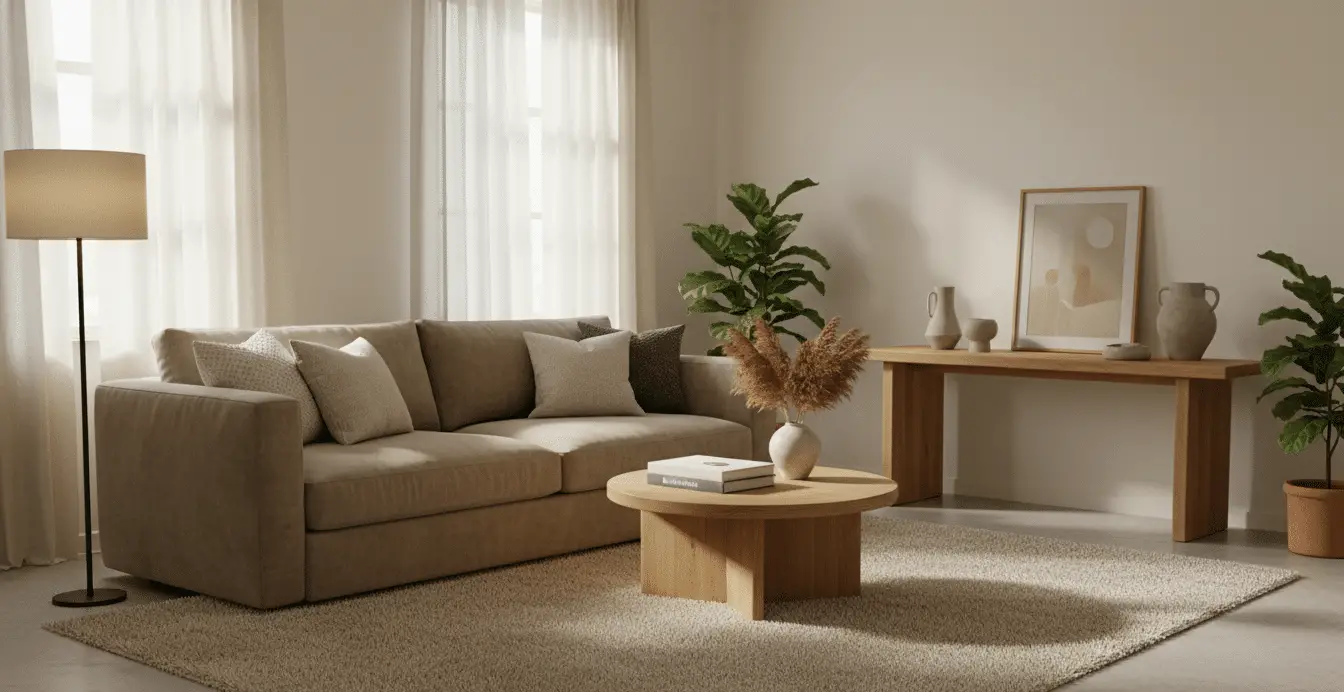
Warm Neutral Living Room Aesthetic for Peaceful Interiors: The Complete Guide to Creating a Calm and Cozy Space
Table of Contents
Introduction
There is a growing desire for interiors that feel calm, restorative, and emotionally grounding. In fact, recent home design surveys show that warm neutrals are now among the most requested palettes for living rooms because they offer a soothing counterbalance to busy lifestyles. If your living room feels visually overwhelming, mismatched, or simply lacks harmony, a warm neutral aesthetic may be the solution that transforms your space into a sanctuary.
A warm neutral living room aesthetic uses soft browns, creamy whites, gentle taupes, and muted earthy tones to create an inviting ambiance. This palette brings together warmth, tranquility, and timelessness, making it perfect for homes seeking serenity without sacrificing style. In this guide, you’ll learn foundational design principles, the psychology behind warm neutrals, and practical steps to craft a space that feels effortlessly peaceful.
From choosing your color base to layering textures, lighting, décor, and furniture pieces, each section offers clarity and inspiration for your design journey.
Understanding the Warm Neutral Living Room Aesthetic
Warm neutral interiors are built around tones that evoke comfort and stability—think sandy beiges, caramel browns, warm greys, and creamy off-whites. These colors soften the look of a room, offering visual balance while allowing furniture, textures, and decor to stand out subtly. Unlike cool neutrals, which lean toward starkness, warm tones feel more organic and expressive without overpowering the senses.
The beauty of warm neutrals lies in their versatility. They can support airy minimalism, rustic charm, modern elegance, or Scandinavian simplicity. This universality means you can evolve your style over time without needing to overhaul your entire palette. The aesthetic is also ideal for small living rooms, as the lighter shades reflect natural light and create a sense of openness.
When designing with warm neutrals, the key is harmony. Every tone should relate to the next, forming a gradient that feels natural and cohesive. Too much uniformity can look flat, while too many contrasting tones can disrupt the calm. The goal is to build dimension through shades, textures, and materials that blend seamlessly together.
Visual Breakdown Table: Core Warm Neutrals and Their Mood Effects
| Warm Neutral Shade | Emotional Tone | Best Use in Living Room |
| Cream White | Soft, airy | Walls, curtains, rugs |
| Taupe | Balanced, calm | Sofas, accent chairs |
| Caramel Brown | Cozy, warm | Wood décor, shelves |
| Warm Grey | Grounded | Accent walls, textiles |
Choosing the Right Neutral Color Palette
Selecting the right palette is foundational to creating peaceful interiors, because color affects our perception of space and emotional well-being. Start by identifying your “anchor” color—the main shade that covers the majority of the room, such as the wall color or the largest furniture piece. This anchor should be warm, light, and soothing to provide a consistent visual thread.
Once your anchor is chosen, add variation through secondary hues. These can be slightly darker or lighter tones of the same family, creating layers that feel natural rather than abrupt. A palette with three to four warm neutrals works well, offering balance without crowding the eye. Undertones matter as well—look for pigments with yellow, red, or brown bases rather than blue, to maintain the warmth.
Testing colors in natural and artificial light is essential. A cream shade that looks inviting in daylight may appear dull under warm bulbs. Place swatches in multiple spots around the room and observe how they shift throughout the day. Warm neutrals should feel consistent, adaptable, and harmonious in all lighting conditions.
Color Planning Table: How to Build a Balanced Palette
| Palette Step | Description | Example Shades |
| Anchor Shade | Main wall or sofa color | Cream, warm beige |
| Secondary Shade | For accent walls or furniture | Taupe, warm grey |
| Depth Shade | Adds richness, used sparingly | Caramel, light chocolate |
| Highlight Shade | For décor and textiles | Off-white, soft sand |
Incorporating Texture for a Comfortable and Cohesive Look
Texture is where warm neutral living rooms truly come alive. Without texture, even the most carefully chosen colors can feel flat. Texture adds depth, movement, and tactile comfort. In warm neutral spaces, mixing textures creates layers that enrich the aesthetic while keeping the palette subtle and soothing.
Start with foundational textures such as plush rugs, soft upholstery, and natural fibers. A wool or jute rug immediately grounds the space with organic warmth. Bouclé, linen, and brushed cotton are excellent options for sofas, throws, and pillows because they add dimension without overwhelming the eye. When choosing wood pieces, opt for warm-toned finishes like oak, walnut, or honey-stained pine.
Textures should balance one another. If your sofa has a smooth fabric, pair it with a chunky knit throw. If your rug is woven and detailed, choose simpler curtains. The layering process should feel intentional, with each texture enhancing the overall harmony of the room.
Texture Layering Table: What to Pair for a Balanced Interior
| Texture Type | Best Pairing | Effect on Aesthetic |
| Linen | Bouclé | Airy yet structured |
| Wool | Smooth cotton | Cozy and balanced |
| Woven jute | Soft upholstery | Natural grounding |
| Wood grain | Ceramic décor | Organic, earthy |
Selecting Furniture That Complements Warm Neutrals
Furniture acts as the backbone of your warm neutral living room aesthetic. The right pieces anchor the space visually and help establish flow and balance. When choosing furniture, prioritize shapes and finishes that pair well with the calm, nature-inspired palette. Soft curves, rounded silhouettes, and light- to medium-toned woods blend beautifully with warm neutrals.
Start by selecting a sofa that reflects the aesthetic. A plush taupe or cream sofa offers a versatile base for pillows, throws, and seasonal décor. Accent chairs in complementary shades provide additional comfort while helping break up uniformity. Consider coffee tables or side tables with matte finishes—wood, stone, or ceramic—to maintain the natural, grounded feeling of the room.
Furniture should also follow the function of the space. If the room is frequently used for gatherings, prioritize seating with depth and comfort. For smaller rooms, modular seating or slim-profile pieces maximize space while maintaining elegance.
Furniture Selection Table: Ideal Options for Warm Neutral Interiors
| Furniture Piece | Recommended Style | Why It Works |
| Sofa | Cream or taupe fabric | Neutral anchor |
| Coffee Table | Warm wood or stone | Natural grounding |
| Accent Chairs | Soft curved silhouettes | Adds warmth, visual softness |
| Shelving | Light wood finishes | Enhances organic feel |
Adding Decorative Elements that Enhance Peaceful Interiors
Decor plays a crucial role in building character and emotional resonance within warm neutral spaces. While minimalism is common in neutral aesthetics, thoughtful decorative choices can elevate the room while maintaining tranquility. Items like ceramic vases, woven baskets, pottery pieces, and framed neutral art add subtle charm without clutter.
When styling decor, focus on sculptural forms and muted tones that highlight the natural beauty of materials. Clay, stone, and wood items enhance the earthy aesthetic. Plants, particularly those with soft, rounded leaves, introduce organic vitality without disrupting the calm palette. Choose planters in warm, textured finishes for cohesion.
Layering decor at varying heights and scales improves visual rhythm. Tall vases, medium-sized bowls, and small trinkets arranged in groups create flow and movement. However, leave intentional negative space—open surfaces where the eye can rest—to maintain the peaceful ambiance.
Décor Layering Table: Balanced Styling for Warm Neutral Spaces
| Décor Item | Placement Recommendation | Aesthetic Benefit |
| Ceramic vases | Coffee or console table | Sculptural interest |
| Textured art | Above sofa | Adds depth without overpowering |
| Woven baskets | Corners or shelves | Warm organic texture |
| Soft greenery | Near windows or tables | Gentle natural contrast |
Designing with Lighting to Strengthen the Warm Neutral Atmosphere
Lighting is one of the most influential elements in achieving peaceful interiors. The warm neutral aesthetic thrives under soft, layered lighting that enhances warmth and eliminates harsh shadows. Begin by maximizing natural light. Choose sheer curtains or lightweight textiles to diffuse sunlight gently.
For artificial lighting, aim for multiple layers: ambient, task, and accent lighting. Ambient lighting sets the room’s overall mood and should be warm-toned; avoid bluish bulbs, as they clash with warm neutrals. Task lighting—such as reading lamps—should illuminate functionality without creating stark brightness. Accent lighting, like sconces or table lamps, casts glows that emphasize textures and decor.
The lighting fixtures themselves should echo the aesthetic. Choose warm metals like brass, brushed gold, or bronze. Wood bases and fabric shades also complement the theme beautifully. Consistency is key—too many competing finishes can disrupt harmony.
Lighting Design Table: Best Practices for Warm Neutral Living Rooms
| Lighting Type | Purpose | Ideal Fixtures |
| Ambient | Overall glow | Warm LED ceiling lights |
| Task | Focused light | Soft-shaded lamps |
| Accent | Highlight textures and décor | Wall sconces, table lamps |
Creating Visual Balance Through Layout and Room Flow
A peaceful living room depends not only on colors and decor but also on spatial balance. A well-planned layout encourages ease of movement, prevents visual chaos, and enhances the calming effect of warm neutrals. Begin by identifying the focal point—either a fireplace, window, or central seating area. Arrange furniture so that the space feels open and welcoming rather than congested.
Symmetry can be helpful but is not always necessary. Instead, aim for balance by distributing visual weight evenly. If your sofa is large and plush, balance it with lighter decor or open shelving. If one side of the room features heavy furniture, consider adding soft textiles or plants to level out the composition.
Flow is also important. Ensure that pathways are clear and that furniture does not obstruct movement. Warm neutral spaces thrive when energy moves gently and freely through the room. Rugs can help define zones without creating rigid boundaries.
Layout Planning Table: How to Achieve Visual Harmony
| Layout Element | Strategy | Effect on Interior |
| Focal Point | Center furniture around it | Creates grounding and direction |
| Pathways | Clear 3–4 ft routes | Enhances ease and comfort |
| Symmetry | Use when helpful, not mandatory | Prevents visual heaviness |
| Zoning | Rugs or lighting | Defines purpose without clutter |
Conclusion
Designing a warm neutral living room aesthetic is about more than choosing soft shades or pretty textures—it’s about creating a sanctuary that supports emotional well-being, calmness, and connection. By understanding how colors, textures, furniture, décor, layout, and lighting work together, you can transform your living room into a peaceful retreat that feels both stylish and deeply comforting.
Warm neutrals create a timeless canvas that adapts easily as your lifestyle evolves. Whether you prefer airy minimalism or cozy layered interiors, this palette provides stability, harmony, and beauty in equal measure. As you experiment with tones, materials, and arrangements, you’ll discover how small decisions create meaningful impacts on the overall atmosphere. Ultimately, the warm neutral aesthetic invites you to slow down, breathe deeply, and enjoy the simple serenity of thoughtful design.