
Styling Kitchen Shelves for a Chic and Organized Kitchen: Design Tips for a Beautiful, Functional Space
Table of Contents
Introduction
The kitchen is the heart of the home, yet studies show it’s also one of the most clutter-prone areas—especially when open shelving is involved. With kitchen shelves constantly holding everyday essentials, cookware, and decorative pieces, maintaining both style and order can feel challenging. However, open shelves offer one of the best opportunities to blend beauty and function in a way cabinets simply can’t. They allow you to display your favorite items, highlight your unique style, and create an airy, curated look that transforms the entire room.
Styling kitchen shelves matters because what you place on them—and how you arrange it—affects not just visual appeal but also how smoothly your kitchen operates. A well-designed shelf setup can make cooking faster, cleaning easier, and the space feel more intentional. When shelves become a thoughtful blend of decor and practicality, the kitchen begins to feel more like a living space than a workstation.
This guide explores creative and achievable ideas for styling kitchen shelves to help you design a chic, organized kitchen that feels inviting. From choosing the right mix of functional items to mastering common styling formulas, you’ll gain inspiration and techniques that work for any kitchen style, whether modern, farmhouse, minimalist, or eclectic.
Balancing Function and Style on Your Kitchen Shelves
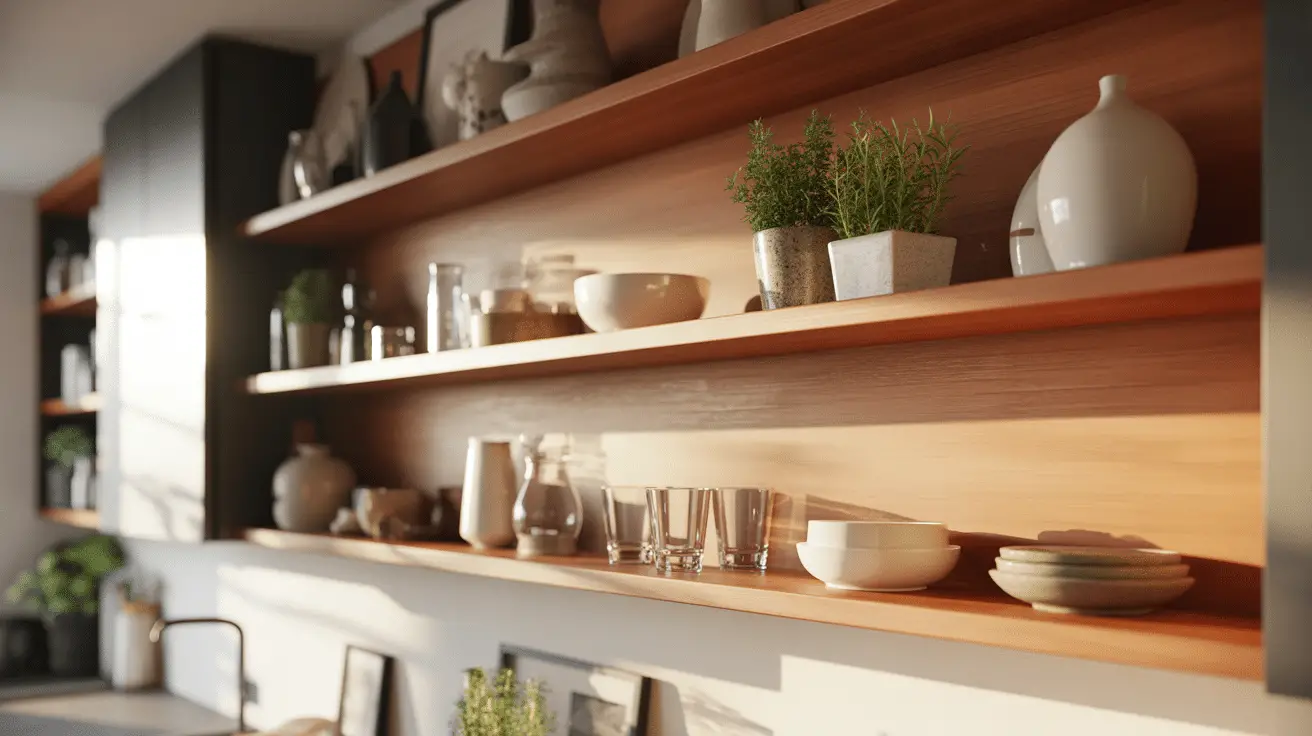
Finding the perfect balance between beauty and functionality is essential when styling kitchen shelves. Unlike decorative shelving in a living room or entryway, kitchen shelves serve a dual purpose—they hold practical items you use daily while contributing to the overall aesthetics of the room. Achieving the right blend begins with selecting objects that are both useful and visually appealing. Dishes, glassware, small bowls, and wooden cutting boards all function well and also add warmth and texture.
The key is intentional placement. Heavily used items, such as plates and cups, should sit at arm’s reach, making them easy to grab. Less frequently used decor pieces—like vases, cookbooks, or decorative jars—can be placed higher. Grouping similar items together also helps maintain visual order. For example, a row of matching glasses appears cleaner than scattered mismatched pieces.
Color plays a meaningful role in balancing style and function. A neutral palette contributes to a cohesive look while allowing practical items to blend seamlessly into the display. Adding natural textures, like wood and ceramic, enhances warmth and prevents shelves from feeling too sterile or utilitarian.
Function + Style Breakdown
| Item Type | Function | Style Contribution |
| Plates + Bowls | Everyday use | Clean lines + uniformity |
| Glassware | Easy-access drinking | Light-reflecting elegance |
| Wooden boards | Food prep | Warm, rustic texture |
| Decorative pieces | Aesthetic detail | Personality + visual interest |
Choosing a Cohesive Color Palette for Chic Kitchen Shelves
Color has a remarkable influence on how organized your shelves appear. Even a small assortment of items can look clutter-free when unified by a cohesive palette. A chic and organized kitchen shelf design often incorporates soft neutrals, earthy tones, or monochromatic schemes. These palettes help visually simplify the shelf arrangement, making it feel intentional rather than chaotic.
Neutral colors—such as white, beige, gray, and natural wood—create a timeless foundation. These tones allow accent colors to stand out subtly without overwhelming the space. For kitchens with open shelving that spans multiple walls, a cohesive palette ensures the entire area feels connected. Repeating shades and materials also creates rhythm, which guides the eye smoothly across the shelves.
You can introduce color through a combination of ceramics, glassware, and small decor pieces. Even simple touches—like a muted green plant, a stack of warm-toned cookbooks, or a soft blue pitcher—can become focal points when placed thoughtfully. The goal is consistency without rigidity; a carefully curated palette should feel natural rather than overly matching.
Color Palette Guide
| Palette Type | Color Examples | Effect on Shelves |
| Neutral | White, cream, natural wood | Clean + serene |
| Earthy | Terracotta, olive, sand | Warm + organic |
| Monochrome | Shades of gray or white | Minimal + chic |
| Soft accent palette | Pastel blues, muted greens | Gentle pops of color |
Using Decorative and Functional Layers to Add Depth
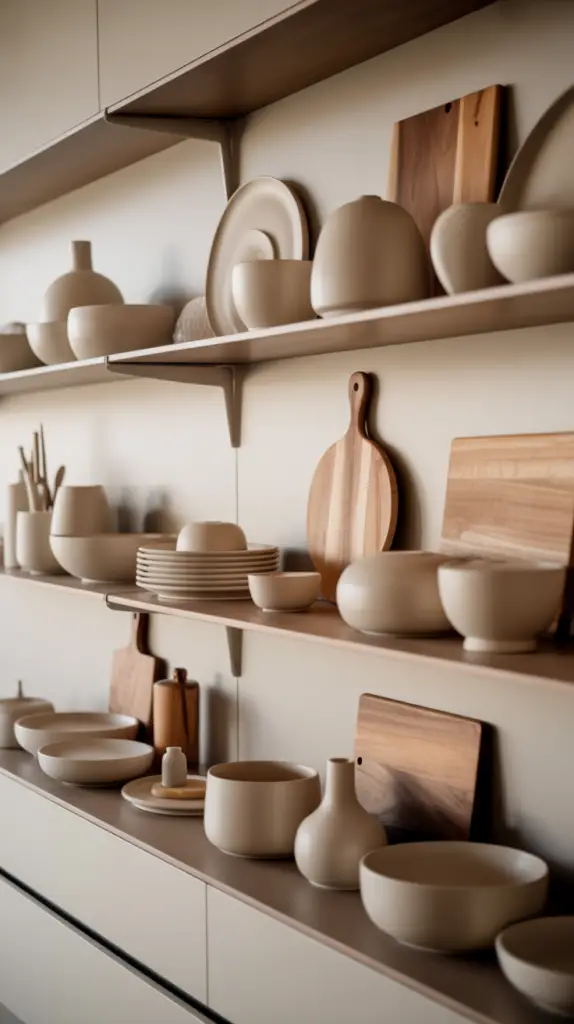
Layering is one of the most transformative styling techniques for creating depth and dimension on kitchen shelves. Without layering, shelves can look flat or overly simplistic. Depth is created by overlapping items, mixing heights, and integrating a variety of materials. This technique enhances the visual flow of the space and gives your kitchen shelves a curated, magazine-worthy look.
Start by establishing anchor pieces—these include tall pitchers, cutting boards, large bowls, or framed artwork. These items set the vertical structure of the shelves. From there, incorporate medium-height objects such as canisters, stacked dishes, or vases. These pieces bridge the visual gap between tall and short items. Finally, add smaller items like salt cellars, spices, or small sculptures to fill in the gaps and create a layered effect.
Textures matter as much as shapes. Wood adds warmth, metals introduce shine, and ceramics provide softness. The combination of these materials creates a balanced composition that feels both functional and artistic. Layering also allows you to highlight your favorite pieces without overwhelming the shelves.
Decor Layering Formula
| Layer | Items Included | Purpose |
| Back Layer | Artwork, tall boards | Adds height + anchors display |
| Mid Layer | Canisters, pitchers, bowls | Builds dimension |
| Front Layer | Spices, small decor | Adds detail + personality |
Storing Essentials in Stylish Containers for an Organized Look
Stylish storage solutions elevate the appearance of your kitchen shelves while keeping clutter at bay. Containers, jars, baskets, and canisters serve as both functional organizers and beautiful decorative elements. Clear glass jars, for instance, allow you to store pasta, rice, or grains while adding a clean, uniform look to your display. Ceramic canisters with subtle patterns or matte finishes introduce charm and contrast.
Choosing consistent storage materials is key. When multiple mismatched containers sit together, the shelves appear busy. Opt for sets or similar styles to create a cohesive foundation. Labels can also enhance organization—handwritten labels, embossed metal tags, or simple printed versions keep essentials easy to find while adding a design element.
Natural materials like woven baskets help soften the shelves and hide less attractive items such as napkins or pantry goods. Their texture adds warmth and prevents the display from feeling too clinical. Combining opaque and transparent storage makes your kitchen both functional and inviting.
Stylish Storage Options
| Storage Type | Best Use | Style Advantage |
| Glass jars | Dry goods | Clean + uniform |
| Ceramic canisters | Everyday essentials | Texture + elegance |
| Woven baskets | Hidden storage | Warm, organic look |
| Metal tins | Coffee, tea, spices | Industrial or vintage charm |
Curating Kitchen Decor That Complements Everyday Items
Decor plays a pivotal role in transforming kitchen shelves from purely functional to stylishly curated. However, decor should complement essential kitchen items rather than overshadow them. Selecting decor that subtly enhances the overall theme—whether rustic, modern, traditional, or minimalist—creates a seamless visual experience.
Soft decorative elements such as small potted plants, sculptural vases, or vintage ceramics introduce personality and charm. Cookbooks are another excellent addition; their spines often bring color and texture, and they serve a practical purpose in a kitchen. Artwork placed behind items or resting casually on a shelf adds a personal touch without requiring hardware installation.
When curating decor, consider proportion. A few larger pieces are often more effective than many small objects, which can create clutter. The goal is to complement—not compete with—the functional items. This mindful approach allows the shelves to appear full but not overcrowded, stylish but not impractical.
Decor Curation Table
| Decor Type | Placement Idea | Visual Effect |
| Plants | Near neutral items | Adds freshness |
| Artwork | Behind dishes | Creates depth |
| Cookbooks | Stacked or upright | Adds color |
| Ceramics | Mixed near daily items | Enhances charm |
Creating Design Movement Through Height and Shape Variation
A visually appealing shelf display depends heavily on variation. Incorporating different heights and shapes creates movement, guiding the eye naturally from one item to the next. Without variation, shelves may appear stagnant or overly uniform. Mixing tall vases, medium bowls, and small sculptural pieces introduces rhythm and keeps the arrangement interesting.
Height variation begins with anchor items. Place the tallest items—like pitchers or large canisters—toward the back or ends of the shelf. Medium-height items should sit at the center or near the tall pieces to create progression. Smaller pieces, which serve as accents, nestle comfortably at the front. These gradual shifts in height create flow.
Shape variation is equally important. Round bowls, rectangular cutting boards, cylindrical canisters, and sculptural pieces all bring a sense of contrast. These differences in form introduce visual balance and prevent the display from feeling repetitive. Mixing shapes also helps draw attention to standout pieces.
Height & Shape Variation Guide
| Variation Type | Example | Result |
| Tall items | Pitchers, large boards | Adds vertical interest |
| Medium items | Vases, canisters | Creates progression |
| Small items | Spices, small bowls | Adds finishing detail |
| Mixed shapes | Round, square, cylindrical | Enhances movement |
Rotating Seasonal and Fresh Elements on Your Kitchen Shelves
Seasonal styling keeps your kitchen shelves feeling fresh and current throughout the year. Instead of redesigning your entire kitchen, subtle updates—such as changing plants, switching textiles, or adding seasonal decor—allow your space to evolve naturally. Seasonal touches bring personality, warmth, and a sense of celebration to your kitchen.
In spring, soft florals, pastel ceramics, and fresh greenery brighten the shelves. Summer invites lighter textures like woven baskets, blue accents, and glass vases. Autumn is ideal for adding warmth through amber glass, dried foliage, or rustic bowls. Winter styling calls for a refined palette with metallic accents, evergreen sprigs, and soft candlelight.
The key is restraint. Seasonal decor should be subtle enough to blend naturally with your everyday items. One or two anchor pieces—such as a pumpkin in fall or a sprig of eucalyptus in winter—can shift the tone without overwhelming the shelves.
Seasonal Styling Table
| Season | Shelf Elements | Mood |
| Spring | Fresh flowers, pastels | Light + uplifting |
| Summer | Blues, woven textures | Airy + relaxed |
| Fall | Amber glass, dried leaves | Cozy + rustic |
| Winter | Metallics, evergreens | Elegant + calming |
Conclusion
Styling kitchen shelves is an opportunity to blend creativity, practicality, and personal style. When thoughtfully arranged, shelves can serve as both functional storage and beautiful decor, transforming your kitchen into a chic and organized space. By balancing everyday items with curated pieces, choosing cohesive colors, embracing layering, and introducing seasonal touches, you can create shelves that feel intentional and inspiring. The kitchen becomes more than a place to cook—it becomes a reflection of your lifestyle, taste, and love for a beautifully designed home.