
Rustic Farm Kitchen Decor for Country and Cottage Homes: Cozy Styling Ideas for Warm, Timeless Spaces
Table of Contents
Introduction
The kitchen remains the heart of country and cottage homes, and in recent years, rustic farm kitchen decor has surged in popularity. A design trend report revealed that more homeowners are leaning toward natural materials, vintage accents, and cozy textures to recreate the warmth of traditional farmhouse kitchens. There’s something deeply comforting about a space that feels lived-in, organic, and rooted in heritage. Rustic décor makes a kitchen feel welcoming not only for cooking and gathering but also for everyday living.
This design style matters because rustic farm kitchen decor blends functionality with charm. In an era filled with sleek, modern finishes, many people crave the authenticity of wood grains, handcrafted pottery, distressed finishes, and nostalgic pieces that tell a story. A rustic farm kitchen encompasses all of these elements, creating a space rich in heart and character. Whether your home is fully rural, coastal cottage, or suburban with farmhouse touches, rustic decor allows your kitchen to embrace warmth and simplicity.
In this guide, you’ll learn how to craft a rustic farm kitchen that captures timeless charm. You’ll discover styling strategies for color palettes, furniture, cabinetry, open shelving, vintage finds, natural materials, textiles, and layout ideas. Each section includes detailed insights and visual breakdowns so you can curate a kitchen that feels beautifully grounded and genuinely welcoming.
Choosing a Warm and Earthy Color Palette for Rustic Farm Kitchens
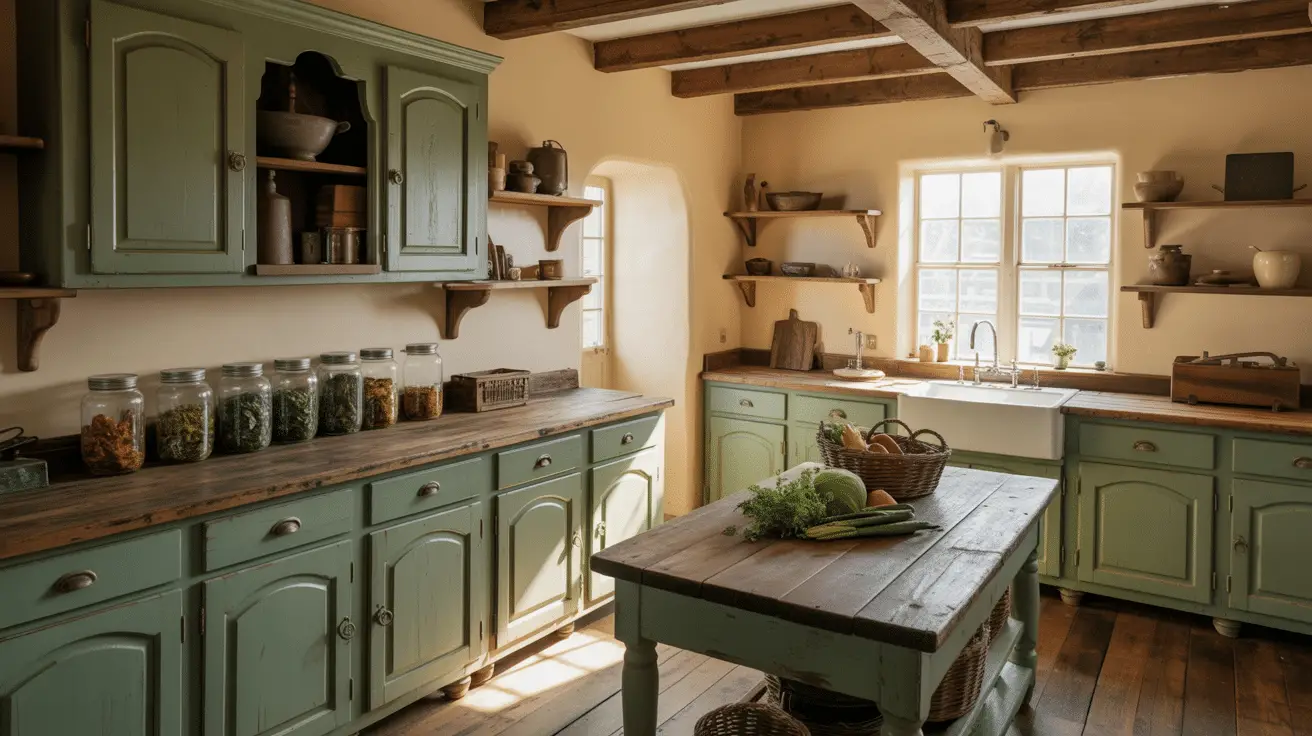
A rustic farm kitchen begins with its color palette. Country and cottage homes traditionally celebrate warm, earthy tones that echo natural surroundings—think soft creams, warm whites, muted greens, faded blues, honeyed wood, and clay-inspired reds. These shades reflect the countryside’s organic beauty and create a cozy, inviting foundation for rustic decor.
Neutral palettes work particularly well because they allow the room’s textures, materials, and accents to shine. Off-whites and light beiges brighten a kitchen without feeling stark. Muted greens and blues add a calming, cottage-like quality, especially when used on cabinetry or accent walls. Warm tones—like terracotta or ochre—can be introduced through pottery, tile, or painted furniture, providing depth and character.
Lighting influences color perception significantly. Natural light softens earthy hues, while warm evening light enhances rustic tones, making the kitchen feel even more welcoming. When selecting paint or finishes, test samples under different lighting to ensure they match the mood you envision.
Rustic Color Palette Guide
| Color Family | Examples | Best Uses |
| Warm Neutrals | Cream, beige, antique white | Walls, cabinetry, backsplash |
| Earthy Greens | Sage, olive, moss | Cabinets, accents, shelving |
| Faded Blues | Dusty blue, slate, denim | Island, decor pieces |
| Warm Accents | Terracotta, ochre, clay | Pottery, textiles, artwork |
Using Natural Materials to Enhance Rustic Farm Kitchen Decor
Natural materials are the hallmark of rustic farm kitchen decor, anchoring the space in authenticity and warmth. Wood, stone, iron, clay, and woven fibers bring texture and character that mass-produced materials can’t replicate. These elements create a tactile, organic atmosphere that feels grounded in tradition—a perfect match for country and cottage homes.
Wood is essential in rustic design. Reclaimed wood beams, butcher-block counters, farmhouse tables, or wooden shelving introduce warmth and establish a lived-in feel. The imperfections—knots, grain variations, and slight weathering—add charm. Stone elements like soapstone countertops, stone tile backsplashes, or terra-cotta floors deepen the rustic ambiance with their earthy tones and rugged textures.
Iron and metal accents, such as wrought-iron pot racks, brass hardware, or vintage light fixtures, add structure and contrast. Ceramics—including hand-thrown pottery, clay pitchers, and earthenware bowls—offer softness and craftsmanship. Finally, woven textures from baskets, runners, or barstool cushions contribute warmth and everyday practicality.
Natural Material Breakdown
| Material | Effect | Best Uses |
| Wood | Warmth + authenticity | Shelving, tables, beams |
| Stone | Earthy + durable | Counters, floors, backsplash |
| Iron/Metal | Structure + vintage charm | Hardware, lighting |
| Ceramics | Handmade softness | Dishware, decor |
| Woven fibers | Cozy texture | Baskets, textiles |
Incorporating Vintage and Antique Pieces for Country Charm
Vintage and antique elements give rustic kitchens their heart and character. These pieces add story, age, and craftsmanship—qualities that define country and cottage decorating. A rustic farm kitchen thrives on nostalgia, whether through antique breadboards, weathered stools, enamel cookware, or found items passed down through generations.
Look for items with patina or visible wear. Distressed cutting boards, stoneware crocks, and chippy-painted furniture look right at home in a rustic setting because they reflect daily use and history. Vintage signs, wire baskets, tin containers, and milk glass can enhance charm without overwhelming the space.
Antique furniture can serve functional roles. A vintage hutch provides storage while acting as a decorative focal point. An old farm table becomes the centerpiece for gathering. Even small treasures—like hand-carved spoons, rustic pitchers, or cast-iron pans—can anchor a vignette.
When incorporating vintage items, balance is key. Too many pieces can clutter the space, while carefully selected items create thoughtful storytelling and visual interest.
Vintage Decor Guide
| Vintage Item | Style Benefit | Suggested Placement |
| Breadboards | Warm rustic texture | Propped on counters |
| Crocks + stoneware | Antique charm | Shelves or islands |
| Farm tables | Gathering space | Kitchen center |
| Enamelware | Country nostalgia | Open shelves or hooks |
Using Open Shelving to Display Farmhouse Kitchen Decor
Open shelving is a staple in rustic kitchen decor because it blends practicality with charm. Unlike closed cabinetry, open shelves allow everyday items—plates, mugs, bowls, jars—to double as decor. They also introduce texture and color, making the kitchen feel more lived-in and accessible.
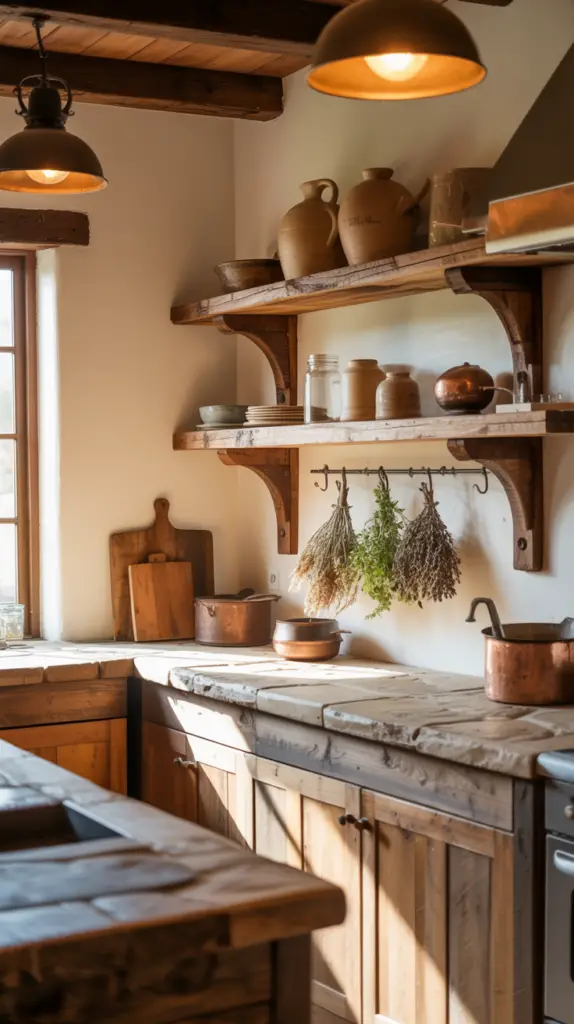
Start by choosing shelves made of reclaimed or natural wood. Their grain and imperfections add instant character. Floating shelves, bracketed shelves, or built-in open cabinets all support rustic styles beautifully. Arrange items intentionally: stack plates neatly, group mugs by color, and lean cutting boards for height. Mixing ceramics, woven baskets, cookbooks, and glass storage jars creates visual variety.
Avoid overcrowding. Leaving space gives each item breathing room and keeps the shelves from looking cluttered. Also consider layering: place larger items in the back and smaller items in front to create depth.
Open shelving also encourages functional beauty. Items like spices, oils, and teas look charming in uniform jars. Displaying your prettiest cookware or handmade ceramics reinforces cottage coziness.
Open Shelving Breakdown
| Shelf Element | Purpose | Impact |
| Ceramics | Everyday use | Adds texture + soft color |
| Wooden boards | Functional + decorative | Warm rustic tone |
| Glass jars | Storage | Clean + charming |
| Woven baskets | Hidden storage | Cozy cottage texture |
Choosing Lighting That Enhances Rustic Kitchen Warmth
Lighting plays a crucial role in rustic farm kitchen decor because it sets the mood and highlights texture. Warm lighting—especially from vintage-style fixtures—creates the cozy atmosphere country homes are known for. Pendant lights, iron chandeliers, lantern-style fixtures, and sconces with warm bulbs help achieve that classic rustic glow.
When selecting fixtures, choose natural, textured materials like iron, copper, wood, or aged brass. These finishes reinforce the organic feel of the space. A pendant light over the kitchen island can act as a focal point, while wall sconces add soft illumination in cooking or dining areas.
Layering lighting is key: ambient lighting provides overall warmth, task lighting supports function, and accent lighting draws attention to design features like open shelves or a stone backsplash.
Lighting should complement—not overpower—rustic elements. Warm white bulbs (2700K–3000K) are ideal, reinforcing the earthy palette and texture variations.
Lighting Strategy Table
| Lighting Type | Role | Best Placement |
| Pendant lights | Focal point | Island or dining area |
| Sconces | Accent + task | Above counters or shelves |
| Chandeliers | Atmosphere | Center of kitchen |
| Under-shelf lighting | Function | Work surfaces |
Incorporating Farmhouse Textiles for Soft Layers and Comfort
Textiles play a remarkable role in rustic farm kitchen decor by introducing softness, warmth, and cottage charm. While kitchens may not seem like a textile-rich environment, well-chosen fabrics can elevate the atmosphere dramatically. Think striped tea towels, linen table runners, gingham curtains, checkered napkins, or woven chair cushions.
Linen is ideal for rustic kitchens thanks to its relaxed texture and natural appearance. A linen tablecloth draped over a wooden table adds softness while preserving rustic authenticity. Cotton fabrics with small florals, ticking stripes, or gingham patterns bring cottage charm and nostalgic appeal.
Rugs also contribute warmth, especially in large or open kitchens. A jute runner, braided rug, or vintage-inspired patterned rug adds visual interest and grounding underfoot. They help define kitchen zones while adding character.
Handmade or artisanal textiles—like crocheted potholders or embroidered tea towels—introduce craft and personality.
Textile Inspiration Table
| Textile Type | Best Use | Effect |
| Linen | Curtains, runners | Soft + natural |
| Cotton | Towels, napkins | Cottage charm |
| Jute/woven | Rugs, baskets | Earthy texture |
| Gingham/stripes | Curtains + decor | Classic farmhouse feel |
Styling the Kitchen With Farm-Inspired Decor Details
Farm-inspired details personalize a rustic kitchen and help tell a story of simple, country living. Decor doesn’t have to be elaborate; often, the most charming touches are humble objects with everyday purpose. Think ceramic pitchers filled with flowers, wooden crates, vintage jars, copper pots, and bowls of fresh fruit.
Farmhouse décor tends to celebrate utility. Many items serve both beauty and function. Displaying eggs in a stoneware bowl, herbs in terracotta pots, or bread in a woven basket all enhance the rustic feel. Wall décor can include botanical prints, antique advertisements, farm animal sketches, or a chalkboard for daily notes.
Functional décor like hooks for aprons, open racks for cast-iron pans, or hanging baskets adds visual appeal and real-world convenience. Rustic signs or reclaimed wood plaques can add personality while maintaining authenticity.
The goal is to blend practicality with charm—allowing décor to emerge naturally from your lifestyle.
Farm Decor Breakdown
| Decor Type | Role | Style Contribution |
| Ceramic pitchers | Floral display | Soft cottage charm |
| Copper pots | Cooking + decor | Timeless rustic elegance |
| Terracotta pots | Herbs + greenery | Natural warmth |
| Woven baskets | Storage | Organic coziness |
Conclusion
Rustic farm kitchen decor brings together warmth, authenticity, and timeless style—perfect for country and cottage homes. By embracing natural materials, vintage accents, warm colors, open shelving, crafted textiles, and charming farm-inspired details, you can create a kitchen that feels both inviting and beautifully grounded. The rustic aesthetic celebrates imperfection, heritage, and the pleasure of simple living, making your kitchen a space where memories are nurtured and comfort thrives. A well-styled rustic farm kitchen becomes not just a place to cook, but a heartfelt reflection of home itself.