
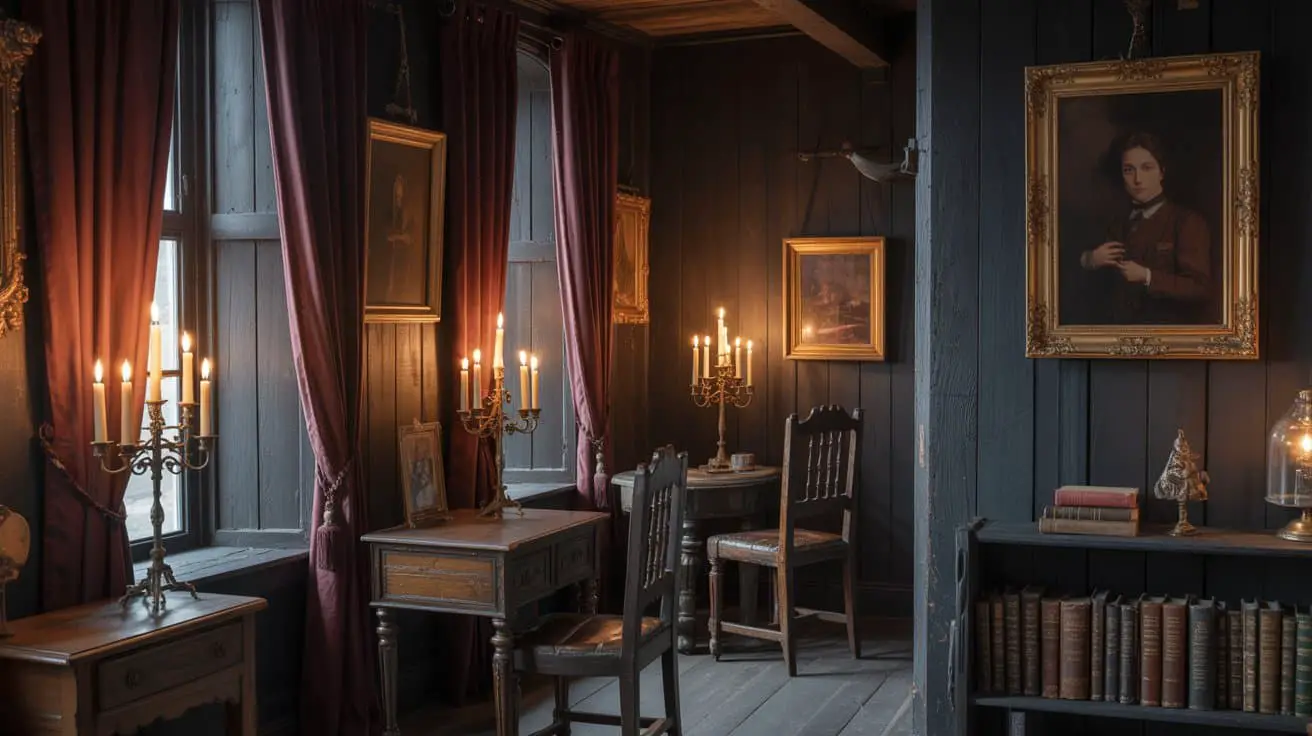
Victorian Gothic Farmhouse Style Inspiration: Elegant Dark Aesthetics, Vintage Charm, and Rustic Romance for the Modern Home
Table of Contents
Introduction
There is something undeniably captivating about the Victorian Gothic farmhouse aesthetic. It blends the ornate, moody elegance of Victorian-era design with the grounded simplicity of classic farmhouse living. In recent years, this style has gained remarkable popularity as homeowners seek ways to make their spaces feel both dramatic and comforting. A survey of home design trends shows an increasing fascination with dark palettes, antique-inspired details, and atmospheric textures—elements central to the Victorian Gothic farmhouse style.
Why does this style resonate so deeply? Because it allows for emotional expression through design. The Victorian Gothic palette—rich blacks, deep burgundies, dusty mauves, iron accents, aged wood—creates intimacy, storytelling, and warmth. When paired with farmhouse staples like exposed beams, natural materials, and rustic finishes, the result is a uniquely layered look that feels lived-in, historic, and visually compelling.
This article explores Victorian Gothic farmhouse style inspiration through detailed design principles, room-by-room ideas, color palettes, decorative accents, architectural elements, and practical ways to merge dark elegance with rustic charm. You’ll find creative insights, stylistic breakdowns, and cohesive visuals to help you bring this mesmerizing aesthetic into your own home. By the end, you’ll have a full understanding of how to balance drama and warmth to create a home that feels both soulful and stunning.
Defining Victorian Gothic Farmhouse Style Through Color and Mood
Color plays a defining role in Victorian Gothic farmhouse style, setting the emotional tone for each space. This aesthetic thrives on rich, layered palettes that blend moody Victorian hues with the organic softness of farmhouse charm. Deep forest green, rich plum, coal black, and antique gold are frequently used to create a sense of old-world drama, while muted taupes and warm creams prevent the palette from feeling overwhelming.
A great way to begin crafting this look is by choosing one dominant dark color for walls or major furniture pieces. This color becomes the backdrop for ornate Victorian detailing and rustic farmhouse accents. Consider pairing matte black walls with reclaimed wood shelving or choosing velvety burgundy drapery against soft, distressed white trim. Each contrast enriches the atmosphere without sacrificing comfort.
Shadows and lighting also contribute to the overall mood. Low, warm lighting—like lantern-style sconces or amber-glow Edison bulbs—adds an inviting aura. Soft candlelight-inspired tones mimic Victorian interiors, making even dark rooms feel cozy rather than oppressive.
Color Inspiration Table
| Palette Type | Colors Included | Mood Created |
| Victorian Gothic | Black, burgundy, plum | Dramatic, historic |
| Rustic Farmhouse | Cream, warm taupe, natural browns | Cozy, grounded |
| Blended Palette | Charcoal, deep green, warm whites | Balanced, atmospheric |
Architectural Elements That Shape the Victorian Gothic Farmhouse Look
Architectural detail is essential in capturing Victorian Gothic farmhouse style inspiration. Victorian homes are known for intricate craftsmanship—arched doorways, ornate trim, wainscoting, carved moldings—while farmhouse architecture emphasizes simplicity, exposed beams, and an earthy connection to nature. Blending these elements creates a striking contrast that instantly elevates a space.
One effective method is incorporating gothic arches or pointed window trims into otherwise rustic spaces. These shapes provide historical character and visual drama. Paired with shiplap walls or distressed beams, the result is a harmonious union of elegance and rugged charm.
Victorian-inspired molding also adds sophistication. Crown molding, chair rails, and decorative paneling enrich the space while maintaining the grounded feel of traditional farmhouse interiors. Even subtle additions, like a carved fireplace mantel or gothic window casing, contribute to the overall ambiance without requiring a full renovation.
Flooring choices further define the look. Dark-stained hardwood, patterned Victorian tiles, and wide-plank farmhouse floors all play beautifully with this hybrid style.
Architectural Detail Breakdown
| Feature | Style Influence | Impact |
| Gothic Arches | Victorian Gothic | Adds drama and romance |
| Exposed Beams | Farmhouse | Adds rustic authenticity |
| Carved Moldings | Victorian | Creates elegance |
| Wide-Plank Floors | Farmhouse | Adds warmth |
Furniture Choices That Define Victorian Gothic Farmhouse Interiors
Furniture selection is where the Victorian Gothic farmhouse style truly shines. Victorian furnishings are ornate, curvaceous, and detailed, while farmhouse pieces tend to be simple, sturdy, and practical. Combining the two creates a beautifully layered, collected look.
Begin with key Victorian pieces like tufted velvet chairs, carved wooden desks, dramatic headboards, or antique dressers. These become your statement items. Surround them with neutral farmhouse elements—linen sofas, rustic benches, simple wooden tables—to keep the atmosphere grounded and functional.
Material contrast is essential. Mixing dark woods with lighter farmhouse finishes creates harmony. For example, pairing a deep mahogany cabinet with a raw wood coffee table brings balance to the room. Upholstery also plays a role, with velvet, damask, and brocade offering Victorian flair and cotton or linen adding farmhouse comfort.
Even modern pieces work if chosen thoughtfully. A sleek iron bed frame, for instance, can evoke gothic undertones without overpowering the space.
Furniture Style Table
| Furniture Type | Material/Finish | Effect |
| Victorian Armchair | Velvet, carved wood | Luxurious focal point |
| Farmhouse Dining Table | Raw or distressed wood | Rustic grounding |
| Iron Bed Frame | Matte black | Gothic elegance |
| Antique Dresser | Dark stain | Historic touch |
Decorative Accents That Bring Victorian Gothic Farmhouse Style to Life
Accents are where personality flourishes in Victorian Gothic farmhouse design. Decorative elements create the finishing touches that tie the hybrid aesthetic together. For Victorian influence, prioritize ornate mirrors, candelabras, lace details, and vintage picture frames. These pieces add richness and old-world charm.
Farmhouse touches like woven baskets, ceramic pitchers, and wooden bowls help soften the dramatic Victorian backdrop. The key is blending ornate with simple—pairing a gothic mirror with rustic lanterns or placing antique books next to earthenware pottery. Both styles balance and enhance one another.
Botanical motifs are another important detail. Dried flowers, preserved branches, and dark-toned floral arrangements complement the gothic side of the aesthetic without feeling gloomy. Deep red roses, purple hydrangeas, or eucalyptus branches in antique vases add a romantic touch.
Metal finishes such as wrought iron, aged brass, and antique gold enrich texture and warmth. These materials mimic Victorian metalwork while blending perfectly with farmhouse practicality.
Accent Inspiration Table
| Accent Type | Style Influence | Visual Effect |
| Ornate Mirrors | Victorian | Adds drama and depth |
| Lantern Lighting | Farmhouse | Softens and warms space |
| Antique Books | Gothic | Adds history and storytelling |
| Dried Florals | Both | Romantic, timeless charm |
Lighting Techniques That Create a Moody Farmhouse Atmosphere
Lighting is one of the most powerful tools for shaping Victorian Gothic farmhouse style inspiration. Victorian interiors are known for low, warm glows that cast gentle shadows, while farmhouse homes rely on functional, soft lighting to maintain comfort. Combining these approaches produces a moody yet inviting environment.
Start with layered lighting. Chandeliers with gothic silhouettes, wrought-iron sconces, and candle-style bulbs create Victorian drama. Meanwhile, farmhouse-style lamps—ceramic bases, warm linen shades—introduce softness. The goal is warm, diffused light rather than bright overhead brightness.
Consider the placement of light. Highlight ornate architectural details or dramatic furniture pieces by directing warm beams toward them. Shadows add mystery and texture, essential to gothic styling. Amber-toned bulbs or Edison-style filaments enhance the old-world aesthetic without looking overly theatrical.
Candlelight, real or LED, brings authenticity and romance. Group candles on trays, candelabras, or mantelpieces to enhance historic charm.
Lighting Styles Table
| Fixture Type | Influence | Best Use |
| Iron Chandelier | Gothic | Dining room, entryway |
| Lantern Sconce | Farmhouse | Hallways, bedrooms |
| Candlelight | Victorian | Accent lighting |
| Edison Bulbs | Rustic | Living rooms, dens |
Textiles and Patterns That Blend Gothic Elegance with Farmhouse Warmth
Textiles are essential in merging dramatic Victorian Gothic influence with the softness of farmhouse comfort. Victorian fabrics often feature rich textures—velvet, lace, brocade—while farmhouse textiles rely on natural fibers such as cotton, wool, and linen. Together, they create a tactile, inviting environment.
One effective approach is layering textiles. Start with a simple farmhouse base—linen bedding, cotton slipcovers, woven rugs—and then add gothic richness through velvet pillows, crochet throws, or dark-toned quilt coverlets. The contrast between heavy and light materials enhances the depth and complexity of the space.
Patterns also contribute significantly. Victorian spaces often showcase damask, botanical prints, or intricate detailing, while farmhouse interiors embrace plaids, stripes, and simple florals. Blending these styles requires balance—pairing a dark damask pillow with a neutral farmhouse throw maintains cohesion without feeling overwhelming.
Rugs play an important role as well. Persian-style rugs with deep hues complement gothic aesthetics, while jute or braided rugs add rustic warmth. Mixing these rugs in different rooms—or layering them—creates seamless stylistic flow.
Textile Blend Table
| Textile Type | Style | Effect |
| Velvet | Victorian Gothic | Luxurious and dramatic |
| Linen | Farmhouse | Light and breathable |
| Brocade | Victorian | Decorative richness |
| Woven Wool | Rustic | Cozy, warm texture |
Creating a Cohesive Victorian Gothic Farmhouse Home
Achieving cohesion with such a layered style requires thoughtful balance. The key is ensuring that the dramatic Victorian Gothic elements never overpower the rustic simplicity of farmhouse foundations. Begin by identifying the dominant influence you want in each room. A bedroom might lean more gothic with velvet drapery and dark walls, while a kitchen might emphasize farmhouse comfort with light wood and soft textiles.
Color consistency helps unify the look throughout your home. Choosing a shared palette—black, warm white, muted mauve, deep green—creates harmony. Use gothic details as accents in farmhouse-heavy rooms and vice versa. This interplay ensures every room feels related without becoming repetitive.
Textures also support cohesion. Repeating elements like wrought iron, distressed wood, lace accents, or stone pottery maintains visual flow. Even small connections matter, like using the same warm lighting tone throughout the house or incorporating dried botanical arrangements in multiple rooms.
Cohesion Building Table
| Design Element | How to Apply | Benefit |
| Repeated Palette | Use shared tones | Visual continuity |
| Mixed Textures | Alternate heavy/light materials | Balanced atmosphere |
| Accent Rotation | Gothic in some rooms, farmhouse in others | Dynamic but unified |
Conclusion
Victorian Gothic farmhouse style is a captivating blend of drama, elegance, and rustic comfort. By merging the moody sophistication of Victorian design with the warmth and practicality of farmhouse living, you create a home rich in character and emotional depth. This aesthetic embraces contrast—dark and light, ornate and simple, historic and natural—resulting in spaces that feel both timeless and uniquely personal. Whether through architectural details, richly layered textiles, vintage-inspired accents, or atmospheric lighting, the Victorian Gothic farmhouse style offers endless inspiration for creating a home that tells a story with every corner.