
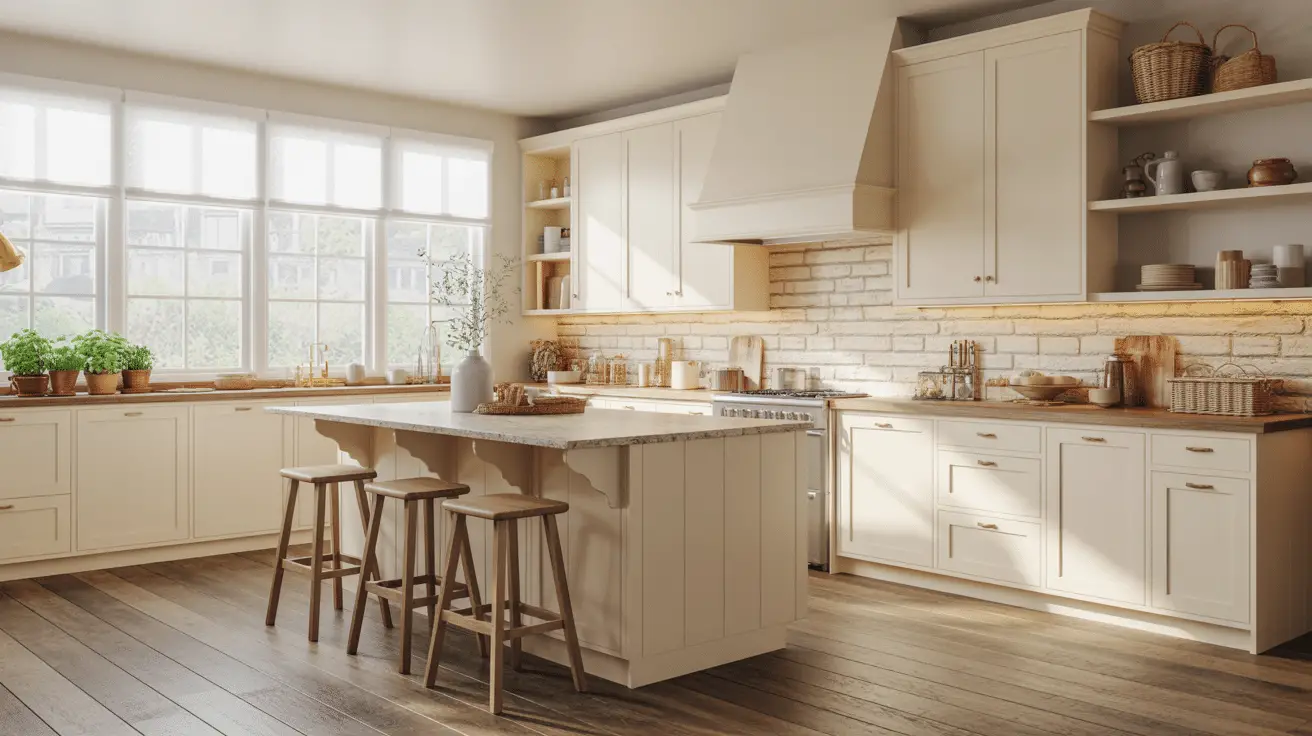
Modern Warm White Kitchen Ideas with Natural Texture for an Inviting, Elevated Space
Table of Contents
Introduction
A well-designed kitchen does more than provide a place to cook—it sets the tone for the entire home. With the growing desire for spaces that feel calm, grounding, and timeless, modern warm white kitchens have become a top choice for homeowners. Recent interior design surveys show that over 60% of renovators prioritize warm, neutral palettes paired with natural textures to create a welcoming environment that balances beauty with comfort. This shift isn’t just aesthetic; it reflects a deeper need for soothing, clutter-free spaces that feel lived-in yet elevated.
A warm white kitchen offers the perfect backdrop for layering organic materials, subtle contrasts, and tactile finishes. Unlike stark or ultra-minimalist white kitchens of the past, today’s warm white trend embraces softness and character. Think creamy cabinetry, wood accents, stone surfaces, woven décor, and artisanal touches that give the room a relaxed, inviting character. Whether you’re renovating your entire kitchen or refreshing elements of your current layout, introducing natural texture can completely change the mood of your space.
In this guide, you’ll find detailed, practical, and beautifully styled ideas to help you create a modern warm white kitchen infused with natural texture. From choosing the right paint tones and cabinetry finishes to incorporating wood, stone, woven elements, and thoughtful décor, each section breaks down actionable inspirations that bring comfort and sophistication to the heart of your home. By the end, you’ll know exactly how to craft a warm, modern kitchen that feels timeless, cozy, and effortlessly refined.
Selecting the Ideal Warm White Palette for a Modern Textured Kitchen
Choosing the right warm white palette is the foundation for designing a kitchen that feels soft, welcoming, and timeless. Warm white tones contain subtle undertones—cream, beige, greige, or buttery neutrals—that create a cozier ambiance than crisp, cool whites. When used thoughtfully, these hues provide a clean, modern base while enhancing the natural textures layered throughout the space.
Start with cabinetry, as it sets the dominant visual tone. Warm whites with creamy or beige undertones pair beautifully with organic materials like wood and stone. If your kitchen receives ample natural light, you can lean toward deeper warm whites without the space feeling dim. In low-light kitchens, choose lighter warm whites that reflect sunlight and brighten the room.
The finish also affects the feel of the space. A satin or matte finish creates a soft, velvety look that complements natural textures, while glossy finishes may appear too modern for the warmth you’re aiming to achieve. Consider how your walls and trim interact with cabinetry—contrasting these subtly can add sophistication and dimension.
Warm White Palette Breakdown
| Kitchen Element | Warm White Option | Visual Effect |
| Cabinetry | Creamy or beige undertones | Soft, cozy foundation |
| Walls | Lighter warm whites | Bright, airy mood |
| Trim | Slightly deeper warm tones | Subtle contrast & depth |
Incorporating Natural Wood Accents to Add Warmth and Depth
Wood is one of the most impactful materials for adding warmth and texture to a modern warm white kitchen. It softens the space, introduces natural character, and provides contrast without disrupting the clean, minimalist aesthetic. When paired with warm whites, wood creates a sense of balance that feels both fresh and grounded.
Begin by incorporating wood through cabinetry details, floating shelves, or range hood covers. Light and medium-toned woods—such as white oak, ash, and maple—work especially well in warm white kitchens because they complement the palette while maintaining a soft, airy feel. For a more dramatic effect, integrate darker woods sparingly through furniture or accent pieces.
Wood countertops or butcher-block sections can also add a tactile layer to the kitchen. Even small areas—like an island prep zone—can make a strong impact. If you prefer stone counters, you can still bring warmth through bar stools, cutting boards, bowls, or decorative trays.
Wood Accent Integration Table
| Wood Feature | Purpose | Example Use |
| Floating Shelves | Warmth & display | Oak open shelving |
| Furniture | Natural texture | Wooden stools |
| Décor | Organic detail | Cutting boards, bowls |
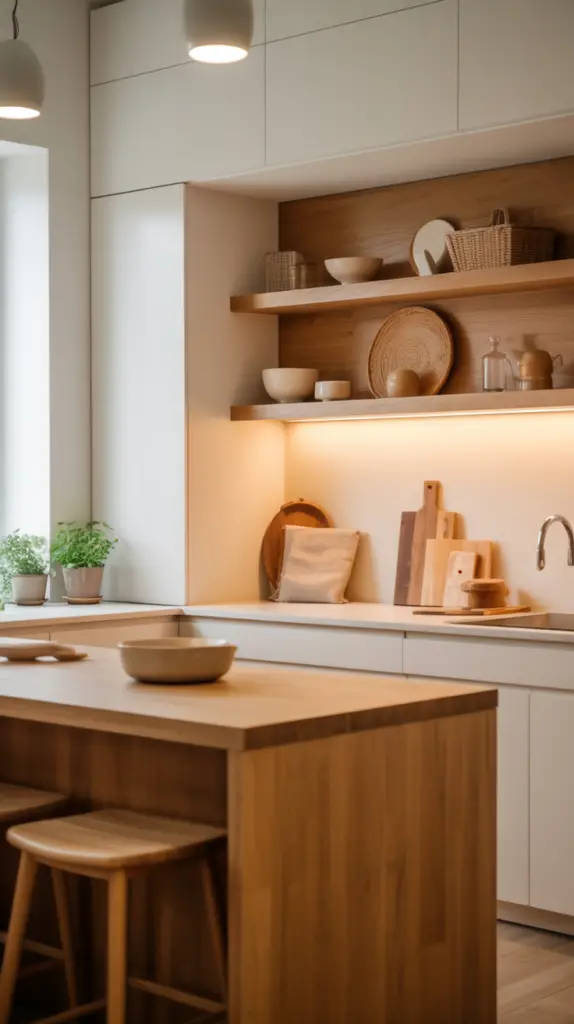
Layering Stone, Marble, and Organic Surfaces for Modern Elegance
One of the most defining characteristics of modern warm white kitchens is the use of organic stone surfaces that add movement, tactile beauty, and subtle luxury. Materials such as marble, quartz, limestone, and textured granite enhance the visual interest of a monochromatic palette, preventing the kitchen from feeling flat or overly minimal. This design approach creates a sophisticated balance between natural elements and contemporary styling.
The countertop is often the centerpiece of a kitchen’s design, and choosing the right stone dramatically influences the room’s overall mood. Marble with warm veining, such as creamy gold or soft taupe streaks, pairs perfectly with warm white cabinetry. Quartz options that mimic natural stone allow homeowners to achieve the same elegant look while enjoying enhanced durability and low maintenance. Limestone or soapstone brings a more rustic, time-worn feel that aligns beautifully with natural texture themes.
A full-height backsplash is one of the most impactful updates you can make. Extending stone vertically creates a cohesive look, amplifies the natural lines of the material, and introduces a sculptural element that draws the eye upward. This approach minimizes visual clutter while showcasing the beauty of organic surfaces.
Consider adding stone through smaller details as well. Marble trays, limestone bowls, or travertine vases subtly enhance the textured atmosphere. The interplay between soft white tones and organic stone creates a layered, lived-in elegance.
Organic Surface Ideas Table
| Material | Ideal Use | Aesthetic Impact |
| Marble | Counters, backsplash | Luxurious movement |
| Quartz | Counters | Durable elegance |
| Limestone | Accent surfaces | Earthy texture |
| Travertine | Decor | Warm, natural tone |
Adding Woven and Soft Textures to Enhance Warmth
Natural texture extends beyond wood and stone—woven elements, soft textiles, and organic fibers add essential warmth and personality to a modern warm white kitchen. These details introduce subtle contrast and tactile richness that soften the otherwise clean, modern lines.
Begin with functional woven pieces such as rattan or seagrass bar stools. Their organic patterns break up visual monotony and add a relaxed, artisanal feel. Woven light fixtures are another beautiful addition; pendant lamps made of wicker or natural fiber cast soft shadows and reinforce the cozy ambiance.
Even the smallest textiles make a difference. Linen towels, cotton runners, or a soft-patterned rug near the sink can transform the kitchen from sleek to inviting. Choose muted, earthy tones—taupe, sand, oatmeal—to maintain cohesion with the warm white palette.
Woven Texture Table
| Texture Type | Contribution | Suggested Use |
| Rattan | Organic softness | Bar stools, baskets |
| Linen | Light, airy texture | Towels, runners |
| Woven Fibers | Warm contrast | Pendant lights |
Designing a Modern Warm White Kitchen Island With Natural Texture
A kitchen island is often the visual and functional centerpiece of the room, making it one of the best places to incorporate warm white tones and natural textures. Whether your island is large and architectural or compact and charming, thoughtful design details can elevate its presence and enhance the overall feel of the space.
Start with the base color. A warm white island creates harmony with surrounding cabinetry and maintains a clean, cohesive look. Alternatively, contrasting the island base with a natural wood finish brings depth and breaks up the monochromatic palette beautifully. Light oak or bleached wood tones add softness, while walnut or richer hardwoods introduce dramatic warmth.
Countertops heavily influence the island’s impact. A waterfall design featuring marble or quartz creates an elegant, sculptural effect. If you prefer a more rustic aesthetic, butcher block adds warmth while providing a functional prep surface. The key is choosing a material that complements the surrounding textures without competing with them.
The seating around your island should continue the natural theme. Woven stools, wooden chairs, or upholstered seats in earthy fabrics all enhance comfort and visual warmth. Consider how material textures relate to one another—for example, pairing a stone countertop with woven stools creates a balanced contrast.
Decorative accents complete the island’s story. A ceramic vase with branches, a wooden bowl filled with fruit, or a textured tray with kitchen essentials can bring personality without cluttering the space. Lighting also plays a major role; pendant fixtures with warm metal or organic materials help define the island as a focal point.
Kitchen Island Texture Table
| Feature | Material Option | Design Benefit |
| Base Finish | Warm white or natural wood | Harmony & depth |
| Countertop | Marble, quartz, butcher block | Texture & elegance |
| Seating | Woven or wood stools | Organic warmth |
| Lighting | Natural fiber or warm metal | Soft definition |
Enhancing a Warm White Kitchen With Thoughtful Décor and Styling
Décor in a modern warm white kitchen should feel simple, intentional, and organic. Instead of overwhelming the space with accessories, choose a few meaningful pieces that enhance the natural textures already present.
Ceramic vases, handmade pottery, and textured bowls add artisanal charm. Displaying cutting boards in varied wood tones creates a functional yet stylish vignette. Consider incorporating greenery through potted herbs or simple branches in a vessel—they bring life, color, and movement to the kitchen without disrupting the neutral palette.
Kitchen Décor Table
| Décor Type | Material | Style Benefit |
| Ceramics | Stoneware, clay | Artisanal appeal |
| Wood Accents | Walnut, oak | Natural contrast |
| Greenery | Herbs, branches | Organic freshness |
Conclusion
A modern warm white kitchen with natural texture strikes the perfect balance between simplicity and character. Through warm-toned cabinetry, layered organic materials, stone finishes, woven accents, and thoughtful island design, you can create a kitchen that feels both fresh and timeless. These elements work harmoniously to create a space that invites gathering, cooking, and connection—making the kitchen not only beautiful but deeply comforting. A textured, warm white palette ensures your kitchen will remain stylish and welcoming for years to come.