
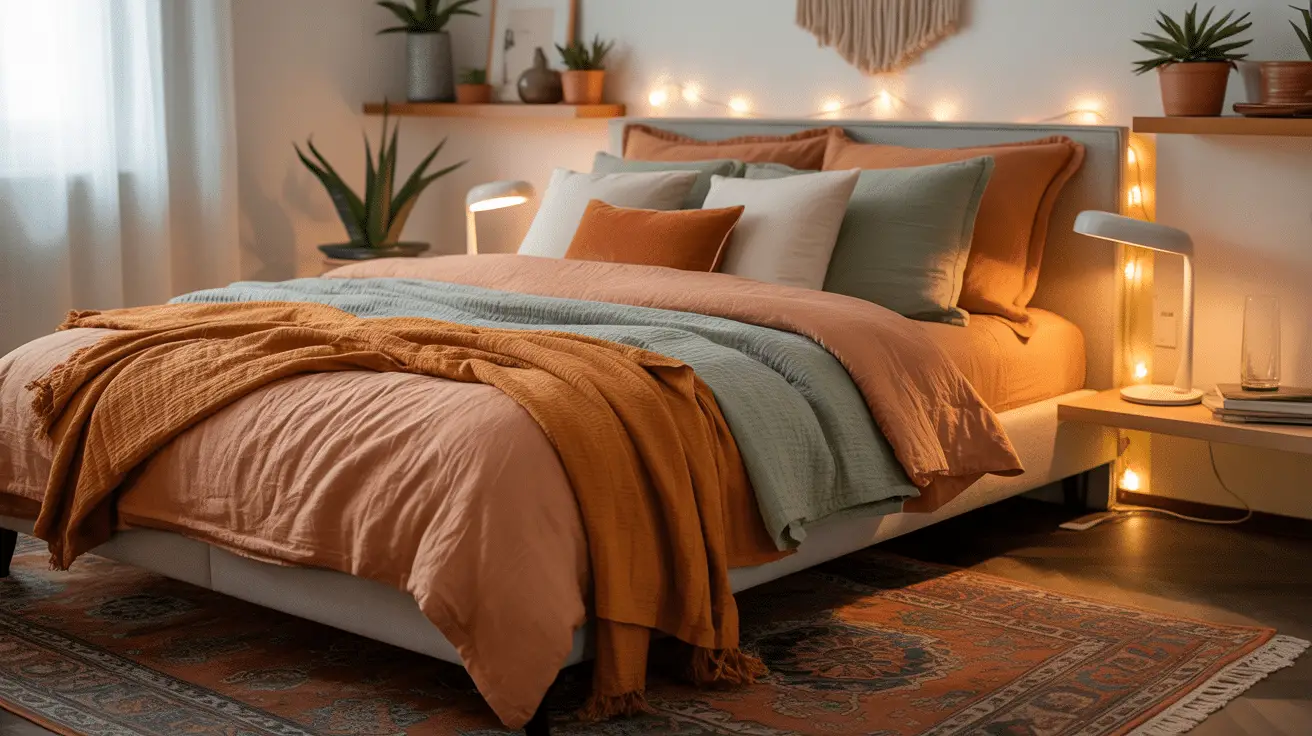
Cozy Colorful Bedding Ideas for Vibrant Bedroom Décor That Feels Warm and Expressive
Table of Contents
Introduction
Color has an extraordinary ability to shape how a room feels—inviting, lively, serene, or uplifting. In fact, design research shows that color impacts both mood and energy levels, making it one of the most powerful tools in home décor. When it comes to bedrooms, many people default to neutrals, fearing that bold colors might overwhelm the space. Yet colorful bedding, when styled thoughtfully, can bring warmth, personality, and vibrancy that transform a bedroom from ordinary to unforgettable. If your room feels flat or lacking inspiration, introducing cozy colorful bedding may be the perfect change.
Cozy colorful bedding goes beyond simply choosing bright sheets—it’s about layering textures, mixing tones, balancing patterns, and creating an atmosphere that feels both expressive and comforting. The right bedding palette can energize your mornings, relax your evenings, and showcase your unique style. Whether you prefer deep jewel tones, sunny warm hues, soft pastels, or a mix of lively patterns, colorful bedding offers endless creative possibilities.
In this guide, you’ll discover inspiring ideas and practical strategies to style cozy colorful bedding in a vibrant bedroom. We’ll explore color palettes, texture choices, layering techniques, pattern mixing, accessories, and layout tips to help you create a space filled with warmth and personality. Each section includes detailed insights, real-world examples, and visual planning tables so you can refresh your bedroom with confidence and creativity.
Selecting the Best Color Palettes for Cozy and Vibrant Bedding
Choosing the right color palette is the foundation of creating a cozy and vibrant bedroom. Colorful bedding doesn’t mean using every bright shade available—it means selecting intentional tones that evoke warmth, comfort, and visual interest. Warm colors like mustard, terracotta, coral, and burnt orange create a grounded, inviting feel. Jewel tones such as emerald, sapphire, ruby, and deep purple bring richness and sophistication. Pastel combinations like blush pink, lavender, and soft aqua offer a calming yet cheerful aesthetic.
The palette you choose should complement the room’s existing lighting and décor. In rooms with natural light, saturated colors appear softer and more harmonious. In dim or warm-lit rooms, deep tones feel rich and enveloping. Pairing bold bedding with neutral walls creates balance, while incorporating artwork or accent pillows in coordinating shades helps unify the entire space.
Colorful bedding can also be layered within one palette—like pairing sunset tones in varying intensities—or across contrasting palettes, such as teal and mustard, for a more eclectic look. The goal is cohesion with enough variation to keep the room visually engaging and cozy.
Color Palette Ideas Table
| Palette Type | Example Colors | Mood Created | Works Best In |
| Warm Earthy | Mustard, terracotta, clay | Cozy, grounded | Boho or rustic spaces |
| Jewel Tones | Emerald, sapphire, ruby | Rich, luxurious | Modern or glam bedrooms |
| Soft Pastels | Lavender, blush, mint | Calm, airy | Minimal or cottage rooms |
| Bold & Bright | Teal, coral, citron | Energetic, playful | Eclectic or artistic homes |
Layering Techniques That Make Colorful Bedding Feel Extra Cozy
Layering is essential for creating a cozy aesthetic, especially when working with colorful bedding. A layered bed feels plush, inviting, and visually dynamic. The art of layering involves choosing the right combination of sheets, blankets, duvets, quilts, and throws in complementary colors and textures.
Begin with your base layer—a fitted sheet and top sheet. Choose a color that either blends softly with your palette or provides a gentle contrast. Next, add a plush duvet or comforter in a primary color that sets the tone for your bedding. For extra warmth and depth, drape a quilt or coverlet over the duvet. This secondary layer introduces texture and creates a sense of dimension.
Finally, add one or two throws across the foot of the bed. These should introduce either a bold color accent or a softer textured finish like chunky knits, waffle weaves, or lightweight cotton blankets. Layering also allows seasonal flexibility: lighter layers in summer, heavier combinations during winter.
Each layer should complement the others, creating harmony rather than clutter. Thoughtful layering turns a colorful bed into a cozy haven.
Layering Breakdown Table
| Layer | Purpose | Color Tip | Texture Recommendation |
| Sheets | Foundation comfort | Soft or neutral tone | Smooth cotton or bamboo |
| Duvet/Comforter | Main bedding color | Bold shade | Plush or lightly textured |
| Quilt/Coverlet | Added depth | Complementary tone | Stitched or quilted |
| Throw Blanket | Final touch | Accent or contrast | Knit, woven, or faux fur |

Mixing Patterns and Textures for Artistic and Vibrant Bedding
Pattern mixing can turn your bedding into a lively, expressive design statement. Stripes, florals, geometric prints, and abstract designs all offer opportunities to create visual movement and personality. The key is thoughtful coordination—patterns should complement rather than compete.
Start with one dominant pattern, such as a floral duvet or a geometric quilt. This becomes the anchor of your bedding design. Then introduce smaller-scale patterns—perhaps striped sheets or dotted pillowcases—that echo one of the colors in the primary pattern. This repetition creates cohesion. Avoid mixing patterns that share no color relationship, as this can create visual tension instead of harmony.
Texture mixing also enhances coziness. Smooth cotton sheets paired with a velvet throw or boucle pillows instantly elevate the tactile appeal. Layering various textures softens bold colors and balances intricate patterns, resulting in a bedding look that feels both vibrant and inviting.
Pattern & Texture Mixing Table
| Element | Role | Recommended Patterns/Textures | Best Placement |
| Dominant Pattern | Visual anchor | Florals, geometrics | Duvet or comforter |
| Secondary Pattern | Subtle harmony | Stripes, small dots | Sheets or pillowcases |
| Accent Texture | Depth + tactile comfort | Velvet, boucle, knit | Throws or cushions |
| Neutral Balance | Visual rest | Solid tones | Extra pillows or coverlet |
Choosing the Best Materials for Cozy Colorful Bedding
Material selection significantly affects how cozy and vibrant your bedding feels. Different materials influence temperature, comfort, and how colors appear. Cotton is ideal for breathable, everyday comfort and tends to show bright colors beautifully. Linen brings a relaxed, organic charm, with colors appearing soft and slightly muted—perfect for warm, earthy palettes. Bamboo fabric offers exceptional softness and vibrant color retention, making it excellent for bold bedding themes.
Velvet and chenille add luxury and richness, often used in throw blankets or accent pillows. Their smooth sheen makes colors appear deeper and more saturated. Knit or crochet blankets introduce a handcrafted warmth that enhances the cozy vibe, especially in cooler months.
Each material plays a unique role in shaping the tactile experience of your bedding. Mixing materials—such as pairing a cotton duvet with velvet pillows—adds complexity and comfort.
Material Selection Table
| Material | Temperature Feel | Color Effect | Best Use |
| Cotton | Breathable + cool | Bright and crisp | Sheets, duvets |
| Linen | Airy + relaxed | Soft, muted tones | Duvet covers |
| Velvet | Warm + plush | Deep saturation | Throws, pillows |
| Bamboo | Soft + silky | Vivid tones | Sheets |
| Knit | Cozy + textured | Natural warmth | Accent layer |
Creating a Vibrant Bed Layout That Enhances the Entire Room
Your bed layout determines how all your colorful bedding elements come together visually. A thoughtful layout can make your room feel curated, expressive, and welcoming. Start with pillow placement, which sets the initial structure. Use layered pillow arrangements, beginning with large euro shams for height. In front, place standard pillows, followed by smaller decorative pillows that introduce patterns or accent colors.
Next, consider the positioning of your secondary layers. A folded quilt at the foot of the bed adds weight and visual balance. A loosely draped throw creates an effortless, cozy feel. The distribution of colors should feel intentional—placing brighter colors near the top of the bed keeps the room energetic, while deeper colors near the foot create grounding.
The bed layout should also complement the surrounding décor. Matching colors found in wall art, rugs, or bedside accessories creates consistency across the room, making the bedding feel like part of a larger design story.
Bed Layout Design Table
| Layout Element | Purpose | Styling Tip | Effect |
| Euro Shams | Height + structure | Choose solid or muted tone | Creates foundation |
| Standard Pillows | Everyday use | Match or complement duvet | Adds cohesion |
| Decorative Pillows | Color accents | Introduce patterns | Highlights vibrant elements |
| Quilt Placement | Balance | Folded or draped | Enhances texture |
| Throw Blanket | Cozy finish | Casual or tailored placement | Adds warmth |
Accessorizing Your Bedroom to Complement Colorful Bedding
Accessories complete the bedroom and reinforce your chosen bedding palette. Using décor items intentionally can pull colors together, enhance warmth, and create a cohesive environment. Choose bedside lamps with colorful shades, artwork that echoes your bedding colors, or decorative vases that introduce complementary hues.
Area rugs offer a powerful grounding effect. Choose rugs with subtle patterns or colors that mirror your bedding’s tones. Wall art can amplify the room’s energy, whether abstract paintings with bold strokes or framed prints in matching shades.
Even small accessories—like books, candles, textured baskets, and decorative trays—can reinforce the cozy and vibrant atmosphere. Just as with bedding, layering accessories in varied textures creates visual depth and warmth.
Accessory Styling Table
| Accessory | Style Benefit | Color Role | Placement |
| Artwork | Adds personality | Reflects bedding palette | Above bed |
| Lamps | Warm ambient light | Shade introduces accent color | Bedside |
| Area Rug | Grounds space | Balances bold bedding | Under bed |
| Decorative Objects | Finishing details | Pops of color | Nightstands or shelves |
Using Color Psychology to Shape a Cozy and Energizing Bedroom
Color psychology plays a transformative role in bedroom design. Warm hues like coral, saffron, and peach promote comfort and coziness, making them ideal for bedding. These shades stimulate positive emotions without overstimulating the senses. Cooler tones—teal, emerald, lavender—offer a refreshing and calm energy while still appearing vibrant.
The emotional balance between colors is key. A bold bedding color should be paired with softer tones in surrounding décor to maintain harmony. For example, pairing bright coral bedding with soft cream walls and natural wood accents creates balance and comfort. Meanwhile, deep jewel tones like emerald or sapphire feel luxurious when contrasted with metallic touches or richly textured fabrics.
Color psychology helps ensure your bedroom feels both vibrant and restful—a fusion that defines cozy colorful bedding.
Color Psychology Table
| Color | Psychological Effect | Best Use in Bedding |
| Coral | Uplifting + warm | Duvet or throw |
| Teal | Refreshing + calm | Quilt or pillowcases |
| Mustard | Cozy + grounding | Accent pillow |
| Purple | Creative + luxurious | Comforter or shams |
| Pink | Soft + soothing | Sheets or layered blankets |
Conclusion
Cozy colorful bedding offers one of the most effective and expressive ways to transform your bedroom décor. By thoughtfully combining color palettes, layering techniques, textures, patterns, materials, and accessories, you can create a space that feels both vibrant and deeply comforting. The right bedding not only enhances visual appeal but also shapes the emotional tone of your room—bringing warmth, joy, and personality into the place where you start and end each day. A vibrant bedroom doesn’t need to be overwhelming; with intentional design choices, it becomes a beautiful reflection of your style and a cozy retreat that energizes and soothes in equal measure.